


No Climb Woven Wire Mesh: Industrial Engineering and Selection Guide
In industrial environments, the structural integrity and security of partitions, machine guards, and filtration supports are paramount. Among the various materials available to engineers, no climb woven wire mesh stands out as a specialized configuration designed to provide maximum security and safety. By utilizing tight weaving patterns and high-strength alloys, this material prevents unauthorized access, climbing, or the passage of debris while maintaining essential airflow and visibility. For procurement teams and plant engineers, understanding the technical nuances of Woven Wire Mesh is critical to ensuring long-term performance in demanding B2B applications.
Understanding the Mechanics of No Climb Woven Wire Mesh
The term "no climb" traditionally refers to a mesh design where the spacing between the wires is too narrow to allow for handholds or footholds. In an industrial context, this is achieved through a high mesh count—the number of openings per linear inch. When the aperture size is reduced significantly, the mesh becomes virtually impossible to scale, making it an ideal choice for high-security perimeters, hazardous equipment enclosures, and sensitive processing areas.
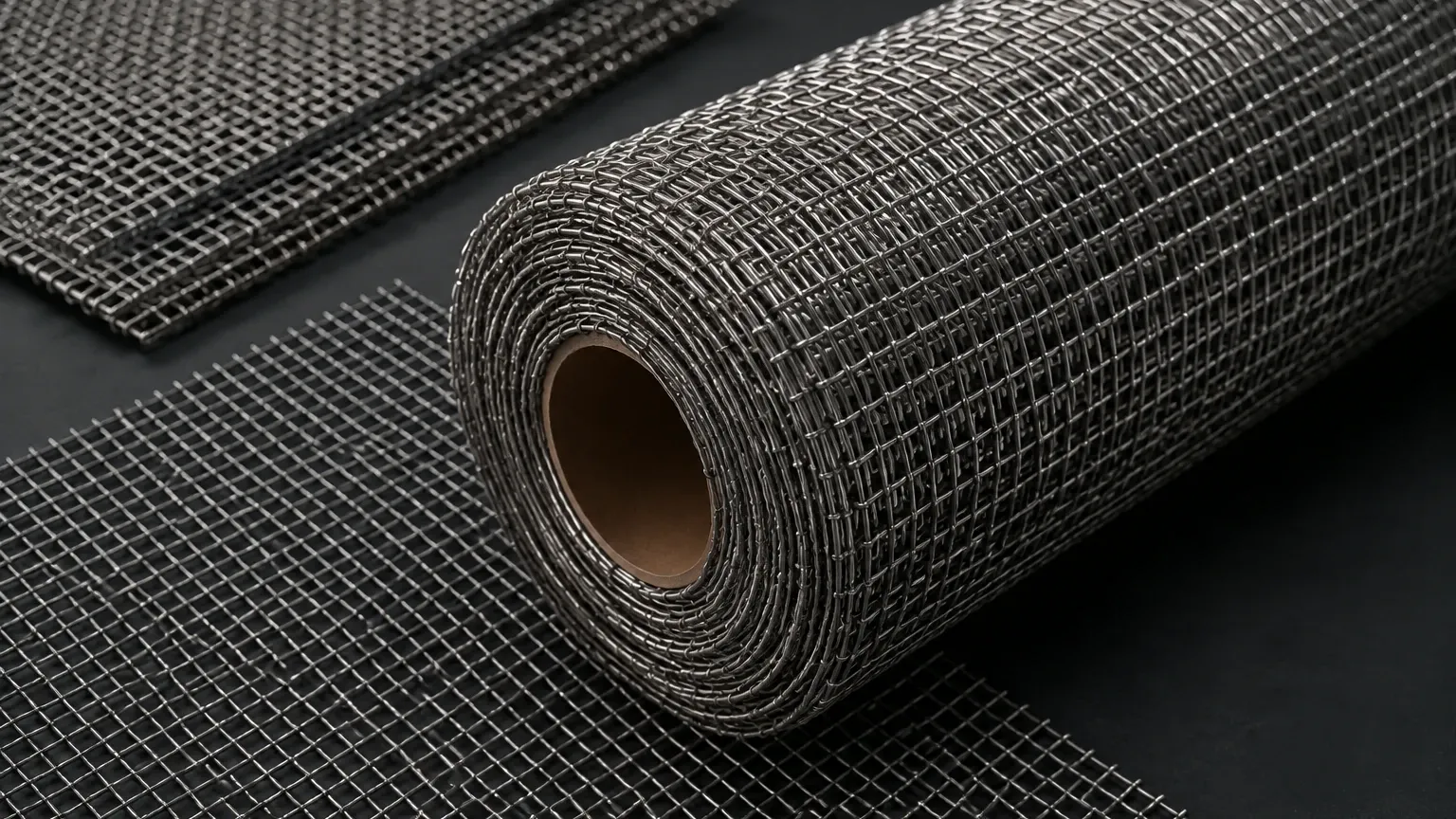
Unlike expanded metal or welded wire, woven mesh is manufactured by interlacing wires over and under one another. This mechanical interlocking provides a degree of flexibility and vibration resistance that is essential in environments with heavy machinery. For industrial filtration and protection, Plain, twill and dutch woven wire mesh in SS304/316L — rolls, cut mesh and framed panels. Send mesh count or micron target for a technical quote. offers the necessary precision to meet specific safety standards while providing the structural rigidity required for permanent installations.
Material Selection: Stainless Steel 304 vs. 316L
The performance of no climb woven wire mesh is heavily dependent on the alloy selected. In industrial settings, stainless steel is the gold standard due to its mechanical strength and resistance to environmental degradation.
Grade 304 Stainless Steel
Grade 304 is the most common stainless steel used in woven mesh. It contains approximately 18% chromium and 8% nickel, providing excellent corrosion resistance in most indoor and mild outdoor environments. It is a cost-effective solution for machine guarding and internal partitions where exposure to aggressive chemicals is limited. However, in environments with high chloride exposure or extreme humidity, 304 may be susceptible to pitting.
Grade 316L Stainless Steel
For more demanding applications, such as chemical processing plants, marine environments, or pharmaceutical facilities, Grade 316L is preferred. The "L" stands for low carbon, which improves weldability and reduces the risk of sensitization at the grain boundaries. The addition of molybdenum (2-3%) significantly enhances the material’s resistance to chloride-induced pitting and crevice corrosion. When specifying no climb mesh for outdoor security or corrosive filtration processes, 316L ensures a longer service life and lower total cost of ownership.
Weaving Patterns and Their Impact on Structural Integrity
The method by which the wires are woven determines the mesh’s aperture precision, stability, and "no climb" effectiveness. Engineers must select a weave pattern that aligns with the specific stresses the mesh will encounter.
Plain Weave
This is the most straightforward pattern, where each warp wire passes alternately over and under each shute wire. It provides the most consistent aperture size and is commonly used for standard security screens and basic filtration. In no climb configurations, a high-count plain weave creates a dense, flat surface that is difficult to grip.
Twill Weave
In a twill weave, each warp wire passes over and under two shute wires. This allows for the use of heavier wire diameters than a plain weave of the same mesh count. The result is a more robust mesh that can withstand higher mechanical impacts. This is particularly useful for heavy-duty machine guards where the mesh must resist both climbing and physical force.
Dutch Weave
Dutch weaves utilize different diameters for warp and shute wires. The shute wires are driven close together, creating a "zero-aperture" mesh that is used primarily for high-precision filtration. While not a traditional "climb-resistant" fence, the density of Dutch woven mesh makes it an impenetrable barrier for fine particles and provides extreme structural stability for pressurized systems.
Industrial Applications for High-Density Woven Mesh
No climb woven wire mesh is not limited to perimeter fencing; its utility extends across various industrial sectors where safety and filtration intersect.
1. Machine Guarding and Safety Enclosures: In automated manufacturing, high-density mesh prevents personnel from reaching into moving parts. The tight weave ensures that even small tools or fingers cannot pass through the barrier, complying with OSHA and ISO safety standards.
2. Chemical and Petrochemical Processing: High-strength stainless steel mesh is used to protect sensitive valves and instrumentation from external debris. Its no-climb properties also secure hazardous chemical storage areas against unauthorized entry.
3. Food and Beverage Production: In these environments, mesh must be easy to clean and resistant to sanitizing chemicals. Woven wire mesh provides the necessary ventilation for cooling processes while preventing pest ingress and ensuring a secure production perimeter.
4. Water Treatment and Filtration: No climb mesh can serve as a primary intake screen, preventing large debris from entering treatment systems. Its structural rigidity allows it to withstand the pressure of flowing water without deforming.
Key Engineering Considerations for Procurement
When sourcing no climb woven wire mesh, engineers should evaluate several technical parameters to ensure the product meets the application's requirements.
Mesh Count and Aperture Size
To achieve a "no climb" effect, the aperture (the clear opening between wires) should typically be less than 0.5 inches, though many industrial security meshes use even smaller openings. Engineers must balance the need for security with the requirement for open area, which affects airflow and light transmission.
Wire Diameter and Tensile Strength
The diameter of the wire directly impacts the mesh's weight and strength. A thicker wire increases the mesh's resistance to cutting and deformation but reduces the percentage of open area. It is essential to confirm the tensile strength of the wire to ensure it can withstand the expected mechanical loads, whether from wind, physical impact, or internal pressure.
Edge Treatment and Framing
For security and safety, how the mesh is finished is as important as the weave itself. Raw edges can be hazardous and prone to unraveling. Specifying framed panels or hemmed edges ensures a secure fit into the final structure and prevents the mesh from being easily pulled out of its housing.
Maintenance and Longevity in Demanding Environments
One of the primary advantages of stainless steel no climb woven wire mesh is its low maintenance requirement. However, in industrial settings, a regular inspection and cleaning schedule is necessary to maintain performance.
* Cleaning: In food or pharmaceutical applications, the mesh should be cleaned with appropriate detergents to prevent the buildup of contaminants. In outdoor or corrosive environments, rinsing the mesh to remove salt or chemical deposits will prevent surface staining and prolong the life of the alloy.
* Inspection for Mechanical Damage: While woven mesh is durable, it should be periodically checked for signs of impact damage or wire fatigue, especially in high-vibration environments. Damaged sections should be replaced promptly to maintain the integrity of the security barrier.
* Total Cost Considerations: While the initial cost of stainless steel woven mesh may be higher than galvanized or plastic alternatives, its durability, recyclability, and resistance to environmental stress result in a significantly lower total cost over the project's lifecycle.
Customization and OEM Solutions
Every industrial facility has unique requirements for its protective barriers and filtration components. Kaifil specializes in providing customized filtration and mesh solutions that go beyond standard specifications. From selecting the optimal wire gauge to developing custom frame designs, working with a manufacturer that understands the engineering behind the weave is vital.
Whether the goal is to secure a high-voltage transformer area or to provide a high-strength support for a chemical filter, the selection of no climb woven wire mesh must be driven by data and environmental realities. By focusing on material grade, weave precision, and mechanical properties, procurement teams can secure their operations with a solution that is both effective and enduring.
For those ready to specify their requirements, evaluating the available options in Woven Wire Mesh is the first step toward achieving a high-performance industrial barrier. By confirming mesh counts, material certifications, and custom dimensions early in the design phase, engineers can ensure that their safety and filtration systems meet the highest standards of reliability.
