


In the landscape of industrial processing, the integrity of a filtration system often depends on the precision and durability of its primary medium. For engineers and procurement specialists in the chemical, pharmaceutical, and food industries, securing high-quality Woven Wire Mesh is a critical step in maintaining operational efficiency and product purity. While the immediate impulse may be to source woven steel mesh nearby to minimize lead times, the technical complexity of modern filtration demands a deeper evaluation of supplier capabilities, material science, and engineering specifications.
Industrial filtration is not a one-size-fits-all commodity. It is a specialized field where the difference between a standard 304 stainless steel mesh and a high-performance 316L Dutch weave can mean the difference between a successful production run and a costly system failure. This guide examines the technical parameters of woven steel mesh, the logistics of local sourcing versus specialized manufacturing, and the criteria necessary for selecting the right filtration components for demanding environments.
The Engineering Fundamentals of Woven Wire Mesh
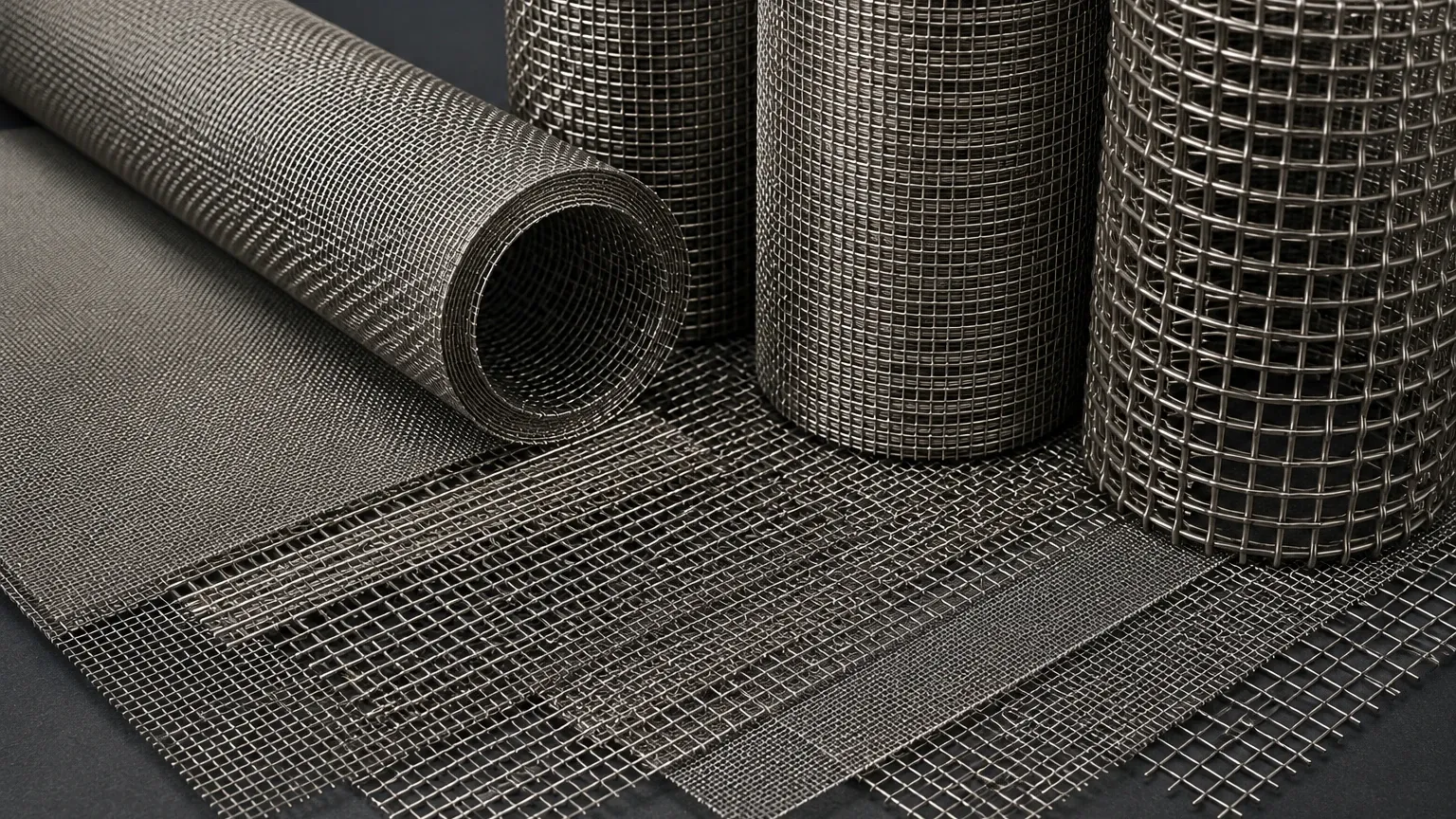
At its core, woven wire mesh is a structured fabric created by interlacing metallic wires on a loom. Unlike perforated metal or expanded metal, woven mesh offers a unique combination of high open-area percentages and precise pore size control. The performance of the mesh is dictated by three primary variables: the material alloy, the weave pattern, and the physical dimensions of the wire and aperture.
Material Selection: 304 vs. 316L Stainless Steel
For most industrial applications, stainless steel is the material of choice due to its mechanical strength and resistance to oxidation.
* Type 304: The most common grade, offering excellent durability and resistance to many atmospheric and chemical exposures. It is widely used in food processing and general industrial filtration where extreme corrosion is not a primary concern.
* Type 316L: Containing molybdenum, this alloy provides superior resistance to chlorides and pitting corrosion. In pharmaceutical and marine environments, or in chemical processes involving high salinity or acidic solutions, 316L is the industry standard for ensuring long-term structural integrity.
Understanding Weave Patterns
The method by which wires are interlaced determines the mesh’s filtration accuracy and mechanical stability.
1. Plain Weave: The most straightforward pattern where each warp wire crosses over and under each shute (weft) wire. It provides the highest open area and is ideal for liquid-solid separation where high flow rates are required.
2. Twill Weave: Each shute wire passes over and under two warp wires. This allows for the use of heavier wires in a given mesh count, increasing the strength of the mesh and making it suitable for high-pressure applications.
3. Dutch Weave (Plain and Twill): These weaves utilize different diameters for warp and shute wires. The result is a dense, robust mesh with very small, triangular openings. Dutch weaves are essential for fine filtration (down to the micron level) and are commonly found in hydraulic systems and fuel filters.
Why Searching for Woven Steel Mesh Nearby Requires Technical Due Diligence
When a facility faces an urgent need for replacement filters, the search for woven steel mesh nearby is often driven by the desire to reduce downtime. However, proximity should not be the sole deciding factor. A local general hardware supplier may stock basic mesh, but they often lack the technical documentation, material certifications, and precision cutting capabilities required for industrial-grade filtration.
The Risks of Non-Specialized Sourcing
Sourcing from a non-specialized local vendor can lead to several technical risks:
* Inconsistent Pore Size: Industrial processes rely on a specific micron rating. Low-quality mesh may have variations in aperture size, leading to "bypass" where particles larger than the target size pass through the filter.
* Material Impurity: Without mill test reports (MTRs), there is no guarantee that the "stainless steel" provided meets the chemical composition requirements of 304 or 316L, which can lead to premature corrosion.
* Mechanical Failure: In high-vibration or high-pressure environments, poorly woven mesh can experience wire shifting, which compromises the filtration accuracy and can lead to the mesh tearing.
For these reasons, engineers often find that partnering with a specialized manufacturer like Kaifil—regardless of geographic distance—provides a higher total value. Specialized manufacturers offer Plain, twill and dutch woven wire mesh in SS304/316L — rolls, cut mesh and framed panels. Send mesh count or micron target for a technical quote. This ensures that the product is not just "nearby," but is technically fit for the intended application.
Critical Specifications for Filtration Selection
To move beyond a generic search and into a technical specification, engineers must define several key metrics. These parameters dictate how the mesh will behave under load and how effectively it will capture contaminants.
Mesh Count and Micron Rating
Mesh count refers to the number of openings per linear inch. While this is a standard industry term, it does not tell the whole story. The micron rating—the size of the smallest particle the mesh can reliably trap—is the more critical metric for filtration. Because wire diameter affects the size of the opening, two meshes with the same mesh count can have different micron ratings if their wire diameters differ.
Open Area Percentage
The open area is the ratio of the total area of the apertures to the total area of the mesh. A higher open area results in lower pressure drops (differential pressure) and higher flow rates. However, increasing the open area usually requires thinner wires, which can reduce the mesh's lifespan and resistance to mechanical stress. Calculating the optimal balance between flow and strength is a core part of filter design.
Tensile Strength and Ductility
In applications such as vibrating screens or high-pressure hydraulic filters, the mesh must withstand significant mechanical forces. The tensile strength of the stainless steel wire ensures the mesh does not deform, while sufficient ductility allows the mesh to be formed into shapes (such as pleated cartridges or conical strainers) without cracking.
Industrial Applications and Performance Expectations
The versatility of Woven Wire Mesh allows it to serve as the primary filtration medium across diverse sectors. Understanding how the mesh performs in these specific environments helps in setting realistic expectations for replacement cycles and maintenance.
Chemical and Petrochemical Processing
In these environments, filters are exposed to aggressive solvents and high temperatures. Woven steel mesh is preferred here because it maintains its pore geometry even under thermal expansion. It is often used in catalyst recovery and the removal of particulates from corrosive fluid streams.
Food and Beverage Production
Hygiene is the priority in food-grade applications. Stainless steel mesh is non-reactive and easy to sanitize. It is commonly used for straining juices, filtering syrups, and protecting pumps from solid debris. The smooth surface of the woven wire allows for effective Clean-in-Place (CIP) procedures, reducing the need for frequent manual disassembly.
Pharmaceutical Manufacturing
Pharmaceutical filtration requires the highest levels of precision. Mesh used in this sector must often comply with strict regulatory standards regarding material migration and cleanliness. Woven wire mesh provides a predictable, repeatable filtration barrier that is essential for batch consistency and product safety.
Customization and OEM Integration
One of the primary advantages of working with an experienced manufacturer is the ability to customize the mesh for specific equipment. While a search for woven steel mesh nearby might yield standard rolls, industrial systems often require finished or semi-finished components.
* Cut-to-Size Pieces: Precision laser or plasma cutting ensures that mesh edges are clean and dimensions are exact, preventing bypass in filter housings.
* Framed Panels: Adding a rigid metal frame to the mesh provides structural support, making it easier to install and replace in large-scale filtration units.
* Multi-Layer Sintering: For extreme pressure applications, multiple layers of woven wire mesh can be sintered (diffusion bonded) together. This creates a porous metal plate that combines the fine filtration of a thin mesh with the mechanical strength of a thick plate.
Total Cost of Ownership (TCO) Considerations
When evaluating suppliers, it is important to look beyond the initial purchase price. The total cost of ownership for a filtration component includes the acquisition cost, the cost of installation, the frequency of cleaning, and the lifespan of the product.
1. Durability: A high-quality mesh that lasts twice as long as a cheaper alternative effectively halves the long-term cost, even if the initial price is higher.
2. Cleaning Efficiency: Mesh that is woven with high precision is easier to backwash or ultrasonically clean. This reduces the time and labor required for maintenance.
3. Process Protection: The most significant cost associated with filtration is the potential damage to downstream equipment (like pumps or turbines) if a filter fails. Investing in certified, high-quality woven steel mesh is a form of insurance against catastrophic system failures.
Conclusion: Selecting a Technical Partner
While the convenience of finding woven steel mesh nearby is an understandable goal for procurement teams, the technical requirements of industrial filtration usually necessitate a more specialized approach. Selecting the right Woven Wire Mesh involves a deep understanding of alloy chemistry, weave dynamics, and the specific stresses of the application environment.
By focusing on technical specifications—such as micron rating, material grade, and customization options—engineers can ensure they are not just buying a commodity, but are investing in a component that will optimize their process. Whether you require standard rolls for general screening or custom-engineered framed panels for a complex chemical process, the priority should always be on quality, precision, and the technical support provided by the manufacturer. This approach ensures that the filtration system remains a reliable asset rather than a point of failure.
