


Stainless Steel 304 Woven Wire Mesh Sheet: Engineering and Application Guide
In the landscape of industrial filtration and separation, the selection of the correct media is a critical engineering decision that impacts system efficiency, maintenance frequency, and overall operational costs. A stainless steel 304 woven wire mesh sheet serves as a foundational component in many of these systems, offering a balance of mechanical strength, corrosion resistance, and precision.
For engineers and procurement professionals, understanding the technical nuances of woven wire mesh is essential for optimizing performance in demanding environments. This guide examines the technical specifications, material properties, and engineering considerations required to select the appropriate filtration media for industrial applications.
Understanding the Fundamentals of Woven Wire Mesh
At its core, Woven Wire Mesh is produced by weaving individual wires over and under one another on industrial looms. This process creates a stable structure with precise openings, known as apertures. In industrial contexts, these meshes are characterized by several key parameters: mesh count, wire diameter, and aperture size.
1. Mesh Count: This refers to the number of openings per linear inch. A higher mesh count indicates a finer mesh with smaller apertures.
2. Wire Diameter: The thickness of the wire used in the weave. This significantly influences the mesh's mechanical strength and the "open area" percentage.
3. Aperture (Opening Size): The clear distance between two adjacent parallel wires. This determines the particle size that the mesh will effectively retain.
When specifying a stainless steel 304 woven wire mesh sheet, it is vital to calculate the open area percentage, which is the ratio of the area of the openings to the total area of the mesh. A higher open area generally results in lower pressure drops and higher flow rates, though it may compromise the structural integrity of the sheet if the wire diameter is too thin for the application's pressure demands.
Technical Properties of Stainless Steel 304 for Filtration
Stainless steel Type 304 is the most widely utilized austenitic stainless steel in the filtration industry. Its chemical composition—typically 18% chromium and 8% nickel—provides robust performance characteristics suitable for a broad spectrum of industrial environments.
Corrosion Resistance
Type 304 stainless steel forms a passive chromium oxide layer that protects the underlying metal from oxidation and many organic and inorganic chemicals. While Type 316 is often preferred for high-chloride or marine environments due to its molybdenum content, Type 304 offers excellent resistance in most food processing, pharmaceutical, and general industrial water treatment applications.
Thermal Stability
Industrial processes often involve fluctuating temperatures. Type 304 maintains its mechanical properties and oxidation resistance at temperatures up to approximately 870°C (1600°F) for intermittent service and 925°C (1700°F) for continuous service. However, in filtration applications where structural precision is paramount, thermal expansion must be accounted for in the housing design.
Mechanical Strength and Formability
One of the primary reasons for choosing a stainless steel 304 woven wire mesh sheet is its high tensile strength and durability. Unlike synthetic filter media, stainless steel mesh does not shed fibers and is resistant to puncture and abrasion. It can also be easily formed, welded, or pleated into complex shapes, such as filter cartridges or framed panels, without losing its structural integrity.
Weave Types and Their Impact on Performance
The method by which the wires are interlaced determines the mesh's filtration characteristics and its ability to withstand pressure. Different weave patterns are selected based on the specific requirements of the filtration task.
Plain Weave
The most common and straightforward weave, where each warp wire (running the length of the roll) passes alternately over and under each weft wire (running across the width). This results in square openings and is ideal for general-purpose screening and low-pressure filtration.
Twill Weave
In a twill weave, each warp wire passes alternately over and under two weft wires. This allows for the use of heavier wire diameters in finer mesh counts than would be possible with a plain weave. It is often used when the application requires a combination of fine filtration and increased mechanical strength.
Dutch Weave (Plain and Twill)
Dutch weaves utilize different diameters for the warp and weft wires. The wires are woven tightly together to create a dense filter media with no visible straight-through openings. Instead, the fluid follows a tortuous path through the mesh. This weave is specifically designed for high-pressure applications and precision micron-rated filtration, such as hydraulic oil filtration and fuel systems.
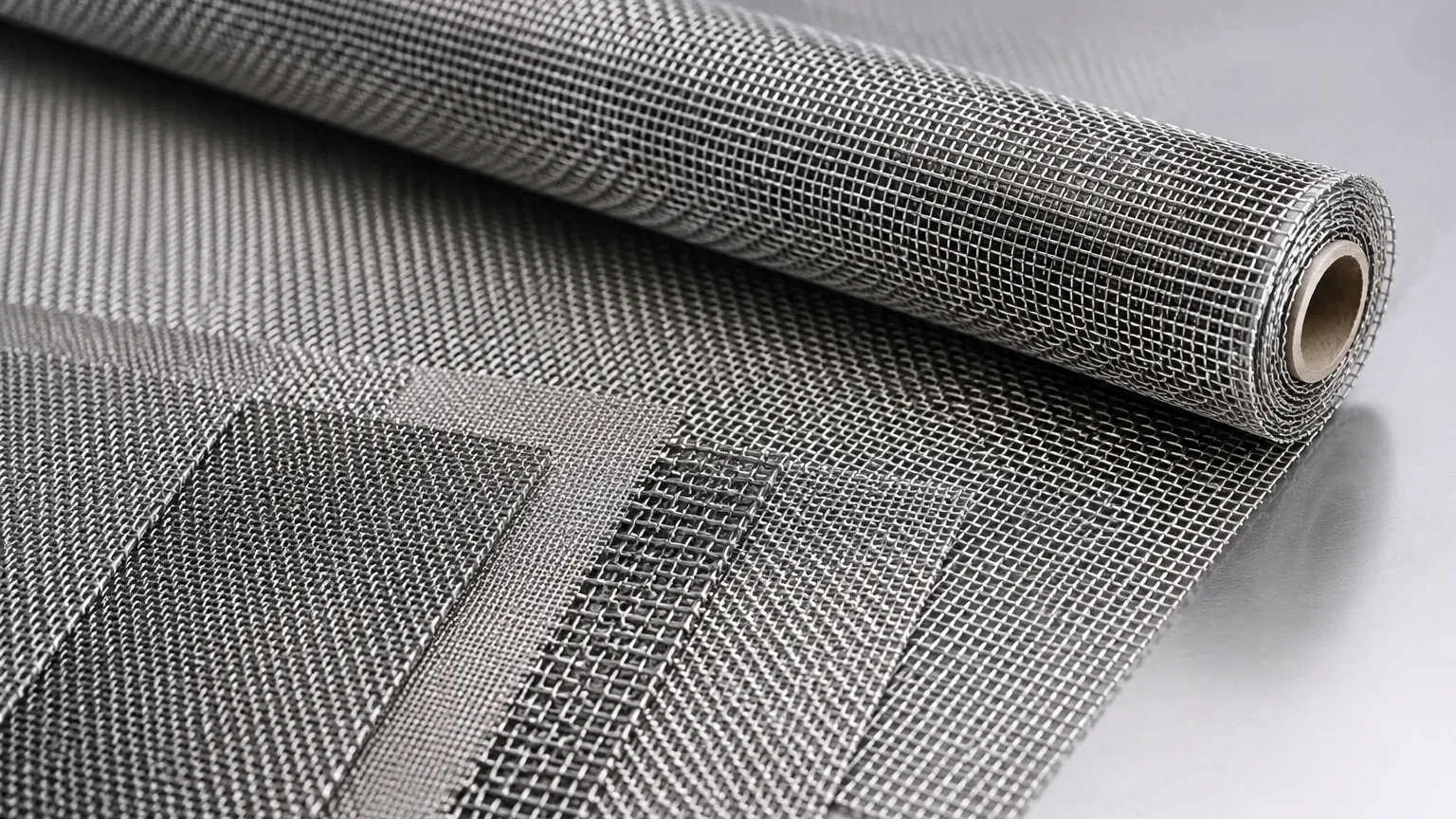
For those requiring specific configurations, Plain, twill and dutch woven wire mesh in SS304/316L — rolls, cut mesh and framed panels. Send mesh count or micron target for a technical quote. to ensure the weave matches the pressure and particle retention requirements of your system.
Engineering Considerations for Industrial Integration
Integrating a stainless steel 304 woven wire mesh sheet into an industrial system requires more than just selecting a micron rating. Engineers must evaluate how the mesh interacts with the fluid dynamics and mechanical stresses of the equipment.
Pressure Drop (Delta P)
The resistance to flow caused by the filter media is a critical factor. A high initial pressure drop can reduce the efficiency of pumps and increase energy consumption. The pressure drop is influenced by the fluid's viscosity, flow velocity, and the mesh's open area. As the mesh accumulates debris, the pressure drop increases, eventually requiring cleaning or replacement.
Structural Support
In high-flow or high-pressure systems, a single layer of fine mesh may lack the necessary stiffness to prevent deformation or "ballooning." In such cases, the mesh sheet is often supported by a coarser perforated metal plate or a heavier backup mesh. This multi-layer construction ensures that the fine filtration layer remains intact under stress.
Edge Treatments and Customization
How the mesh sheet is finished can affect its installation and longevity. For OEM applications, mesh sheets can be provided with various edge treatments:
* Cut Edges: Standard edges where the wires are trimmed. These may require framing to prevent fraying.
* Selvage Edges: Finished edges that prevent the mesh from unraveling, common in standard roll widths.
* Framed Panels: The mesh is secured within a U-profile or flat frame, providing a ready-to-install component for shaker screens or intake filters.
Critical Selection Criteria for Purchasing Teams
When requesting a quote or specifying a stainless steel 304 woven wire mesh sheet, providing precise data ensures that the manufactured product meets the application's needs. Purchasing teams should confirm the following details with their supplier:
* Micron Rating: Specify whether you require a "nominal" or "absolute" micron rating. Absolute ratings are essential for critical processes where no particles above a certain size can pass.
* Dimensional Tolerances: For sheets used in precision machinery, specify the allowable variance in length, width, and flatness.
* Compliance Standards: In the food and pharmaceutical sectors, ensure the material meets FDA or other relevant regulatory standards for contact surfaces.
* Quantity and Format: Determine if the material is required in bulk rolls, individual cut-to-size sheets, or custom-fabricated components.
Maintenance, Cleaning, and Total Cost of Ownership
One of the significant advantages of stainless steel filtration media over disposable alternatives is the ability to clean and reuse the material. This reduces the total cost of ownership by extending the replacement cycle and minimizing waste.
Cleaning Methods
* Backwashing: Reversing the flow of the fluid to dislodge particles trapped on the surface of the mesh.
* Ultrasonic Cleaning: Using high-frequency sound waves in a cleaning solution to remove fine particles from the depths of a Dutch weave or complex filter structure.
* Chemical Cleaning: Using compatible solvents or acids to dissolve scale or organic buildup, provided the chemicals do not compromise the Type 304 stainless steel.
When to Replace
Despite their durability, mesh sheets will eventually require replacement. Signs of wear include permanent deformation (blinding that cannot be cleaned), wire thinning due to erosion, or mechanical damage such as tears or broken wires. Regular inspection protocols are necessary to prevent "bypass," where unfiltered fluid leaks through damaged sections of the mesh.
Conclusion
Selecting the right stainless steel 304 woven wire mesh sheet is a technical process that balances material properties, weave geometry, and mechanical requirements. By focusing on the specific demands of the application—be it chemical compatibility, pressure resistance, or precision particle retention—engineers can ensure long-term reliability and efficiency.
Kaifil specializes in providing customized filtration solutions tailored to these industrial needs. Whether you require standard rolls or precision-engineered framed panels, our technical team can assist in selecting the optimal configuration for your project. For detailed specifications and support, Review product options and application support to find the right solution for your industrial filtration challenges.
