


Stainless Steel Woven Wire Rodent Proof Mesh: An Engineering and Specification Guide
In industrial and commercial environments, the integrity of infrastructure is frequently challenged by biological threats, specifically rodent infestations. For facilities operating in the food and beverage, pharmaceutical, and chemical processing sectors, a rodent breach is more than a nuisance; it is a critical failure point that can lead to contaminated product batches, damaged electrical systems, and regulatory non-compliance. While various exclusion methods exist, stainless steel woven wire rodent proof mesh has emerged as the industrial standard due to its unique combination of mechanical strength, corrosion resistance, and permeability.
Selecting the appropriate mesh requires a technical understanding of material properties, weave patterns, and the specific behavioral biology of the pests being excluded. This guide examines the engineering considerations necessary for integrating rodent-proof barriers into industrial designs and maintenance protocols.
The Engineering Necessity of Rodent Exclusion
Rodents, particularly rats and mice, possess a physiological drive to gnaw on materials to maintain their incisors, which grow continuously. In an industrial setting, they can exert significant bite pressure, easily penetrating plastic, wood, and soft metals like aluminum or thin-gauge copper. Furthermore, their ability to compress their bodies allows them to pass through surprisingly small apertures—approximately 6mm for a young mouse and 12mm for a rat.
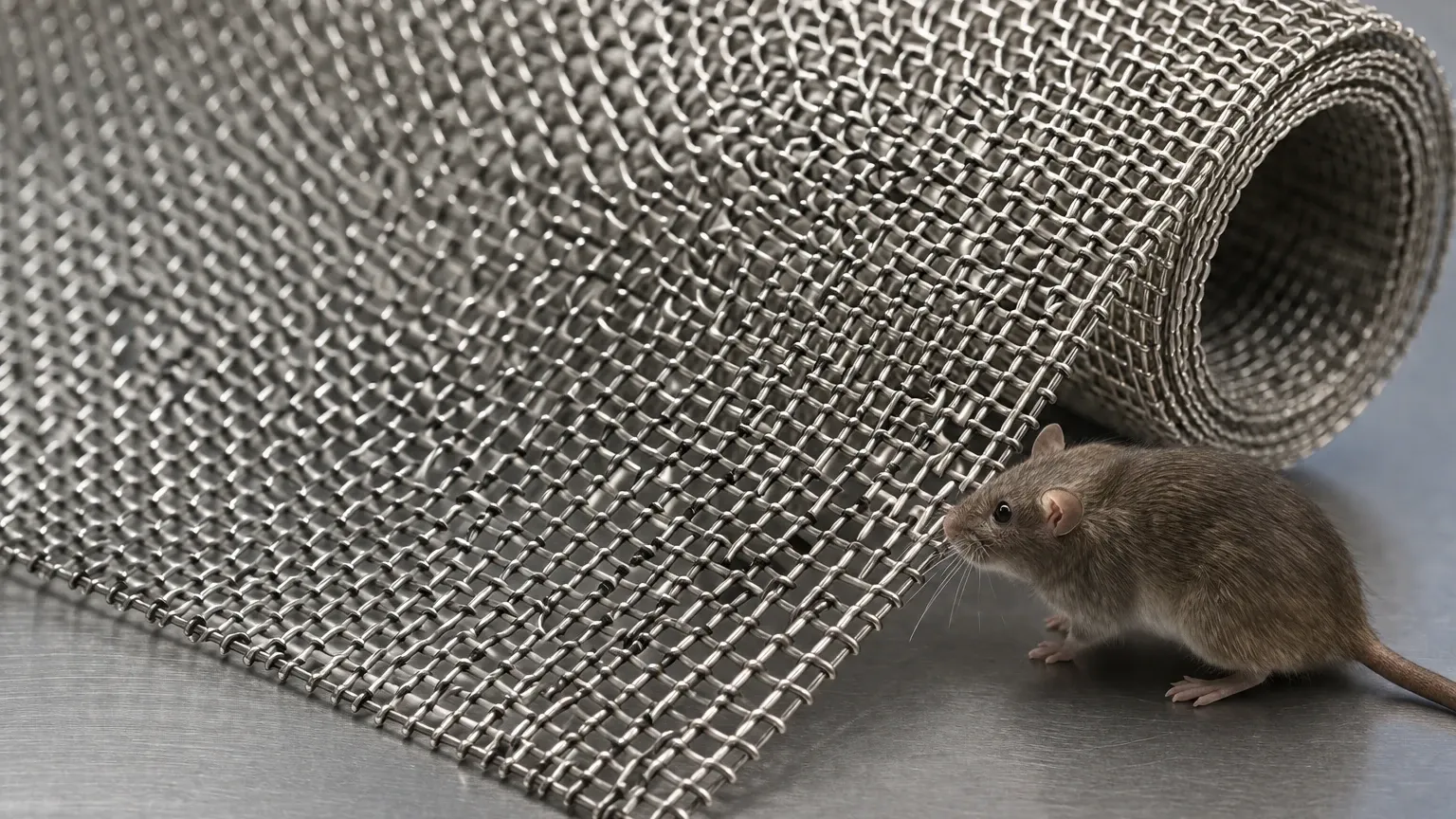
Standard Woven Wire Mesh serves as a physical deterrent that resists these mechanical forces. Unlike expanded metal or welded wire, woven mesh provides a consistent aperture size and a structural flexibility that allows it to be formed around complex geometries, such as pipe penetrations and HVAC ducting, without sacrificing the integrity of the barrier.
Material Science: Why Stainless Steel is Mandatory
In industrial filtration and protection, material selection is dictated by the environment. For rodent proofing, stainless steel is the preferred alloy for several technical reasons:
1. Mechanical Hardness
Stainless steel (specifically the 300 series) possesses a high tensile strength and surface hardness. This makes it virtually impossible for rodents to gain a "purchase" with their teeth. While galvanized steel is often used in residential applications, it is prone to zinc coating failure over time, leading to rust and eventual structural compromise that rodents can exploit.
2. Corrosion Resistance (SS304 vs. SS316L)
Industrial environments often involve exposure to moisture, cleaning chemicals, or saline atmospheres.
- SS304: This is the standard grade for most indoor industrial applications. It provides excellent resistance to oxidation and is suitable for most dry-processing facilities.
- SS316L: In facilities where harsh chemical washdowns occur (common in food processing) or in coastal areas, SS316L is required. The addition of molybdenum enhances resistance to pitting and crevice corrosion, ensuring the stainless steel woven wire rodent proof mesh remains intact for decades.
Critical Parameters: Aperture and Wire Diameter
When specifying mesh for exclusion, engineers must balance two competing factors: the need for a small enough opening to prevent entry and the need for sufficient open area to allow for airflow or drainage.
Aperture Size (Clear Opening)
To effectively exclude the smallest juvenile mice, the aperture should not exceed 6mm x 6mm. In high-precision environments, such as cleanrooms or pharmaceutical labs, a smaller mesh count is often used to prevent the entry of large insects alongside rodents.
Wire Diameter
The diameter of the wire directly impacts the mesh's durability. For industrial rodent proofing, a wire diameter between 0.5mm and 1.2mm is standard. A thicker wire increases the weight and cost but provides a more rigid barrier that can withstand physical impacts from machinery or high-pressure cleaning.
Open Area Calculations
For HVAC and ventilation applications, engineers must calculate the percentage of open area to ensure that the installation of the mesh does not cause an unacceptable pressure drop in the system. High-quality manufacturers provide detailed data on these specifications, allowing for precise system modeling. For specialized industrial requirements, engineers can Review product options and application support to identify the correct mesh count for specific exclusion targets.
Comparing Weave Types for Protective Barriers
The method by which the wires are interlaced—the weave—determines the stability and the "feel" of the mesh. While there are many variations, three primary types are relevant for industrial exclusion and filtration:
1. Plain Weave: The most common type where each warp wire crosses alternately above and below each weft wire. It offers the most consistent aperture and is the easiest to cut and form during installation.
2. Twill Weave: Used when a heavier wire diameter is required for a given mesh count. The wires are woven over and under two wires, allowing for greater thickness and durability in high-stress areas.
3. Dutch Weave: Primarily used for fine filtration rather than simple exclusion. However, in specific industrial contexts where both rodent proofing and fine particulate filtration are required (such as air intake vents), Dutch weave provides a dense, strong barrier.
Kaifil offers Plain, twill and dutch woven wire mesh in SS304/316L — rolls, cut mesh and framed panels. Send mesh count or micron target for a technical quote to ensure the specific weave matches the environmental demand.
Industrial Application Scenarios
Stainless steel woven wire rodent proof mesh is utilized across various zones within a facility. Understanding these applications helps in selecting the right product format (e.g., rolls vs. cut-to-size panels).
HVAC and Ventilation Systems
Air intakes and exhaust vents are primary entry points. Mesh must be installed to cover these openings without restricting airflow. Stainless steel is critical here because condensation often forms on vents, which would cause carbon steel mesh to corrode and fail.
Electrical Enclosures and Cable Trays
Rodents are attracted to the warmth of electrical components and the insulation of cables. Using a fine-gauge woven wire mesh to seal cable entries and ventilation slots in control panels prevents catastrophic electrical shorts and fires.
Food and Pharmaceutical Processing
In these sectors, the mesh serves a dual purpose: excluding pests and acting as a primary filter or guard for processing equipment. The non-reactive nature of stainless steel ensures that the mesh does not contaminate the product, even if it comes into direct contact with ingredients.
Structural Gaps and Weep Holes
During the construction or retrofitting of industrial buildings, gaps are often left for expansion or drainage (weep holes). Installing custom-cut mesh panels into these gaps provides a permanent solution that does not interfere with the building's structural requirements.
Installation Engineering and Fastening
A common failure point in rodent exclusion is not the mesh itself, but how it is secured. Rodents are adept at finding loose edges or pushing through poorly fastened barriers.
Mechanical Fastening
For industrial applications, mesh should be secured using stainless steel fasteners, such as self-tapping screws with washers or specialized clamping bars. This prevents galvanic corrosion (which occurs when dissimilar metals touch) and ensures the mesh cannot be bypassed.
Framing and Edging
For larger vents or removable panels, the mesh should be framed. A stainless steel U-profile frame provides edge protection, preventing fraying of the mesh and making the component easier to handle during maintenance cycles.
Sealing Gaps
When installing mesh around pipes or irregular shapes, it is often necessary to use a combination of mesh and a stainless steel sealant or "stuf-fit" mesh wool to ensure there are zero gaps exceeding 6mm.
Long-term Maintenance and Performance Monitoring
While stainless steel woven wire rodent proof mesh is designed for longevity, industrial maintenance protocols should include regular inspections.
- Debris Accumulation: In high-airflow environments, the mesh may act as a filter for airborne debris. Regular cleaning via vacuuming or pressure washing is necessary to maintain system efficiency.
- Physical Integrity: Inspect for signs of mechanical damage from facility operations (e.g., forklift impacts).
- Fastener Check: Ensure that vibration from industrial machinery hasn't loosened the mounting hardware.
Because stainless steel is highly durable, the total cost of ownership (TCO) is significantly lower than that of cheaper materials that require frequent replacement. The initial investment in high-quality Woven Wire Mesh is offset by the prevention of expensive repairs and the avoidance of production downtime.
Conclusion: Selecting a Technical Partner
Successful rodent exclusion in an industrial context requires more than just a roll of wire. It requires a partnership with a manufacturer that understands the technical nuances of filtration and material science. When evaluating suppliers, engineers should look for capabilities in customization—whether that involves specific alloy requirements, custom mesh counts, or precision-cut components.
By prioritizing material grade, aperture accuracy, and proper installation techniques, facilities can establish a robust, permanent defense against rodent-related risks. For those in the procurement or engineering phase of a project, reviewing technical specifications and requesting a quote based on specific micron or mesh count targets is the most effective way to ensure the final solution meets the rigorous demands of the industrial environment.
Download Stainless Steel Woven Wire Rodent Proof Mesh as a PDF
