


Welded Woven Wire Mesh: Engineering Stability for Industrial Filtration
In the demanding landscape of industrial filtration, the mechanical integrity of a filter medium is as critical as its filtration accuracy. While standard Woven Wire Mesh provides exceptional precision in particle separation, certain high-pressure, high-vibration, or high-flow environments require additional structural reinforcement. This is where welded woven wire mesh—a hybrid approach that combines the precision of textile-like weaving with the structural permanence of welding—becomes an essential engineering solution.
For engineers and procurement specialists, understanding the nuances of how welding is applied to woven structures is vital for ensuring long-term performance and minimizing the total cost of ownership. This guide explores the technical considerations, manufacturing methods, and selection criteria for utilizing welded woven components in professional filtration systems.
The Role of Welded Woven Wire Mesh in Industrial Filtration
Standard woven wire mesh is a flexible material. Its wires are held in place by the tension of the weave—whether it is a plain, twill, or dutch weave pattern. However, in industrial applications where the filter is subjected to backpulsing, high differential pressures, or mechanical stress, the individual wires can shift. This phenomenon, known as "wire migration" or "scissoring," can alter the pore size and compromise the filtration rating.
Welded woven wire mesh addresses these challenges by securing the wire intersections or the edges of the mesh through localized welding processes. This creates a rigid, dimensionally stable structure that maintains its micron rating even under extreme operational stress. By integrating welding into the fabrication of woven components, manufacturers like Kaifil can produce filter cartridges and screens that offer the precision of a fine weave with the durability of a solid metal component.
Woven vs. Welded: Understanding the Hybrid Advantage
To specify the correct material, it is important to distinguish between standard welded wire mesh (a grid of wires welded at every intersection) and woven mesh that has been further processed through welding.
1. Standard Welded Wire Mesh: Typically used for guards, cages, or coarse support structures. The wires are laid in a grid and resistance-welded at every junction. While strong, it lacks the fine filtration capabilities of woven cloth.
2. Standard Woven Wire Mesh: Offers a wide range of micron ratings (from 5 microns to several millimeters) but remains flexible. It is the gold standard for precision separation.
3. Welded Woven Wire Mesh (The Hybrid): This involves taking a high-precision woven mesh—often in SS304 or SS316L—and welding it to a support frame, welding the seams to form a cylinder, or, in specific cases, spot-welding layers together (sintering is a related but distinct thermal process).
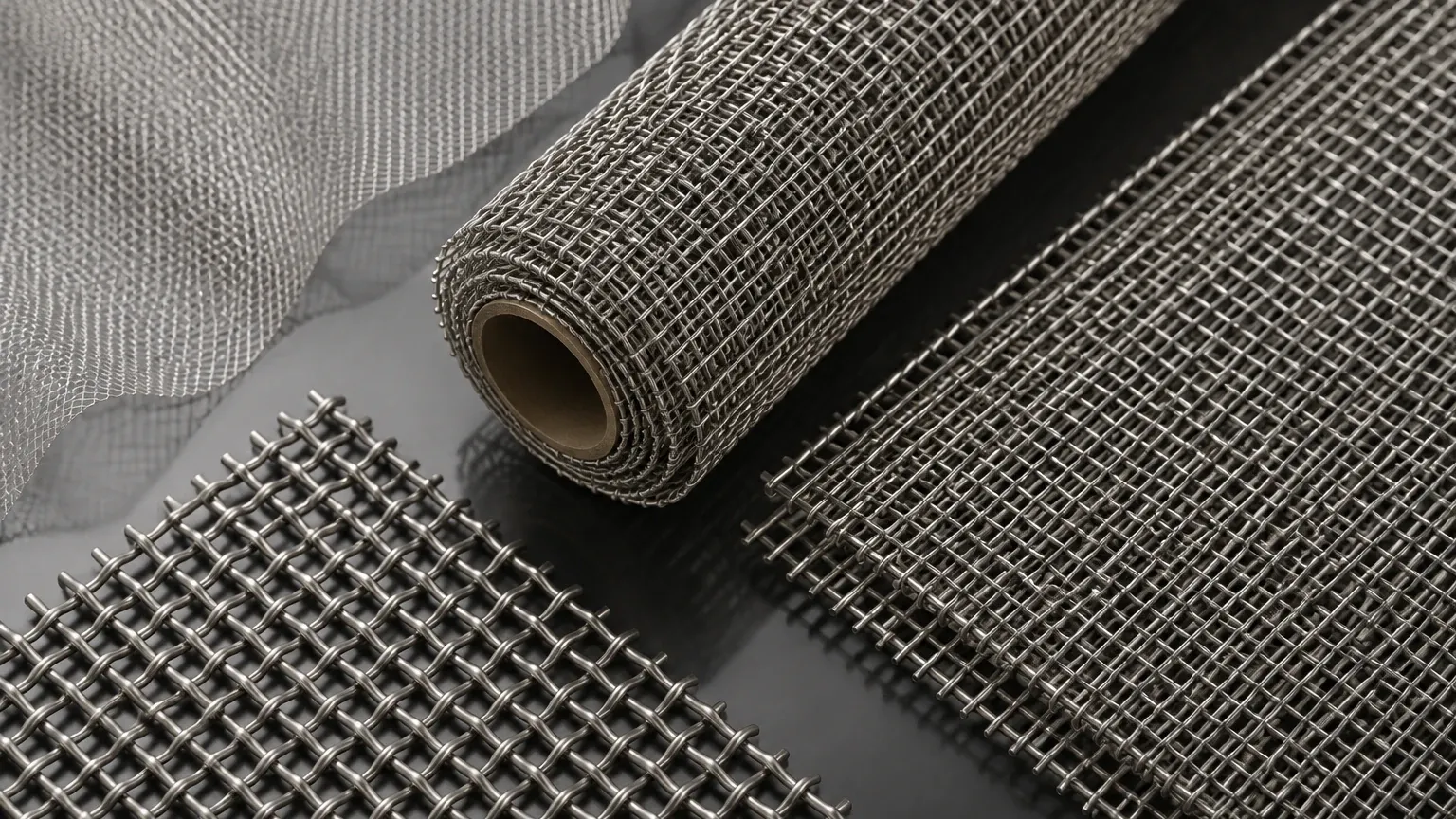
The primary advantage of the hybrid approach is the elimination of fraying at the edges and the prevention of mesh distortion. For technical teams, this means a more reliable Plain, twill and dutch woven wire mesh in SS304/316L — rolls, cut mesh and framed panels. Send mesh count or micron target for a technical quote. that can be integrated into complex assemblies without the risk of loose wires entering the downstream fluid path.
Key Engineering Benefits of Welded Structural Reinforcement
When evaluating filtration media for a project, engineers must look beyond the initial filtration efficiency. The following benefits highlight why welded woven structures are preferred in critical applications:
1. Elimination of Media Migration
In industries like pharmaceuticals or food processing, downstream contamination is a zero-tolerance issue. Unsecured woven mesh edges can shed tiny wire fragments if the mesh is cut and not properly finished. Welding the edges or the seams ensures that every wire is locked into the assembly, providing a "clean" filtration solution.
2. Enhanced Pressure Resistance
Filter cartridges often face high differential pressures (ΔP) as they accumulate contaminants. A welded woven structure can withstand higher collapse pressures because the weld points distribute the mechanical load more evenly across the support structure compared to a loose mesh wrap.
3. Dimensional Stability During Cleaning
Many industrial filters are designed to be cleaned and reused. Whether through ultrasonic cleaning, backwashing, or chemical dipping, the mesh undergoes physical stress. Welding ensures the pore geometry remains constant throughout multiple cleaning cycles, extending the service life of the component.
Critical Manufacturing Considerations: Welding Methods
The method used to weld woven wire mesh significantly impacts its corrosion resistance and mechanical strength. At Kaifil, advanced manufacturing capabilities allow for precise control over the heat-affected zone (HAZ) to maintain the integrity of the stainless steel.
* Resistance Spot Welding (RSW): Often used to secure mesh to perforated metal support cores. It provides a strong mechanical bond without the need for filler metals.
* TIG (Tungsten Inert Gas) Welding: Used for high-strength longitudinal seams in filter cartridges. It provides a clean, continuous weld that is essential for high-pressure hydraulic applications.
* Plasma and Laser Welding: These methods offer the highest precision with the smallest HAZ. This is critical when working with very fine mesh counts where excessive heat could melt the fine wires or reduce the corrosion resistance of the SS316L alloy.
* Ultrasonic Welding: Sometimes used for multi-layered fine mesh structures where traditional thermal welding might be too aggressive.
Selection Criteria for High-Performance Filtration Components
Choosing the right welded woven wire mesh configuration requires a balance between filtration fineness and mechanical robustness. Engineers should consider the following parameters:
Material Selection
Stainless steel 304 is the standard for general industrial use, offering good strength and cost-effectiveness. However, for chemical processing or marine environments, SS316L is required due to its molybdenum content, which provides superior resistance to pitting and crevice corrosion, especially at weld points.
Mesh Count and Wire Diameter
A higher mesh count (more wires per inch) provides finer filtration but results in thinner wires that are more sensitive to welding heat. Conversely, a lower mesh count with larger wire diameters offers greater structural strength. The "effective open area" must be calculated to ensure that the welding or support structure does not excessively restrict flow rates.
Weave Type
* Plain Weave: Best for high-flow, low-pressure applications.
* Dutch Weave: Provides superior strength and finer filtration (down to 5-10 microns), making it the ideal candidate for welded high-pressure filter elements.
Industrial Applications and Performance Expectations
Welded woven wire mesh components are utilized across sectors where failure is not an option.
* Chemical Processing: Used in strainers and baskets that must withstand corrosive fluids and high temperatures. The welded seams prevent the mesh from pulling away from the flange under heavy cake loads.
* Hydraulic Systems: High-pressure hydraulic filters use welded woven mesh to protect sensitive valves from particulate matter. The stability of the mesh ensures that the micron rating remains consistent even during pressure spikes.
* Food and Beverage: In dairy or beverage filtration, welded edges are a sanitary requirement to prevent bacterial growth in the crevices of frayed mesh and to ensure no metal fragments enter the product.
* Water Treatment: Large-scale intake screens use reinforced welded woven panels to withstand the force of water flow while excluding debris.
Technical Checklist for Purchasing and Specification
Before finalizing a purchase order for welded woven filtration components, engineering and purchasing teams should confirm the following technical details with the manufacturer:
1. Alloy Verification: Is the material certified SS304 or SS316L? For welded components, low-carbon "L" grades are preferred to prevent carbide precipitation during welding.
2. Weld Integrity: What testing methods are used to ensure weld strength? (e.g., bubble point testing for seam integrity or pull tests for spot welds).
3. Tolerances: What are the allowable deviations in diameter, length, and mesh alignment? Precision welding requires tight tolerances on the base woven material.
4. Customization Requirements: Does the application require a specific support structure (like perforated metal or expanded metal) to be welded to the mesh?
5. Environmental Factors: Will the component be exposed to chlorides, high temperatures, or cyclic loading? This determines the necessary weld depth and finishing processes.
By focusing on these technical boundaries, engineers can ensure that their filtration systems operate with maximum efficiency and minimal downtime. Kaifil’s expertise in custom stainless steel filtration allows for the development of high-performance welded woven wire mesh solutions tailored to the specific rigors of your industrial environment.
