


Where to Buy Woven Wire Mesh: A Technical Sourcing Guide for Industrial Applications
Selecting the right source for industrial-grade filtration components is a critical decision for engineers and procurement professionals. Woven wire mesh serves as the foundational element in countless filtration systems, ranging from simple strainers to complex, multi-layered high-pressure filter cartridges. Because the performance of a chemical reactor, a hydraulic system, or a pharmaceutical processing line depends on the precision of the mesh openings and the integrity of the material, knowing where to buy woven wire mesh requires more than just finding the lowest price.
In industrial environments, "off-the-shelf" solutions rarely suffice. Technical teams must evaluate suppliers based on material traceability, manufacturing tolerances, and the ability to provide customized configurations. This guide explores the essential criteria for sourcing Woven Wire Mesh and how to differentiate between high-volume distributors and specialized manufacturers.
Understanding the Sourcing Landscape
When determining where to buy woven wire mesh, the market generally splits into three categories: general hardware suppliers, industrial distributors, and specialized manufacturers. For B2B applications, the choice significantly impacts the long-term reliability of the equipment.
General Hardware and Retail Suppliers
While these outlets are accessible, they typically carry low-grade mesh with wide tolerances. They are unsuitable for industrial filtration where specific micron ratings or chemical resistance (such as SS316L) are required. They rarely provide Material Test Reports (MTRs) or technical data sheets.
Industrial Distributors
Distributors act as intermediaries, stocking standard rolls of common mesh counts. They are a viable option for rapid delivery of standard items. However, they often lack the engineering depth to assist with custom filtration challenges or OEM requirements. Furthermore, purchasing through a distributor adds a layer of cost and can complicate the communication of technical specifications.
Specialized Manufacturers (OEM Partners)
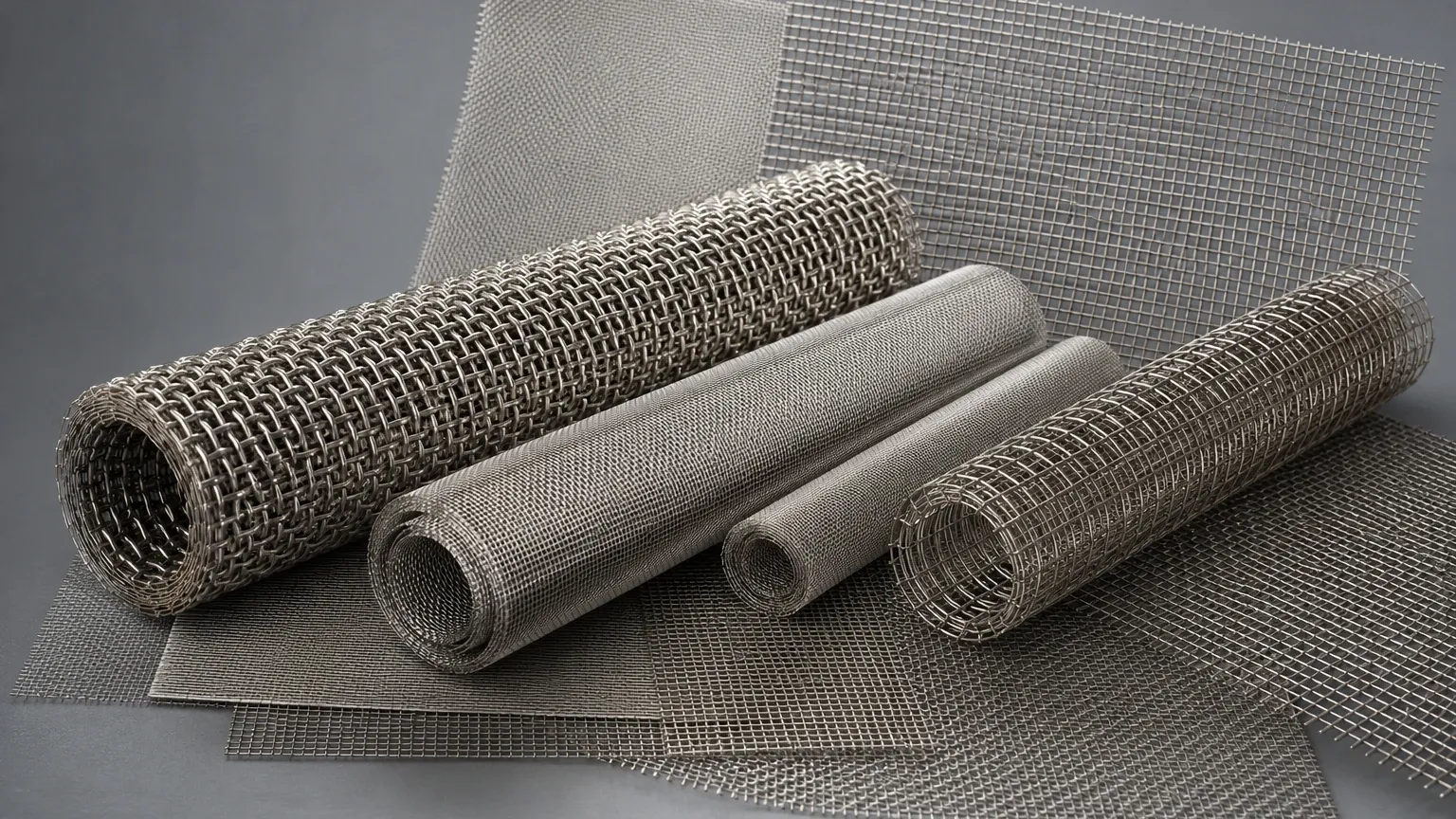
Manufacturers like Kaifil specialize in the precision weaving and fabrication of stainless steel filtration products. Buying directly from a manufacturer is often the most effective route for engineers who need Plain, twill and dutch woven wire mesh in SS304/316L — rolls, cut mesh and framed panels. Send mesh count or micron target for a technical quote. Direct sourcing ensures that the mesh is produced to exact specifications, with full traceability and the option for secondary operations like ultrasonic cleaning, precision cutting, or framing.
Key Technical Criteria for Evaluating Suppliers
Before finalizing a purchase agreement, technical teams should audit a supplier’s capabilities against the specific demands of their application. A failure in the mesh—whether through corrosion or mechanical fatigue—can lead to costly downtime or product contamination.
1. Material Integrity and Traceability
In the chemical and pharmaceutical sectors, the difference between Stainless Steel 304 and 316L is substantial. SS316L contains molybdenum, providing superior resistance to chlorides and pitting. A reputable supplier must provide certification that the wire used in the weaving process meets the specified alloy standards. When searching for where to buy woven wire mesh, always confirm that the supplier can provide MTRs upon request.
2. Weave Precision and Consistency
Filtration accuracy depends on the uniformity of the mesh openings. In a plain weave, the warp and shute wires cross over and under each other alternately. Any deviation in wire diameter or tension during the weaving process can result in irregular openings, allowing oversized particles to pass through. For fine filtration, suppliers should demonstrate their ability to produce Twill or Dutch weaves, which allow for higher mesh counts and greater mechanical strength.
3. Customization and Fabrication Capabilities
Industrial filters are rarely used as simple flat sheets. They are often formed into cylinders, pleated into cartridges, or welded into frames. A manufacturer that offers in-house fabrication provides a significant advantage. They can ensure that the mesh is not damaged during the cutting or welding process and that the final component maintains the required filtration area and structural integrity.
Sourcing for Specific Industry Requirements
The "best" place to buy woven wire mesh depends heavily on the industry. Each sector has unique regulatory and performance benchmarks that the supplier must be able to navigate.
Food and Beverage Processing
Filters used in food production must be made from non-toxic materials and be easy to clean to prevent bacterial growth. Suppliers should offer mesh that is free from weaving oils and residues. Stainless steel is the industry standard here due to its durability and ability to withstand Clean-in-Place (CIP) cycles.
Chemical and Petrochemical
These applications often involve high temperatures and corrosive fluids. Sourcing mesh for these environments requires a deep understanding of alloy compatibility. Engineers should look for suppliers who can provide specialized weaves like Reverse Dutch Weave, which offers high strength and excellent backwashing characteristics for continuous filtration processes.
Pharmaceuticals and Biotechnology
In these sectors, filtration accuracy is measured in microns. Suppliers must be able to verify the absolute and nominal micron ratings of their mesh. Precision-engineered woven wire mesh is essential for ensuring the purity of the final product and protecting downstream equipment from particulates.
How to Prepare a Request for Quote (RFQ)
To get an accurate quote when looking for where to buy woven wire mesh, engineers should provide a detailed set of specifications. This reduces the risk of receiving a product that does not meet the application’s needs. Your RFQ should include:
* Material: (e.g., SS304, SS316, SS316L, or specialized alloys).
* Mesh Count: The number of openings per linear inch in both directions.
* Wire Diameter: Specified in inches or millimeters. This affects both the opening size and the percentage of open area.
* Opening Size (Aperture): The clear distance between adjacent wires.
* Weave Type: Plain, Twill, Plain Dutch, or Twill Dutch.
* Dimensions: Roll width and length, or specific dimensions for cut pieces or framed panels.
* Quantity: Industrial manufacturers often have different pricing tiers based on volume.
The Hidden Costs of Low-Quality Mesh
When evaluating where to buy woven wire mesh, the initial purchase price is only one part of the total cost of ownership. Low-quality mesh often suffers from:
* Premature Blinding: Irregular openings can lead to uneven cake buildup, requiring more frequent cleaning or replacement.
* Mechanical Failure: Poorly tensioned wires can shift under pressure, changing the filtration rating or causing the mesh to tear.
* Corrosion: If the material is not true to its specification (e.g., using 304 where 316L was required), the mesh will fail rapidly in corrosive environments.
By choosing a manufacturer that prioritizes quality control and technical accuracy, companies can reduce maintenance costs and extend the service life of their filtration systems.
Why Choose a Specialized Manufacturer Like Kaifil?
Kaifil stands out in the market by bridging the gap between raw material production and high-precision engineering. As a professional manufacturer, Kaifil provides customized stainless steel filtration solutions that address the specific challenges of demanding industrial environments.
Whether you need standard rolls for general industrial use or precision-engineered components for hydraulic or pharmaceutical applications, Kaifil offers the technical expertise required to select the right mesh. Our capabilities include material selection guidance, filtration accuracy verification, and customized design services. By working directly with a manufacturer, you gain access to technical support that helps optimize filtration performance and ensures that the product you receive is exactly what your project requires.
Conclusion
Determining where to buy woven wire mesh is a process of balancing technical requirements with supplier reliability. For critical industrial applications, sourcing directly from a manufacturer with a proven track record in stainless steel filtration is the most effective way to ensure product quality and application success. By focusing on material traceability, weave precision, and customization capabilities, engineers can secure filtration components that deliver long-term value and consistent performance.
For those ready to move forward with a project, reviewing technical options is the next step. You can Review product options and application support to find the specific mesh count and weave type that aligns with your operational goals.
