


Woven Steel Mesh 80
In the landscape of industrial filtration and separation, the selection of the correct mesh count is a critical engineering decision that directly impacts system efficiency, product purity, and equipment longevity. Among the various specifications available, woven steel mesh 80 occupies a versatile middle ground, offering a balance between fine filtration and structural robustness. This guide provides a technical overview of 80 mesh specifications, material considerations, and application-specific selection criteria for engineers and procurement professionals.
Understanding the Geometry of Woven Steel Mesh 80
The term "80 mesh" refers to the number of openings per linear inch of the material. When discussing Woven Wire Mesh, understanding the relationship between mesh count, wire diameter, and aperture size is fundamental to predicting performance.
Mesh Count and Aperture Calculation
For a standard 80 mesh configuration, there are 80 wires and 80 openings in every 25.4mm (one inch) of the fabric. The aperture size—the clear distance between two adjacent wires—is determined by the wire diameter used during the weaving process.
A common configuration for industrial-grade woven steel mesh 80 involves a wire diameter of approximately 0.12mm to 0.13mm (0.0050 inches). Using the standard formula:
* Aperture (W) = (1 / Mesh Count) – Wire Diameter
* Aperture = (25.4mm / 80) – 0.12mm ≈ 0.1975mm (197.5 Microns)
This resulting micron rating of approximately 180 to 200 microns makes 80 mesh an ideal candidate for removing fine particulates, sand, and suspended solids from liquid streams, or for grading fine powders in dry processing.
Open Area Percentage
The open area percentage is a critical metric for calculating flow rates and pressure drops. It represents the ratio of the area of the openings to the total area of the mesh. For a standard 80 mesh with 0.12mm wire, the open area typically falls between 35% and 40%. A higher open area reduces the initial pressure drop across the filter but may compromise the mechanical strength of the mesh if the wire diameter is reduced too significantly.
Material Selection: SS304 vs. SS316L
While "woven steel mesh 80" can technically refer to various alloys, industrial applications almost exclusively demand stainless steel due to its corrosion resistance and thermal stability. Choosing between Grade 304 and Grade 316L is one of the most frequent decisions during the procurement phase.
Stainless Steel 304
SS304 is the standard "18-8" stainless steel. It provides excellent mechanical properties and good resistance to atmospheric corrosion and many organic and inorganic chemicals. It is widely used in food processing, architectural applications, and general industrial straining where high-chloride environments are not present.
Stainless Steel 316L
For more demanding environments, SS316L is the preferred choice. The addition of molybdenum (2-3%) significantly enhances resistance to pitting and crevice corrosion in chloride-rich environments, such as seawater or chemical processing plants. The "L" designation stands for low carbon, which improves weldability and reduces the risk of intergranular corrosion after welding—a vital consideration if the 80 mesh is to be fabricated into pleated cartridges or framed panels.
Engineering Performance: Flow Rates and Pressure Drop
When integrating woven steel mesh 80 into a filtration system, engineers must account for the fluid dynamics at the mesh interface. The performance of the mesh is governed by several factors:
1. Clean Pressure Drop: The initial resistance offered by the mesh to the fluid flow. This is a function of the fluid's viscosity, velocity, and the mesh's open area. 80 mesh provides relatively low resistance compared to finer Dutch weave meshes, making it suitable for high-volume gravity-fed or low-pressure pumped systems.
2. Dirt Holding Capacity: As particles are captured, the effective open area decreases, leading to an increase in differential pressure. Because 80 mesh is a surface filtration medium (unlike depth filters), it is prone to "blinding" if the particle size distribution of the contaminant is too close to the aperture size (approx. 180-200 microns).
3. Mechanical Stability: Under high-pressure conditions, the mesh must resist deformation. While 80 mesh is relatively fine, it maintains good structural integrity. However, in high-differential pressure applications, it is often supported by a coarser "backing mesh" or a perforated metal core to prevent bursting or bypass.
Application-Specific Selection for Industrial Filtration
The versatility of woven steel mesh 80 allows it to serve multiple roles across diverse industries. Identifying the specific intent of the filtration helps in refining the mesh specifications.
Chemical and Petrochemical Processing
In chemical plants, 80 mesh is frequently used for catalyst recovery or as a protective screen for sensitive instrumentation. Its ability to withstand aggressive solvents and high temperatures (up to 800°C for SS316 in non-oxidizing environments) makes it a reliable choice for harsh process streams.
Food and Beverage Industry
Compliance with hygiene standards is paramount in food production. Stainless steel 80 mesh is used for straining juices, oils, and syrups. The smooth surface of the woven wire allows for easy cleaning and sterilization, meeting FDA requirements for food contact surfaces. It is particularly effective at removing pulp or seeds while maintaining high throughput.
Hydraulic and Lubrication Systems
Protecting hydraulic pumps and valves from particulate contamination is essential for system reliability. 80 mesh is often employed in suction strainers to capture larger debris before it enters the pump. While it does not provide the sub-10-micron filtration required for high-pressure components, it serves as a critical first line of defense.
Water Treatment and Irrigation
In water treatment, 80 mesh screens are used to filter out sand, scale, and organic matter. This protects downstream membranes (like Reverse Osmosis units) or fine spray nozzles in irrigation systems from clogging. Its durability ensures a long service life even when exposed to fluctuating water quality.
Manufacturing Standards and Quality Control
To ensure consistent performance, woven steel mesh 80 should be manufactured according to international standards such as ISO 9044 (Industrial wire screens – Technical requirements and testing) or ASTM E2011. Quality control measures typically include:
* Mesh Count Verification: Using a counting glass to ensure exactly 80 openings per inch.
* Wire Diameter Measurement: Ensuring the wire thickness meets the specified tolerance, as even a 0.01mm deviation can significantly alter the aperture size and open area.
* Weave Consistency: Checking for defects such as broken wires, oil spots, or "shiners" (deformed wires) that could create bypass paths for contaminants.
* Material Certification: Providing Mill Test Reports (MTRs) to verify the chemical composition of the stainless steel alloy.
Common Risks and Failure Modes in 80 Mesh Systems
Engineers should be aware of potential issues that can arise during the operation of 80 mesh filtration components:
Blinding and Plugging
Blinding occurs when particles that are slightly larger than the aperture become wedged in the mesh, or when sticky, fibrous materials bridge across the openings. This leads to a rapid increase in pressure drop. If blinding is a recurring issue, engineers may need to consider a different weave type (such as a rectangular mesh) or implement automated backwashing systems.
Corrosion and Erosion
Even stainless steel can fail if the environment is not correctly matched to the alloy. Pitting corrosion in 304 mesh exposed to salt water is a common failure mode. Additionally, high-velocity streams containing abrasive particles can cause erosion-corrosion, thinning the wires over time and eventually leading to mesh failure.
Mechanical Fatigue
In applications with pulsating flows or mechanical vibrations, the wires in the mesh may experience fatigue. This often manifests as cracking near the edges of the filter frame or at the points where the mesh is welded to a support structure.
Procurement Checklist: What Engineers Must Confirm
Before placing an order for woven steel mesh 80, technical teams should confirm the following parameters to ensure the product meets the application requirements:
1. Exact Alloy Grade: Specify SS304, SS316, or SS316L based on the chemical environment.
2. Wire Diameter: Confirm if a standard (e.g., 0.12mm) or heavy-duty wire is required. This affects both the micron rating and the strength.
3. Weave Type: While 80 mesh is typically a plain weave, certain applications might benefit from a twill weave if a heavier wire is used.
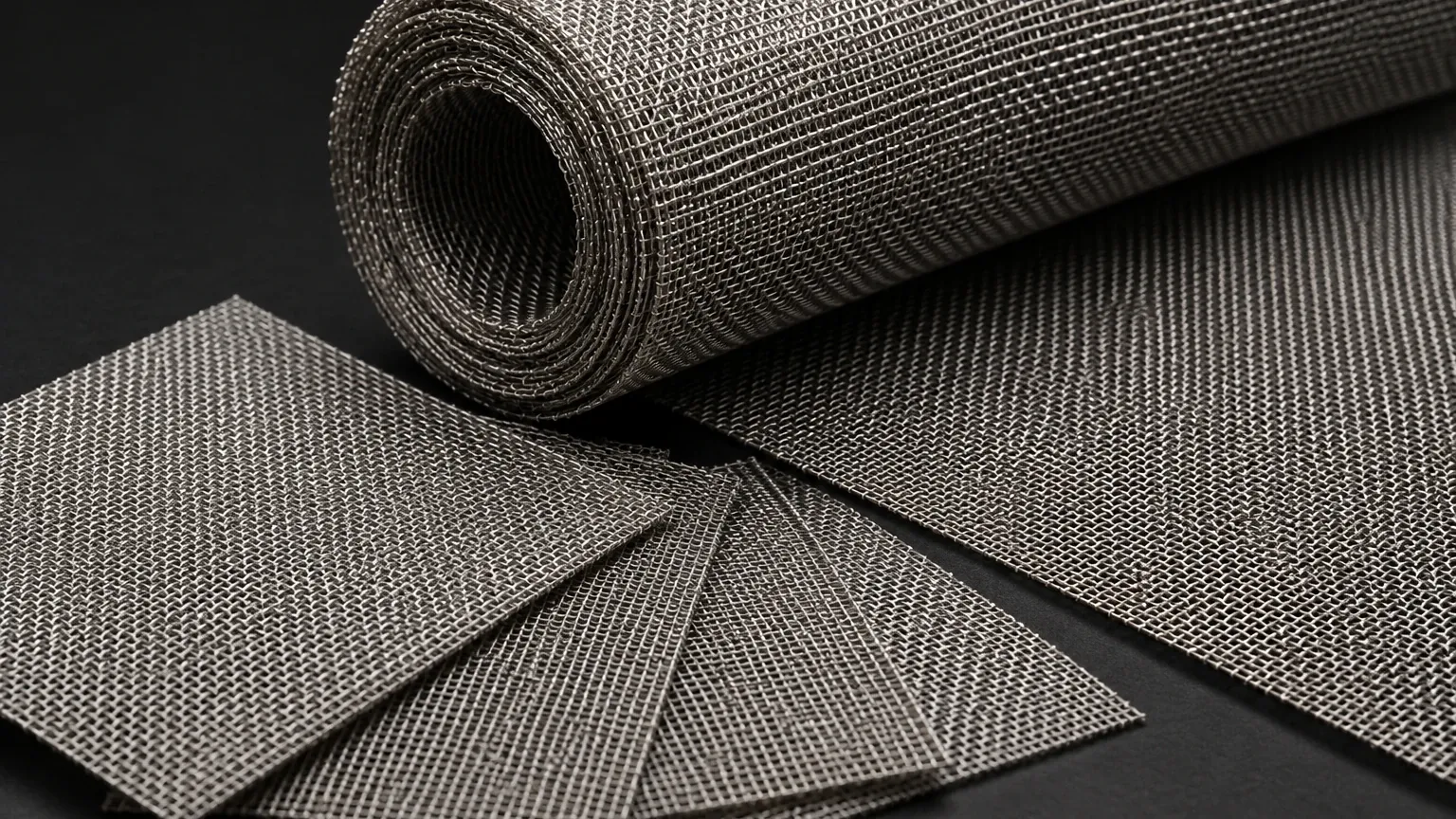
4. Dimensions and Form Factor: Specify whether the mesh is needed in bulk rolls, precision-cut circles, or fabricated into custom components like pleated cartridges or framed panels.
5. Quantity and Packaging: For large-scale projects, ensure the mesh is packaged to prevent deformation during transit, particularly for finer mesh counts like 80 mesh which can be susceptible to creasing.
Customization and OEM Solutions
Standard off-the-shelf mesh rolls are often just the starting point. Many industrial applications require customized filtration components. Kaifil specializes in transforming raw woven wire mesh into engineered solutions, including:
* Layered Sintered Mesh: Combining 80 mesh with other layers to create a high-strength, multi-stage filter medium.
* Custom Fabrications: Producing edge-guarded screens, cylindrical strainers, and complex pleated elements designed to fit specific housing geometries.
* Surface Treatments: Options such as passivating or electropolishing to further enhance corrosion resistance and cleanliness.
By focusing on technical precision and material integrity, manufacturers can provide 80 mesh solutions that optimize the balance between filtration accuracy and operational durability. For detailed specifications or to discuss a specific application, engineers are encouraged to Plain, twill and dutch woven wire mesh in SS304/316L — rolls, cut mesh and framed panels. Send mesh count or micron target for a technical quote.
