


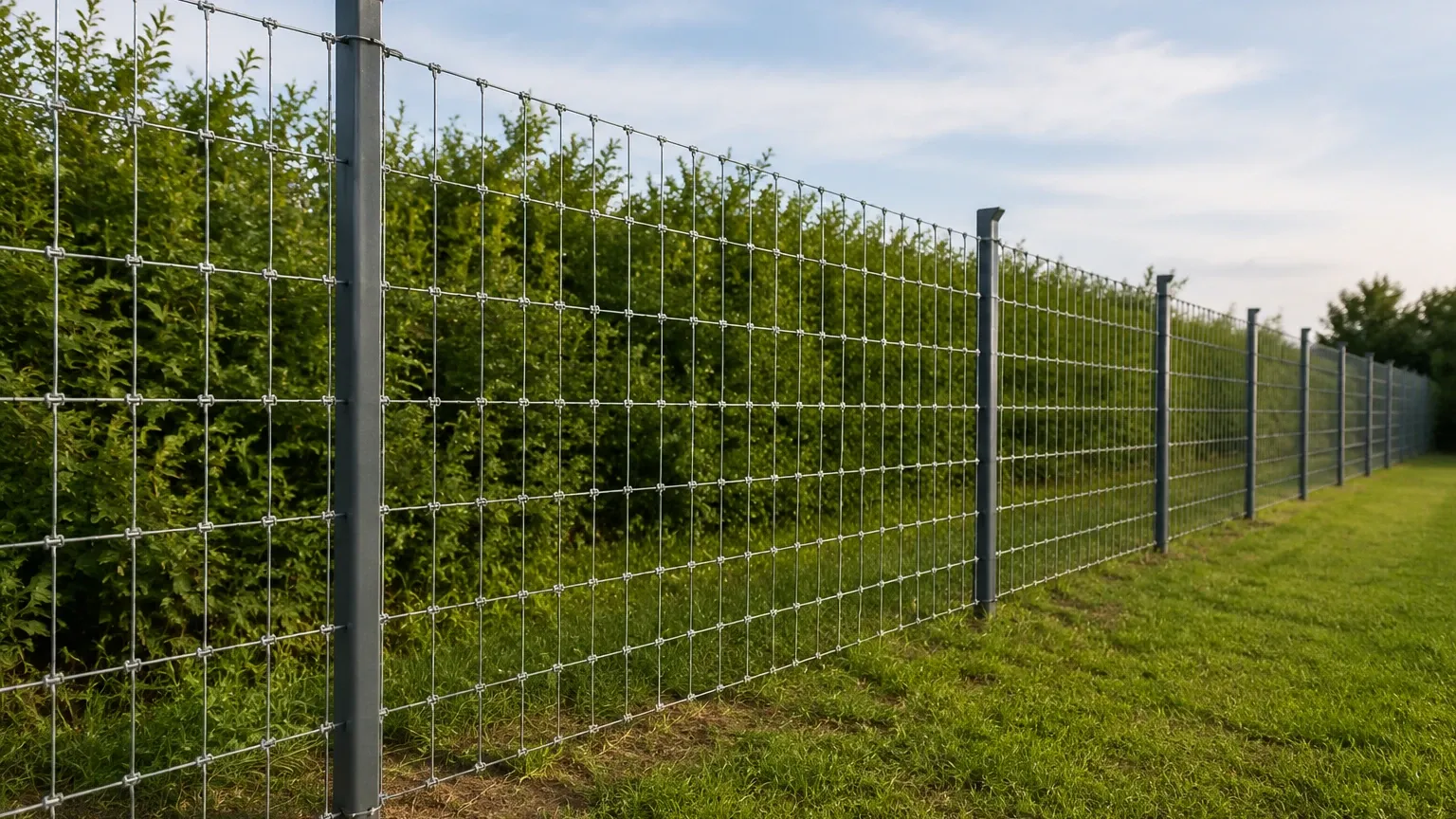
7ft Woven Wire Fence
In industrial and high-security environments, the selection of perimeter and partition materials is driven by structural integrity, material longevity, and specific environmental resistance. A 7ft woven wire fence or screen is a standard specification for exclusion, containment, and safety partitioning. While often discussed in agricultural contexts, the engineering requirements for industrial-grade applications—such as those found in chemical processing, food production, and pharmaceutical facilities—demand a more rigorous approach to material selection and weaving technology.
Selecting the right Woven Wire Mesh involves understanding the interplay between wire diameter, opening size, and the mechanical properties of the alloy used. This guide provides a technical overview of 7ft woven wire structures, focusing on engineering considerations, material performance, and industrial application standards.
1. Engineering Specifications for High-Vertical Mesh Structures
When designing a 7ft vertical barrier, engineers must account for both static and dynamic loads. Unlike shorter partitions, a 7ft span introduces significant leverage on support posts and requires precise tensioning to prevent sagging or "belly" formation in the mesh.
Wire Gauge and Tensile Strength
The diameter of the wire, often referred to by its gauge, directly correlates with the mesh's ability to withstand impact and environmental stress. For industrial 7ft woven wire fences, heavy-duty gauges (typically ranging from 9 AWG to 12 AWG) are preferred. High-tensile stainless steel wire provides the necessary yield strength to maintain a rigid surface over a large vertical area without requiring excessive intermediate horizontal bracing.
Mesh Opening and Visibility
The aperture, or the clear space between wires, determines the functionality of the fence. A smaller mesh opening (e.g., 1-inch or 2-inch squares) increases security and prevents the passage of smaller objects but increases the wind load on the structure. In industrial settings where ventilation or visibility is required—such as machine guarding or warehouse partitioning—engineers must balance the "open area" percentage with the required physical strength.
2. Material Selection: SS304 vs. SS316L in Industrial Environments
The longevity of a 7ft woven wire fence is primarily determined by its resistance to corrosion. While galvanized steel is common in general construction, industrial environments often necessitate stainless steel alloys to avoid frequent replacement cycles and contamination risks.
Grade 304 Stainless Steel
SS304 is the standard for most indoor industrial applications and mild outdoor environments. It offers excellent physical strength and good corrosion resistance. In food processing plants or dry chemical storage, SS304 provides a cost-effective solution for 7ft partitions that must withstand regular cleaning and high-pressure washdowns.
Grade 316L Stainless Steel
For facilities located near coastal areas, or those involving harsh chemical processing (such as chloride exposure), SS316L is the preferred specification. The addition of molybdenum in 316L significantly enhances its resistance to pitting and crevice corrosion. Furthermore, the "L" (low carbon) designation ensures that the mesh remains resistant to intergranular corrosion after welding, which is critical if the 7ft mesh panels are to be framed or integrated into larger structural assemblies.
3. Weaving Patterns and Structural Performance
The method by which the wires are interlaced—the weave pattern—influences the flexibility, stability, and aesthetic of the final 7ft installation. For large-scale vertical applications, three primary patterns are typically considered:
* Plain Weave: This is the most common pattern where each warp wire crosses alternately over and under each shute wire. It provides a consistent opening size and is ideal for standard security fencing and partitions.
* Interlock Crimp: In this design, both the warp and shute wires are crimped at the points of intersection. This provides extra stability and prevents the wires from shifting, which is essential for 7ft spans that may be subject to vibration or mechanical impact.
* Lock Crimp: Similar to interlock, but the crimp is deeper and more localized at the intersection. This creates a very rigid mesh with a flat surface on one side, often used in heavy-duty industrial screening where structural precision is paramount.
4. Installation and Tensioning for 7ft Vertical Spans
Installing a 7ft woven wire fence requires specialized techniques to ensure the mesh remains taut over its lifespan. Because woven mesh is more rigid than chain-link, the tensioning process must be uniform across the entire height.
Support Post Spacing
For a 7ft height, support posts should generally be spaced no further than 8 to 10 feet apart, depending on the wire gauge. In high-wind areas or high-impact zones, closer spacing or the use of reinforced "H-beam" posts may be necessary to prevent the mesh from acting as a sail and compromising the foundation.
Horizontal Bracing
To maintain the 7ft verticality, a top rail and a bottom tension wire are standard. However, for industrial partitions, a middle rail is often added at the 3.5ft mark. This prevents the mesh from bowing inward or outward and provides additional attachment points for the mesh, distributing the load more evenly across the support structure.
5. Maintenance and Total Cost of Ownership (TCO)
One of the primary advantages of utilizing high-quality stainless steel woven wire mesh for 7ft fencing is the reduction in long-term maintenance costs. While the initial capital expenditure (CAPEX) is higher than galvanized or plastic-coated alternatives, the TCO is often lower due to several factors:
* Elimination of Recoating: Stainless steel does not require painting or galvanizing touch-ups, which is a significant labor saving in large facilities.
* Durability in Cleaning: In pharmaceutical and food-grade environments, the ability to use aggressive sanitizers without degrading the fence material ensures compliance with hygiene standards without premature structural failure.
* Impact Resistance: High-tensile woven wire is less prone to permanent deformation compared to lighter materials, reducing the frequency of panel replacements in busy warehouse or factory environments.
6. Customization and OEM Solutions for Specialized Applications
Not every 7ft woven wire fence is a standard perimeter barrier. Many industrial projects require customized solutions that integrate filtration or specific screening properties into the fence design.
Framed Mesh Panels
For modularity, many engineers opt for pre-fabricated framed panels. These 7ft panels can be bolted into place, allowing for easy reconfiguration of factory floors or cleanroom partitions. Kaifil specializes in manufacturing these custom components, ensuring that the mesh tension and frame weld integrity meet industrial tolerances.
Integrated Filtration and Screening
In some specialized cooling tower applications or wastewater treatment perimeters, the 7ft fence serves a dual purpose: security and debris filtration. By selecting a specific mesh count and wire diameter, the fence can act as a primary screen to prevent large contaminants from entering sensitive equipment zones while maintaining the necessary airflow and security height.
7. Key Considerations Before Purchasing
Before finalizing a specification for a 7ft woven wire fence, procurement teams and engineers should confirm the following technical details:
1. Environment: Is there exposure to chlorides, acids, or high humidity? (Determines SS304 vs SS316L).
2. Impact Load: Will the fence be near forklift traffic or heavy machinery? (Determines wire gauge and weave type).
3. Regulatory Compliance: Does the material need to be FDA-compliant or meet specific fire safety standards for indoor use?
4. Aperture Requirements: What is the maximum allowable opening size for security or containment purposes?
By addressing these factors, facilities can ensure that their 7ft woven wire installation provides a reliable, long-term solution that meets the rigorous demands of the industrial sector. For technical consultations on mesh selection, wire diameters, or custom fabrication for large-scale projects, reviewing established engineering standards and material data sheets is a critical step in the design process.
