


Woven Wire Deer Fence: Engineering and Material Selection for Industrial Perimeter Protection
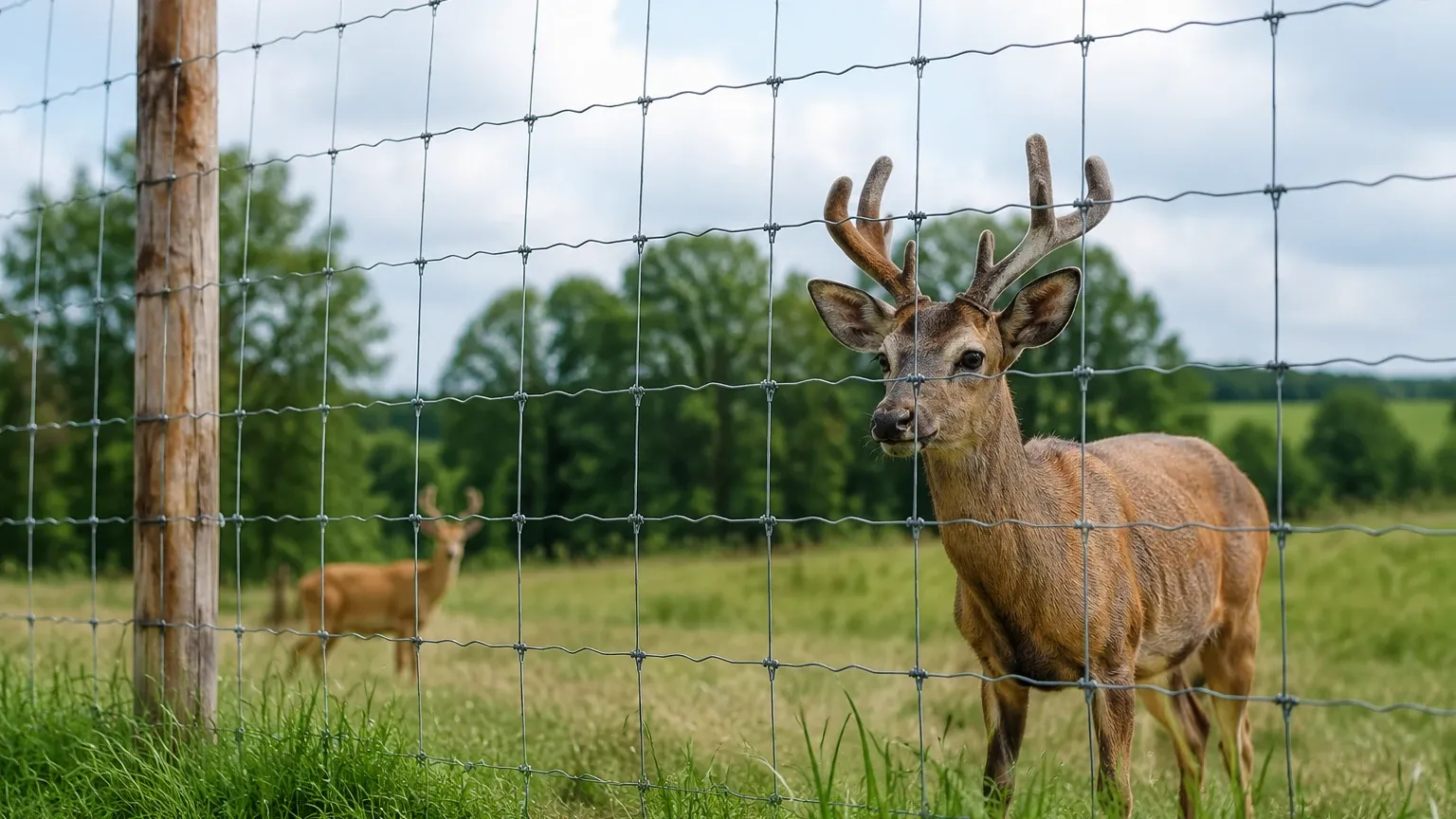
In industrial and large-scale commercial environments, perimeter security often requires a balance between physical strength, visibility, and environmental resistance. When protecting facilities, research sites, or high-value agricultural assets from large wildlife, the choice of barrier material is critical. A woven wire deer fence constructed from high-grade industrial materials provides a superior solution compared to standard welded or lightweight plastic alternatives.
Understanding the technical nuances of Woven Wire Mesh is essential for engineers and procurement teams who must specify materials that can withstand both physical impact and long-term exposure to the elements. This guide examines the engineering principles, material properties, and selection criteria for industrial-grade woven wire fencing.
The Engineering Behind a Woven Wire Deer Fence
The term "woven" refers to the manufacturing process where individual wires are interlaced over and under one another on a precision loom. Unlike welded wire mesh, where the intersections are fused via resistance welding, a woven wire deer fence relies on the mechanical tension and friction between the wires to maintain its structure.
This structural design offers several engineering advantages:
1. Flexibility and Impact Absorption: Because the wires are not rigidly fixed at every junction, the mesh can absorb and dissipate the kinetic energy of an impact—such as a deer running into the fence—without the welds snapping or the material deforming permanently.
2. High Tensile Strength: Industrial woven mesh typically utilizes high-tensile stainless steel or galvanized wire, which allows the fence to remain taut over long spans between posts.
3. Uniformity: Precision weaving ensures consistent mesh openings, which is vital for maintaining a predictable physical barrier and aesthetic uniformity across large installations.
Material Selection: Why Stainless Steel Woven Wire Mesh?
For industrial applications, the material composition of the mesh determines the total cost of ownership (TCO). While carbon steel or galvanized options are common in residential settings, industrial facilities often specify stainless steel for its superior performance characteristics.
Grade 304 Stainless Steel
SS304 is the standard industrial grade for most outdoor environments. It contains approximately 18% chromium and 8% nickel, providing excellent resistance to oxidation and atmospheric corrosion. In the context of a woven wire deer fence, SS304 offers the necessary strength to resist animal breaches while remaining cost-effective for large-scale perimeters.
Grade 316 Stainless Steel
In coastal areas or facilities exposed to chemical runoff (such as de-icing salts or industrial pollutants), SS316 is the preferred choice. The addition of molybdenum (2-3%) significantly enhances resistance to chloride-induced pitting and crevice corrosion. When longevity is the primary requirement, Plain, twill and dutch woven wire mesh in SS304/316L — rolls, cut mesh and framed panels. Send mesh count or micron target for a technical quote. provides the highest level of durability available in the market.
Comparing Woven vs. Welded Structures for Perimeter Security
When evaluating options for a deer fence, engineers often compare woven wire mesh to welded wire mesh. While welded mesh is often cheaper and easier to manufacture in light gauges, it has significant drawbacks in high-stress applications.
* Stress Concentration: In welded mesh, the heat-affected zone around the weld can become a point of failure under stress or vibration. Over time, environmental stressors can cause these welds to pop, compromising the entire panel.
* Corrosion Resistance: In galvanized-before-welded (GBW) products, the welding process burns off the protective zinc coating at the intersections, leaving them vulnerable to rust. Woven wire mesh avoids this issue entirely, as the wires are woven after coating (or are made of inherently corrosion-resistant alloys like stainless steel).
* Adaptability to Terrain: Woven wire deer fences are generally more "forgiving" on uneven terrain. The mechanical nature of the weave allows for slight adjustments in tension and alignment that rigid welded panels cannot accommodate.
Technical Specifications: Wire Gauge and Mesh Opening
Selecting the correct specifications for a woven wire deer fence requires balancing the need for a physical barrier with visibility and weight considerations.
Wire Gauge (Diameter)
Industrial fencing typically uses wire diameters ranging from 1.0mm to 3.0mm. A thicker wire increases the breaking strength and the overall weight of the fence. For deer exclusion, the wire must be heavy enough to resist the force of a full-grown animal (which can weigh upwards of 100-150kg) without snapping.
Mesh Opening Size
The "opening size" or "aperture" refers to the clear distance between adjacent wires. For a deer fence, the openings are usually larger than those found in filtration mesh. Common industrial specifications for perimeter mesh might include 50mm x 50mm or 100mm x 100mm openings. However, if the fence must also exclude smaller animals or serve a dual purpose as a safety barrier, a tighter mesh count may be required.
Environmental Resistance and Longevity in Industrial Applications
Industrial sites often face harsher conditions than residential or agricultural lands. Factors such as UV exposure, extreme temperature fluctuations, and chemical exposure must be considered.
1. UV Stability: Unlike plastic or polypropylene deer fencing, which degrades under ultraviolet light and becomes brittle within a few years, stainless steel woven wire mesh is completely UV-stable. It will not lose its structural integrity regardless of sun exposure.
2. Thermal Expansion: Metal mesh has a predictable coefficient of thermal expansion. In large-scale installations, engineers must account for the expansion and contraction of the wire to prevent sagging in summer or excessive tension in winter.
3. Chemical Inertness: In areas near chemical processing plants or mining operations, the fence may be exposed to acidic or alkaline environments. Stainless steel's passive oxide layer provides a robust defense against these corrosive agents.
Installation Considerations for High-Tensile Mesh
Installing an industrial woven wire deer fence requires specialized techniques to ensure the material performs as engineered.
Tensioning
Because woven mesh is flexible, it must be properly tensioned during installation. This is usually achieved using a stretcher bar and a mechanical winch. Proper tensioning ensures that the mesh remains flat and does not sag, which would otherwise allow animals to jump over or crawl under the barrier.
Post Spacing and Bracing
For a 2.4-meter (8-foot) high deer fence, post spacing is typically between 3 and 5 meters. Corner posts and end posts must be heavily braced to withstand the constant inward pull of the tensioned mesh. In industrial settings, steel I-beams or heavy-walled pipe posts are often used instead of timber.
Securing the Mesh
The mesh is secured to the posts using heavy-duty clips, staples, or tie wires. In high-security or high-load areas, the mesh may be sandwiched between a flat bar and the post and bolted through to provide a continuous connection point that prevents the mesh from being pulled away from the support structure.
Total Cost of Ownership (TCO) and Maintenance
While the initial capital expenditure for a stainless steel woven wire deer fence is higher than that of galvanized or plastic alternatives, the TCO is significantly lower over a 20-to-30-year horizon.
* Maintenance Requirements: Stainless steel mesh requires virtually no maintenance beyond occasional inspections for mechanical damage caused by heavy machinery or extreme weather events. It does not require painting, re-coating, or chemical treatments.
* Replacement Cycles: Plastic fences often require replacement every 5-7 years due to UV degradation and animal damage. Galvanized fences may last 10-15 years before rust compromises their strength. A high-quality stainless steel woven mesh installation can easily exceed a 30-year service life in most industrial environments.
Conclusion: Selecting the Right Solution
When specifying a woven wire deer fence for an industrial project, engineers must prioritize material quality and structural integrity. The use of Woven Wire Mesh provides a durable, high-strength, and low-maintenance barrier that protects assets while withstanding the rigors of industrial environments. By selecting the appropriate stainless steel grade and wire specifications, procurement teams can ensure a long-lasting solution that meets both safety and budgetary requirements.
For projects requiring specific filtration or precision mesh components alongside perimeter solutions, consulting with a manufacturer that understands the nuances of wire diameter, weave patterns, and metallurgical properties is essential. Whether the application is a large-scale perimeter or a specialized industrial component, the technical advantages of woven wire remain the industry standard for reliability.
