


Woven Wire Dog Fence
In industrial, commercial, and high-end residential applications, the selection of fencing material is a critical engineering decision that impacts security, durability, and long-term maintenance costs. While standard hardware-grade fencing may suffice for temporary use, permanent containment structures—often referred to as a woven wire dog fence in specialized facility management—require a deeper understanding of material science and mechanical properties.
For engineers and procurement professionals, specifying Woven Wire Mesh involves evaluating wire diameter, alloy composition, and weave patterns to ensure the barrier can withstand physical impact, environmental stressors, and the rigors of long-term exposure. This guide examines the technical parameters of industrial woven wire used in containment and security applications.
Understanding the Construction of Woven Wire Mesh
Woven wire mesh is manufactured by weaving individual wires over and under one another in a precise, repeatable pattern. Unlike welded wire mesh, where wires are fused at intersection points, woven mesh relies on the mechanical interlocking of the wires to maintain structural integrity. This construction method provides a degree of flexibility and high tensile strength, making it ideal for containment applications where the mesh must absorb impact without fracturing.
Weave Types and Their Impact on Performance
In the context of a woven wire dog fence or security barrier, the weave type dictates the mesh's stability and surface texture:
* Plain Weave: The most common industrial weave, where each warp wire crosses alternately over and under each shute wire. It provides a consistent aperture size and is the standard for most containment needs.
* Twill Weave: Each warp and shute wire passes over two and under two successive wires. This is typically used for heavier wire diameters that are too stiff for plain weaving, allowing for a robust barrier in high-stress environments.
* Lock Crimp: Often used in heavier architectural and industrial fencing, the wires are pre-crimped at the intersection points to "lock" them in place, preventing wire movement and ensuring aperture consistency under pressure.
Material Selection: Stainless Steel vs. Carbon Steel
The primary driver of the total cost of ownership (TCO) for a woven wire dog fence is the material grade. While galvanized carbon steel is a common entry-level choice, industrial applications frequently demand stainless steel for its superior corrosion resistance and mechanical longevity.
Stainless Steel 304 (SS304)
SS304 is the industry standard for outdoor containment. It contains approximately 18% chromium and 8% nickel, providing excellent resistance to oxidation and corrosion from rain and humidity. For most terrestrial fencing applications, SS304 offers the best balance between performance and cost.
Stainless Steel 316 (SS316L)
In coastal environments or facilities where harsh cleaning chemicals are used (such as veterinary clinics or pharmaceutical research labs), SS316 is the preferred specification. The addition of molybdenum (2-3%) significantly enhances resistance to chloride-induced pitting and crevice corrosion. While the initial investment is higher, the extended service life in corrosive environments makes it the more economical choice over a 10-to-15-year horizon.
Engineering Specifications for Containment Barriers
When designing or purchasing a woven wire dog fence for an industrial or high-security facility, three technical specifications must be confirmed: wire diameter, mesh count (or aperture size), and open area percentage.
Wire Diameter (Gauge)
The wire diameter directly correlates with the mesh's breaking strength and rigidity. For animal containment, a heavier gauge is required to prevent the mesh from deforming if an animal jumps against it. Industrial specifications typically range from 0.8mm to 3.0mm depending on the required level of security. Thicker wires provide greater resistance to cutting and physical force but increase the weight and cost of the material.
Aperture Size and Security
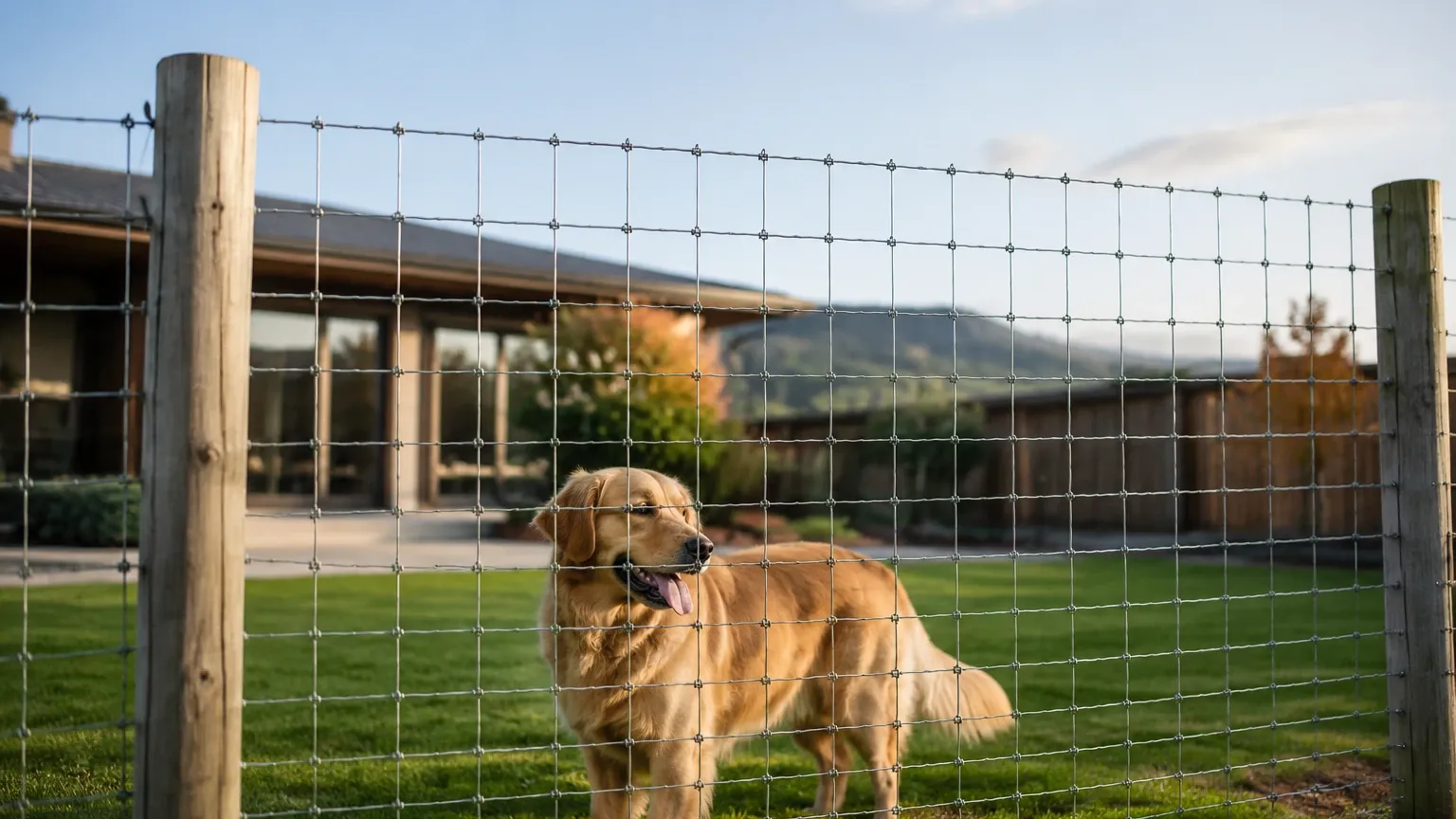
The aperture, or the clear opening between wires, must be sized according to the specific containment goal. In a woven wire dog fence, the opening must be small enough to prevent paws or muzzles from becoming trapped, yet large enough to maintain visibility and airflow. A common industrial specification for high-security animal containment is a 1-inch to 2-inch square opening, which balances structural strength with aesthetic clarity.
Open Area Percentage
The open area is the ratio of the total area of the openings to the total area of the mesh. This is a critical consideration for HVAC systems and airflow in indoor kennels or containment rooms. A higher open area percentage allows for better ventilation but may compromise the overall strength of the panel if the wire diameter is too thin.
Comparing Woven Wire Mesh to Welded Alternatives
Engineers often debate between woven and welded wire for fencing applications. While welded wire mesh is often cheaper and easier to cut, it has several technical disadvantages in high-performance containment:
1. Stress Concentrations: Welded joints are points of concentrated stress. If an animal repeatedly impacts a welded fence, the welds can fatigue and snap. Woven wire distributes the load across the entire length of the wire.
2. Corrosion Vulnerability: In galvanized welded mesh, the welding process can sometimes damage the protective coating at the intersections, leading to premature rusting. Woven stainless steel mesh maintains its protective oxide layer across the entire surface.
3. Flexibility: Woven mesh has a natural "give" that allows it to absorb energy. This makes it a safer option for animal containment, as it reduces the risk of injury upon impact compared to a rigid welded surface.
Installation and Structural Integration
The performance of a woven wire dog fence is only as good as its installation. Because woven mesh is more flexible than welded panels, it requires proper tensioning or secure framing to prevent sagging.
Framed Panels vs. Roll Installation
For industrial facilities, framed panels are often the superior choice. The mesh is cut to size and welded or bolted into a perimeter frame (typically angle iron or tube steel). This provides a clean, professional appearance and ensures the mesh remains taut. For larger perimeter fencing, the mesh may be installed in rolls and secured to posts using tension bars and bands.
Fastening Systems
When securing stainless steel mesh, it is vital to use stainless steel fasteners. Mixing metals (e.g., using galvanized bolts on a stainless mesh) can lead to galvanic corrosion, where the less noble metal corrodes at an accelerated rate, eventually compromising the structural integrity of the fence.
Total Cost Considerations and Procurement
When evaluating quotes for a woven wire dog fence, procurement teams should look beyond the price per square foot. A comprehensive technical evaluation includes:
* Longevity: How many years will the material last before requiring replacement? Stainless steel often outlasts galvanized alternatives by a factor of three or four.
* Maintenance: Does the material require painting or rust-inhibiting treatments? Stainless steel is virtually maintenance-free once installed.
* Customization: Can the manufacturer provide custom roll widths or specific wire diameters to optimize the design and reduce waste during installation?
For specialized industrial filtration and containment needs, Kaifil provides high-precision Woven Wire Mesh solutions. By selecting the correct alloy and mesh configuration, engineers can ensure that their containment systems provide the necessary security and durability for demanding environments.
Conclusion
Specifying a woven wire dog fence for professional or industrial use requires a move away from consumer-grade products toward engineered metal solutions. By focusing on material grade (SS304/SS316), wire diameter, and the mechanical advantages of the woven structure, facility managers and engineers can implement containment systems that are both high-performing and cost-effective over their entire lifecycle. Whether the priority is corrosion resistance in a coastal facility or impact durability in a high-traffic kennel, industrial-grade woven wire mesh remains the benchmark for reliable containment.
