


Engineering Guide to Industrial Woven Wire Mesh: 100 Ft Roll Specifications and Applications
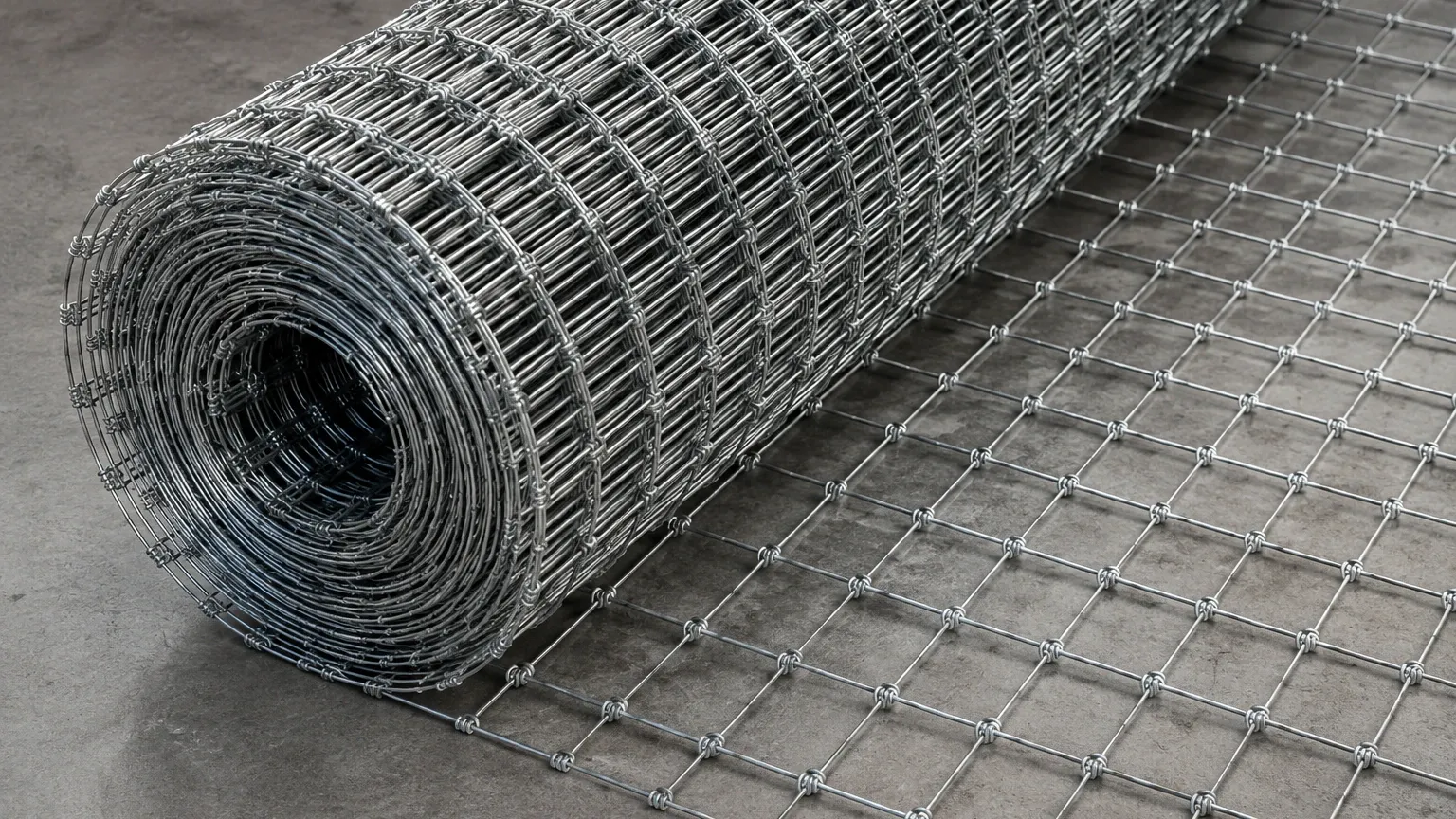
In industrial procurement and facility engineering, the selection of perimeter materials and protective barriers requires a rigorous evaluation of material science and structural integrity. While the term "woven wire fence 100 ft" often appears in general construction contexts, for engineers and technical purchasing teams in the chemical, pharmaceutical, and food processing sectors, it represents a specific unit of high-performance stainless steel Woven Wire Mesh.
Standardizing on 100-foot rolls allows for efficient planning of large-scale industrial partitions, machine guards, and high-durability security fencing. However, the performance of these installations depends heavily on the mesh count, wire diameter, and alloy composition. This guide examines the technical parameters that define high-quality woven wire solutions and provides the engineering context necessary for informed selection.
Understanding the Fundamentals of Woven Wire Mesh in Industrial Settings
Woven wire mesh is manufactured by weaving individual metallic wires over and under one another in a precise geometric pattern. Unlike welded wire, where the intersections are fused via heat, woven mesh relies on the mechanical interlocking of the wires. This configuration provides superior flexibility and resistance to vibration-induced fatigue, making it an ideal choice for industrial environments subject to mechanical stress or thermal cycling.
When specifying a woven wire fence 100 ft roll for industrial use, engineers must look beyond the linear length. The structural performance is dictated by the "mesh count"—the number of openings per linear inch—and the wire diameter. In heavy-duty fencing and guarding applications, a lower mesh count with a larger wire diameter is typically preferred to maximize impact resistance and structural rigidity.
The Role of Weave Patterns
For most industrial fencing and partitioning applications, the Plain Weave is the standard. In this pattern, each warp wire passes alternately over and under each shute wire. It offers the highest level of transparency and airflow while maintaining a consistent aperture. For specialized applications requiring higher density or finer filtration capabilities within a protective barrier, Twill Weave or Dutch Weave patterns may be utilized, though these are more common in fluid filtration than in perimeter fencing.
Material Selection for Long-Term Durability: SS304 vs. SS316L
The environment in which the 100-foot woven wire installation will reside is the primary factor in material selection. Industrial facilities often expose materials to corrosive cleaning agents, high humidity, or chemical vapors.
Stainless Steel 304 (SS304)
SS304 is the most common grade for industrial woven wire mesh. It provides excellent corrosion resistance in most atmospheric conditions and is highly cost-effective for indoor partitions, machine guarding, and general-purpose industrial fencing. It maintains its structural integrity across a wide temperature range, making it suitable for most manufacturing environments.
Stainless Steel 316L (SS316L)
For facilities dealing with chlorides, marine environments, or aggressive chemical processing, SS316L is the mandatory choice. The addition of molybdenum enhances its resistance to pitting and crevice corrosion. In pharmaceutical and food-grade applications where frequent wash-downs with caustic chemicals are required, SS316L ensures that the woven wire fence 100 ft installation does not succumb to surface degradation or structural failure over time.
Technical Specifications for 100 Ft Woven Wire Installations
When requesting a quote for industrial-grade mesh, technical professionals should provide specific parameters to ensure the product meets the application's load-bearing and environmental requirements.
1. Wire Gauge (Diameter): Measured in inches or millimeters, the wire diameter directly correlates with the tensile strength of the fence. Heavier gauges are required for security and high-impact areas.
2. Aperture (Opening Size): This is the clear distance between two adjacent wires. Engineers must calculate the required aperture based on the size of objects that need to be contained or excluded (e.g., finger-safe guarding for machinery).
3. Open Area Percentage: This calculation is vital for applications requiring airflow or visibility. A higher open area reduces wind load on outdoor 100-foot fence runs but may decrease the overall strength of the mesh.
4. Edge Treatment: For 100-foot rolls, the edges can be supplied as "raw" (cut) or "selvaged" (finished). A selvaged edge prevents fraying and is often preferred for safety in high-traffic industrial zones.
For precise project requirements, engineers can Review product options and application support to determine the optimal balance between mesh density and wire thickness.
Industrial Applications: Beyond Simple Fencing
While the term "fence" implies a perimeter barrier, the application of woven wire fence 100 ft rolls in industrial contexts is far more diverse.
Machine Guarding and Safety Enclosures
In automated manufacturing lines, woven wire mesh is used to create safety cells. The mesh allows operators to monitor equipment visually while providing a physical barrier against moving parts or ejected debris. The 100-foot roll format allows for continuous runs around large assembly lines, minimizing the number of seams and potential failure points.
Cleanroom and Laboratory Partitioning
Stainless steel woven wire is non-shedding and easy to decontaminate, making it ideal for partitioning sensitive areas in pharmaceutical and biotech facilities. Unlike plastic or coated barriers, stainless steel mesh does not outgas and can withstand high-temperature sterilization processes.
Industrial Storage and Security
High-value inventory in warehouses often requires secure, ventilated storage. Woven wire mesh panels provide security against theft while allowing for the free movement of air and the effective operation of fire suppression (sprinkler) systems, which can be obstructed by solid walls.
Key Engineering Considerations for Large-Scale Mesh Deployment
Installing a woven wire fence 100 ft run requires careful consideration of tensioning and support structures. Unlike shorter segments, a 100-foot span is subject to cumulative thermal expansion and potential sagging if not properly supported.
Tensioning and Framework
For industrial applications, the mesh is typically secured to a structural frame (often angle iron or tubular steel). In long runs, tensioning hardware—such as turnbuckles or tension bars—must be used to keep the mesh taut. This prevents the mesh from vibrating or bowing under pressure, which is critical for maintaining safety clearances in machine guarding.
Support Spacing
As a general engineering rule, vertical supports should be placed every 4 to 8 feet, depending on the height of the fence and the gauge of the wire. For high-impact zones, closer spacing is required to ensure that the mesh can distribute the force of an impact across multiple support points without permanent deformation.
Maintenance and Lifecycle of Stainless Steel Woven Wire
One of the primary advantages of investing in high-quality stainless steel Woven Wire Mesh is the low total cost of ownership (TCO). Unlike galvanized or PVC-coated fencing, stainless steel does not require painting or frequent coating repairs.
* Cleaning: In food and pharmaceutical environments, the mesh should be cleaned using pressurized water or compatible chemical cleaners. The woven structure allows for thorough drainage, reducing the risk of bacterial growth in crevices.
* Inspection: Periodic inspections should focus on the attachment points and tensioning hardware. In high-vibration environments, check for signs of wire fatigue or abrasion at the contact points with the frame.
* Repair: If a section of a 100-foot run is damaged, stainless steel mesh can often be patched with matching mesh segments or replaced in sections, provided the structural frame remains intact.
Procurement and Customization Options
For technical purchasing teams, sourcing a woven wire fence 100 ft roll involves more than selecting a part number. Customization is often required to meet specific safety standards or environmental conditions.
Kaifil specializes in providing tailored filtration and mesh solutions, offering Plain, twill and dutch woven wire mesh in SS304/316L — rolls, cut mesh and framed panels. Send mesh count or micron target for a technical quote. This level of customization ensures that the mesh provided meets the exact mechanical and chemical requirements of the project, whether it is for a standard perimeter fence or a complex industrial enclosure.
Conclusion
Selecting the right woven wire fence 100 ft solution for industrial applications requires a deep understanding of material properties, weave types, and structural requirements. By prioritizing high-grade stainless steel alloys and precise technical specifications, engineers can ensure that their installations provide long-term safety, security, and durability. Whether for machine guarding, cleanroom partitioning, or facility security, the use of professional-grade woven wire mesh remains the gold standard for demanding industrial environments.
