


Woven Wire Mesh 10mm
In industrial filtration and material processing, selecting the correct aperture size is fundamental to system efficiency and equipment longevity. Woven wire mesh 10mm specifications represent a critical threshold in coarse filtration, protective screening, and structural reinforcement. While finer meshes are often the focus of laboratory-grade filtration, the 10mm aperture serves as a workhorse in heavy-duty industrial environments where durability and high flow rates are paramount.
As a professional manufacturer, Kaifil specializes in custom stainless steel filtration solutions that bridge the gap between standard specifications and site-specific engineering requirements. Understanding the technical nuances of 10mm woven wire mesh—from material chemistry to mechanical tolerances—is essential for engineers and procurement teams tasked with optimizing industrial processes.
Understanding the 10mm Specification: Aperture vs. Mesh Count
When discussing woven wire mesh 10mm, it is vital to distinguish between the aperture (the clear opening between wires) and the mesh count (the number of openings per linear inch). In the context of a 10mm specification, engineers are typically referring to a 10mm clear opening.
At this scale, the mesh is relatively coarse. The relationship between the aperture ($w$), the wire diameter ($d$), and the mesh count ($n$) is defined by the formula:
$$n = \frac{25.4}{w + d}$$
For a 10mm aperture, the wire diameter must be substantial enough to maintain structural integrity under the mechanical loads common in coarse screening. Typically, wire diameters for a 10mm opening range from 1.5mm to 3.0mm, depending on the required open area and the pressure the mesh must withstand. Choosing the right balance between wire thickness and aperture size determines the "open area" percentage, which directly impacts flow velocity and pressure drop across the filter element.
Material Selection for Demanding Environments
The performance of Woven Wire Mesh is largely dictated by the alloy from which it is drawn. Because 10mm mesh is frequently used in primary filtration or outdoor structural applications, environmental resistance is a primary concern.
Stainless Steel 304 (SS304)
SS304 is the standard industrial grade for most general-purpose applications. It offers excellent strength and good corrosion resistance in non-saline environments. It is widely used in food processing and general industrial screening where cost-effectiveness is balanced with durability.
Stainless Steel 316L (SS316L)
For applications involving chemical processing, pharmaceuticals, or marine environments, SS316L is the preferred choice. The addition of molybdenum provides superior resistance to pitting and crevice corrosion, particularly in chloride-rich environments. For engineers designing systems for aggressive fluids or high-temperature filtration, SS316L ensures a longer service life and reduced risk of metallic contamination.
Specialty Alloys
In specific B2B contexts, such as high-temperature petrochemical refining or specialized chemical synthesis, alloys like Duplex stainless steel or Monel may be required. These materials offer enhanced mechanical properties and resistance to specific corrosive agents that exceed the capabilities of standard 300-series stainless steels.
Technical Engineering Considerations
When integrating woven wire mesh 10mm into a system, several engineering factors must be evaluated to ensure the component performs as intended.
1. Open Area and Flow Dynamics
The open area is the ratio of the total area of the apertures to the total area of the mesh. A 10mm aperture with a 2mm wire diameter results in a significantly different flow profile than the same aperture with a 3mm wire. High open area percentages reduce energy consumption by minimizing resistance to flow, but they may compromise the mesh's ability to withstand heavy impact or high-pressure differentials.
2. Weave Type: Plain vs. Intermediate Crimp
For a 10mm opening, the weave style is typically a "Plain Weave," where each warp wire passes alternately over and under each weft wire. However, in larger aperture sizes like 10mm, "Intermediate Crimp" or "Lock Crimp" styles are often employed. These styles provide extra rigidity by pre-crimping the wires before weaving, ensuring that the 10mm spacing remains precise even under vibration or mechanical stress.
3. Mechanical Strength and Load Bearing
In many industrial applications, the mesh acts as a support structure for finer filter media or as a primary screen for heavy particulates (such as in mining or aggregate processing). Engineers must calculate the tensile strength of the mesh to ensure it can support the weight of the "filter cake" or the impact force of incoming materials without deforming.
Applications of Woven Wire Mesh 10mm
The versatility of the 10mm aperture allows it to serve multiple functions across diverse industries. At Kaifil, we provide Plain, twill and dutch woven wire mesh in SS304/316L — rolls, cut mesh and framed panels. Send mesh count or micron target for a technical quote. to meet these specific needs.
Water Treatment and Intake Screens
In municipal and industrial water treatment, 10mm mesh is often used as a primary intake screen. Its role is to prevent large debris, such as stones, wood, and aquatic life, from entering the pumping system. The use of stainless steel ensures that these screens can remain submerged for years without significant degradation.
Food and Beverage Processing
In the food industry, 10mm screens are utilized for the initial sorting and grading of raw materials, such as grains, nuts, or vegetables. The smooth surface of high-quality stainless steel woven wire mesh 10mm facilitates easy cleaning and complies with stringent hygienic standards, preventing bacterial growth in the mesh intersections.
Chemical and Petrochemical Pre-filtration
Before fluids enter high-precision filtration stages, coarse 10mm mesh removes large scale, catalyst remains, or accidental contaminants. This protects downstream equipment, such as pumps and fine-micron filter cartridges, from catastrophic failure or premature clogging.
Architectural and Security Applications
Beyond filtration, the 10mm mesh is increasingly used in architectural facades and safety barriers. It provides a balance of aesthetic transparency, airflow, and physical security. In these cases, the precision of the weave and the quality of the surface finish are the primary technical requirements.
Selection Criteria: What Engineers Should Confirm
To ensure the successful procurement of woven wire mesh 10mm, technical professionals should verify the following parameters with their manufacturer:
* Dimensional Tolerances: What is the allowable variance in the 10mm aperture? In precision applications, even a 0.5mm deviation can affect the consistency of the output.
* Edge Treatment: Will the mesh be supplied with raw edges, or does the application require hemmed, welded, or framed edges to prevent fraying and facilitate installation?
* Surface Treatment: Does the application require passivated stainless steel for enhanced corrosion resistance, or electropolishing for a smoother, more hygienic finish?
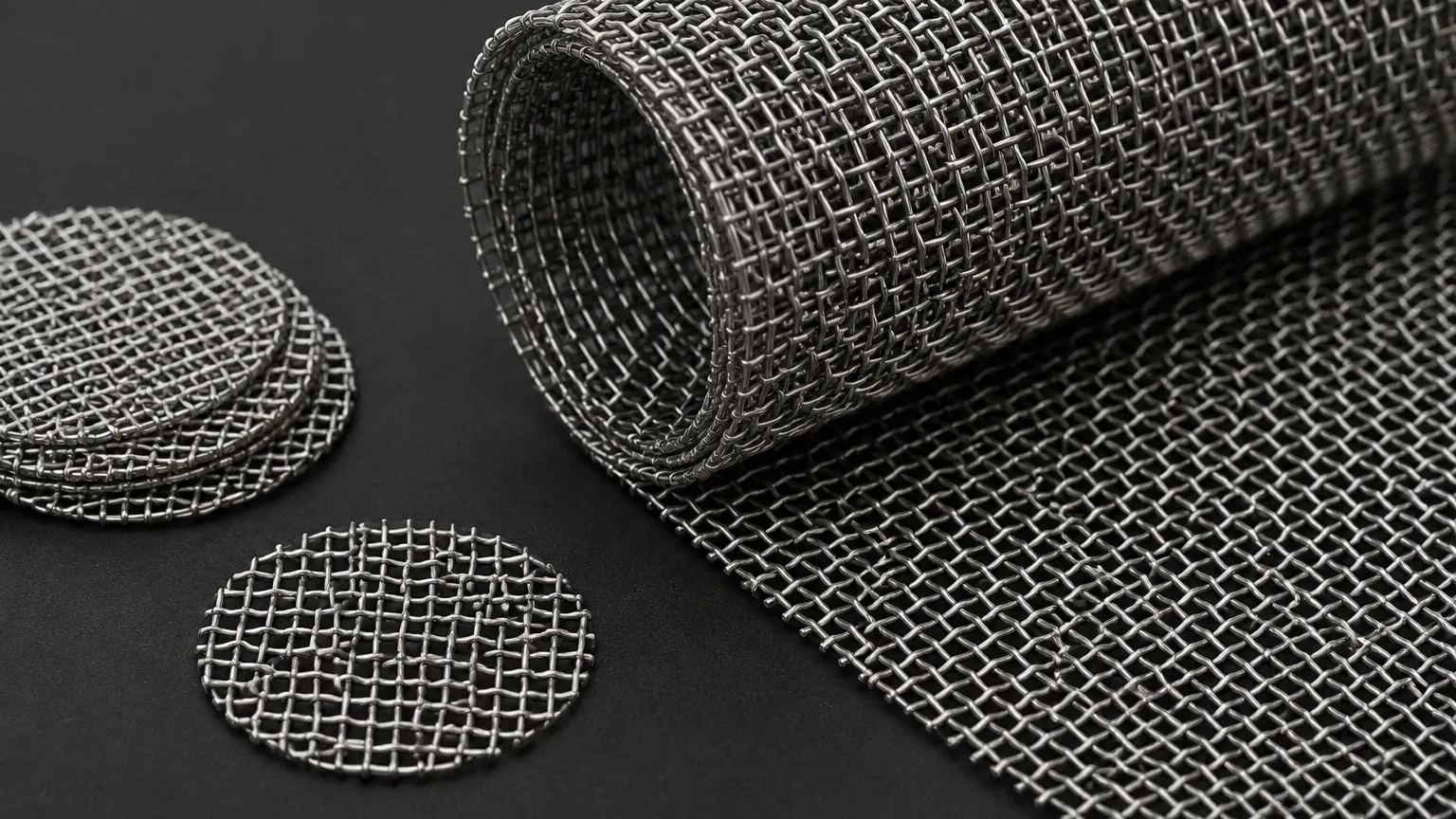
* Form Factor: Is the mesh required in bulk rolls, or should it be custom-cut into discs, cylinders, or framed panels to fit existing equipment?
Customization and OEM Capabilities
Standard off-the-shelf mesh often fails to meet the rigorous demands of specialized industrial equipment. Kaifil’s manufacturing process is designed for flexibility, allowing for the production of custom filtration components that integrate seamlessly into OEM machinery.
Whether the requirement is for a specific wire-to-aperture ratio to achieve a target flow rate or a unique frame design for rapid replacement cycles, custom engineering is often the most cost-effective solution in the long term. By working closely with a manufacturer that understands both the metallurgy and the application physics, purchasing teams can reduce the total cost of ownership through extended component lifespans.
Maintenance and Replacement Cycles
While stainless steel woven wire mesh 10mm is inherently durable, its lifecycle is influenced by the operating environment. In abrasive applications, such as slurry filtration, the wire diameter will gradually thin, increasing the aperture size and eventually leading to structural failure.
Best practices for maintenance include:
* Regular Inspection: Checking for wire displacement or signs of localized corrosion (pitting).
* Cleaning Protocols: Using ultrasonic cleaning or high-pressure backwashing to remove lodged particles that can cause "blinding" (blockage of the apertures).
* Predictive Replacement: Establishing a replacement schedule based on the known wear rate of the specific material being processed, rather than waiting for catastrophic failure.
Conclusion
Selecting the right woven wire mesh 10mm is a technical decision that impacts the safety, efficiency, and reliability of industrial operations. From ensuring the correct alloy for chemical compatibility to calculating the mechanical load requirements for coarse screening, every detail matters.
Kaifil remains committed to providing high-performance, durable filtration components tailored to the most demanding industrial environments. By combining advanced manufacturing capabilities with deep engineering expertise, we help our global partners achieve optimized filtration performance. For those seeking precise specifications or customized designs, exploring the full range of Woven Wire Mesh options is the first step toward a more efficient filtration system.
