


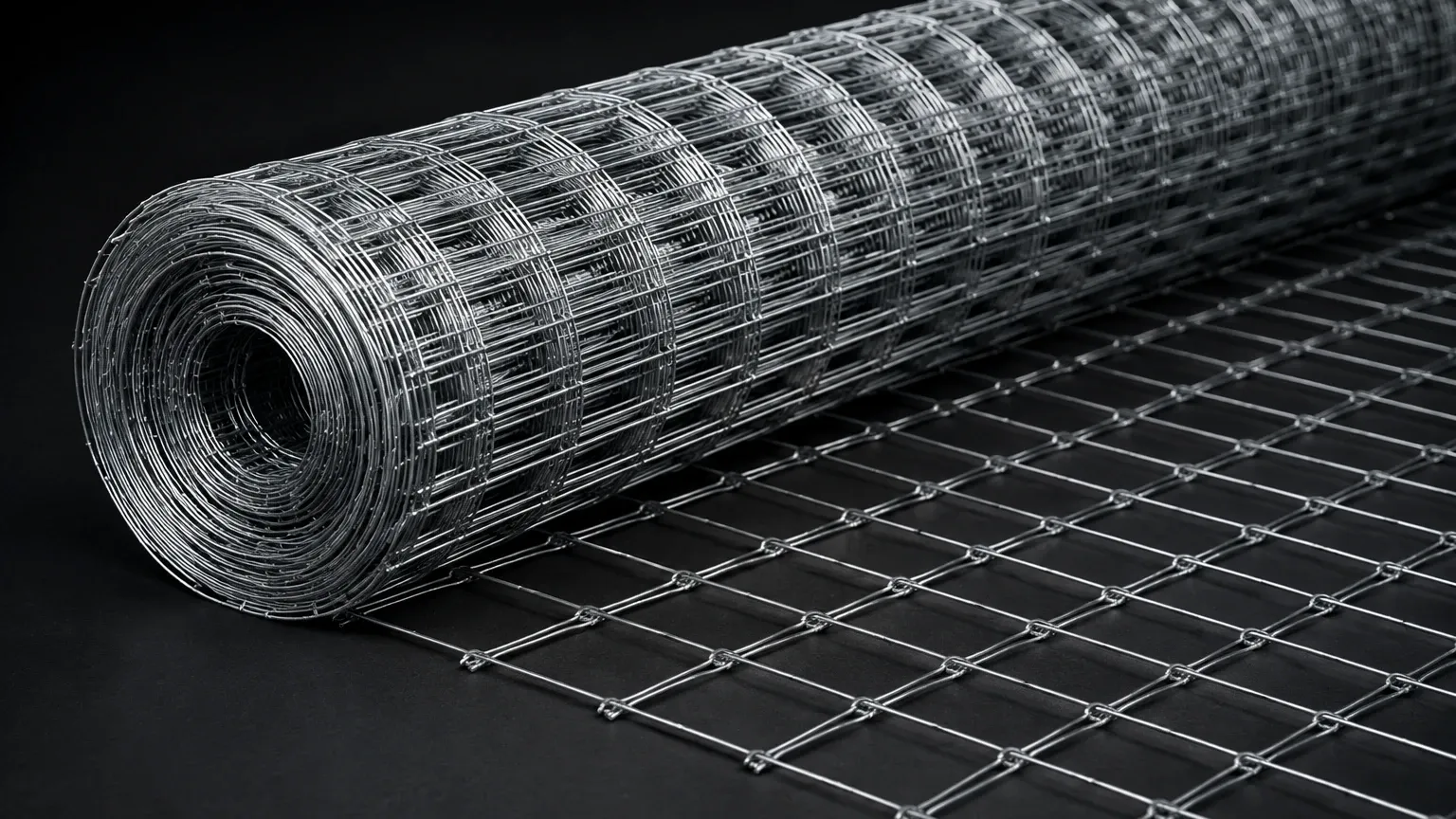
Woven Wire Fence 3ft
In industrial environments, the selection of perimeter and safety barriers is a critical engineering decision that impacts both operational safety and long-term maintenance costs. A woven wire fence 3ft in height is a common specification for machine guarding, low-level partitions, and specialized containment areas. Unlike standard residential fencing, industrial-grade Woven Wire Mesh must meet rigorous standards for material purity, tensile strength, and corrosion resistance.
This guide examines the technical considerations for selecting, specifying, and installing 3ft woven wire barriers, focusing on the engineering requirements of sectors such as chemical processing, food and beverage production, and heavy manufacturing.
Understanding the Industrial Utility of 3ft Woven Wire Barriers
A 3ft height (approximately 914mm) is frequently utilized in industrial settings where a full-height partition is unnecessary or where visibility and airflow must be maintained above the barrier. Common applications include:
* Machine Guarding: Protecting personnel from moving parts while allowing operators to monitor equipment performance.
* Conveyor Side Guards: Preventing items from falling off elevated transport lines.
* Chemical Containment Zones: Creating a physical boundary around hazardous areas where low-profile access is required for maintenance.
* HVAC and Ventilation Enclosures: Protecting sensitive equipment from debris while ensuring maximum airflow.
For these applications, the mechanical properties of the mesh—specifically its resistance to impact and environmental degradation—are paramount.
Material Selection: SS304 vs. SS316L
The choice of material is the most significant factor in the longevity of a woven wire fence 3ft installation. While galvanized steel is common in light commercial use, industrial applications typically demand stainless steel for its superior performance in harsh environments.
Stainless Steel 304 (SS304)
SS304 is the standard industrial grade. It offers excellent corrosion resistance to most oxidizing acids and is highly durable. It is suitable for indoor machine guarding and general-purpose industrial fencing where exposure to high-chloride environments is limited.
Stainless Steel 316L (SS316L)
For facilities dealing with chemical processing, marine environments, or high-saline conditions, SS316L is the preferred choice. The addition of molybdenum provides enhanced resistance to pitting and crevice corrosion. The "L" denotes low carbon content, which improves weldability and prevents carbide precipitation during the fabrication of framed panels.
Weave Types and Structural Stability
The method by which the wires are interlaced determines the mesh's aperture stability and its ability to withstand physical stress. When selecting materials for high-durability barriers, engineers often specify Plain, twill and dutch woven wire mesh in SS304/316L — rolls, cut mesh and framed panels. Send mesh count or micron target for a technical quote. to ensure the mesh meets exact aperture and tensile requirements.
Plain Weave
This is the most common weave pattern where each warp wire crosses alternately over and under each shute wire. It provides the most consistent aperture size and is ideal for standard safety fencing.
Twill Weave
In a twill weave, each warp wire passes over and under two successive shute wires. This allows for the use of heavier wire diameters for a given mesh count, resulting in a stronger, more rigid 3ft fence panel that can withstand higher impact loads.
Dutch Weave
While primarily used for high-pressure filtration, Dutch weave patterns (Plain or Twill) are sometimes employed in specialized barriers where restricted visibility or specific airflow redirection is required. The dense packing of wires provides exceptional strength.
Technical Specifications for Industrial Enclosures
When specifying a woven wire fence 3ft, engineers must look beyond the height and consider the relationship between wire diameter, mesh count, and open area.
Wire Diameter and Mesh Count
The mesh count refers to the number of openings per linear inch. For a 3ft safety fence, a lower mesh count with a larger wire diameter is typically preferred to provide structural rigidity. For example, a 2×2 mesh (2 openings per inch) with a 0.063-inch wire diameter offers a robust barrier that is difficult to deform.
Aperture (Opening Size)
The aperture is the clear distance between two adjacent wires. In safety applications, the aperture must be small enough to prevent fingers or tools from passing through the barrier. Conversely, in ventilation applications, the aperture must be large enough to minimize pressure drop.
Open Area Percentage
The open area is calculated using the formula:
`Open Area % = (Aperture / (Aperture + Wire Diameter))^2 * 100`
For a woven wire fence 3ft used for cooling-fan guards, a high open area (60%+) is necessary to prevent equipment overheating.
Engineering Considerations for Installation
Installing an industrial Woven Wire Mesh barrier at a 3ft height requires careful attention to framing and tensioning to prevent sagging and ensure the safety of the perimeter.
Framing Methods
Industrial mesh is rarely installed as a loose fabric. Instead, it is usually integrated into frames:
1. U-Edging: A metal channel is crimped or welded onto the edges of the mesh. This hides sharp wire ends and provides a mounting surface.
2. Angle Iron Frames: For heavy-duty applications, the mesh is tack-welded into a frame made of L-shaped steel. This is the most common method for modular 3ft safety panels.
3. Bolted Tensioning: In some perimeter applications, the mesh is stretched between posts using tension bars and bolts, similar to chain-link fencing but with much tighter tolerances.
Support Spacing
For a 3ft high fence, vertical supports (posts) should typically be spaced every 4 to 6 feet, depending on the wire gauge. Heavier gauges allow for wider spacing without compromising the integrity of the barrier.
Evaluating Total Cost of Ownership (TCO)
When purchasing a woven wire fence 3ft, the initial purchase price is only one component of the total cost. Engineers should evaluate the TCO over a 10-to-15-year horizon.
| Factor | Galvanized Steel | Stainless Steel (SS304/316L) |
| :— | :— | :— |
| Initial Cost | Lower | Higher |
| Corrosion Resistance | Moderate (Zinc coating wears off) | Excellent (Self-healing oxide layer) |
| Maintenance | Requires painting/replacement | Minimal cleaning required |
| Strength-to-Weight | Standard | High |
| Lifecycle | 3–7 years in industrial settings | 15–20+ years |
In most chemical or food-processing environments, the reduced downtime and replacement labor costs associated with stainless steel Woven Wire Mesh far outweigh the higher upfront material cost.
Common Risks and Quality Assurance
Procuring industrial mesh requires verification of material certificates and manufacturing tolerances. Common risks include:
* Material Substitution: Using lower-grade alloys that look identical to SS316 but fail prematurely in corrosive environments. Always request Mill Test Reports (MTRs).
* Inconsistent Weave: Variations in aperture size can compromise safety standards or filtration performance.
* Edge Fraying: Improperly finished edges on a 3ft fence can lead to workplace injuries. Ensure all panels are specified with appropriate edging or hemmed borders.
Conclusion: Confirming Project Requirements
Before finalizing a specification for a woven wire fence 3ft, technical professionals should confirm the following details with their manufacturer:
1. Exact Alloy: Is SS304 sufficient, or does the environment demand SS316L?
2. Load Requirements: What is the maximum impact force the barrier must withstand?
3. Environmental Exposure: Will the mesh be subject to high-pressure washdowns, caustic chemicals, or extreme temperatures?
4. Compliance Standards: Does the mesh need to meet specific OSHA, ISO, or food-safety (FDA/3A) requirements?
By focusing on these technical parameters, engineering teams can ensure that their 3ft woven wire installations provide reliable service and maintain safety standards throughout their operational life. For specialized configurations or high-precision requirements, consulting with a manufacturer experienced in custom Woven Wire Mesh solutions is recommended to optimize the design for specific industrial needs.
