


Woven Wire Fence 36
In industrial environments, the specification of a "woven wire fence 36"—typically referring to a 36-inch height or width—serves as a critical standard for safety, containment, and filtration pre-processing. While the term is often associated with perimeter security, in the context of advanced manufacturing and chemical processing, it represents a versatile category of Woven Wire Mesh designed to meet rigorous engineering standards. Choosing the right configuration requires a deep understanding of material properties, weave patterns, and the mechanical demands of the specific application.
Selecting a 36-inch woven wire component involves more than just measuring dimensions. Engineers must evaluate the interplay between wire diameter, aperture size, and the alloy's resistance to environmental stressors. This guide explores the technical nuances of industrial-grade woven wire solutions, providing actionable insights for procurement and engineering teams.
The Engineering Significance of the 36-Inch Dimension
The 36-inch (914mm) dimension is a frequent requirement in industrial design for several reasons. First, it aligns with standard roll widths in the production of Woven Wire Mesh, allowing for efficient material usage with minimal waste during fabrication. Second, in many safety contexts, 36 inches is a benchmark height for machine guarding and lower-tier partitions that provide visibility while maintaining physical separation.
When specifying a woven wire fence 36 for an industrial facility, the focus shifts from simple containment to performance. Whether the mesh is used as a protective barrier around high-pressure hydraulic systems or as a support structure for large-scale filtration cartridges, the consistency of the weave across that 36-inch span is paramount. Variations in tension or wire spacing can lead to structural weaknesses, particularly in environments subject to vibration or thermal expansion.
Material Selection: Beyond Standard Carbon Steel
For most industrial applications, especially those handled by specialists like Kaifil, standard galvanized steel is often insufficient. The move toward stainless steel alloys ensures longevity and prevents contamination in sensitive processes.
SS304 vs. SS316L
* Stainless Steel 304: This is the industry standard for general-purpose applications. It offers excellent corrosion resistance and mechanical strength. It is ideal for woven wire fence 36 applications in food processing (non-acidic) and general machinery guarding.
* Stainless Steel 316L: For environments involving chemical processing, marine exposure, or high-salinity conditions, 316L is the preferred choice. The addition of molybdenum provides superior resistance to pitting and crevice corrosion.
In filtration-heavy industries, the material must also be compatible with the fluids being processed. A woven wire fence 36 used as a primary screen in a water treatment plant must withstand constant submersion without degrading, making material certification a non-negotiable part of the procurement process.
Analyzing Weave Patterns for Performance
The method by which wires are interlaced determines the mesh's strength, flexibility, and filtration capability. For those looking to optimize their systems, understanding the following patterns is essential:
1. Plain Weave: The most common pattern where each warp wire crosses alternately over and under each shute wire. It provides the highest level of transparency and is excellent for simple partitions and coarse filtration.
2. Twill Weave: This allows for a heavier wire diameter than plain weave for a given mesh count. Each warp wire floats over two shute wires, creating a diagonal pattern. This is often used when a woven wire fence 36 needs to withstand higher mechanical loads.
3. Dutch Weave: This utilizes different wire diameters for the warp and shute. It results in a much tighter, denser mesh that is primarily used for precision filtration rather than simple fencing.
For a detailed look at how these weaves affect your specific project, you can Plain, twill and dutch woven wire mesh in SS304/316L — rolls, cut mesh and framed panels. Send mesh count or micron target for a technical quote.
Technical Specifications: Mesh Count and Wire Diameter
When an engineer requests a woven wire fence 36, the two most critical technical variables are the mesh count and the wire diameter. These two factors dictate the "open area" percentage, which is vital for applications requiring airflow or fluid passage.
* Mesh Count: This refers to the number of openings per linear inch. A higher mesh count means smaller openings. For a 36-inch industrial guard, a lower mesh count with thicker wire is typically chosen to maximize impact resistance.
* Wire Diameter: This is the thickness of the wire before it is woven. In industrial fencing and guarding, the wire diameter must be balanced against the mesh count to ensure the panel remains rigid across its 36-inch width without sagging.
Calculating Open Area
The formula for open area is:
`Open Area % = (Aperture / (Aperture + Wire Diameter))² x 100`
For applications like motor housing guards or ventilation screens, maintaining a specific open area is necessary to prevent equipment overheating while still providing the protection of a woven wire fence 36.
Industrial Applications of 36-Inch Woven Wire
While the term "fence" implies a perimeter, in a B2B context, the applications are far more specialized.
Machine Guarding and Safety Enclosures
In manufacturing plants, 36-inch high woven wire panels are used to create safety zones around automated robotics or conveyor systems. Unlike solid sheet metal, Woven Wire Mesh allows safety inspectors and operators to monitor the machinery visually while remaining protected from moving parts or debris.
Filtration Pre-Screening
In large-scale hydraulic or water treatment systems, a woven wire fence 36 can act as a primary debris screen. It captures large particulates before the fluid reaches finer, more delicate stainless steel filter cartridges. This staged approach extends the life of the secondary filters and reduces total cost of ownership.
Architectural and Structural Infill
In industrial architecture, 36-inch panels are frequently used as infill for walkways and mezzanines. The stainless steel construction provides a high strength-to-weight ratio and requires minimal maintenance compared to painted carbon steel alternatives.
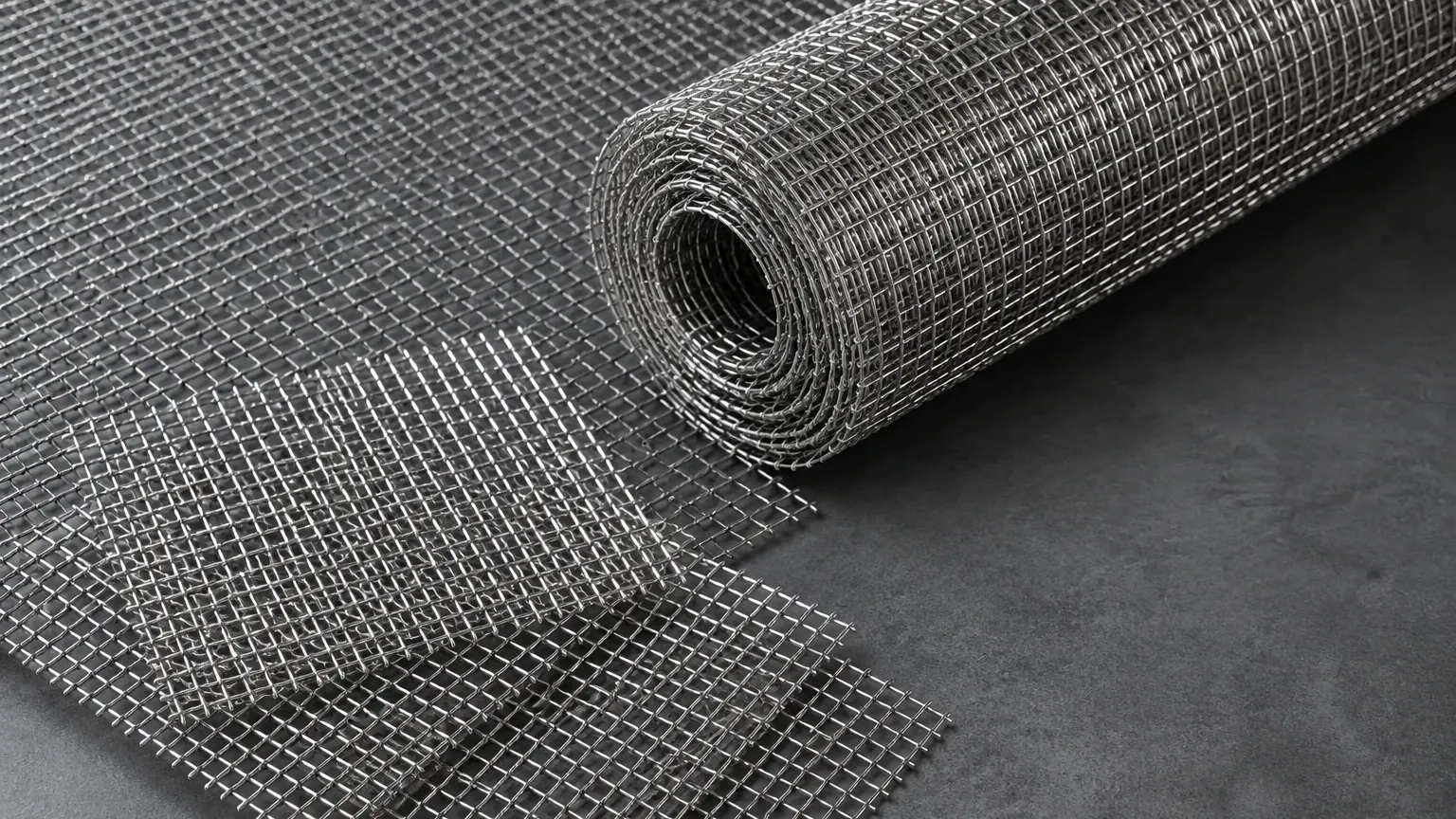
Installation and Engineering Considerations
Proper installation of a woven wire fence 36 is as important as the material quality. In industrial settings, panels are often framed to provide additional rigidity.
Framing and Attachment
* U-Channel Framing: This involves encasing the edges of the mesh in a metal channel, which is then welded or bolted to the support structure. This prevents the edges from fraying and increases the safety of the installation.
* Tensioning: For unframed rolls used in longer spans, proper tensioning is required to prevent the mesh from vibrating or "drumming" under industrial loads.
Thermal Expansion
Engineers must account for the thermal expansion coefficient of stainless steel, especially if the woven wire fence 36 is installed near high-heat equipment like industrial ovens or chemical reactors. If the mesh is constrained too tightly without allowance for expansion, the weave may distort over time.
Common Risks and How to Mitigate Them
One of the primary risks in purchasing Woven Wire Mesh for 36-inch applications is "wire slippage." In lower-quality weaves, the wires can shift, leading to inconsistent aperture sizes. This is particularly dangerous in filtration applications where a specific micron rating must be maintained.
To mitigate this, it is essential to work with manufacturers who utilize precision weaving looms and provide material mill certificates. Confirming the alloy composition through heat numbers ensures that the "stainless steel" provided actually meets the corrosion resistance standards required for the environment.
Procurement Checklist for Engineers
Before finalizing a purchase order for a woven wire fence 36 or related mesh components, technical teams should confirm the following details with the manufacturer:
1. Environment: Will the mesh be exposed to acids, high temperatures, or high-pressure cleaning?
2. Mechanical Load: Is the mesh a static barrier, or will it be subjected to impact or constant vibration?
3. Filtration Requirements: If used for separation, what is the target micron size or particle retention rate?
4. Compliance: Does the material need to meet FDA (for food/beverage) or ISO standards?
5. Customization: Does the project require custom-cut dimensions or specialized framing to fit into an existing OEM system?
Conclusion
The specification of a woven wire fence 36 is a foundational element in many industrial safety and filtration designs. By focusing on the technical properties of Woven Wire Mesh—from the specific stainless steel alloy to the intricacies of the weave pattern—engineers can ensure their systems operate efficiently and safely. Whether the goal is to protect personnel from machinery or to provide the first line of defense in a complex filtration process, the quality of the woven component is the determining factor in long-term performance.
Working with an experienced manufacturer like Kaifil allows for the development of customized solutions that go beyond off-the-shelf fencing, providing the precision and durability required for demanding industrial environments.
