


Engineering Guide: Selecting Woven Wire Mesh for 4ft Industrial Enclosures and Filtration
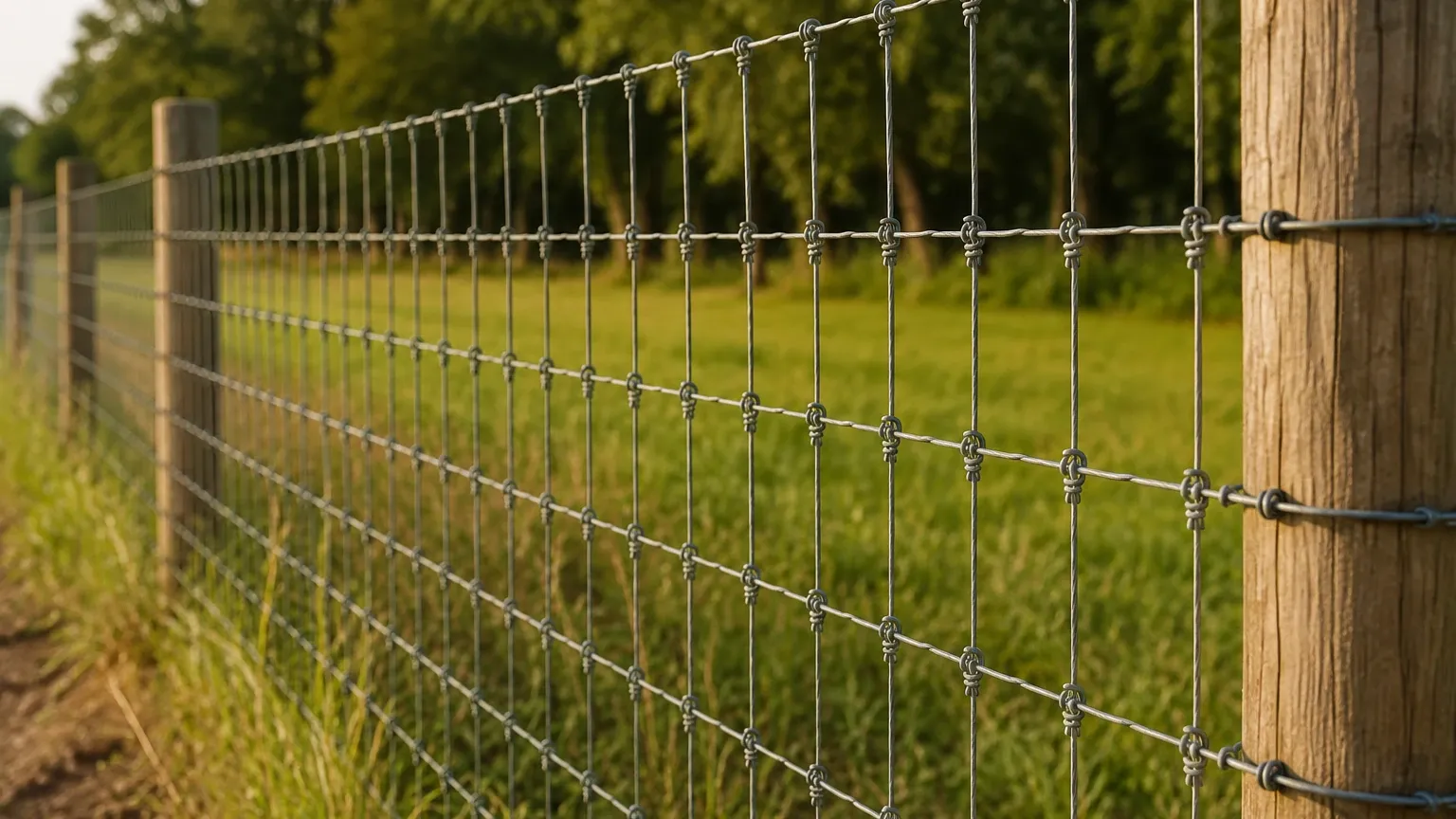
In industrial environments, the specification of a woven wire fence 4 ft in height often refers to more than just a simple perimeter barrier. For engineers and facility managers, this dimension represents a standard height for machine guarding, safety partitions, and large-scale industrial filtration panels. Selecting the correct Woven Wire Mesh requires a deep understanding of material science, mechanical loads, and the specific environmental stressors the mesh will encounter.
At Kaifil, we specialize in high-precision stainless steel filtration and mesh solutions. This guide explores the technical considerations necessary when specifying 4ft tall woven wire components for industrial applications, moving beyond basic aesthetics to focus on structural integrity and performance.
Understanding Woven Wire Mesh in Industrial 4ft Applications
Woven wire mesh is produced by weaving individual metallic wires over and under one another to create a stable, precise grid. When applied to 4ft tall structures, the mesh must balance two competing needs: transparency (for visibility or airflow) and rigidity (to maintain shape over a large vertical span).
In a B2B context, a "woven wire fence 4 ft" specification is commonly found in:
* Machine Guarding: Protecting personnel from moving parts while allowing visual inspection.
* Warehouse Partitioning: Creating secure zones that do not interfere with HVAC or fire sprinkler systems.
* Large-scale Filtration: Pre-filtration screens for water intake or chemical processing tanks where a 48-inch height is a standard modular unit.
Material Selection: SS304 vs. SS316L for 4ft Panels
The longevity of an industrial mesh installation depends almost entirely on material compatibility. For most 4ft industrial panels, stainless steel is the preferred medium due to its tensile strength and resistance to oxidation.
Grade 304 Stainless Steel
This is the industry standard for general-purpose applications. It offers excellent durability and is cost-effective for indoor machine guards or dry warehouse partitions. However, it is susceptible to pitting in high-chloride environments.
Grade 316L Stainless Steel
For applications involving chemical processing, food and beverage production, or coastal environments, 316L is essential. The addition of molybdenum provides superior resistance to corrosion and acids. In a 4ft filtration panel used in wastewater treatment, 316L ensures the structural mesh does not degrade under constant exposure to harsh effluents.
Engineering the Structural Integrity of Woven Wire Fence 4 Ft
A 4ft vertical span introduces mechanical challenges that smaller filtration discs do not face. Without proper engineering, a mesh panel can sag, bulge, or vibrate excessively.
Wire Diameter and Mesh Count
The relationship between wire diameter and mesh count (the number of openings per linear inch) determines the "open area" and the strength of the panel. For a woven wire fence 4 ft tall, engineers must calculate the required wire gauge to prevent deformation.
* Heavy-Duty Applications: Thicker wires (e.g., 2mm to 4mm) with lower mesh counts provide the impact resistance needed for safety barriers.
* Precision Filtration: Finer wires with higher mesh counts are used when the 4ft panel serves as a primary or secondary filter media in industrial tanks.
Tensioning and Framing
To maintain the flatness of a 4ft mesh section, the material is often tensioned within a frame. Kaifil provides customized framed panels where the mesh is welded or mechanically fastened to a rigid perimeter. This prevents the "oil-canning" effect and ensures the mesh remains taut over its entire 48-inch height.
Weave Patterns and Their Impact on Performance
The method of weaving significantly alters how the mesh behaves under stress and how it filters particles.
Plain Weave
The most common pattern, where each warp wire crosses over and under each shute wire. It provides the highest degree of transparency and is ideal for 4ft machine guards where visibility is paramount.
Twill Weave
In this pattern, each shute wire passes over and under two warp wires. This allows for a heavier wire diameter than plain weave for a given mesh count, increasing the overall strength of a 4ft panel without sacrificing the aperture size.
Dutch Weave
Dutch weaves use different diameters for warp and shute wires, resulting in a dense, high-strength mesh with very fine filtration ratings. While less common for simple "fencing," Dutch weave is used in 4ft tall pressure leaf filters and other specialized industrial separation equipment.
Key Considerations for Purchasing and Customization
When sourcing a woven wire fence 4 ft solution for industrial use, purchasing teams should confirm several technical variables to ensure the product is fit for purpose.
1. Aperture Precision: For filtration, the consistency of the opening size is critical. Inconsistent apertures lead to bypass and equipment failure.
2. Edge Treatment: For 4ft rolls or panels, how the edges are finished (selvage vs. raw cut) impacts both safety during installation and the ease of welding into frames.
3. Tolerances: Industrial applications often require tight dimensional tolerances. Specify whether the 4ft height is a nominal or absolute requirement.
4. Surface Finish: Depending on the industry (e.g., pharmaceutical or food), the mesh may require electropolishing to remove surface impurities and improve hygiene.
Common Risks in Specifying Industrial Mesh
One of the primary risks in B2B procurement is the "commodity trap"—treating industrial mesh as a standard hardware store item. For a 4ft tall installation, using under-specified wire diameters can lead to:
* Vibration Fatigue: In environments with heavy machinery, thin-gauge mesh can vibrate at resonant frequencies, eventually leading to wire breakage at the contact points.
* Impact Failure: Safety guards must be rated for specific kinetic energy impacts. A mesh that is too light will fail to contain a projectile or a falling operator.
* Corrosion Stress: In chemical plants, the high surface area of woven wire mesh makes it particularly vulnerable to atmospheric corrosion if the wrong alloy is selected.
Installation and Long-term Maintenance for Industrial Mesh
Proper installation is as important as material selection. For a woven wire fence 4 ft tall, the following best practices apply:
* Support Intervals: Even high-tensile stainless steel mesh requires intermediate supports if the horizontal span exceeds certain limits. For 4ft panels, vertical supports every 4 to 6 feet are standard to prevent bowing.
* Avoid Dissimilar Metals: When mounting stainless steel mesh, use stainless steel fasteners. Using galvanized or carbon steel bolts can trigger galvanic corrosion, compromising the mesh at the attachment points.
* Cleaning Protocols: In filtration or food-grade applications, the mesh should be cleaned using methods that do not abrade the wires. High-pressure water or ultrasonic cleaning is often preferred over mechanical brushing, which can distort the weave.
Why Choose Kaifil for Your Woven Wire Mesh Needs?
As a professional manufacturer, Kaifil understands that every industrial application has unique requirements. We don't just provide rolls of mesh; we provide engineered solutions. Whether you need a specific Woven Wire Mesh for a 4ft safety enclosure or a complex multi-layer filter cartridge, our team works with you to define the technical parameters that matter most: micron rating, tensile strength, and chemical compatibility.
Our OEM capabilities allow us to produce custom widths and lengths, ensuring that your 4ft panels are delivered ready for integration into your equipment or facility. By controlling the manufacturing process from material selection to final inspection, we ensure that every square inch of mesh meets the rigorous standards of the chemical, pharmaceutical, and hydraulic industries.
Conclusion
Specifying a woven wire fence 4 ft for industrial use is a task that requires careful attention to engineering detail. By selecting the appropriate stainless steel grade, calculating the necessary wire diameter, and choosing the right weave pattern, you can ensure a solution that provides safety, durability, and precise filtration performance.
For technical support or to request a quote based on your specific mesh count or micron targets, Review product options and application support to see how our stainless steel woven wire mesh can be tailored to your project’s exact requirements.
