


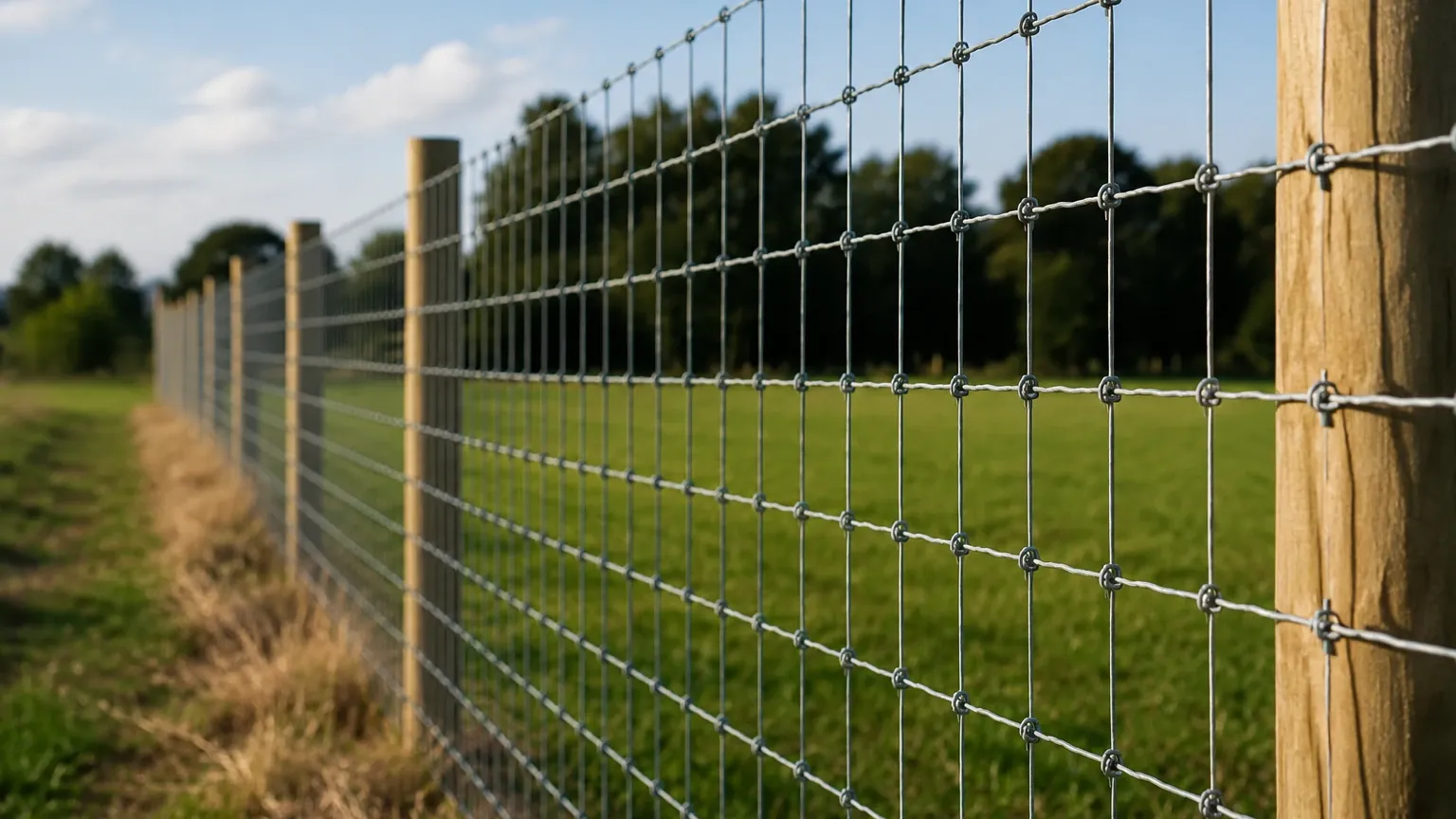
Woven Wire Fence 50 Ft: Engineering Specifications and Industrial Applications
In industrial procurement and facility engineering, the specification of a "woven wire fence 50 ft" often refers to more than just a perimeter barrier. While 50-foot rolls are a standard unit of measure in the fencing industry, for engineers working in chemical processing, water treatment, and food production, these rolls represent high-precision Woven Wire Mesh used for safety barriers, machine guarding, and pre-filtration screens. Selecting the correct material, weave type, and wire diameter is critical to ensuring the longevity and safety of the installation.
Industrial environments demand higher performance than standard agricultural or residential fencing can provide. When a project requires a 50-foot length of woven wire, the focus shifts from simple containment to technical variables like corrosion resistance, aperture stability, and structural integrity under mechanical stress. This guide examines the technical considerations for specifying woven wire in industrial contexts, focusing on stainless steel solutions that offer superior durability over galvanized alternatives.
Understanding the Technical Anatomy of Woven Wire Mesh
To specify a woven wire fence 50 ft roll correctly, one must understand the three primary variables that define the product's performance: material alloy, wire diameter, and mesh count. Unlike standard fencing, which may only specify height and gauge, industrial woven wire requires precise measurements to ensure it meets the application's filtration or protection requirements.
Material Selection: SS304 vs. SS316L
For most industrial applications, stainless steel is the preferred material due to its inherent resistance to oxidation and chemical exposure.
* Type 304 Stainless Steel: This is the most common grade for industrial screens and barriers. It provides excellent strength and good corrosion resistance for general industrial use, such as machine guards or debris screens in non-corrosive environments.
* Type 316L Stainless Steel: For applications involving marine environments, chemical processing, or pharmaceutical production, 316L is essential. The addition of molybdenum enhances resistance to pitting and crevice corrosion, particularly in chloride-rich environments.
Wire Diameter and Aperture
The wire diameter determines the physical strength of the 50-foot roll. In a "woven wire fence 50 ft" context, a heavier wire gauge (lower numerical value) provides greater impact resistance. The aperture, or the clear opening between wires, must be calculated based on what the barrier is intended to exclude or retain. In filtration-adjacent applications, this aperture is often measured in microns or millimeters to ensure precise particle control.
Weave Types for Industrial 50 Ft Rolls
The method by which the wires are interlaced significantly impacts the mesh's stability and surface characteristics. While a standard fence uses a simple interlock, industrial woven wire mesh utilizes specific weaving patterns to achieve different mechanical properties.
Plain Weave
The most common weave for industrial barriers, where each warp wire crosses alternately over and under each shute wire. This provides a consistent aperture and is the easiest to clean, making it ideal for food processing environments where hygiene is a priority.
Twill Weave
In a twill weave, each shute wire passes successively over and under two warp wires. This allows for a heavier wire diameter to be used for a given mesh count, resulting in a stronger 50-foot roll that can withstand higher mechanical loads without deforming. This is often specified for heavy-duty machine guarding.
Dutch Weave
For applications where the "fence" also serves a filtration purpose—such as a primary intake screen for a water treatment facility—Dutch weaves are utilized. These use different diameters for warp and shute wires to create a dense, high-strength mesh capable of fine filtration while maintaining the structural rigidity required for a large-scale installation.
Industrial Applications for Woven Wire Fence 50 Ft
While the term "fence" implies a vertical barrier, in an industrial B2B context, 50-foot rolls of woven wire are integrated into various systems that require a combination of airflow, visibility, and physical protection.
Machine Guarding and Personnel Safety
In manufacturing plants, 50-foot rolls of stainless steel woven wire are used to create custom enclosures around high-speed machinery. Unlike solid barriers, woven wire allows for visual inspection of the equipment and ensures adequate ventilation to prevent overheating. The high tensile strength of Plain, twill and dutch woven wire mesh in SS304/316L — rolls, cut mesh and framed panels. Send mesh count or micron target for a technical quote. ensures that the barrier can contain flying debris in the event of a mechanical failure.
Industrial Sifting and Scalping
In the bulk solids and mining industries, 50-foot lengths of woven wire are cut and tensioned onto vibrating screens. These "fences" act as the primary separation layer, sorting materials by size. The precision of the weave is paramount here; any variation in aperture size would lead to product contamination or inconsistent grading.
Architectural and Security Screening
For high-security facilities, woven wire provides a tamper-resistant barrier that is significantly more difficult to cut than standard chain-link fencing. When specified in 50-foot rolls, it allows for seamless installation across long spans, reducing the number of joints and potential weak points in the security perimeter.
Engineering Considerations for Installation and Tensioning
Installing a 50-foot roll of industrial woven wire requires careful engineering to ensure the mesh remains taut and functional over its service life. Unlike lightweight fencing, industrial stainless steel mesh has significant weight and requires robust support structures.
1. Support Framework: For a 50-foot span, intermediate posts or supports are necessary to prevent sagging. The spacing of these supports depends on the wire diameter and the expected load (e.g., wind load or impact risk).
2. Tensioning Systems: To maintain the accuracy of the aperture, the mesh must be properly tensioned. In filtration or sifting applications, this is often achieved using hook strips or draw bolts that apply even pressure across the width of the roll.
3. Thermal Expansion: In environments with significant temperature fluctuations, engineers must account for the thermal expansion of the stainless steel. If the mesh is constrained too tightly without room for movement, it may buckle or stress the support welds.
Maintenance and Total Cost of Ownership (TCO)
When evaluating a woven wire fence 50 ft for industrial use, the initial purchase price is only one component of the total cost. Engineers must consider the maintenance requirements and the expected lifespan of the material.
Corrosion Resistance and Cleaning
One of the primary advantages of using stainless steel woven wire mesh for 50-foot barriers is the reduced need for maintenance. Galvanized steel fencing eventually rusts, especially at the intersection points of the wires where the coating can crack. Stainless steel forms a self-healing passive oxide layer that resists corrosion. In food and pharmaceutical applications, the mesh can be cleaned using high-pressure washdowns or chemical sanitizers without degrading the material.
Durability vs. Replacement Cycles
A high-quality stainless steel woven wire roll may have a higher upfront cost than carbon steel or plastic alternatives, but its service life is significantly longer. In demanding industrial environments, the cost of downtime for replacing a failed barrier often exceeds the cost of the material itself. By specifying a durable woven wire solution from the outset, facilities can achieve a lower TCO over a 10-to-20-year horizon.
Selecting the Right Supplier for Custom Filtration and Barriers
For engineers and purchasing teams, the challenge lies in finding a supplier that understands the technical nuances of industrial filtration and protection. A manufacturer like Kaifil provides the expertise needed to navigate these specifications. Whether the project requires a standard 50-foot roll for machine guarding or a custom-engineered mesh for a complex filtration system, the focus remains on precision and reliability.
When requesting a quote for a woven wire fence 50 ft, it is helpful to provide the following data points to the technical team:
* Required Alloy: (e.g., SS304 for general use, SS316L for chemical resistance).
* Mesh Count or Aperture Size: The number of openings per linear inch or the specific micron rating.
* Wire Diameter: To ensure the mesh meets the necessary strength requirements.
* Roll Width: While the length is 50 feet, the width must be specified to fit the existing framework.
By focusing on these factual engineering criteria, procurement professionals can ensure they receive a product that meets the rigorous demands of the industrial sector, providing both safety and performance for years to come.
