


Woven Wire Fence Amazon: A Guide to Industrial Mesh Selection
When searching for "woven wire fence amazon," many procurement officers and maintenance engineers are looking for a quick, accessible solution for perimeter security, basic screening, or temporary partitioning. While retail platforms offer convenience for general-purpose applications, industrial environments—specifically those involving chemical processing, filtration, and high-pressure fluid dynamics—require a level of precision and material integrity that standard consumer-grade fencing cannot provide.
Understanding the distinction between a general-purpose woven wire fence and industrial-grade Woven Wire Mesh is critical for ensuring operational efficiency and equipment longevity. This guide explores the technical parameters, material considerations, and sourcing risks that engineering teams must evaluate before selecting a wire product for industrial use.
Distinguishing Between Consumer Fencing and Industrial Woven Wire Mesh
The term "woven wire fence" typically refers to products designed for agricultural, residential, or light commercial use. These are often characterized by larger openings, galvanized steel construction, and a focus on physical barrier strength rather than filtration precision. Conversely, industrial woven wire mesh is an engineered component designed with specific apertures, wire diameters, and weave patterns to meet strict performance criteria.
Material Composition and Durability
Retail-grade fencing found through searches for "woven wire fence amazon" is frequently made from carbon steel with a galvanized coating. While suitable for outdoor weather resistance in low-corrosion environments, these materials fail rapidly when exposed to the caustic chemicals found in pharmaceutical or food processing plants. Industrial mesh utilizes high-grade alloys like Stainless Steel 304, 316L, or specialized Monel and Inconel to withstand extreme temperatures and corrosive agents.
Dimensional Tolerance
In a fencing application, a variance of a few millimeters in the opening size is negligible. In industrial filtration, however, a variance of even a few microns can lead to system failure, downstream contamination, or inconsistent product quality. Industrial manufacturing processes ensure that the mesh count (the number of openings per linear inch) remains constant across the entire roll or panel.
Technical Specifications: Beyond the Basics of Woven Wire Fence Amazon
For engineers, the selection process begins with a technical data sheet rather than a retail product description. When moving beyond the basic utility of a woven wire fence, several engineering considerations become paramount.
1. Mesh Count vs. Micron Rating
While fencing is measured in inches or gauge, industrial mesh is defined by its mesh count or its micron rating. The mesh count indicates the density of the weave, while the micron rating defines the largest particle that can pass through the mesh. For precision filtration, Dutch weave patterns are often employed to achieve ratings as fine as 5 to 10 microns, a level of precision impossible to find in standard fencing products.
2. Wire Diameter and Open Area
The relationship between wire diameter and the opening size determines the "percentage of open area." This is a critical calculation for hydraulic and pneumatic applications where flow rate and pressure drop must be managed. A thicker wire increases the durability and pressure resistance of the mesh but reduces the open area, potentially leading to higher energy costs for pumping systems.
3. Tensile Strength and Yield
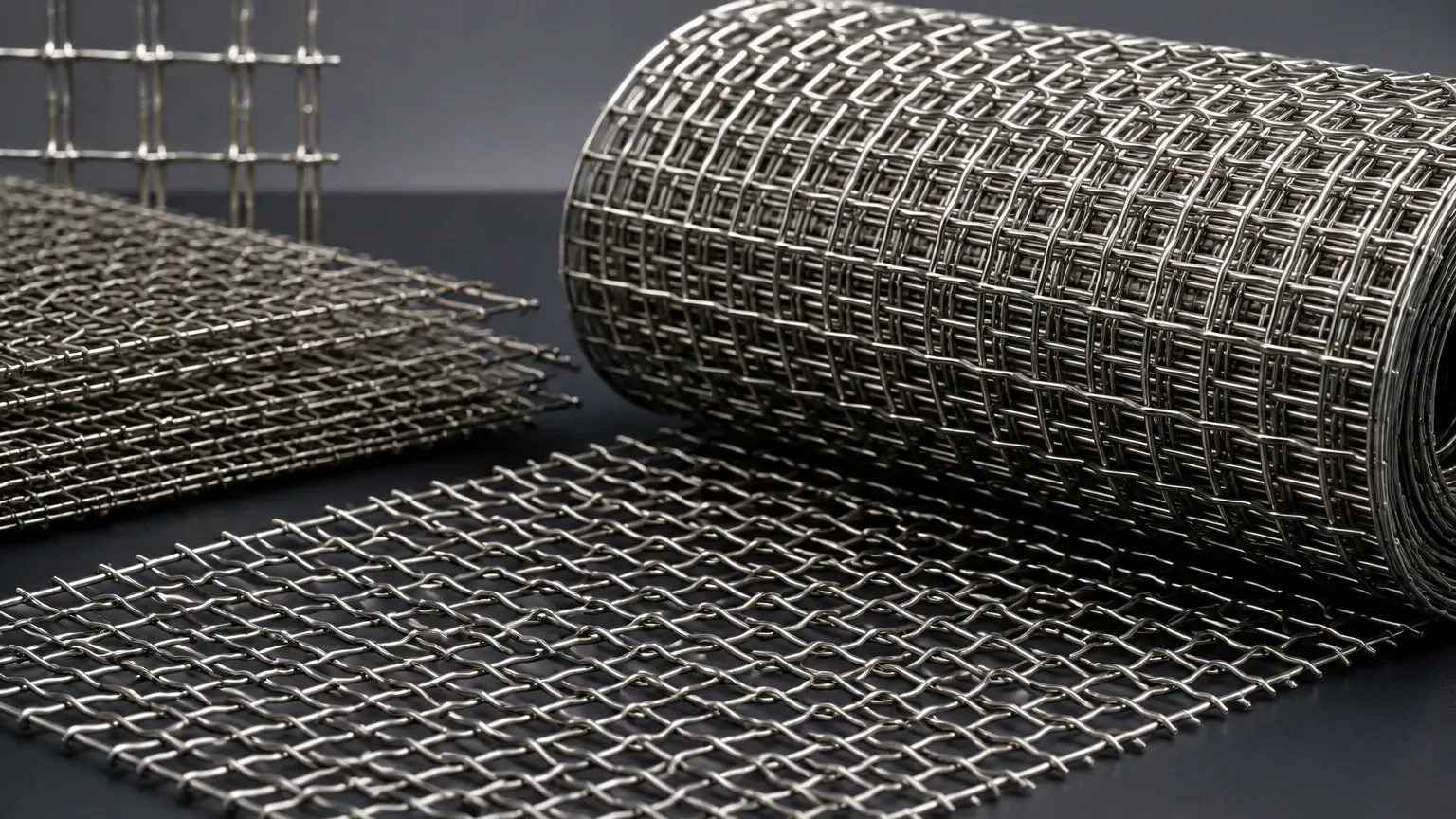
Industrial mesh must often withstand significant mechanical stress, such as backwashing cycles in water treatment or high-pressure pulses in hydraulic systems. Unlike a static fence, these components are dynamic parts of a machine. Sourcing Plain, twill and dutch woven wire mesh in SS304/316L — rolls, cut mesh and framed panels. Send mesh count or micron target for a technical quote. ensures that the material has been tested for the tensile strength required to prevent mesh deformation under load.
Material Selection: Why SS316L Matters in Industrial Environments
A common pitfall when purchasing through general retail channels like Amazon is the lack of detailed material certification. For B2B applications, the difference between Stainless Steel 304 and 316L is significant.
* Stainless Steel 304: The standard "18-8" stainless steel. It offers excellent corrosion resistance for most applications but is susceptible to pitting in chloride-rich environments (e.g., marine or high-salt food processing).
* Stainless Steel 316L: Contains molybdenum, which provides superior resistance to chlorides and acids. The "L" denotes low carbon content, which improves weldability and prevents sensitization—a common cause of corrosion at weld points in filter cartridges.
In industrial filtration, using a 304-grade mesh where 316L is required can lead to premature failure, resulting in costly downtime and potential product recalls. Professional manufacturers provide Mill Test Reports (MTRs) to verify the exact chemical composition of the alloy used.
The Role of Weave Types in Filtration and Screening
The utility of a woven wire product is largely determined by its weave pattern. While a "woven wire fence amazon" search will typically yield simple plain weaves, industrial applications often require more complex geometries.
| Weave Type | Characteristics | Primary Application |
| :— | :— | :— |
| Plain Weave | Each warp wire crosses over and under each shute wire. | General screening, low-pressure filtration. |
| Twill Weave | Each shute wire passes over and under two warp wires. | Allows for heavier wire diameters in fine mesh counts. |
| Plain Dutch | Thicker warp wires with finer shute wires driven close together. | High-pressure filtration with high mechanical strength. |
| Twill Dutch | Combines twill and Dutch weave characteristics. | Extremely fine filtration (sub-20 micron) with high flow rates. |
Selecting the wrong weave can result in "blinding" (clogging) of the filter or insufficient structural integrity to handle the operating pressure of the system.
Risks of Using Retail-Grade Wire for Industrial Filtration
While retail platforms are excellent for consumer goods, they present several risks for industrial procurement:
1. Lack of Traceability: Industrial standards (such as ISO or ASTM) require that materials be traceable back to the melt. Retail products often lack the documentation necessary for compliance in regulated industries like pharmaceuticals or aerospace.
2. Inconsistent Quality Control: Mass-produced fencing may have irregular wire spacing or loose weaves that shift under pressure. In a filtration assembly, this leads to "bypass," where unfiltered fluid escapes through enlarged openings.
3. Limited Customization: Industrial filtration often requires specific dimensions, framed edges, or pleated configurations. Retailers typically sell fixed-size rolls that require significant secondary processing, increasing the total cost of ownership.
4. No Engineering Support: Choosing the right mesh involves calculating flow velocity, pressure drop, and particle retention. Retail platforms provide a transaction, whereas industrial manufacturers like Kaifil provide technical consultation to ensure the component fits the specific application.
How to Source High-Performance Woven Wire Mesh for OEM Projects
For engineers and purchasing teams, the goal is to balance performance with cost-effectiveness. When a project moves beyond the scope of a simple barrier, the following steps should be taken:
* Define the Operating Environment: Identify the temperature, chemical exposure, and pressure the mesh will face.
* Determine the Target Particle Size: Specify the micron rating required for the process. This will dictate whether a plain, twill, or Dutch weave is necessary.
* Calculate Mechanical Requirements: Determine if the mesh needs to be self-supporting or if it requires a perforated metal backing or a support frame.
* Request Technical Documentation: Ensure the supplier can provide material certifications and compliance documents (RoHS, REACH, etc.).
By focusing on these technical parameters, companies can avoid the pitfalls of under-specified materials. While a search for "woven wire fence amazon" might solve a temporary fencing need, professional-grade Woven Wire Mesh is the only reliable choice for integrated industrial systems.
Conclusion
In the B2B sector, the "cheapest" or "fastest" option often becomes the most expensive when accounting for maintenance, replacement cycles, and potential system failures. Whether you are designing a new filtration system for a chemical plant or replacing screens in a food processing line, prioritizing technical specifications over retail convenience is essential. Working with a dedicated manufacturer ensures that the mesh you receive is engineered for your specific challenges, providing the durability and precision that off-the-shelf fencing simply cannot match.
