


Woven Wire Fence for Cattle: A Technical Engineering Perspective
In the realm of industrial containment and agricultural infrastructure, the selection of perimeter materials is a critical engineering decision. While Woven Wire Mesh is frequently associated with high-precision industrial filtration and chemical processing, its structural principles are equally vital when designing a robust woven wire fence for cattle. For engineers and facility managers, understanding the mechanical properties, material science, and structural integrity of these mesh systems is essential to ensuring long-term performance and safety.
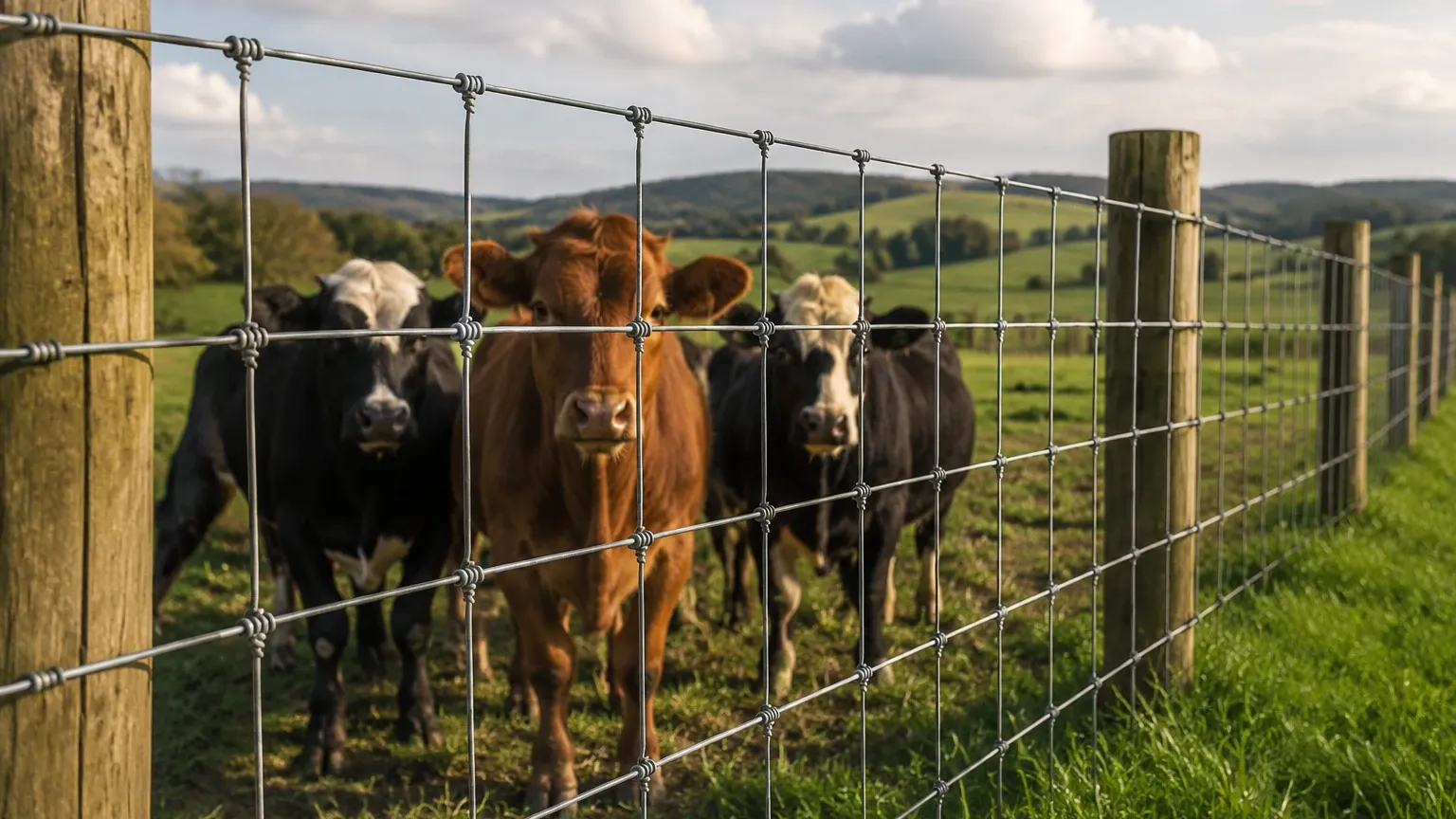
A woven wire fence for cattle is not merely a barrier; it is a tensioned structural system designed to withstand significant dynamic loads. Unlike welded wire alternatives, which can suffer from joint failure under impact, woven structures distribute stress across the entire mesh fabric. This article examines the technical specifications, material considerations, and engineering advantages of utilizing high-quality woven wire mesh in demanding containment environments.
Understanding the Structural Mechanics of Woven Wire Mesh
The fundamental advantage of a woven structure lies in its ability to absorb and dissipate energy. In a woven wire mesh, the intersecting wires are mechanically interlocked rather than fused. This allows for a degree of flexibility—often referred to as "give"—that is crucial when dealing with large livestock. When a cow exerts pressure or impacts the fence, the woven design allows the mesh to flex and then return to its original shape, preventing permanent deformation or breakage.
From an engineering standpoint, the weave pattern determines the mesh's stability and aperture consistency. While industrial filtration often utilizes Plain, twill and dutch woven wire mesh in SS304/316L — rolls, cut mesh and framed panels. Send mesh count or micron target for a technical quote., containment applications focus on the "stay wire" and "line wire" configuration. The horizontal line wires provide tensile strength to resist the tensioning force during installation, while the vertical stay wires maintain the spacing and provide vertical rigidity.
Material Science: Evaluating Corrosion Resistance in Containment
The environment in which a woven wire fence for cattle is installed is often chemically aggressive. Exposure to animal waste, fertilizers, and varying moisture levels can lead to rapid oxidation and structural failure if the incorrect alloy is selected.
Stainless Steel vs. Galvanized Steel
While traditional agricultural fencing relies on galvanized coatings, industrial-grade applications often require the superior performance of stainless steel.
- SS304: Offers excellent corrosion resistance for most standard environments. It is resistant to oxidation and provides high tensile strength, making it a standard for durable containment.
- SS316L: In coastal regions or environments with high chloride exposure, SS316L is the preferred choice. The addition of molybdenum enhances resistance to pitting and crevice corrosion, ensuring the fence maintains its structural integrity for decades.
Selecting a high-chromium alloy ensures that the mesh remains passive to environmental triggers, significantly extending the replacement cycle and reducing the total cost of ownership (TCO) compared to lower-grade carbon steel options that require frequent recoating or replacement.
Design Parameters: Mesh Openings and Wire Gauge
Specifying the correct dimensions for a woven wire fence for cattle requires a balance between visibility, containment capability, and material weight. The two primary variables are the wire gauge and the mesh opening size.
Wire Gauge (Diameter)
For cattle containment, the wire must possess sufficient cross-sectional area to resist snapping under tension. Typical industrial mesh for containment utilizes heavy-gauge wires. A thicker wire diameter increases the breaking strength but also increases the weight of the rolls, requiring more robust support posts. Engineers must calculate the expected impact force of the livestock to determine the minimum safe wire diameter.
Mesh Aperture (Spacing)
In agricultural contexts, the spacing of the stay wires is critical. Smaller openings at the bottom of the fence prevent smaller animals from entering or calves from exiting, while larger openings at the top reduce material costs and weight. However, for high-security or industrial-adjacent containment, a uniform, tighter mesh may be specified to prevent any potential entanglement or to provide a more formidable physical barrier.
Comparing Knot Configurations for Structural Stability
The method by which the vertical and horizontal wires are joined in a woven wire fence for cattle defines its performance under stress. There are three primary knot types recognized in the industry:
1. Hinge Joint: This is the most common and economical design. The stay wire is wrapped around the line wire, creating a "hinge" that allows the fence to fold under pressure and spring back. While effective for general use, it may not be sufficient for high-pressure areas where cattle frequently crowd the fence.
2. Fixed Knot: In this design, a separate piece of wire is used to lock the stay and line wires together. This creates a highly rigid structure that does not slide or bunch. Fixed knot mesh is the gold standard for cattle containment because it allows for wider post spacing and requires less maintenance over time.
3. S-Knot (Square Deal): Utilizing a smooth knot design, this prevents injury to the animals while providing more rigidity than a hinge joint. It is often used in specialized containment where animal hide protection is a priority.
Impact Resistance and Tensile Strength Requirements
Cattle are capable of exerting massive dynamic loads. A 1,500-pound animal moving at even a slow pace carries significant kinetic energy. The Woven Wire Mesh selected must have a certified tensile strength capable of withstanding these loads without reaching its elastic limit.
High-tensile wire is often preferred for these applications. High-tensile mesh is manufactured with higher carbon content, allowing it to be pulled tighter during installation. This results in a fence that does not sag over time and remains "springy." From a maintenance perspective, high-tensile woven wire requires fewer tensioning adjustments throughout its lifecycle, which is a critical consideration for large-scale industrial or agricultural facilities where labor costs for maintenance are high.
Lifecycle Costs and Maintenance of High-Performance Mesh
When evaluating a woven wire fence for cattle, purchasing teams must look beyond the initial price per foot. The total cost of ownership includes installation labor, maintenance frequency, and the expected lifespan of the material.
- Installation Efficiency: Fixed-knot and high-tensile woven mesh allow for greater distances between fence posts (up to 16-20 feet in some configurations), which reduces the number of posts and the labor required for digging and setting.
- Durability: A stainless steel mesh system, while more expensive upfront, eliminates the risk of rust-through. In industrial settings where downtime or containment failure can lead to significant liability, the reliability of stainless steel is a form of insurance.
- Replacement Cycles: Standard galvanized fencing may last 10-15 years in harsh conditions. In contrast, high-grade stainless steel woven wire mesh can remain functional for 30-50 years, effectively tripling the replacement interval.
Technical Checklist for Sourcing Woven Wire Mesh
Before finalizing a purchase for a containment project, engineers and procurement specialists should confirm the following technical details with their manufacturer:
* Alloy Certification: Ensure the material meets SS304 or SS316 standards to prevent premature corrosion.
* Tensile Strength Rating: Request the breaking strength of both the line and stay wires.
* Knot Integrity: Verify the knot type and its resistance to vertical and horizontal slippage.
* Roll Uniformity: For large-scale installations, ensuring consistent wire diameter and mesh spacing across all rolls is vital for a uniform tensioning process.
* Customization Options: Determine if custom heights or specialized aperture patterns are available to meet specific site requirements, such as uneven terrain or high-traffic zones.
Conclusion
Selecting a woven wire fence for cattle is an exercise in structural engineering and material selection. By prioritizing high-quality Woven Wire Mesh with the appropriate alloy and knot configuration, facility managers can create a containment system that is both durable and cost-effective. Whether the application is for a high-value agricultural operation or an industrial site requiring robust perimeter security, the principles of mesh tension, tensile strength, and corrosion resistance remain the foundation of a successful installation.
For those requiring precision-engineered solutions, focusing on the technical specifications of the mesh ensures that the final structure will withstand the rigors of the environment and the physical demands of the livestock. Investing in superior materials like stainless steel and advanced woven designs provides the reliability necessary for modern industrial and agricultural containment.
