


Woven Wire Fence Ideas: Engineering High-Performance Industrial Enclosures
In industrial and commercial environments, the term "fencing" often extends beyond simple perimeter markers. For engineers and facility managers, a fence is a technical barrier designed to provide security, safety, and durability under demanding conditions. When exploring woven wire fence ideas, the focus shifts from aesthetic residential options to high-performance Woven Wire Mesh solutions that offer precision, structural integrity, and resistance to harsh environments.
Selecting the right mesh for an industrial enclosure requires a deep understanding of material science, weave types, and mechanical loads. Whether you are designing machine guarding for a manufacturing floor, security partitions for a pharmaceutical warehouse, or protective barriers for chemical processing plants, the specifications of the wire mesh will determine the long-term success of the installation.
The Technical Role of Woven Wire Mesh in Industrial Fencing
Unlike welded wire or chain-link alternatives, woven wire mesh is manufactured by interlacing wires over and under one another in a precise pattern. This process creates a stable, consistent opening size that is critical for applications where both visibility and containment are required.
In an industrial context, woven wire fence ideas are evaluated based on several engineering criteria:
* Aperture Precision: The exact size of the openings, which is vital for machine guarding to ensure no debris or limbs can pass through.
* Open Area Percentage: The ratio of open space to the total area, which influences airflow, light transmission, and visibility.
* Structural Rigidity: The ability of the mesh to withstand impact or pressure without significant deformation.
* Material Longevity: The resistance of the alloy to corrosion, oxidation, and chemical exposure.
Material Selection: Beyond Standard Steel
When implementing woven wire fence ideas in industrial settings, material selection is the most significant factor in determining the total cost of ownership. While galvanized steel is common in low-stakes environments, high-performance applications typically require stainless steel.
SS304 vs. SS316L for Enclosures
For most indoor industrial partitions and machine guards, SS304 provides an excellent balance of strength and corrosion resistance. It is the standard choice for general manufacturing environments where moisture levels are controlled.
However, for facilities involving chemical processing, food production, or coastal locations, SS316L is the superior choice. The addition of molybdenum in SS316L significantly enhances resistance to chlorides and acidic environments, preventing the "pitting" corrosion that can compromise the structural integrity of a fence over time.
Industrial Woven Wire Fence Ideas and Applications
1. Machine Guarding and Safety Enclosures
One of the most critical applications for woven wire mesh is protecting personnel from moving machinery. Engineering a safety fence requires a mesh that allows operators to monitor the equipment visually while maintaining a physical barrier.
* Design Tip: Use a high-transparency weave with a heavy wire gauge. This ensures that even if a component fails and is ejected from the machine, the mesh has the tensile strength to contain the impact.
2. Pharmaceutical and Cleanroom Partitions
In pharmaceutical manufacturing, enclosures must be easy to sanitize and resistant to harsh cleaning agents. Woven wire mesh in SS316L is ideal here because it does not harbor bacteria in the same way that porous materials or complex welded joints might.
* Design Tip: Opt for a plain weave with a smooth finish to minimize surface area where contaminants could accumulate. This supports the rigorous hygiene standards required in FDA-regulated environments.
3. High-Security Storage and Tool Cribs
For the storage of high-value components or hazardous materials, woven wire mesh provides a level of security that is difficult to breach. Unlike chain link, which can be easily cut and unraveled, a high-density woven mesh requires specialized tools to penetrate.
* Design Tip: Consider a crimped woven mesh. By pre-crimping the wires before weaving, the mesh gains additional stability, making the openings virtually impossible to shift or enlarge manually.
4. Architectural Industrial Facades and Balustrades
In modern industrial architecture, woven wire mesh is used for both safety and aesthetics. It can serve as a fall-protection barrier on elevated walkways or as a ventilated facade for parking structures and utility buildings.
* Design Tip: Large-diameter wires with a wide aperture provide a rugged, industrial look while maintaining maximum airflow, which is essential for cooling large machinery or preventing the buildup of exhaust gases.
Evaluating Weave Types for Structural Performance
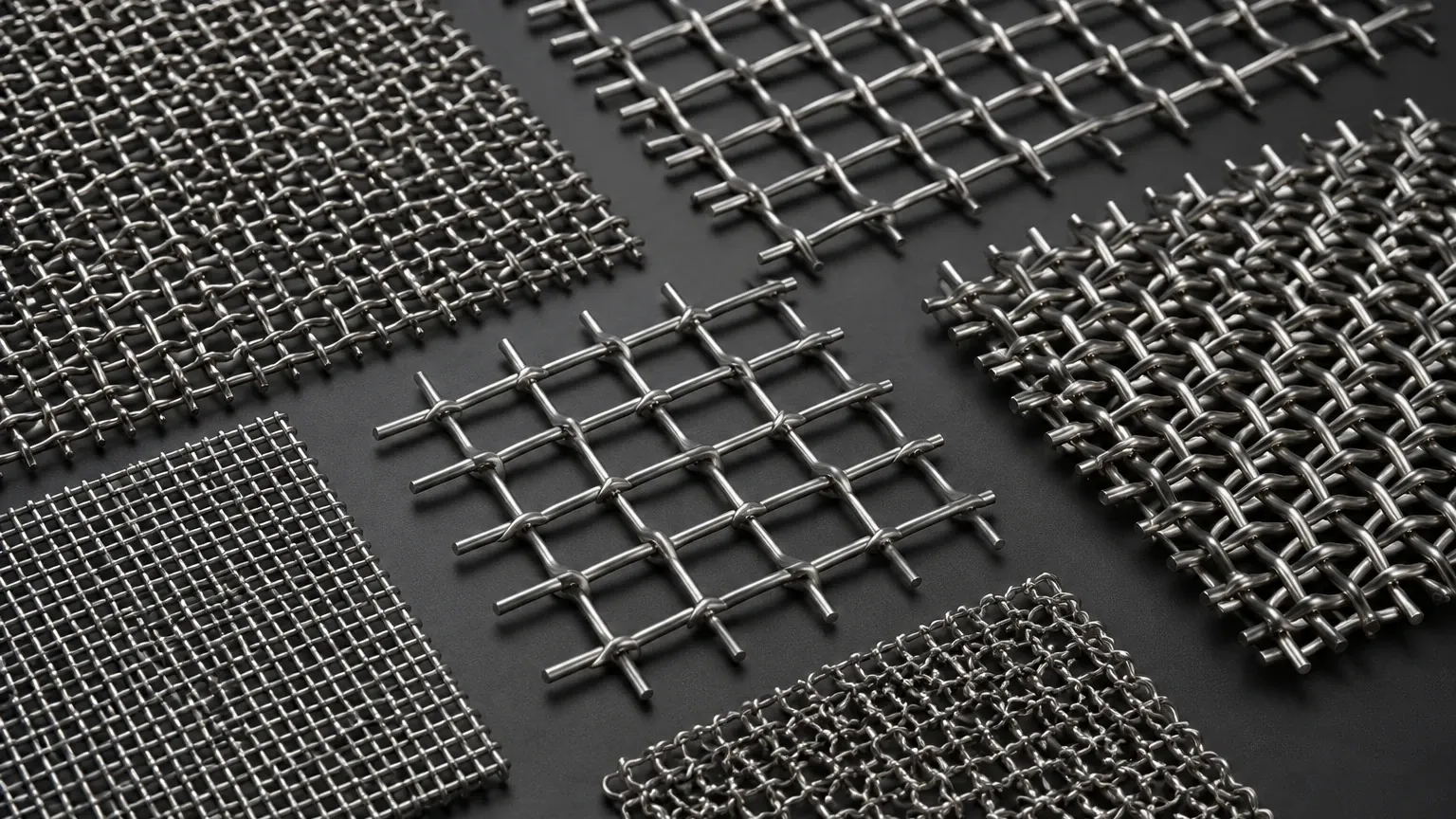
The way wires are interlaced significantly affects the performance of the fence. When reviewing woven wire fence ideas, engineers must choose between several primary weave styles:
Plain Weave
This is the most common and straightforward weave, where each warp wire crosses alternately over and under each weft wire. It provides the most consistent aperture size and is suitable for most standard industrial enclosures.
Twill Weave
In a twill weave, each warp wire passes over and under two weft wires. This allows for the use of heavier wire diameters than a plain weave of the same mesh count, resulting in a much stronger and more durable mesh for high-impact areas.
Crimped Mesh
For fencing applications, "crimped" mesh is often preferred. The wires are passed through a crimping machine to create indentations at the intersection points. This locks the wires in place, providing exceptional dimensional stability even when the mesh is subjected to mechanical stress or heavy loads.
Key Engineering Considerations Before Procurement
Before finalizing a design based on these woven wire fence ideas, purchasing teams and engineers should confirm several technical details with their manufacturer to ensure the product meets application requirements.
1. Mesh Count vs. Wire Diameter
The relationship between the number of wires per inch (mesh count) and the thickness of the wire (gauge) determines the strength and the open area. For a security fence, you might prioritize a larger wire diameter with a lower mesh count to maximize physical strength.
2. Edge Treatment and Framing
How the mesh is finished is vital for safety. For industrial fences, the edges should be either knuckled, welded into a U-channel frame, or capped to prevent sharp wire ends from causing injury. Plain, twill and dutch woven wire mesh in SS304/316L — rolls, cut mesh and framed panels. Send mesh count or micron target for a technical quote. provides the necessary versatility to meet these safety standards.
3. Environmental Exposure
Will the fence be exposed to high temperatures, cryogenic conditions, or corrosive chemicals? Stainless steel alloys maintain their mechanical properties across a wide temperature range, but specific coatings or specialized alloys may be necessary for extreme chemical exposure.
Common Risks and How to Mitigate Them
When implementing woven wire mesh in fencing applications, there are several risks to manage:
* Galvanic Corrosion: If stainless steel mesh is attached to a carbon steel frame without proper insulation, galvanic corrosion can occur. Always ensure that fasteners and frames are compatible with the mesh material.
* Vibration Fatigue: In environments with heavy machinery, constant vibration can cause wires to rub against each other at intersection points. Selecting a pre-crimped mesh or ensuring the mesh is properly tensioned within its frame can mitigate this risk.
* Incorrect Specification: Using a mesh that is too fine for a perimeter fence may lead to sagging, while a mesh that is too coarse may fail to meet safety regulations for finger-guards. Always consult with a technical expert to match the mesh specifications to the specific safety standard (such as ISO 13857 for machine safety).
Conclusion: Choosing the Right Partner for Custom Filtration and Enclosures
While woven wire mesh is a staple in the filtration industry, its properties make it an indispensable material for industrial fencing and enclosures. By focusing on material grade, weave precision, and structural design, engineers can create barriers that are not only functional but also durable enough to withstand the rigors of a professional industrial environment.
When sourcing materials for your next project, look for a manufacturer that understands the technical nuances of wire mesh production. From custom dimensions to specific alloy requirements, the right partner will provide the engineering support needed to turn woven wire fence ideas into high-performance reality. For those requiring precise specifications in stainless steel, exploring professional options in Woven Wire Mesh is the first step toward a reliable, long-term solution.
