


Woven Wire Fence Insulators: Engineering Guide for Industrial Mesh Systems
In the realm of industrial perimeter security and specialized agricultural containment, the integrity of a fencing system depends not only on the strength of the mesh itself but also on the hardware that supports its functionality. Woven wire mesh is a preferred material for high-tensile fencing due to its structural stability and resistance to impact. However, when these systems are electrified for enhanced security or livestock management, the role of woven wire fence insulators becomes critical. These components serve as the dielectric barrier between the conductive metal mesh and the support posts, ensuring that the electrical pulse remains within the fence line rather than grounding out through the structure.
For engineers and procurement professionals, selecting the right combination of mesh and insulation hardware requires an understanding of material science, environmental stressors, and mechanical tension. This guide explores the technical considerations for integrating woven wire fence insulators into high-performance industrial mesh systems.
The Relationship Between Woven Wire Mesh and Perimeter Security
Woven wire mesh is manufactured by interlacing individual wires over and under each other in various patterns. In industrial applications, the most common configurations include plain weave and twill weave, often utilizing high-grade stainless steel such as SS304 or SS316L. These materials are chosen for their exceptional corrosion resistance and tensile strength, making them ideal for long-term outdoor installations.
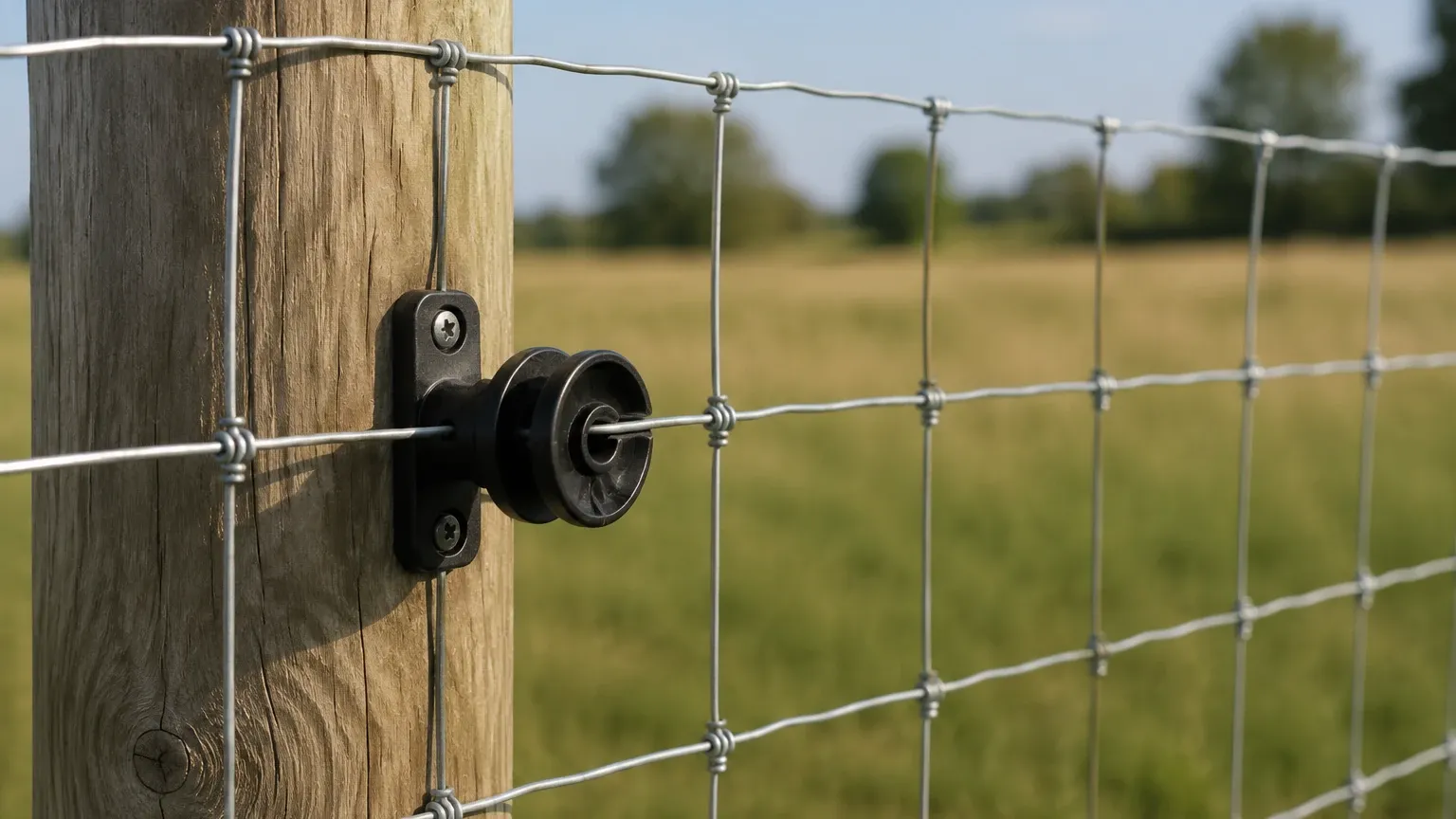
When used in fencing, the "woven" nature of the product provides a significant advantage over welded alternatives. The mechanical interlocking of the wires allows the fence to absorb impacts and adapt to uneven terrain without the risk of weld failure. However, the high conductivity of stainless steel means that any contact with a grounded support post will result in a short circuit if the system is electrified. This is where woven wire fence insulators are indispensable. They provide the necessary clearance and electrical resistance to maintain the voltage levels required for effective security.
For those sourcing materials for these demanding environments, it is essential to work with manufacturers who understand the nuances of mesh geometry. Plain, twill and dutch woven wire mesh in SS304/316L — rolls, cut mesh and framed panels. Send mesh count or micron target for a technical quote. provides the foundational strength needed for such systems, ensuring that the mesh can withstand the tension applied by modern insulation hardware.
Understanding the Function of Woven Wire Fence Insulators
The primary function of an insulator in a woven wire system is to prevent the flow of electrical current from the fence wire to the fence post. In an electrified setup, the fence acts as one part of an open circuit; the circuit is only completed when an intruder or animal touches the mesh and the ground simultaneously. If the mesh touches a metal or damp wooden post directly, the energy leaks into the earth, rendering the fence ineffective.
Dielectric Strength and Leakage Prevention
Effective woven wire fence insulators must possess high dielectric strength—the maximum electric field that the material can withstand without breaking down. In industrial security, where high-voltage energizers are used to deter intrusion over long distances, even minor leakage can significantly reduce the "shock" delivered at the end of the line. Insulators designed for woven wire must also account for the increased surface area of the mesh compared to a single strand of wire, requiring robust attachment points that do not compromise the mesh's structural integrity.
Mechanical Load Management
Woven wire fences are typically installed under high tension to prevent sagging and to resist scaling. Insulators must, therefore, act as load-bearing components. They must resist the lateral forces exerted by the mesh, especially in corners or over undulating topography. A failure in the insulator often leads to a failure in the entire security perimeter, as the mesh may sag and come into contact with grounded elements.
Material Selection and Dielectric Properties
When specifying woven wire fence insulators, material choice is the most significant factor affecting longevity and performance. Industrial environments expose these components to UV radiation, extreme temperature fluctuations, and chemical pollutants.
1. High-Density Polyethylene (HDPE) and Polypropylene: These are the most common materials for modern insulators. They offer excellent electrical resistance and are relatively cost-effective. However, for industrial use, these must be treated with UV stabilizers to prevent embrittlement. In high-tension woven wire applications, reinforced polymers are often required to prevent the wire from "cutting" into the insulator over time.
2. Porcelain and Ceramic: Historically the gold standard for insulation, ceramic insulators offer virtually infinite UV resistance and superior dielectric properties. They are ideal for high-voltage industrial applications where the mesh is expected to remain in place for decades. The drawback is their brittleness; they can crack if hit by heavy machinery or if the support posts shift significantly.
3. Glass-Reinforced Nylon: This material is frequently used for heavy-duty insulators that must support the weight of large woven wire mesh panels. It combines the electrical properties of polymers with the mechanical strength of composite materials, making it suitable for high-security perimeters in harsh climates.
Technical Challenges in Electrified Woven Wire Systems
Integrating insulators with woven wire mesh presents unique engineering challenges that differ from standard single-strand electric fences.
Arcing and Tracking
Because woven wire mesh consists of many intersecting points, there are numerous "sharp" edges where electrical charge can concentrate. If an insulator is poorly designed or becomes contaminated with salt, dust, or moisture, it can lead to "tracking." This is a process where a conductive path forms across the surface of the insulator, leading to arcing. Engineers must ensure that insulators provide a sufficient "creepage distance"—the shortest path along the surface of the insulation material between the conductive mesh and the grounded post.
Compatibility with Mesh Geometry
Not all insulators are compatible with the varied apertures of woven wire mesh. For a fine mesh used in high-security zones, the insulator must have a wide enough face to distribute the pressure across multiple wire intersections. Conversely, for wide-aperture agricultural mesh, the insulator needs a secure locking mechanism to prevent the mesh from sliding vertically. Custom-engineered clips or "pinlock" designs are often employed to ensure a fixed, stable connection that maintains consistent spacing between the mesh and the post.
Maintenance and Longevity of Industrial Mesh Components
An industrial filtration or fencing system is only as reliable as its weakest link. For woven wire fence insulators, the primary threat to longevity is environmental degradation. Regular inspection cycles are necessary to identify components that have begun to fail.
* UV Degradation: In sun-drenched regions, plastic insulators can become chalky and brittle. Once the surface integrity is lost, moisture can penetrate the material, leading to internal shorts.
* Physical Wear: In high-wind areas, the constant vibration of the woven wire mesh against the insulator can cause abrasive wear. This eventually thins the dielectric barrier. Specifying insulators with smooth, rounded contact points can mitigate this risk.
* Contamination Cleaning: In coastal or industrial areas, salt and soot buildup on the insulator surface can create a conductive bridge. Periodic cleaning or the use of "sheds" (the umbrella-like ridges on an insulator) helps redirect rainwater to wash away contaminants.
For systems utilizing high-quality stainless steel mesh, such as those provided by Kaifil, the mesh itself may outlast the insulators. Therefore, selecting high-tier insulation hardware is a matter of matching the service life of the mesh to the support components to minimize total cost of ownership.
Custom Solutions for Specialized Filtration and Mesh Applications
While woven wire fence insulators are specific to perimeter applications, the principles of mesh tension, material compatibility, and environmental resistance are central to all industrial mesh uses. Kaifil specializes in the manufacturing of high-precision woven wire mesh that serves diverse industries, from chemical processing to heavy-duty filtration.
In many industrial settings, woven wire mesh is integrated into larger frames or assemblies where it must be isolated from vibration or electrical interference. The expertise required to manufacture mesh that meets strict micron ratings or specific tensile requirements is the same expertise needed to design effective containment and security systems. Whether the application involves a complex hydraulic filter or a high-security electrified perimeter, the quality of the underlying woven wire mesh determines the performance ceiling of the entire installation.
Conclusion: Selecting the Right Components
Designing or maintaining a system that utilizes woven wire mesh requires a holistic approach to component selection. Woven wire fence insulators are not merely accessories; they are functional engineering components that dictate the reliability of electrified perimeters. By understanding the dielectric requirements, mechanical loads, and material limitations, procurement teams can ensure their installations remain secure and functional for their intended lifespan.
When sourcing the core material for these systems, it is vital to prioritize manufacturers who provide documented material grades and precision weaving. For industrial-grade solutions, Plain, twill and dutch woven wire mesh in SS304/316L — rolls, cut mesh and framed panels. Send mesh count or micron target for a technical quote. offers the technical foundation necessary for both high-performance filtration and robust security fencing. By combining high-quality stainless steel mesh with the appropriate insulation hardware, engineers can create durable, efficient, and low-maintenance systems tailored to the most demanding industrial environments.
