


Woven Wire Mesh: A Technical Guide to Visual Specifications and Industrial Applications
In the realm of industrial procurement and mechanical engineering, visual documentation plays a critical role in material selection. When professionals search for woven wire fence images or mesh patterns, they are often looking for more than just aesthetics; they are seeking a visual confirmation of structural integrity, weave precision, and material suitability for specific environments.
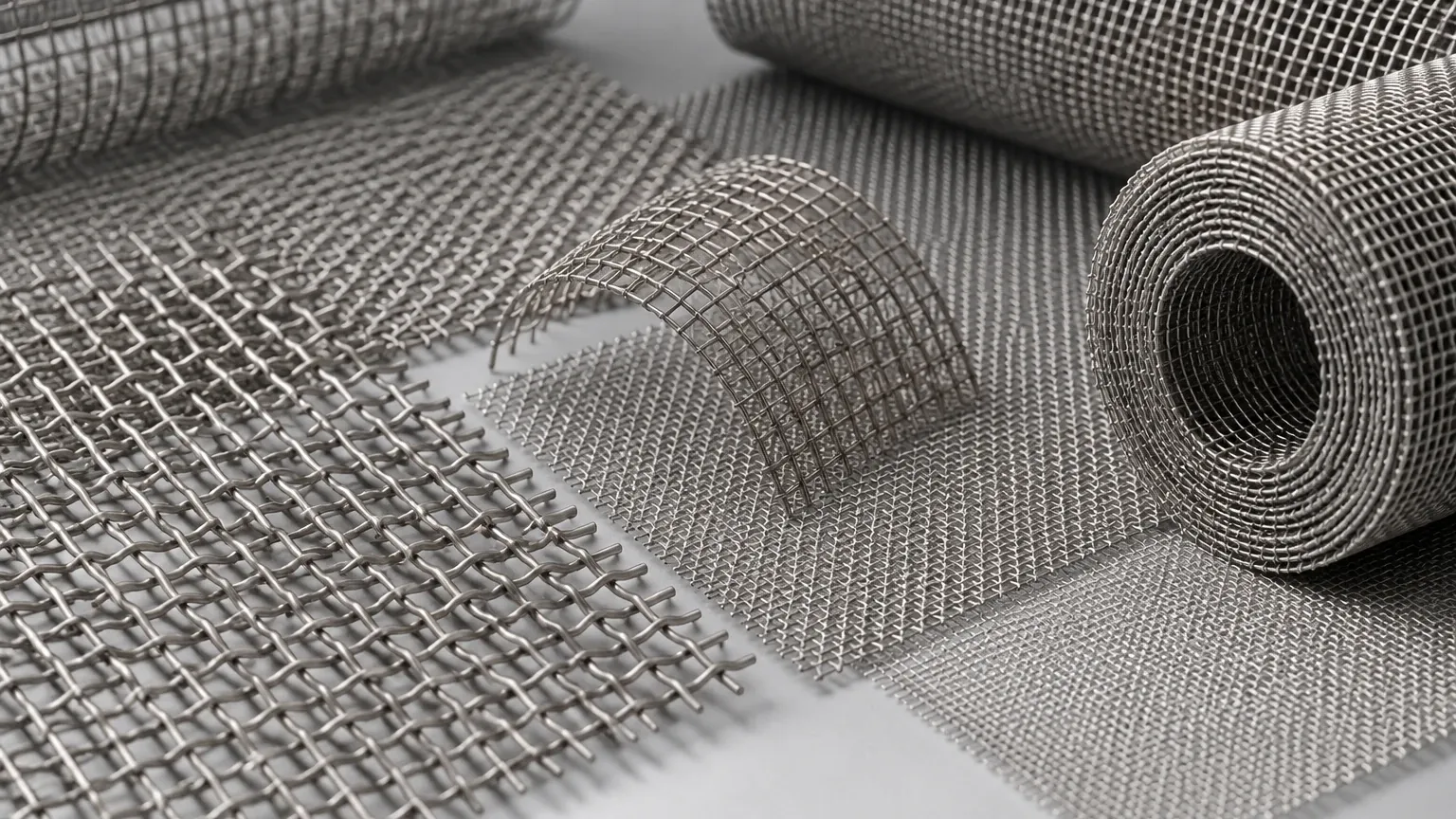
Plain, twill and dutch woven wire mesh in SS304/316L — rolls, cut mesh and framed panels. Send mesh count or micron target for a technical quote. serves as the foundation for high-performance filtration and industrial shielding. Understanding the visual and technical nuances of these materials is essential for engineers tasked with optimizing filtration efficiency or ensuring site security through robust industrial fencing and guarding solutions.
1. Decoding Woven Wire Mesh Patterns
The visual appearance of Woven Wire Mesh is determined by the weaving method, which directly impacts its mechanical properties and filtration performance. For B2B buyers, identifying the correct weave pattern from technical images is the first step in ensuring the component meets the application's demands.
Plain Weave
The most common pattern, the plain weave, features a simple over-and-under sequence. Visually, it presents as a uniform grid with square openings. It is the standard for general-purpose filtration and industrial screening where high flow rates and moderate strength are required. Because the wires are crimped at every intersection, it maintains excellent dimensional stability.
Twill Weave
In a twill weave, each shute wire passes successively over and under two warp wires. This creates a diagonal pattern that is visually distinct from the plain weave. This technique allows for the use of heavier wires in a given mesh count, providing greater strength and the ability to produce finer meshes that might otherwise be impossible with a standard plain weave.
Dutch Weave (Plain and Twill)
Dutch weaves are designed primarily for high-pressure filtration. Visually, these appear much denser, almost like a solid metal cloth, because the warp wires are thicker and the shute wires are driven close together. This creates a tortuous path for particles, offering superior filtration accuracy (micron ratings) compared to square mesh. When viewing images of Dutch weave, the lack of visible "daylight" through the mesh is a hallmark of its fine filtration capabilities.
2. Industrial Fencing vs. Filtration: Interpreting Woven Wire Fence Images
While the term "fence" often evokes images of agricultural or residential boundaries, in a B2B and industrial context, woven wire fence images typically represent high-tensile security screens, machine guards, and architectural partitions. These are not standard chain-link fences but precision-engineered barriers made from stainless steel or specialized alloys.
Security and Perimeter Protection
Industrial woven wire fences are utilized in high-security environments where resistance to cutting and impact is paramount. Unlike welded wire, woven mesh offers inherent flexibility that can absorb kinetic energy, making it ideal for safety enclosures in automated manufacturing cells. Visual inspection of these fences usually reveals a heavy-gauge wire with a tight aperture to prevent the passage of tools or hands.
Machine Guarding
In food processing and chemical plants, woven wire mesh serves as a protective barrier around moving parts. These guards must allow for airflow and visibility while maintaining strict safety standards. The choice of mesh count here is critical; it must be fine enough to meet OSHA or ISO safety requirements but open enough to prevent the buildup of heat or debris.
Architectural and Aesthetic Screens
Beyond utility, woven wire mesh is increasingly used in architectural applications for facades, wall coverings, and decorative partitions. In these instances, the visual data provided by high-resolution images helps architects determine how light will interact with the material and how the texture will contribute to the overall building design.
3. Material Selection: Beyond the Visual Surface
When evaluating Woven Wire Mesh through technical catalogs or samples, the material composition is as important as the weave pattern. Stainless steel is the industry standard due to its durability and resistance to environmental stressors.
* Grade 304: The most widely used stainless steel for woven mesh. It offers excellent corrosion resistance in most non-marine environments and is highly cost-effective for general industrial guarding and filtration.
* Grade 316/316L: Contains molybdenum, which provides superior resistance to chlorides and pitting. This is the preferred choice for pharmaceutical, food and beverage, and marine applications where chemical cleaning agents or salt spray are present.
* Specialty Alloys: For extreme environments, materials like Monel, Inconel, or Hastelloy may be used. These are visually similar to stainless steel but offer vastly different performance profiles regarding temperature resistance and chemical stability.
Engineers must confirm that the visual finish—whether it is a bright annealed finish or a matte pickled finish—aligns with the hygiene and maintenance requirements of the facility.
4. Technical Specifications: Quantifying What You See
An image of a mesh panel can be deceptive without the accompanying technical data. To move from a visual concept to a procurement specification, several key metrics must be confirmed:
Mesh Count
This refers to the number of openings per linear inch. A higher mesh count indicates a finer screen. For example, a 100-mesh screen has 100 openings per inch. When looking at woven wire fence images, a low mesh count (e.g., 2-mesh or 4-mesh) indicates a heavy-duty barrier, while a high mesh count (e.g., 200-mesh) indicates a fine filter cloth.
Wire Diameter
The thickness of the wire used in the weave affects both the open area and the mechanical strength. A thicker wire increases the weight and durability of the mesh but reduces the percentage of open area, which can impact flow rates in filtration or visibility in guarding applications.
Aperture (Opening Size)
The aperture is the clear distance between two adjacent wires. This is the most critical dimension for filtration, as it determines the maximum size of a particle that can pass through the mesh. In industrial safety, the aperture determines whether the mesh can prevent finger or hand ingress.
Percentage of Open Area
Calculated as `(Aperture^2 / (Aperture + Wire Diameter)^2) x 100`, this value tells engineers how much of the total surface area is actually open. This is vital for calculating pressure drops in hydraulic systems or airflow in ventilation guards.
5. Customization and Engineering Considerations
Standard off-the-shelf mesh often fails to meet the specific needs of complex industrial systems. Customization is where manufacturers like Kaifil provide significant value. When reviewing project requirements, engineers should consider the following modifications:
* Framing and Edging: For safety fences and filter panels, raw mesh edges can be hazardous and prone to fraying. Custom frames (U-edging, angle iron, or flat bars) provide structural support and ease of installation.
* Sintering: For high-pressure filtration, multiple layers of woven wire mesh can be sintered (diffusion bonded) together. This creates a rigid, highly durable filter medium that maintains its pore size even under extreme mechanical stress.
* Pleating: To increase the surface area within a small footprint, mesh can be pleated. This is common in stainless steel filter cartridges used in hydraulic and chemical processing.
* Surface Treatments: Depending on the application, mesh can be passivated, electropolished, or coated (e.g., PTFE or epoxy) to enhance corrosion resistance or non-stick properties.
6. Common Risks in Mesh Procurement
Relying solely on generic woven wire fence images without verifying manufacturer credentials can lead to several operational risks. B2B buyers should be aware of the following pitfalls:
1. Material Substitution: Lower-grade stainless steel (like 201) can look identical to 304 or 316 in photographs but will fail prematurely in corrosive environments. Always request material test reports (MTRs).
2. Inconsistent Weave Tension: Poorly manufactured mesh may have irregular openings or "loose" wires, which compromises filtration accuracy and structural integrity. High-quality images should show perfectly straight wires and uniform apertures.
3. Edge Fraying: In low-quality woven products, the edges may not be properly secured, leading to unraveling during installation or operation. This is particularly dangerous in food-grade applications where wire fragments could contaminate the product stream.
7. Conclusion: Making an Informed Decision
Whether you are sourcing material for a high-security perimeter or a precision chemical filter, the visual characteristics of Woven Wire Mesh are inseparable from its technical performance. By understanding how to interpret weave patterns, material grades, and aperture specifications, procurement teams can bridge the gap between a visual search for woven wire fence images and the successful implementation of a high-performance industrial solution.
When selecting a partner for your filtration or screening needs, prioritize manufacturers who offer deep technical expertise and the ability to provide customized, documented solutions. Accurate mesh selection not only ensures the safety and efficiency of your operations but also reduces the total cost of ownership by extending the replacement cycles of your components.
For engineers and purchasing managers, the next step involves moving beyond the image to the specification sheet. Confirming the mesh count, wire diameter, and alloy grade ensures that the final product will perform as expected in the most demanding industrial environments.
