


Woven Wire Fence Installation Guide: Engineering Industrial Barriers with Precision Mesh
In industrial environments, the term "fencing" extends beyond simple perimeter security. It encompasses machine guarding, cleanroom partitions, chemical storage enclosures, and high-durability safety barriers. For engineers and facility managers, the integrity of these structures depends heavily on the quality of the material and the precision of the installation. Utilizing high-grade stainless steel Woven Wire Mesh ensures that these barriers withstand corrosive atmospheres, mechanical stress, and rigorous cleaning protocols.
This woven wire fence installation guide provides a technical overview of the engineering considerations, material selection, and step-by-step procedures required to install industrial-grade wire mesh fencing and enclosures effectively.
1. Engineering Considerations for Industrial Mesh Enclosures
Before beginning any installation, it is critical to define the performance requirements of the barrier. Unlike standard commercial fencing, industrial woven wire mesh must often meet specific technical criteria regarding aperture size, wire diameter, and alloy composition.
Material Selection
The choice of alloy is the primary factor in the longevity of the installation.
* SS304: Suitable for general industrial use, providing excellent strength and basic corrosion resistance. It is commonly used for machine guards and internal warehouse partitions.
* SS316L: Essential for chemical processing plants, marine environments, or pharmaceutical facilities. The addition of molybdenum provides superior resistance to chlorides and acidic environments.
Mesh Configuration
The weave type influences both the visibility and the structural rigidity of the fence. While Plain, twill and dutch woven wire mesh in SS304/316L — rolls, cut mesh and framed panels. Send mesh count or micron target for a technical quote. are often discussed in filtration contexts, plain weave is the standard for industrial fencing due to its uniform opening sizes and predictable tensioning characteristics. For high-impact areas, a larger wire diameter with a lower mesh count provides the necessary mechanical resistance.
2. Pre-Installation Planning and Site Assessment
A successful woven wire fence installation guide begins with a thorough site assessment. In industrial settings, you must account for existing infrastructure, such as piping, electrical conduits, and HVAC ducting, which may require custom-cut mesh panels.
Load Calculations
Engineers must calculate the potential loads the fence will encounter. This includes:
* Impact Loads: In machine guarding, the mesh must be able to contain fragments or resist the force of a moving component.
* Wind Loads: For outdoor perimeter fencing, the "sail area" of the mesh must be calculated to determine post-spacing and depth.
* Vibrational Stress: In facilities with heavy machinery, the fastening system must be designed to resist loosening over time due to constant vibration.
Layout and Post Spacing
Standard industrial post spacing typically ranges from 4 to 8 feet, depending on the height of the enclosure and the gauge of the wire mesh. Accurate marking of post-center locations is vital to ensure that pre-cut mesh panels or framed units fit without the need for on-site modification, which can compromise the protective coatings of the steel.
3. Structural Framework and Post Installation
The framework provides the skeleton for the woven wire mesh. For industrial applications, heavy-duty square or round steel tubing is preferred over lightweight aluminum or wood.
Setting the Posts
1. Excavation: For floor-mounted internal partitions, posts are often secured via base plates and heavy-duty expansion bolts. For outdoor or soil-based installations, post holes should be excavated to a depth below the local frost line.
2. Alignment: Use a transit or laser level to ensure all posts are perfectly vertical (plumb) and aligned. Even a slight deviation can cause uneven tensioning in the mesh, leading to sagging or "oil-canning" effects.
3. Anchoring: If using base plates, ensure the concrete substrate is of sufficient PSI rating to handle the cantilevered load of the fence panels.
Rail Installation
Top and bottom rails are essential for maintaining the tension of the woven wire mesh. In high-security or safety-critical zones, a middle rail may be added to prevent the mesh from being pushed in or out. These rails should be welded or bolted securely to the posts using industrial-grade hardware.
4. Woven Wire Mesh Installation Process
Once the framework is secure, the installation of the mesh can proceed. This stage requires precision to ensure the mesh remains taut and aesthetically professional.
Handling and Unrolling
Stainless steel woven wire mesh is often delivered in rolls or flat panels. When handling rolls, it is important to avoid kinking the wire, as stainless steel has a "memory" and kinks can be difficult to remove, creating weak points in the fence. Use a flat, clean surface for unrolling and preliminary cutting.
Attaching the Mesh to the Framework
There are several professional methods for securing woven wire mesh to an industrial frame:
* Tension Bars and Bands: The mesh is threaded with a vertical tension bar, which is then secured to the post using tension bands. This is the most common method for long runs of fencing.
* U-Clips and Bolting: For modular partitions, the mesh is often held against the frame with U-shaped clips and through-bolts. This allows for easier replacement of individual sections if they become damaged.
* Welding: In permanent, high-vibration environments, the mesh may be tack-welded directly to the frame. However, this must be done carefully to avoid burning through the thin wires or compromising the corrosion resistance of the stainless steel.
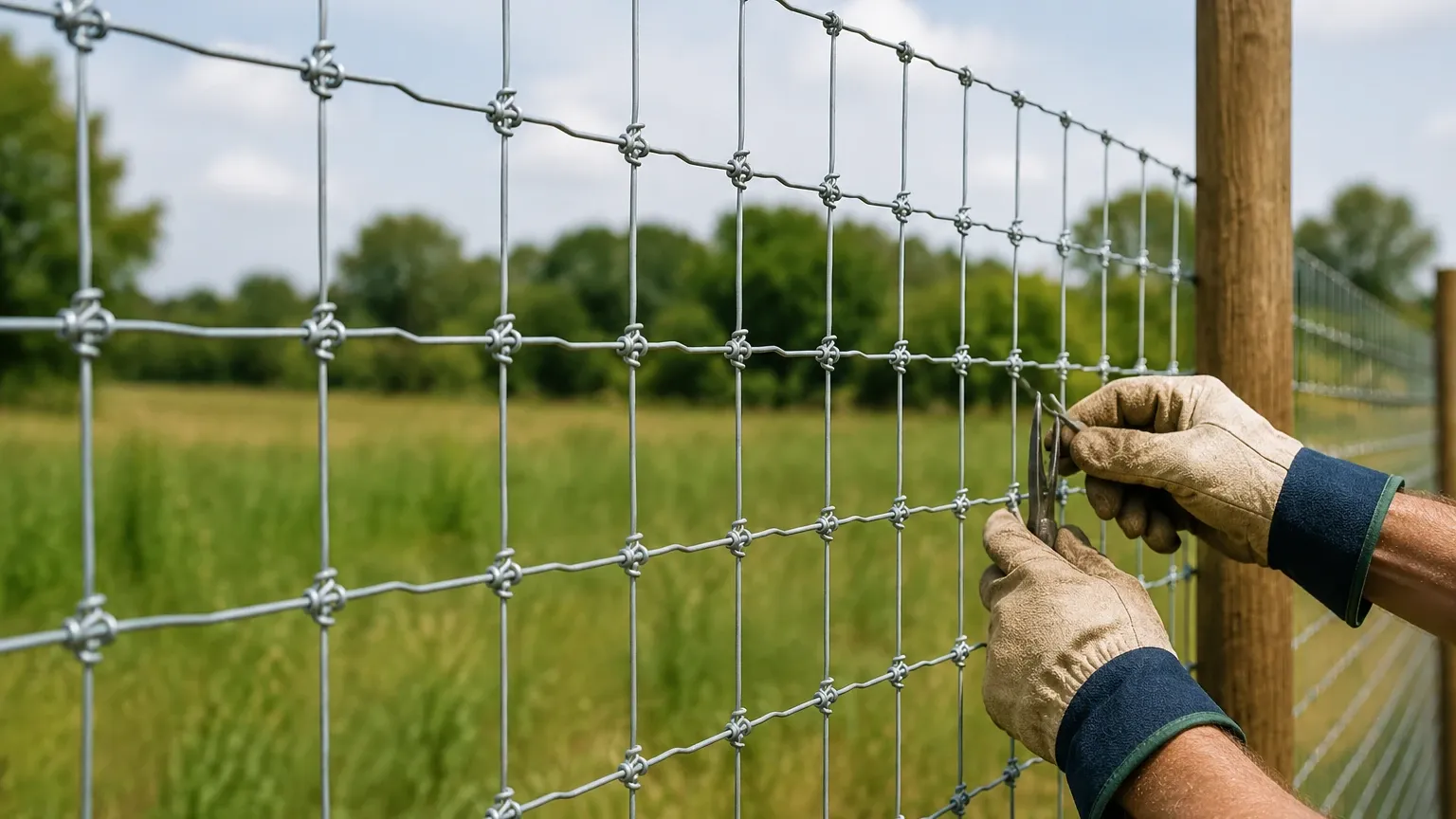
5. Tensioning and Fastening Techniques
Proper tensioning is what distinguishes a professional industrial installation from a temporary fix. A loose mesh is not only a safety hazard but also prone to premature fatigue failure.
Using Tensioning Tools
For large spans, a fence stretcher or come-along tool should be used to pull the mesh tight across the framework. The goal is to achieve a uniform tension that eliminates all visible waves or bulges.
Securing the Edges
Once the desired tension is achieved, the mesh must be fastened to the top and bottom rails. In pharmaceutical or food-grade environments, it is important to minimize "dead spaces" where contaminants can accumulate. Using a continuous flat bar to sandwich the mesh against the rail is a preferred method for these industries, as it provides a seal and distributes the fastening pressure evenly.
6. Customization and Integration of Components
Industrial woven wire fences often need to integrate with other facility systems. This may include:
* Access Points: Gates must be constructed with the same mesh specifications to maintain security. Ensure that gate frames are reinforced to prevent sagging under the weight of the stainless steel mesh.
* Cut-outs for Utilities: When the fence must pass around pipes or electrical trays, the edges of the cut mesh should be finished with a "U-edging" or trim to prevent sharp edges and maintain the structural integrity of the weave.
* Sensor Integration: For high-security zones, the mesh can be integrated with vibration sensors or fiber-optic detection systems. The stability of the woven wire mesh is critical here to prevent false alarms caused by wind-induced movement.
7. Maintenance and Long-Term Performance
While stainless steel woven wire mesh is exceptionally durable, a regular maintenance schedule is necessary to ensure the total cost of ownership remains low.
Cleaning Protocols
In food and beverage or pharmaceutical applications, the mesh should be cleaned using appropriate pressurized water or chemical sanitizers. Because Kaifil’s stainless steel mesh is resistant to corrosion, it can withstand frequent washdowns. However, ensure that the cleaning agents are compatible with the specific alloy (304 vs 316L) to prevent pitting.
Inspection Checklist
* Fastener Integrity: Check for loose bolts or broken welds, especially in high-vibration areas.
* Tension Levels: Over time, environmental factors or physical impacts may cause the mesh to lose tension. Re-tensioning should be performed as needed to maintain safety standards.
* Surface Contamination: In outdoor environments, check for "tea staining" (surface oxidation), which can be cleaned with specialized stainless steel cleaners to restore the material's aesthetic and protective properties.
Conclusion
Following a rigorous woven wire fence installation guide ensures that industrial enclosures provide the necessary protection and durability for demanding applications. From selecting the correct SS316L alloy for chemical resistance to ensuring precise tensioning across a structural frame, every step in the process contributes to the safety and efficiency of the facility.
For engineers requiring specific mesh counts or custom-framed panels for their next project, sourcing high-quality materials is the first step toward a successful installation. Reliable filtration and barrier solutions depend on the marriage of superior manufacturing and expert installation techniques.
