


Engineering Solutions for Woven Wire Fence on Hill: A Technical Guide to Industrial Mesh Installation
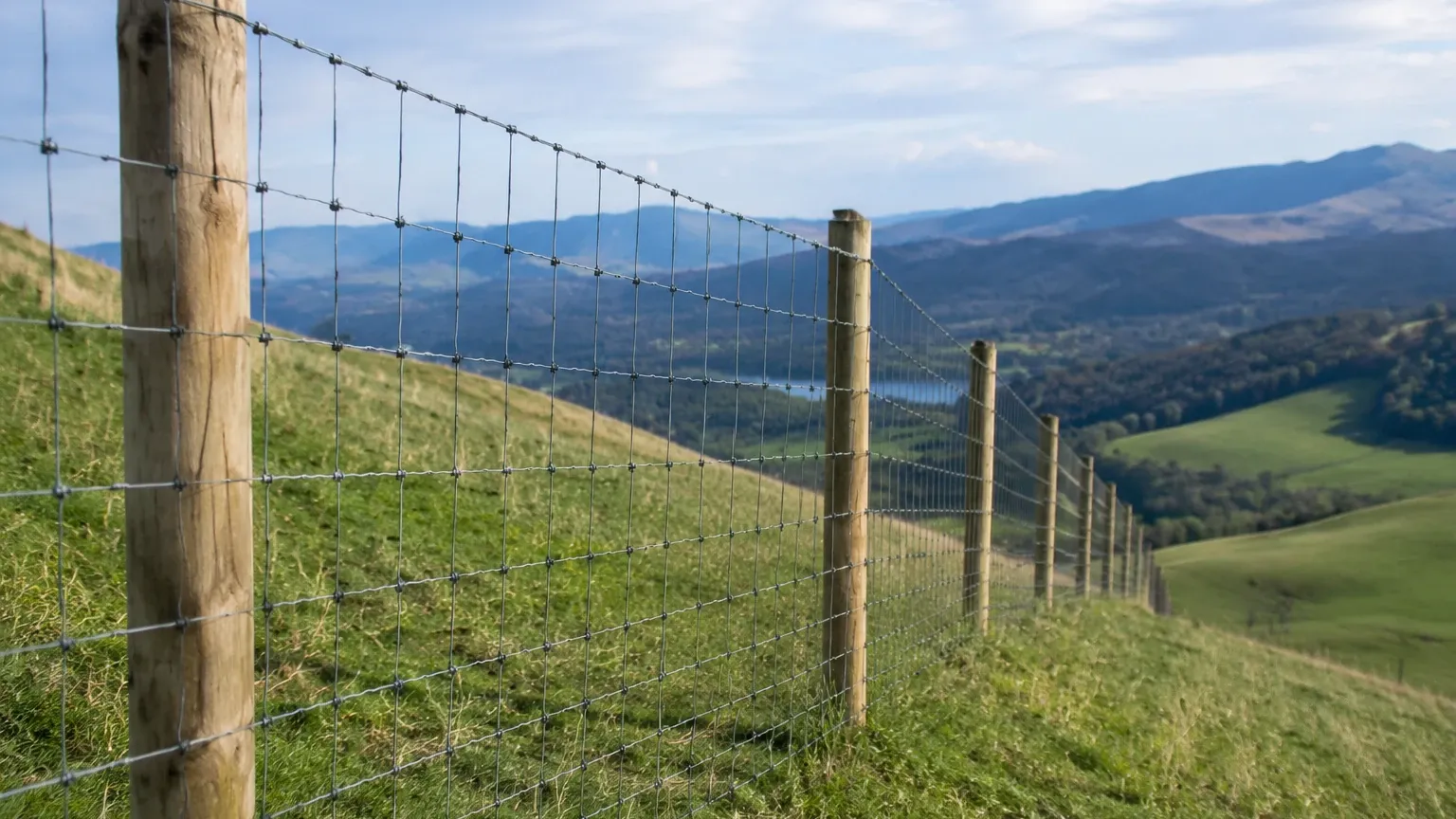
Installing a woven wire fence on hill terrains presents a unique set of engineering challenges that differ significantly from standard flat-ground installations. In industrial environments—such as chemical processing plants, water treatment facilities, or remote infrastructure sites—sloped terrain is often the rule rather than the exception. For engineers and procurement specialists, selecting the right material and installation methodology is critical to ensuring long-term structural integrity and filtration or containment performance.
When dealing with inclines, the choice of Woven Wire Mesh becomes a matter of balancing flexibility, tensile strength, and corrosion resistance. This guide examines the technical considerations, material specifications, and installation techniques required to successfully deploy woven wire barriers on uneven or sloped industrial landscapes.
Understanding the Mechanics of Woven Wire Mesh on Slopes
The primary difficulty in installing a woven wire fence on hill locations is the geometric conflict between a rectangular mesh grid and a non-horizontal ground line. Unlike flexible chain-link, high-precision industrial woven mesh is often manufactured with specific aperture sizes and wire diameters designed for rigid performance. When this mesh is forced to follow a slope, the internal stresses of the weave must be managed to prevent deformation of the openings.
Racking vs. Stepping Techniques
There are two primary methods for addressing a slope with woven wire mesh:
1. Racking (Bias Cutting or Parallelogramming): This involves adjusting the mesh so that the horizontal wires follow the slope while the vertical wires remain plumb. While this maintains a continuous barrier, it can distort the mesh apertures. For filtration-grade mesh where micron-level accuracy is required, racking is generally discouraged as it alters the effective opening size.
2. Stepping: This method involves installing the mesh in level, rectangular sections that "step" down the hill like a staircase. Each panel remains perfectly square, preserving the integrity of the Plain, twill and dutch woven wire mesh in SS304/316L — rolls, cut mesh and framed panels. Send mesh count or micron target for a technical quote. This is the preferred method for industrial applications where the mesh serves a dual purpose of containment and precise separation.
Material Selection: SS304 vs. SS316L for Sloped Environments
Industrial sites on hills are often exposed to higher wind loads and varying environmental stressors. Selecting the correct alloy is the first step in ensuring the longevity of the installation.
Stainless Steel 304 (SS304)
SS304 is the standard industrial grade, offering excellent durability and strength. It is suitable for most perimeter applications where the mesh is not in direct contact with highly corrosive chemicals or salt-spray environments. On a hill, the high tensile strength of SS304 helps the mesh resist the gravitational pull and tensioning forces required to keep the barrier taut.
Stainless Steel 316L (SS316L)
For sites involving chemical processing or coastal locations, SS316L is the authoritative choice. The addition of molybdenum provides superior resistance to pitting and crevice corrosion. In a woven wire fence on hill application, where moisture may collect at the base of the fence due to runoff, the enhanced corrosion resistance of 316L prevents premature structural failure at the ground-contact points.
Engineering Considerations for Tension and Load
A fence on a slope is subject to different physical loads than one on flat ground. Gravity exerts a downward force along the length of the mesh, which can lead to sagging if the tensioning system is not properly engineered.
Tension Distribution
On a hill, the tension is rarely uniform. The "top" post of a sloped section bears a significant portion of the downward pull. Engineers must specify heavy-duty terminal posts and bracing systems that can withstand these lateral and vertical forces. Using high-tensile woven wire mesh reduces the amount of stretching over time, which is vital for maintaining the security of the enclosure.
Wind Loading and Mesh Density
The mesh count—the number of wires per linear inch—directly impacts the wind load. On elevated slopes or hills, wind speeds are often higher. A dense mesh with a high mesh count acts more like a solid sail than a porous barrier. It is essential to calculate the potential wind pressure on the woven wire fence on hill to determine the required post depth and diameter. For applications requiring fine filtration or debris containment, a balanced approach between aperture size and structural support is necessary.
Customization and OEM Solutions for Complex Terrains
Standard off-the-shelf mesh rolls may not always meet the requirements of a complex industrial slope. Customization at the manufacturing level can significantly simplify the installation process and improve the final outcome.
Pre-Cut Panels and Framed Components
For the "stepping" method mentioned earlier, using pre-cut, framed panels is often the most efficient solution. Kaifil specializes in providing custom-dimensioned framed panels that can be manufactured to match the specific "step" heights required by the site's topography. This ensures that the Woven Wire Mesh arrives on-site ready for installation, reducing labor costs and minimizing material waste.
Custom Mesh Counts and Micron Targets
In some industrial scenarios, the fence on a hill serves as a safety guard or a primary filtration barrier for runoff. In these cases, the mesh must meet specific micron targets. Whether the application requires a robust plain weave for physical security or a complex Dutch weave for fine particle retention, selecting a manufacturer capable of producing custom specifications is paramount.
Installation Best Practices for Sloped Industrial Sites
To ensure a successful installation of a woven wire fence on hill areas, technical teams should follow a structured approach:
1. Topographical Survey: Before ordering material, a precise survey of the slope angle is required. This determines whether racking is possible or if stepping is mandatory.
2. Post Foundation Engineering: On a hill, the soil stability may vary. Posts on the downhill side of a slope may require deeper footings or reinforced concrete to resist the "overturning moment" caused by the weight of the mesh and potential wind or snow loads.
3. Intermediate Bracing: For long sloped runs, intermediate pull posts should be installed every 50 to 100 feet to isolate tension sections. This prevents a failure in one section from compromising the entire line.
4. Hardware Compatibility: Ensure all fasteners, tension bars, and bolts are of the same grade as the mesh (e.g., SS316 hardware for SS316L mesh) to prevent galvanic corrosion.
Maintenance and Long-Term Performance Expectations
The total cost of ownership for an industrial woven wire barrier is heavily influenced by its maintenance requirements. A properly installed woven wire fence on hill using high-quality stainless steel should require minimal intervention.
* Debris Management: Sloped fences often catch rolling debris or sediment from runoff. Regular inspections are necessary to ensure that the mesh apertures remain clear and that the weight of accumulated debris does not stress the mesh.
* Tension Checks: Over the first few seasons, thermal expansion and contraction may necessitate slight adjustments to the tensioning system. High-quality woven mesh from reputable manufacturers like Kaifil is designed to have minimal permanent elongation, reducing the frequency of these adjustments.
Conclusion: Selecting the Right Partner for Filtration and Containment
Designing and installing a woven wire fence on hill terrain requires more than just standard fencing knowledge; it requires an understanding of material science and structural engineering. By selecting high-performance Woven Wire Mesh and employing the correct installation techniques, industrial operators can ensure their barriers remain effective for decades.
Whether your project requires a simple perimeter guard or a complex, micron-rated filtration barrier on a challenging incline, the technical specifications of the mesh will determine the project's success. Focusing on grade-A materials like SS304 and SS316L, and opting for customized solutions such as framed panels, provides the reliability needed in demanding industrial environments. For those in the procurement and engineering phases, confirming the mesh count, wire diameter, and alloy type is the essential next step in securing a high-performance filtration or containment solution.
