


Woven Wire Mesh: Engineering Solutions for Industrial Fencing on Uneven Ground
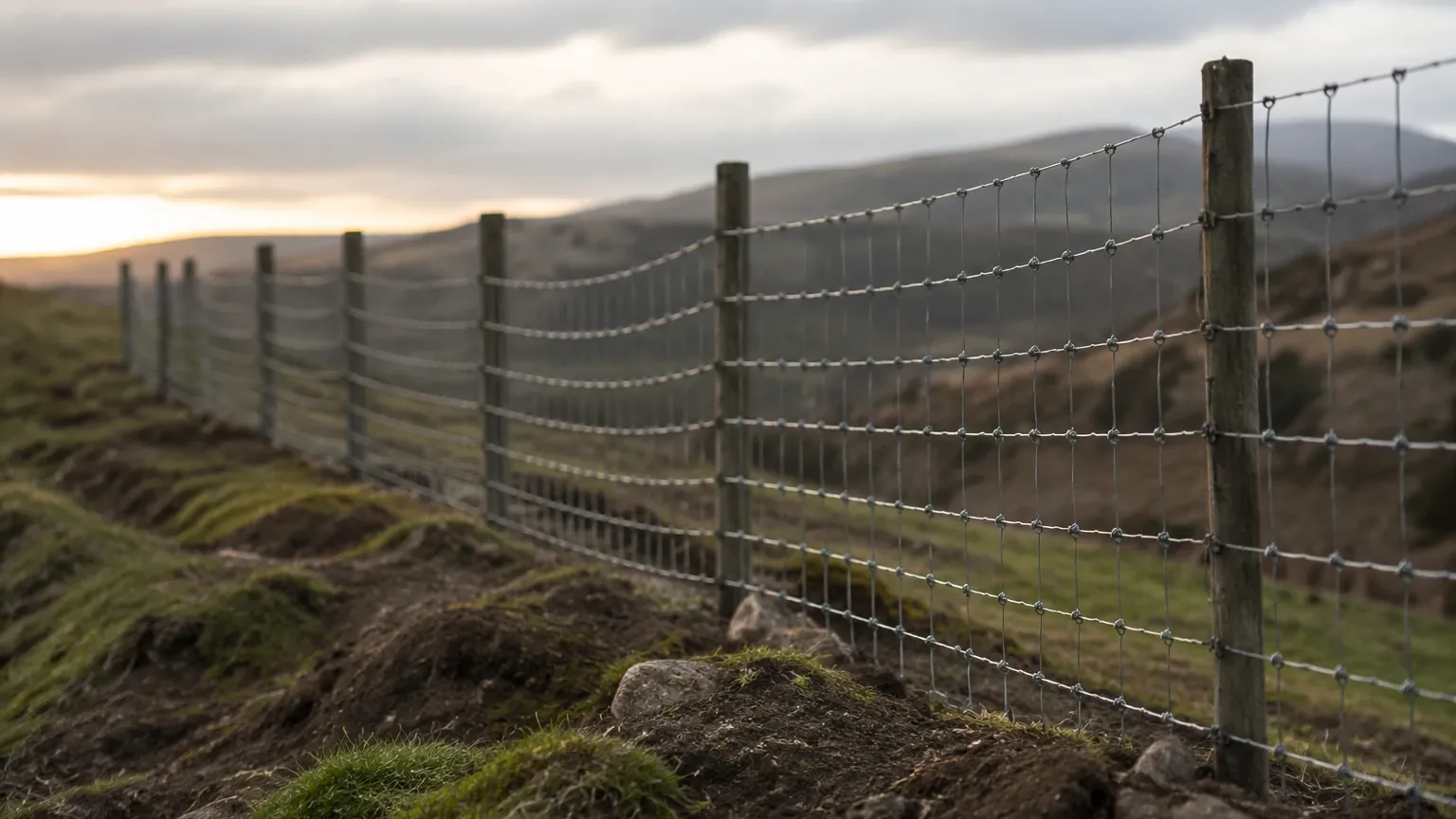
In industrial environments, the requirement for robust, corrosion-resistant barriers often extends beyond standard flat-surface installations. Whether for perimeter security at a chemical processing plant, safety enclosures in a food production facility, or specialized containment in water treatment works, Woven Wire Mesh serves as a foundational material. However, when the site topography presents slopes, dips, or irregular elevations, the engineering complexity increases significantly. Installing a woven wire fence on uneven ground requires a deep understanding of material properties, tension dynamics, and structural adaptation techniques to ensure long-term performance and security.
From a technical perspective, the challenge is not merely aesthetic. Inconsistent terrain affects the distribution of load across the mesh, potentially leading to sagging, structural fatigue, or gaps that compromise the integrity of the enclosure. This guide explores the engineering considerations, material selections, and installation methodologies required to successfully deploy high-performance mesh solutions in challenging topographical conditions.
The Role of Woven Wire Mesh in Industrial Infrastructure
Woven wire mesh is manufactured by weaving individual wires over and under one another in various patterns, most commonly plain, twill, or dutch weaves. In industrial fencing and structural applications, the primary focus is often on the mesh's ability to provide high visibility, airflow, and extreme durability. Unlike welded wire, which can be prone to joint failure under stress, woven mesh allows for a degree of mechanical flexibility that is critical when dealing with the thermal expansion and structural shifts common in industrial settings.
For engineers and procurement teams, the choice of mesh begins with material science. Stainless steel, particularly grades SS304 and SS316L, is the industry standard for demanding environments. SS304 offers excellent strength and basic corrosion resistance, while SS316L, with its molybdenum content, provides superior protection against chlorides and acidic environments—making it the preferred choice for coastal facilities or chemical processing zones. When these materials are used for a woven wire fence on uneven ground, the inherent tensile strength of the stainless steel ensures that the mesh can withstand the uneven tensioning required to follow the land's contour.
Technical Challenges of Installing Woven Wire Fence on Uneven Ground
When a fence line encounters a change in grade, the geometric relationship between the mesh and the support posts changes. In a standard flat installation, the mesh is a rectangle. On a slope, that rectangle must either become a parallelogram (racking) or be broken into smaller, offset segments (stepping).
1. Tension Distribution
In a filtration cartridge or a flat panel, tension is usually uniform. On uneven ground, the tension applied to the top wire of the mesh may differ significantly from the tension on the bottom wire. If not properly calculated, this leads to "scalloping" or sagging, where the mesh loses its structural rigidity. For industrial-grade woven mesh, which often utilizes thicker wire diameters, the force required to maintain a taut surface on a slope can be substantial, necessitating reinforced terminal posts.
2. Mesh Distortion
Certain weave types are more "forgiving" than others. A loose plain weave may allow for some degree of racking, where the mesh is angled to follow a slope while the posts remain vertical. However, high-precision industrial mesh designed for security or filtration-grade containment is often too rigid for significant racking. Attempting to rack a rigid mesh can cause the wires to shift out of their precise alignment, altering the open area and compromising the mesh's specified performance metrics.
Structural Methods for Managing Topographical Variations
There are two primary engineering approaches to installing woven wire mesh on irregular terrain: the Stepping Method and the Contouring (or Racking) Method. The choice between these depends on the mesh specifications and the severity of the grade change.
The Stepping Method
The stepping method is the most common approach for rigid, high-gauge stainless steel woven mesh. In this configuration, the mesh is installed in level panels that "step" up or down the slope like a staircase.
* Advantages: It maintains the structural integrity of the mesh weave, as each panel remains a perfect rectangle. This is critical when the mesh must meet specific aperture requirements for safety or filtration.
* Engineering Consideration: The primary challenge with stepping is the gap created at the bottom of the fence near the downhill post. In industrial security applications, these gaps must be closed using custom-cut mesh "fillers" or by burying the bottom portion of the panel, which requires high-grade SS316L to prevent underground corrosion.
The Contouring and Racking Method
Racking involves tilting the horizontal wires of the mesh so they follow the slope while the vertical wires remain parallel to the fence posts.
* Limitations: Most industrial woven wire mesh is designed for stability and does not rack easily. If a project requires contouring, engineers must specify a weave with a higher degree of flexibility, or the mesh must be custom-fabricated with a bias cut.
* Custom Fabrication: For critical infrastructure, the most effective solution is often to provide the manufacturer with exact topographical data. This allows for the production of Plain, twill and dutch woven wire mesh in SS304/316L — rolls, cut mesh and framed panels. Send mesh count or micron target for a technical quote. that is pre-cut to the specific angles required by the site's elevation changes.
Material Specifications: Selecting Alloys for Durability
In B2B procurement, the total cost of ownership (TCO) is a more vital metric than the initial purchase price. This is particularly true for fencing on uneven ground, where maintenance and replacement are more labor-intensive due to the difficult terrain.
| Feature | Stainless Steel 304 | Stainless Steel 316L |
| :— | :— | :— |
| Corrosion Resistance | High (Standard Industrial) | Excellent (Marine/Chemical) |
| Tensile Strength | ~505 MPa | ~485 MPa |
| Best Use Case | Indoor enclosures, general perimeter | Chemical plants, high-moisture areas |
| Longevity | 15-20+ years | 25-30+ years |
Selecting the right wire diameter (gauge) is also essential. For industrial fencing, a larger wire diameter provides the impact resistance necessary to protect equipment or personnel. However, thicker wires are less flexible, reinforcing the need for the "stepping" method or precision custom-cut panels when dealing with uneven ground.
Engineering Considerations for Tension and Stability
For any industrial mesh installation, the support structure is as important as the mesh itself. On uneven ground, the physics of the fence changes:
1. Terminal Post Anchoring: On a slope, the downhill terminal post often bears a greater lateral load. Engineers should specify deeper footings or increased concrete mass for these posts to prevent leaning over time.
2. Tension Bars and Bands: When using woven wire mesh, tension bars should be used at every start, stop, and corner. On uneven ground, these bars must be perfectly aligned with the mesh's vertical wires to ensure even pull across the entire height of the panel.
3. Horizontal Support Rails: In many industrial applications, adding a top and bottom rail provides the necessary rigidity to prevent the mesh from bowing. On a slope, these rails must be mitered at the correct angles to maintain a seamless connection with the posts.
The Importance of Precision in Custom Mesh Fabrication
Standard off-the-shelf fencing products often fail to meet the rigorous standards of industrial facilities, especially when complex topography is involved. Custom manufacturing allows for the adjustment of several key variables:
* Mesh Count and Aperture: Ensuring the mesh provides the exact level of airflow or containment required, regardless of the installation angle.
* Edge Treatment: For uneven ground, custom-welded borders or reinforced edges can be added to panels to simplify installation and increase safety by eliminating sharp wire ends.
* Coating and Finishing: While stainless steel is naturally resistant, additional passivating or electropolishing can be applied to custom components to further enhance corrosion resistance in extreme environments.
As a professional manufacturer, Kaifil specializes in providing these types of tailored solutions. By working closely with engineering teams during the design phase, we ensure that the woven wire mesh provided is not just a raw material, but a precision-engineered component ready for the specific challenges of the site.
Conclusion: Optimizing Performance for Challenging Terrains
Installing a Woven Wire Mesh fence on uneven ground is an engineering task that demands a balance between material rigidity and topographical adaptability. By selecting the appropriate stainless steel grade, determining the optimal installation method (stepping vs. racking), and utilizing custom-fabricated panels, industrial facilities can achieve a secure, durable, and low-maintenance barrier.
For engineers and purchasing managers, the key to success lies in early collaboration with the manufacturer. Confirming technical specifications such as wire diameter, mesh count, and alloy grade ensures that the final installation will withstand both environmental stressors and the mechanical demands of uneven tensioning.
If your project involves complex filtration or structural mesh requirements on challenging sites, we invite you to Review product options and application support to find the right technical fit for your specific industrial application. Whether you require standard rolls or precision-framed panels, selecting high-quality stainless steel woven wire mesh is the first step toward a high-performance, long-lasting solution.
