


Understanding the Industrial Application of Woven Wire Mesh in Reel Formats
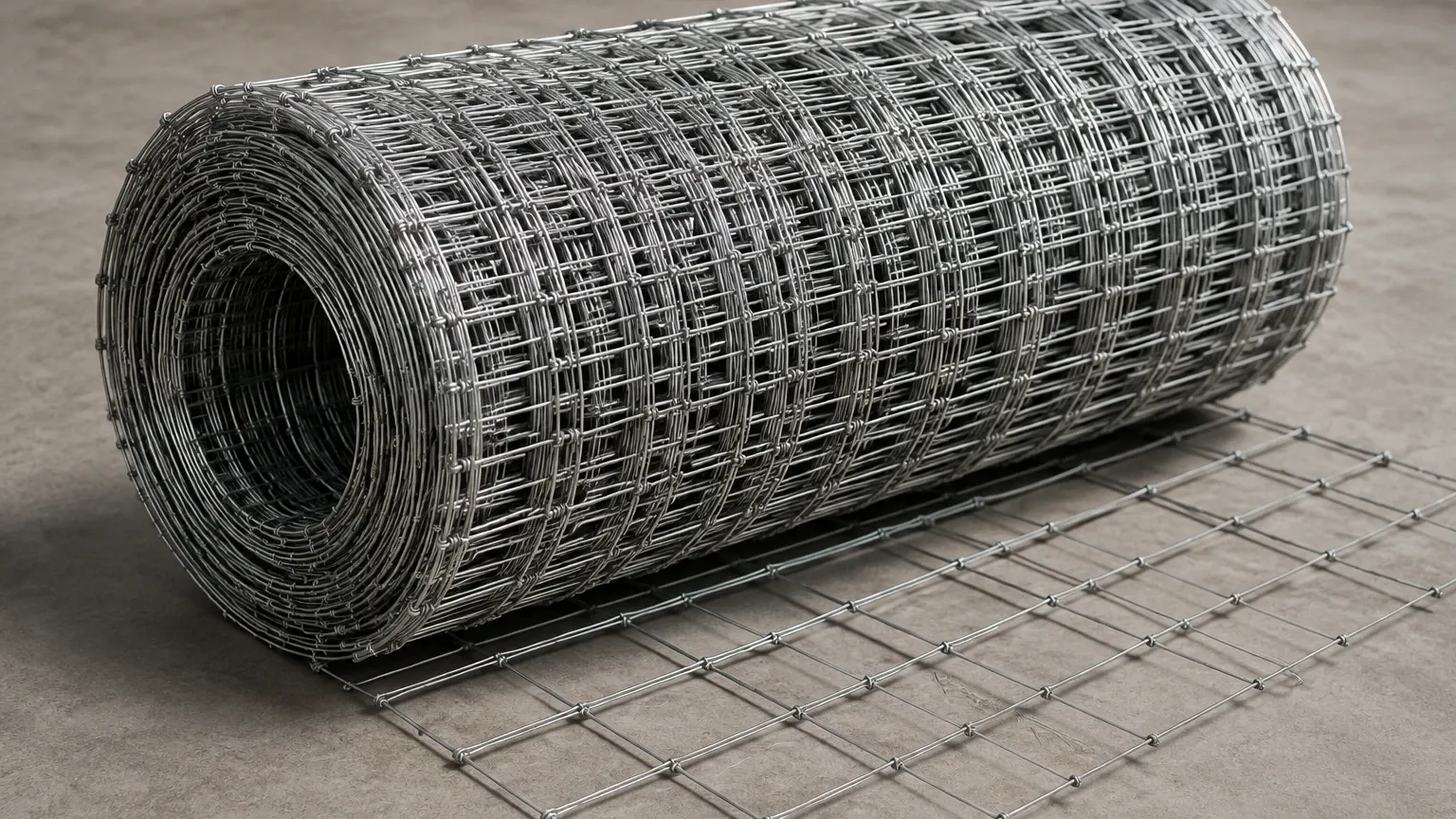
In industrial engineering and facility management, the procurement of high-quality containment and filtration materials is a critical factor in operational efficiency. While the term "woven wire fence reel" often evokes imagery of agricultural boundaries, its application within the B2B sector—specifically in chemical processing, food production, and pharmaceutical manufacturing—is far more technical. In these environments, Woven Wire Mesh serves as a precision-engineered component used for machine guarding, safety partitions, and primary filtration support.
Selecting the correct mesh reel requires a deep understanding of material science, weave geometry, and mechanical properties. This guide examines the technical specifications of woven wire products, focusing on how engineers can evaluate these materials for demanding industrial applications.
Technical Specifications of Industrial Woven Wire Mesh
The performance of a woven wire fence reel in an industrial setting is dictated by its physical construction. Unlike standard fencing, industrial-grade mesh must adhere to strict tolerances regarding wire diameter, aperture size, and alloy composition.
Material Selection: SS304 vs. SS316L
Stainless steel is the industry standard for woven wire due to its balance of strength and corrosion resistance.
* Grade 304: This is the most common grade used for general industrial applications. It provides excellent durability and resistance to oxidation. It is suitable for machine guards and partitions where exposure to highly corrosive chemicals is limited.
* Grade 316L: For environments involving marine exposure, high-salinity processing, or aggressive chemical agents, 316L is preferred. The addition of molybdenum enhances its resistance to pitting and crevice corrosion, making it the authoritative choice for pharmaceutical and chemical filtration systems.
Weave Types and Their Functions
The method by which the wires are interlaced determines the mesh's stability and filtration capabilities.
1. Plain Weave: The most straightforward construction where each warp wire crosses alternately over and under each shute wire. This provides consistent opening sizes and is the standard for most industrial safety "fences."
2. Twill Weave: Each shute wire passes successively over and under two warp wires. This allows for a heavier wire diameter to be used with a given mesh count, increasing the overall strength of the reel.
3. Dutch Weave: Primarily used for high-pressure filtration rather than fencing, this weave features a higher density of wires, resulting in much finer apertures and superior mechanical strength.
The Role of the Woven Wire Fence Reel in Facility Safety
In a manufacturing plant, a woven wire fence reel is frequently utilized to create custom machine guards and safety enclosures. These barriers are essential for OSHA compliance and the protection of personnel from moving parts or high-temperature equipment.
Impact Resistance and Structural Integrity
When selecting a reel for safety partitions, engineers must calculate the required tensile strength. The wire diameter (often measured in gauges or millimeters) directly correlates to the mesh's ability to withstand impact. A heavier gauge woven wire fence reel ensures that the barrier remains rigid under mechanical stress, preventing deformation that could compromise safety distances between workers and machinery.
Visibility and Airflow
One of the primary advantages of using woven wire mesh over solid sheet metal for industrial fencing is the maintenance of airflow and visibility. High-precision mesh allows for the ventilation of heat-generating equipment while ensuring that operators can visually inspect processes without removing safety barriers. Engineers must balance the "open area percentage" to ensure sufficient airflow while maintaining a small enough aperture to prevent fingers or tools from passing through the mesh.
Engineering Considerations: Mesh Count vs. Aperture
For technical professionals, the distinction between mesh count and aperture (opening size) is vital when ordering from a woven wire fence reel.
* Mesh Count: Refers to the number of openings per linear inch. A higher mesh count indicates a finer mesh.
* Aperture: The clear distance between two adjacent wires. This is the most critical measurement for filtration and containment applications.
When a project requires a specific micron rating for filtration, the relationship between wire diameter and mesh count must be precisely calculated. For instance, a thicker wire will decrease the aperture size for the same mesh count, thereby reducing the open area. Technical teams should consult with manufacturers like Kaifil to ensure the selected Plain, twill and dutch woven wire mesh in SS304/316L — rolls, cut mesh and framed panels. Send mesh count or micron target for a technical quote. meets the exact flow rate or containment requirements of the system.
Installation and Handling of Mesh Reels
Supplying woven wire mesh in a reel format offers logistical advantages, particularly for large-scale installations. However, handling these bulk rolls requires specific engineering considerations to maintain the integrity of the weave.
Tensioning and Framing
To function effectively as a fence or guard, the mesh must be properly tensioned. In industrial applications, the mesh is often cut from the reel and secured into a rigid frame. Improper tensioning can lead to "sagging," which not only looks unprofessional but can also create vibration-induced noise or mechanical failure over time. Using specialized tensioning bolts or welding the mesh to a pre-fabricated angle-iron frame is the recommended approach for permanent installations.
Cutting and Edge Treatment
Cutting stainless steel woven wire requires specialized tools to prevent fraying. For safety partitions, the edges of the mesh cut from the reel must be treated—either by folding, binding, or welding—to eliminate sharp wire ends that could pose a laceration hazard to personnel. In filtration applications, edge treatment is equally important to prevent bypass, where unfiltered media escapes around the perimeter of the mesh.
Durability and Total Cost of Ownership (TCO)
While the initial cost of a stainless steel woven wire fence reel may be higher than galvanized or plastic alternatives, the Total Cost of Ownership (TCO) is significantly lower in industrial environments.
Corrosion and Heat Resistance
In industries such as food processing, equipment undergoes rigorous CIP (Clean-in-Place) cycles involving caustic chemicals and high-pressure steam. A 316L stainless steel mesh reel will withstand these conditions for years without rusting or degrading. This longevity reduces the frequency of replacement, minimizing downtime and labor costs associated with maintenance.
Maintenance Protocols
Maintaining woven wire mesh is relatively straightforward. Because of the smooth surface of stainless steel, contaminants are less likely to adhere to the wires. Regular cleaning with appropriate solvents or ultrasonic cleaning (for smaller filtration components) ensures the mesh remains functional and hygienic, which is a non-negotiable requirement in pharmaceutical and food-grade applications.
Critical Confirmation Steps for Purchasing Teams
Before finalizing a purchase of a woven wire fence reel, procurement officers and engineers should confirm several key data points with the manufacturer to ensure the product is fit for purpose:
1. Alloy Verification: Request a Material Test Report (MTR) to confirm the chemical composition of the stainless steel (e.g., ensuring 316L contains the required 2-3% molybdenum).
2. Dimensional Tolerances: Confirm the allowable variance in wire diameter and aperture size. For high-precision filtration, even a small deviation can lead to inconsistent performance.
3. Roll Dimensions: Ensure the width and length of the reel are optimized for the project to minimize scrap waste during the cutting process.
4. Compliance Standards: Verify if the mesh meets relevant industry standards such as ASTM E2014 (Standard Guide for Metallographic Laboratory Safety) or ISO 9044 (Industrial Wire Screens).
Conclusion
The industrial application of a woven wire fence reel extends far beyond simple perimeter security. Whether it is used as a robust safety guard in a manufacturing plant or as the primary media in a complex filtration system, the quality of the Woven Wire Mesh is paramount. By focusing on material grade, weave precision, and mechanical properties, engineers can select a solution that provides long-term reliability and safety.
Kaifil specializes in providing customized stainless steel filtration and containment solutions. By understanding the technical nuances of mesh production, we help industrial partners achieve optimal performance in their most demanding environments. When evaluating your next requirement for woven wire products, prioritize technical specifications and material integrity to ensure your facility operates at peak efficiency.
