


Woven Wire Mesh Installation: Engineering Insights and Tensioning Best Practices
In industrial applications, the performance of Woven Wire Mesh is inextricably linked to the quality of its installation. Whether the mesh is utilized for high-precision chemical filtration, architectural screening, or heavy-duty perimeter security, achieving the correct tension is a critical technical requirement. While many operators search for a woven wire fence stretcher video to understand the basic mechanics of mesh tensioning, industrial-grade applications demand a more sophisticated approach to ensure structural integrity and filtration accuracy.
At Kaifil, we specialize in manufacturing high-performance stainless steel filtration solutions. We understand that even the highest quality SS316L mesh will fail prematurely if it is not properly supported or tensioned. This article explores the engineering principles behind mesh tensioning, the tools required for successful installation, and the technical considerations that procurement teams must evaluate when selecting mesh for demanding environments.
The Critical Role of Tensioning in Industrial Filtration
Tensioning is the process of applying uniform stress across the surface of a woven wire mesh panel to eliminate sagging, fluttering, and mechanical fatigue. In a filtration context, improper tensioning can lead to several failure modes that compromise the entire process.
1. Preventing Mechanical Fatigue
In systems where the mesh is subjected to high-pressure pulses or vibrating loads—such as in vibrating separators or hydraulic filters—any slack in the mesh allows for micro-movements. These movements lead to work-hardening of the wire at the contact points, eventually causing the wires to snap. A properly tensioned mesh acts as a rigid diaphragm, distributing stress evenly across the support structure.
2. Maintaining Filtration Accuracy
For fine filtration, the geometry of the pore size must remain constant. If a mesh is loosely installed, the apertures (openings) can distort under fluid pressure. This "mesh migration" or pore enlargement allows larger particles to bypass the filter, rendering the filtration process ineffective. Ensuring the mesh is taut maintains the precision of the weave pattern.
3. Improving Cleaning Efficiency
In backwashing or self-cleaning filter systems, a taut mesh surface allows the cleaning mechanism (such as a scraper or back-jet) to operate at a consistent distance from the media. Sagging mesh creates "dead zones" where contaminants can accumulate, leading to differential pressure spikes and reduced throughput.
Tools and Techniques: From Fence Stretchers to Hydraulic Pullers
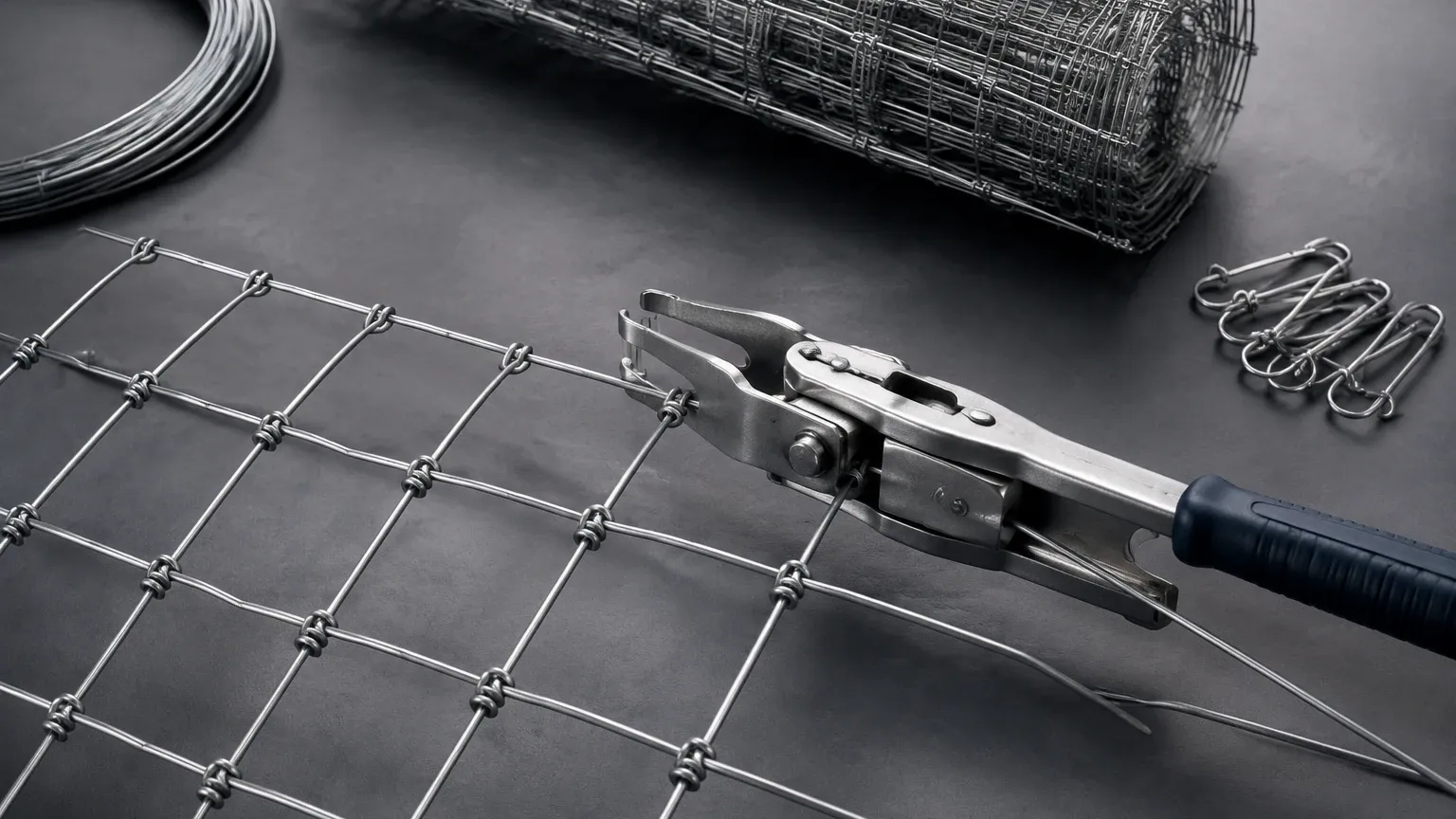
When professionals look for a woven wire fence stretcher video, they are typically looking for a visual guide on how to apply leverage to a wire grid. In the agricultural and light-industrial sectors, a fence stretcher uses a ratcheting mechanism or a pull-bar to take the slack out of a roll of mesh. However, in heavy industrial or precision filtration environments, the tools and techniques evolve significantly.
Manual vs. Mechanical Tensioning
For smaller filter cartridges or laboratory sieves, tensioning is often achieved through interference fits or precision welding onto a rigid frame. For larger installations, such as wastewater treatment screens or architectural panels, mechanical tensioners are required.
* Tension Bolts and Hooks: Commonly used in vibrating screens, these allow for incremental adjustments. The mesh is often supplied with "hooked edges" (shrouded or folded) that interface with the tensioning hardware.
* Hydraulic Tensioning Systems: In large-scale industrial projects, hydraulic pullers provide uniform force that manual tools cannot match. This ensures that the mesh reaches its "yield point" without over-stretching, which could compromise the wire's diameter and aperture size.
Why Visual Guides Matter
Training personnel on the nuances of mesh installation is vital. While a woven wire fence stretcher video can demonstrate the basic physics of pulling wire, industrial teams should seek out manufacturer-specific installation guides. These guides detail the specific torque requirements for tension bolts and the correct sequence for tightening to avoid creating waves or wrinkles in the metal cloth.
Technical Evaluation: Selecting the Right Woven Wire Mesh
Before installation begins, the selection of the mesh itself dictates the success of the project. Engineers must balance filtration requirements with mechanical strength. Plain, twill and dutch woven wire mesh in SS304/316L — rolls, cut mesh and framed panels. Send mesh count or micron target for a technical quote.
Material Selection: SS304 vs. SS316L
The choice of alloy is the first line of defense against environmental failure.
* SS304: Suitable for general industrial use where corrosion risk is moderate. It offers excellent tensile strength and is cost-effective for large-scale screening.
* SS316L: The "L" stands for low carbon, which improves weldability. The addition of molybdenum makes 316L essential for chemical processing, marine environments, and pharmaceutical applications where resistance to pitting and crevice corrosion is required.
Weave Patterns and Their Impact on Tension
The way wires are interlaced affects how the mesh responds to stretching forces:
* Plain Weave: The most common pattern, where each warp wire crosses over and under each shute wire. It is the easiest to tension uniformly but may have lower stability in very fine mesh counts.
* Twill Weave: Each shute wire passes over and under two warp wires. This allows for heavier wires in a given mesh count, increasing the strength and tensioning capacity of the panel.
* Dutch Weave: Designed for high-pressure filtration, these weaves are dense and less flexible. Tensioning these requires specialized frames, as the mesh does not "stretch" in the traditional sense due to the high wire density.
Common Risks in Mesh Installation and Maintenance
Even with the right tools, several risks can undermine the performance of an industrial mesh system. Understanding these risks helps engineers develop better maintenance protocols.
Over-Tensioning and Wire Thinning
There is a common misconception that tighter is always better. Over-tensioning a Woven Wire Mesh can lead to "necking," where the diameter of the wire decreases as it is pulled beyond its elastic limit. This not only weakens the mesh but also changes the micron rating of the filter by enlarging the openings.
Uneven Tensioning (The "Warp" Effect)
If tension is applied more heavily on one side of a panel than the other, the mesh will develop diagonal wrinkles. This creates stress concentrations that are the primary cause of premature tearing. In industrial applications, using a tension meter to verify uniform force across the width of the roll is a best practice.
Corrosion at Attachment Points
The area where the mesh meets the tensioning hardware or frame is a high-risk zone for galvanic corrosion or crevice corrosion. Ensuring that the hardware (bolts, clamps, and stretchers) is made from a compatible grade of stainless steel is essential for long-term durability.
Customization and OEM Solutions for Industrial Projects
At Kaifil, we recognize that standard off-the-shelf mesh rolls do not always meet the rigorous demands of specialized industrial equipment. Customization is often necessary to ensure that the mesh can be tensioned and installed effectively within a specific machine housing.
Edge Treatments for Enhanced Tensioning
To facilitate easier installation, we provide various edge treatments:
* Welded Edges: Prevents fraying and provides a solid surface for clamping.
* Hooked Strips: Custom-fabricated metal hooks attached to the mesh edges, specifically designed for use with tensioning bars in vibrating equipment.
* Framed Panels: The mesh is pre-tensioned and welded into a rigid stainless steel frame at our facility, eliminating the need for the end-user to perform complex tensioning on-site.
Engineering Support and Selection Advice
Choosing between a 20-mesh screen for coarse separation and a 500-mesh cloth for fine chemical filtration involves calculating flow rates, pressure drops, and mechanical loads. Our engineering team works closely with purchasing departments to provide technical data sheets and material certifications that support informed decision-making.
Conclusion: Ensuring Total Cost of Ownership
While a woven wire fence stretcher video might provide a starting point for understanding wire tension, industrial success depends on a deeper technical understanding of Woven Wire Mesh properties and installation precision. By selecting the correct alloy, weave pattern, and edge treatment, and by following rigorous tensioning protocols, engineers can significantly extend the service life of their filtration components.
Investing in high-quality stainless steel mesh from a reliable manufacturer like Kaifil ensures that your filtration systems operate at peak efficiency with minimal downtime. Whether you require bulk rolls for onsite fabrication or precision-engineered framed panels, our team is ready to support your project requirements.
For technical specifications, material compatibility charts, or to request a quote for your specific application, explore our comprehensive range of solutions. Review product options and application support to find the ideal mesh for your industrial needs.
