


Woven Wire Fence Uneven Ground: Engineering and Installation Guide
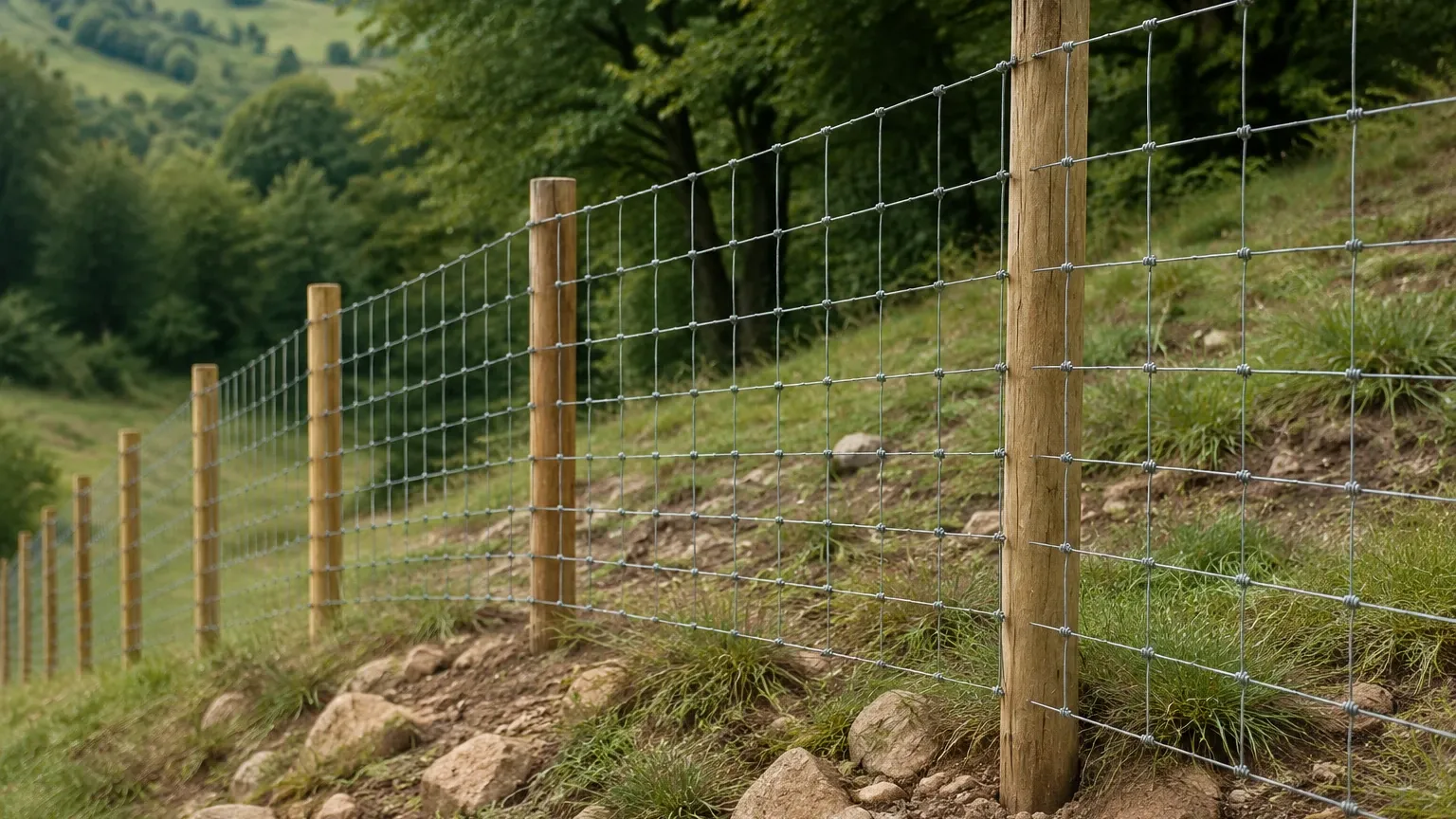
Installing a durable and effective perimeter or industrial barrier requires more than just high-quality materials; it requires a deep understanding of how those materials interact with the topography of the site. When dealing with a woven wire fence uneven ground presents a significant engineering challenge. Unlike flexible chain-link or plastic netting, high-performance Woven Wire Mesh is designed for structural rigidity and precision.
For industrial applications—ranging from high-security perimeter fencing to specialized filtration barriers in wastewater treatment—understanding how to adapt rectilinear mesh to undulating terrain is critical. This guide explores the technical methods, material considerations, and engineering trade-offs involved in deploying woven wire systems on slopes and irregular grades.
The Geometric Challenge of Woven Mesh
At its core, woven wire mesh is a grid of intersecting horizontal (warp) and vertical (shute) wires. In standard manufacturing, these wires intersect at precise 90-degree angles. This geometry provides the mesh with its dimensional stability and uniform aperture size, which are essential for both security and filtration performance.
When this mesh is introduced to a slope, the 90-degree relationship between the wires conflicts with the angle of the ground. If an installer attempts to force a rectangular panel to follow a 15-degree incline, the mesh must "rack" or "bias-cut." However, high-tensile stainless steel mesh, such as SS304 or SS316L, is often too rigid to rack without compromising the integrity of the weave or the accuracy of the openings. Therefore, engineers must choose between two primary installation philosophies: Stepping and Contouring.
Stepping vs. Contouring: Choosing the Right Approach
When managing a woven wire fence uneven ground requires a decision based on the degree of the slope and the required security or filtration level.
1. The Stepping Method
Stepping is the most common approach for rigid, high-specification woven wire panels. In this method, each panel is kept perfectly level, but installed at a different height than its neighbor, following the grade like a set of stairs.
* Advantages: It maintains the structural integrity of the mesh and ensures that the apertures remain uniform. This is vital for applications where specific filtration or airflow rates are required.
* Challenges: Stepping creates triangular gaps at the bottom of the fence where the level panel meets the sloped ground. These gaps must be filled with custom-cut mesh "fillers" or buried structural components to prevent breaches by animals or unauthorized personnel.
2. The Contouring (Racking) Method
Contouring involves tilting the mesh so that the horizontal wires run parallel to the ground. This is only possible with certain types of loose-weave mesh or specialized "hinge-joint" designs.
* Advantages: It eliminates the gaps at the bottom of the fence, providing a continuous barrier that follows the natural curve of the earth.
* Challenges: In technical industrial mesh, racking can distort the openings. If you are using the mesh for a combination of fencing and drainage filtration, racking will turn square openings into diamonds, significantly altering the flow characteristics and particle retention capabilities of the screen.
Material Selection: Why Stainless Steel Matters
In industrial environments, the choice of material for a woven wire fence uneven ground installation is dictated by environmental exposure and mechanical requirements. Kaifil specializes in Plain, twill and dutch woven wire mesh in SS304/316L — rolls, cut mesh and framed panels. Send mesh count or micron target for a technical quote.
Corrosion Resistance in Ground-Level Applications
Fencing on uneven ground often involves the bottom of the mesh coming into frequent contact with soil, moisture, and debris.
* Type 304 Stainless Steel: Suitable for most industrial settings, providing excellent strength and basic corrosion resistance.
* Type 316L Stainless Steel: Essential for coastal environments or chemical processing plants where the mesh is exposed to chlorides or acidic runoff. The "L" (low carbon) designation ensures that the mesh remains resistant to intergranular corrosion after welding, which is often necessary when customizing panels for slopes.
Wire Gauge and Tensile Strength
On uneven terrain, the tension applied to the mesh is rarely uniform. Gravity pulls differently on various sections of the span. Using a heavier wire gauge (lower gauge number) provides the necessary stiffness to prevent sagging on the downhill side of a slope. High-tensile wires are preferred for perimeter security as they resist cutting and impact better than standard galvanized options.
Technical Installation Considerations for Slopes
To ensure a long-lasting installation on irregular grades, several engineering factors must be addressed during the planning phase.
Post Placement and Depth
On a slope, the lateral pressure on fence posts is increased. Posts on the "downhill" side of a span act as anchors for the weight of the mesh.
* Increased Depth: Posts on inclines should typically be set 15-20% deeper than those on flat ground to counteract the gravitational pull.
* Concrete Footings: Using bell-shaped concrete footings can provide better resistance against the "heaving" that occurs in uneven terrain due to drainage and soil movement.
Tensioning and Hardware
Uniform tension is the key to preventing a woven wire fence uneven ground from buckling.
* Tension Bars: In a stepped installation, each panel should be tensioned independently.
* Bracing: Corner posts and "end" posts (which occur at every height change in a stepped system) require diagonal bracing to handle the uneven load distribution.
Managing the "Gap" in Stepped Systems
When using the stepping method, the triangular gap at the bottom is a vulnerability. For industrial sites, this is often resolved by:
1. Concrete Curbing: Pouring a concrete grade beam that follows the slope, allowing the level mesh panel to sit flush against a flat surface.
2. Custom Mesh Aprons: Attaching a secondary, flexible mesh apron to the bottom of the rigid panel that can be pinned or buried into the slope.
Industrial Applications: Filtration and Perimeter Combined
In many B2B sectors, a woven wire fence serves a dual purpose. For example, in mining or large-scale water treatment facilities, the fence may also act as a primary debris screen or a silt barrier.
When a woven wire fence uneven ground is used as a filtration barrier, the "effective filtration area" changes based on the angle of installation. If the mesh is racked to follow the ground, the projected opening size decreases. For engineers calculating flow rates for runoff or industrial discharge, this change in aperture geometry must be factored into the hydraulic model.
Kaifil’s expertise in precision filtration ensures that when we provide Woven Wire Mesh, we can consult on how different weave types—such as plain weave for standard barriers or Dutch weave for high-pressure filtration—will behave under the mechanical stresses of a sloped installation.
Maintenance and Long-Term Durability
Uneven ground often correlates with uneven drainage. Over time, water runoff can erode the soil beneath fence posts or lead to the accumulation of sediment against the mesh.
1. Inspection Cycles: Industrial fences on slopes should be inspected bi-annually for signs of "creep" (slow movement of the soil) or post-leaning.
2. Debris Removal: If the mesh is fine enough to act as a filter, it will inevitably trap organic matter. On a slope, this debris can create a "damming" effect, increasing the wind and water load on the fence. Periodic cleaning with high-pressure water is recommended for stainless steel mesh to maintain both visibility and airflow.
3. Fastener Integrity: Check the clips and bolts at the step-points. These areas experience the highest mechanical stress and are the most likely points of failure in a woven wire fence uneven ground system.
Conclusion
Successfully deploying a woven wire fence uneven ground requires a shift from standard installation practices to a more calculated engineering approach. By choosing the right material—specifically high-grade stainless steel—and selecting the appropriate installation method (stepping or contouring), industrial operators can ensure a secure, durable, and functional barrier.
Whether the goal is high-security perimeter protection or integrated industrial filtration, the quality of the Woven Wire Mesh is the foundation of the system. At Kaifil, we provide the technical data and customized mesh solutions necessary to overcome the challenges of complex topographies, ensuring that your infrastructure remains robust regardless of the terrain.
