


Woven Wire Mesh 1 4
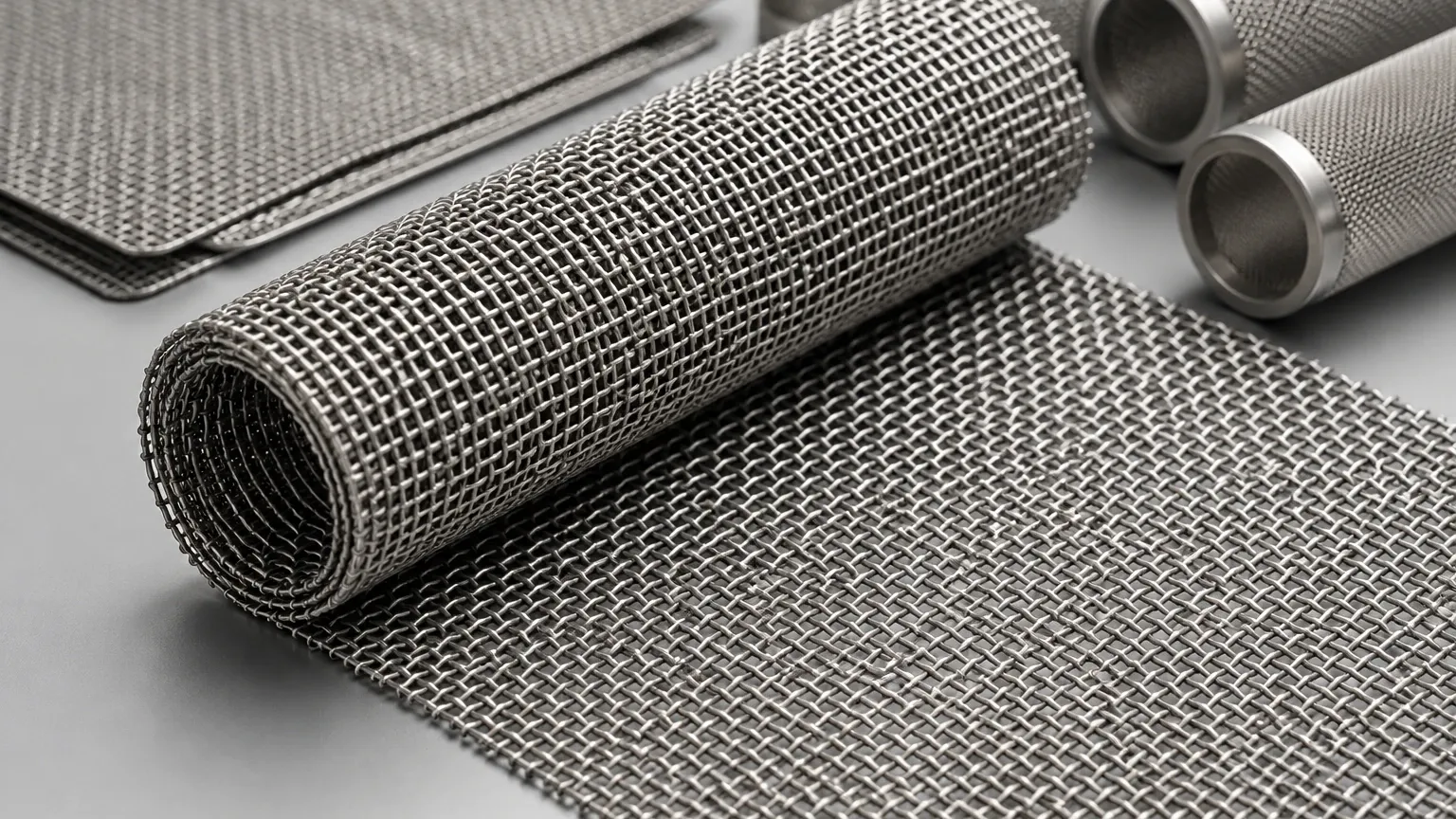
In industrial filtration and material separation, the specification of "1/4 inch" often serves as a critical threshold for coarse filtration and structural reinforcement. Whether an engineer is looking for a specific opening size or a particular mesh count, understanding the nuances of woven wire mesh 1 4 is essential for ensuring system longevity and process efficiency. This guide explores the technical parameters, material considerations, and engineering trade-offs associated with this specific mesh size.
Defining Woven Wire Mesh 1 4: Openings and Mesh Counts
When discussing Woven Wire Mesh, the term "1 4" can be interpreted in two primary ways depending on the industry standard being applied: mesh count or clear opening size. Distinguishing between these two is the first step in technical procurement.
1/4 Inch Opening (Space Cloth)
In many heavy-duty industrial applications, "1/4 inch" refers to the clear opening—the actual space between parallel wires. This is often categorized as "space cloth." For example, a 1/4" opening mesh with a 0.063-inch wire diameter results in a center-to-center spacing of 0.313 inches. This configuration is common in aggregate sorting, large-particle filtration, and protective guards where high throughput and physical robustness are required.
4 Mesh (1/4 Inch Mesh Count)
Conversely, a "4 mesh" refers to four openings per linear inch. While this is mathematically related to the 1/4-inch dimension, the actual clear opening will always be less than 0.25 inches because the thickness of the wire occupies part of that space. For instance, a standard 4-mesh screen using 0.047-inch wire provides a clear opening of approximately 0.203 inches. Engineers must specify whether they require a 0.25" clear opening or a 4-mesh count to avoid significant errors in filtration accuracy.
Material Properties and Alloy Selection for Industrial Environments
The performance of woven wire mesh 1 4 is heavily dictated by the alloy used. Since these meshes are often exposed to abrasive materials or corrosive chemicals, selecting the correct grade of stainless steel is paramount.
Stainless Steel 304
SS304 is the most common choice for general industrial use. It offers excellent mechanical properties and basic corrosion resistance. It is suitable for food processing (where it meets standard sanitary requirements), architectural accents, and general-purpose filtration in non-acidic environments.
Stainless Steel 316L
For applications involving marine environments, chemical processing, or high-chloride exposure, SS316L is the preferred specification. The addition of molybdenum provides superior resistance to pitting and crevice corrosion. In pharmaceutical and high-end chemical filtration, 316L ensures that the mesh does not leach metallic ions into the process stream, maintaining product purity.
Special Alloys
In extreme cases involving high temperatures or highly reactive chemicals, alloys such as Inconel, Monel, or Hastelloy may be required. While less common for standard 1/4-inch configurations, these materials are essential for specialized heat-treating baskets or petrochemical catalysts.
Structural Variations: Weave Types and Crimp Styles
The structural integrity of woven wire mesh 1 4 depends on how the wires are intertwined. At this relatively coarse scale, the crimp style becomes a major factor in the mesh's stability and surface profile.
1. Plain Weave: This is the most straightforward construction where each warp wire passes alternately over and under each shute wire. It provides a consistent opening and is the standard for most 4-mesh requirements.
2. Intermediate Crimp: Often used in space cloth (1/4" openings), both the warp and shute wires are crimped with extra indentations between the intersections. This provides extra rigidity and ensures that the wires remain locked in place even when the mesh is subjected to heavy vibration or mechanical stress.
3. Lock Crimp: This style features deep crimps at the wire intersections, "locking" the wires together. It is ideal for vibrating screens or heavy-duty guards where maintaining precise opening dimensions under load is critical.
4. Flat Top Weave: All the crimping is offset to one side, creating a smooth, flat surface on the top. This is particularly useful in applications where material must slide across the mesh without catching, such as in conveyor belts or certain architectural flooring.
For a detailed look at weave patterns and technical specifications, you can Plain, twill and dutch woven wire mesh in SS304/316L — rolls, cut mesh and framed panels. Send mesh count or micron target for a technical quote.
Technical Performance: Open Area and Flow Dynamics
For engineers, the most critical calculation for woven wire mesh 1 4 is the percentage of open area. This figure determines the flow rate, pressure drop, and throughput capacity of the filtration system.
The formula for calculating open area percentage is:
Open Area % = (O / (O + D))² x 100
*Where O = Opening size and D = Wire diameter.*
A 4-mesh screen with a 0.063" wire diameter has an open area of approximately 59.6%. Increasing the wire diameter to 0.080" for greater durability reduces the open area to 51.8%. This reduction directly impacts the pressure drop across the filter. In hydraulic or high-velocity air systems, a lower open area requires a larger filter surface area to maintain the same flow velocity and prevent cavitation or system strain.
Industrial Applications of 1/4 Inch Mesh
The versatility of woven wire mesh 1 4 allows it to serve multiple roles across diverse sectors. Its balance of strength and permeability makes it a staple in industrial design.
Pre-Filtration and Strainers
In water treatment and chemical processing, 1/4-inch mesh serves as a primary strainer. It protects downstream equipment, such as pumps and fine filter cartridges, from large debris, stones, or undissolved solids. By capturing these large particles early, the mesh extends the service life of more expensive, finer filtration components.
Machine Guarding and Safety
Due to its structural rigidity when manufactured with thicker wire diameters, this mesh is frequently used for machine guards. It allows for high visibility and airflow—essential for cooling motors and electronics—while preventing personnel from coming into contact with moving parts. The 1/4-inch opening is specifically chosen to block fingers or large tools from entering hazardous zones.
Food and Beverage Processing
In the food industry, 1/4-inch mesh is used in drying trays, sorting screens for produce, and scalping screens for bulk ingredients. Stainless steel construction ensures that the mesh can withstand rigorous Clean-in-Place (CIP) cycles involving high-temperature water and caustic cleaning agents.
Architectural and Decorative Use
Beyond industrial function, the 1/4-inch scale is popular in architectural applications. It is used for infill panels, ceiling tiles, and facade cladding. The mesh provides a modern aesthetic while offering functional benefits like solar shading and ventilation.
Engineering Considerations for Custom Fabrication
When integrating woven wire mesh 1 4 into a larger system, standard off-the-shelf rolls may not suffice. Customization is often necessary to meet specific mechanical requirements.
Edge Treatments
Unfinished mesh edges can be sharp and prone to unraveling. For industrial filters, edges are often hemmed, bound with a U-binder, or welded into a solid frame. This not only improves safety during handling but also ensures the mesh remains tensioned within its housing.
Forming and Welding
Stainless steel mesh of this size can be rolled into cylinders for use as filter baskets or pleated for increased surface area (though pleating is more common in finer meshes). Resistance welding and TIG welding are the preferred methods for joining mesh edges, as they provide a strong bond without introducing contaminants or significantly obstructing the open area.
Tolerances
Engineers must confirm the allowable tolerances for both the opening size and the overall dimensions of the cut pieces. In precision machinery, a variance of even 0.010 inches can lead to bypass—where unfiltered fluid escapes around the edges of the mesh. Specifying tight tolerances during the RFQ (Request for Quote) process is vital for high-performance applications.
Quality Control and Procurement Checklists
To ensure the reliability of Woven Wire Mesh in a B2B procurement context, purchasing teams and engineers should verify several key factors before finalizing an order.
* Material Certification: Request Mill Test Reports (MTRs) to verify the chemical composition of the alloy (e.g., ensuring the nickel and chromium levels meet SS316L standards).
* Dimensional Accuracy: Verify the wire diameter using micrometers and the mesh count using a magnifying glass or mesh counter tool.
* Flatness and Tension: For panels or screens, the mesh should be free of "oil canning" (buckling) and should lie flat to ensure even flow distribution.
* Cleaning Standards: For pharmaceutical or food applications, confirm that the mesh has been ultrasonically cleaned or passivated to remove residual oils and lubricants from the weaving process.
Conclusion
Selecting the right woven wire mesh 1 4 involves a careful balance of opening size, wire diameter, and material chemistry. Whether it is used as a robust guard in a manufacturing plant or a critical pre-filter in a chemical refinery, the technical specifications of the mesh dictate the overall success of the application. By focusing on the relationship between open area and structural stability, and by choosing the appropriate stainless steel grade, engineers can implement filtration solutions that offer both high performance and a low total cost of ownership.
When evaluating suppliers, prioritize those who can provide detailed technical data and customization options tailored to your specific flow rates and environmental conditions. Proper specification at the design stage prevents costly downtime and equipment failure in the field.
