


Woven Wire Mesh Balustrade: Engineering and Selection Guide
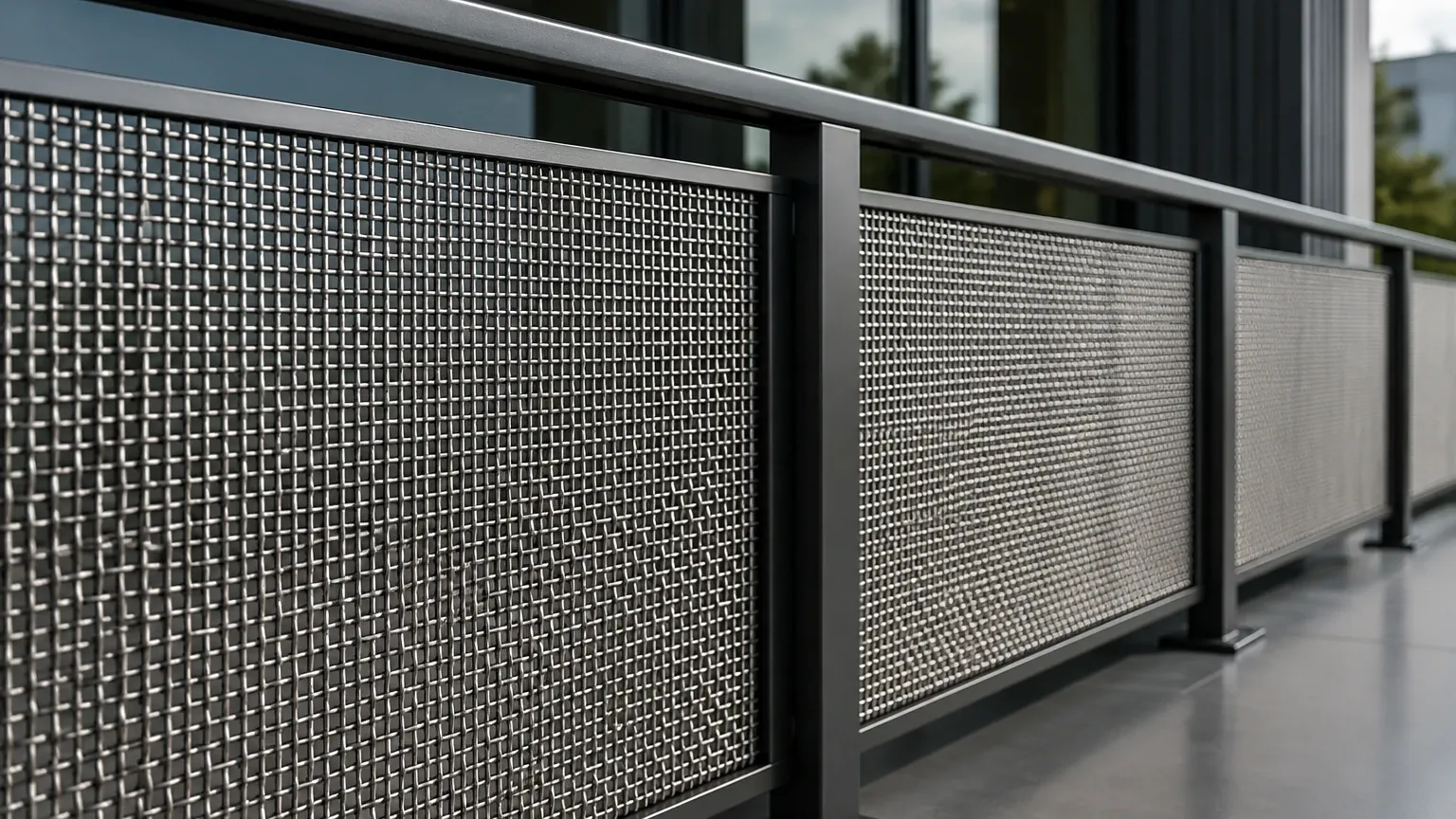
In modern industrial and commercial architecture, the selection of infill materials for safety barriers requires a balance between structural integrity, visibility, and environmental durability. A woven wire mesh balustrade provides a high-performance solution that meets these requirements, leveraging the precision of industrial weaving techniques to create a robust safety barrier. While often associated with fine filtration, the engineering principles behind high-quality Woven Wire Mesh—specifically material grade, weave stability, and tensile strength—are critical factors in the design and procurement of balustrade systems.
For engineers and project managers, understanding the technical nuances of wire mesh is essential for ensuring safety compliance and long-term performance. This guide examines the material specifications, structural considerations, and customization options necessary for specifying woven wire mesh in balustrade applications.
Material Science and Grade Selection for Balustrades
The performance of a woven wire mesh balustrade is fundamentally tied to the alloy selected. In industrial and commercial settings, stainless steel is the standard due to its mechanical properties and resistance to oxidation. Kaifil specializes in high-grade stainless steel alloys, primarily focusing on SS304 and SS316L.
SS304: Standard Industrial Applications
Type 304 stainless steel is the most common grade used for indoor balustrades and controlled environments. It offers excellent forming and welding characteristics. However, in environments with high humidity or occasional chemical exposure, it may be susceptible to surface pitting.
SS316L: High-Corrosion Resistance
For outdoor applications, coastal regions, or industrial facilities involving chemical processing, SS316L is the preferred specification. The addition of molybdenum and a lower carbon content (the "L" designation) significantly enhances resistance to chloride-induced pitting and stress corrosion cracking. When specifying a woven wire mesh balustrade for harsh environments, SS316L ensures a longer service life and lower maintenance costs by preventing "tea staining" and structural degradation.
Technical Specifications: Mesh Patterns and Structural Geometry
The geometry of the weave determines both the aesthetic transparency and the physical strength of the balustrade infill. Unlike expanded metal or perforated sheets, woven mesh maintains the physical integrity of the individual wires, which are interlocked to distribute loads across the panel.
Plain Weave vs. Twill Weave
In a plain weave, each warp wire crosses alternately over and under each shute wire. This is the most stable and common pattern for balustrades, providing consistent aperture sizes and high rigidity. Twill weaves, where wires cross over two and under two, allow for heavier wire diameters in relation to the mesh count, which can be beneficial for high-impact zones requiring greater mass.
Aperture and Open Area
The "open area" percentage is a critical calculation for both safety and airflow. In areas requiring ventilation (such as parking structures or industrial walkways), a high open area is necessary. Conversely, safety codes often dictate a maximum aperture size (the "4-inch sphere rule" in many jurisdictions) to prevent climbing or the passage of objects. Engineers must balance the wire diameter with the mesh count to achieve the required structural density without sacrificing visibility.
Wire Diameter and Tensile Strength
The diameter of the wire used in a woven wire mesh balustrade directly impacts its resistance to deflection. Heavier gauges provide a more rigid infill but require more robust tensioning systems within the balustrade frame. Kaifil’s manufacturing process ensures that the wire used maintains consistent tensile strength, which is vital for calculating the point-load resistance of the final installation.
Load-Bearing Performance and Safety Compliance
A balustrade is first and foremost a safety component. When utilizing woven wire mesh, the system must be engineered to withstand specific lateral loads as defined by local building codes (e.g., IBC in the US or Eurocodes in Europe).
Tensioning and Deflection
Woven mesh is a flexible material by nature. To function effectively as a balustrade infill, it must be properly tensioned or securely captured within a rigid frame. Engineers must calculate the "sag" or deflection that occurs when a lateral force is applied. High-tension systems often require specialized perimeter attachments, such as rod-and-eyebolt systems or heavy-duty channel inserts, to ensure the mesh remains taut and does not bow out under pressure.
Impact Resistance
In high-traffic commercial areas, the mesh must resist permanent deformation from accidental impacts. The interlocking nature of Plain, twill and dutch woven wire mesh in SS304/316L — rolls, cut mesh and framed panels. Send mesh count or micron target for a technical quote. allows the energy of an impact to be distributed across multiple wires, reducing the risk of localized failure compared to single-point attachment materials.
Customization Options: From Rolls to Framed Panels
Every architectural project has unique structural requirements. A one-size-fits-all approach rarely works for industrial filtration or architectural safety. Kaifil provides extensive OEM and customization capabilities to meet specific project demands.
1. Cut-to-Size Panels: For projects with existing frames, precision-cut mesh panels ensure a perfect fit, reducing on-site labor and waste.
2. Framed Infill Units: Supplying the mesh pre-installed in stainless steel frames (using U-channels or angle iron) simplifies the installation process. These units can be bolted directly to the balustrade posts.
3. Specialized Finishes: While the natural mill finish of stainless steel is standard, mesh can be electro-polished to enhance corrosion resistance and provide a brighter surface, or powder-coated to meet specific branding or visibility requirements.
4. Custom Weave Ratios: For large-scale projects, custom wire diameters and aperture sizes can be engineered to meet specific load-bearing and aesthetic targets that standard off-the-shelf products cannot satisfy.
Environmental Resistance and Long-Term Maintenance
One of the primary advantages of a stainless steel woven wire mesh balustrade is its durability. However, "stainless" does not mean "maintenance-free." To maintain the structural integrity and appearance of the mesh, a scheduled maintenance program is recommended.
* Cleaning Cycles: In urban or industrial environments, atmospheric pollutants can accumulate in the intersections of the weave. Regular pressure washing or cleaning with mild detergents prevents the buildup of corrosive agents.
* Inspection of Attachments: The points where the mesh meets the frame are the highest stress areas. Periodic inspections should focus on ensuring that tensioning hardware remains tight and that there is no sign of galvanic corrosion if dissimilar metals were used in the mounting hardware.
* Material Longevity: When properly specified (e.g., using 316L in high-chloride areas), a woven wire mesh system can exceed a 25-year service life, making the total cost of ownership significantly lower than glass or painted carbon steel alternatives.
Cost Considerations and Procurement Best Practices
When evaluating the cost of a woven wire mesh balustrade, procurement teams should look beyond the initial price per square foot. The total cost of ownership includes installation labor, maintenance, and the replacement cycle.
Factors Influencing Cost
* Mesh Complexity: Finer weaves or complex patterns (like dutch weaves used for specialized aesthetic effects) increase manufacturing time.
* Material Volume: Bulk orders of standard rolls are more cost-effective than small runs of custom-dimensioned panels.
* Fabrication Requirements: Pre-framed panels have a higher initial cost but significantly reduce the technical skill and time required for on-site installation.
Information to Confirm Before Ordering
To receive an accurate technical quote and ensure the material is fit for purpose, engineers should confirm the following data points with the manufacturer:
* Mesh Count: The number of openings per linear inch.
* Wire Diameter: Specified in millimeters or gauge.
* Alloy Grade: SS304, SS316, or SS316L.
* Overall Dimensions: Exact panel sizes or roll lengths.
* Edge Treatment: Whether the mesh should be supplied with raw edges, hemmed, or welded into a frame.
Conclusion
A woven wire mesh balustrade is a sophisticated engineering choice for industrial and commercial safety. By selecting the appropriate material grade and weave specification, engineers can create a barrier that is both durable and compliant with safety standards. As a specialist in custom stainless steel filtration and metal components, Kaifil provides the technical expertise and manufacturing precision required to deliver high-performance mesh solutions for the most demanding applications.
For technical support in selecting the right mesh for your next project, including detailed material specifications and customization options, consult with a filtration and metal mesh expert to ensure your design meets both safety and performance objectives.
