


Woven Wire Mesh Images: A Technical Guide for Industrial Procurement and Engineering
In the industrial filtration and separation sector, visual documentation serves as a critical bridge between conceptual design and physical implementation. For engineers and procurement specialists, searching for woven wire mesh images is rarely about aesthetic preference; it is a fundamental step in verifying weave patterns, assessing manufacturing quality, and understanding the physical geometry of a filtration medium.
When evaluating Woven Wire Mesh, high-resolution imagery provides the first line of technical verification. This guide explores how to interpret these images from an engineering perspective, the technical nuances of different weave structures, and the essential data points that must accompany visual references to ensure successful application in demanding environments like chemical processing, pharmaceuticals, and hydraulic systems.
Understanding the Intent Behind Industrial Mesh Imagery
For a B2B audience, the utility of a product image extends far beyond a simple catalog entry. Technical professionals utilize imagery to perform preliminary assessments of several key factors:
1. Pattern Verification: Confirming whether a mesh is plain, twill, or dutch weave, which dictates the flow characteristics and pressure drop of the filter.
2. Surface Integrity: Identifying the presence of manufacturing defects such as "shiners" (displaced wires), irregular crimping, or surface contamination.
3. Edge Construction: Visualizing how the mesh is finished—whether it is a raw cut edge, a welded border, or a hemmed edge—is vital for integration into larger filter housings.
4. Scale and Proportion: While images alone cannot provide exact measurements, they help engineers visualize the relationship between wire diameter and aperture size (open area).
By analyzing woven wire mesh images with a technical eye, purchasing teams can filter out low-quality suppliers and focus on manufacturers like Kaifil that maintain high standards of precision and consistency.
Technical Analysis of Weave Types in Imagery
Different industrial applications require specific weave structures. Understanding how these appear in technical photographs is essential for correct identification.
Plain Weave Structures
Plain weave is the most common and straightforward pattern. In this configuration, each shute (weft) wire passes alternately over and under each warp wire. In high-quality images, this should appear as a perfectly symmetrical grid. Engineers look for uniformity in the square openings, as any deviation suggests inconsistent tensioning during the weaving process, which can lead to bypass or premature clogging in filtration stages.
Twill Weave Characteristics
Twill weave is often used for heavier mesh counts where the wire diameter is too large for a plain weave. In a twill weave, each shute wire passes over and under two warp wires. This creates a diagonal pattern similar to denim fabric. When viewing woven wire mesh images of twill patterns, engineers should observe the "staggered" appearance. This structure allows for a more robust mesh that can withstand higher mechanical loads, making it ideal for high-pressure hydraulic filters.
Dutch Weave and High-Density Filtration
Dutch weaves (both plain and twill) are designed for fine filtration. Unlike square mesh, Dutch weaves have a higher density of wires in one direction than the other. In a technical image, a Dutch weave often looks like a solid metal surface because the apertures are triangular and pass through the mesh at an angle. These are the preferred choice for high-precision applications in the pharmaceutical and food industries where micron-rated performance is non-negotiable.
Key Evaluation Criteria When Reviewing Woven Wire Mesh Images
To move beyond a superficial glance, engineers should use a checklist when reviewing visual documentation provided by a manufacturer.
1. Wire Uniformity and Crimping
The crimp is the "wave" in the wire that locks the mesh together. High-quality woven wire mesh images will show consistent crimp depth. If the crimping is uneven, the mesh may shift under pressure, changing the aperture size and compromising the filtration accuracy. This is particularly dangerous in safety-critical applications like aerospace or chemical reactor beds.
2. Surface Finish and Material Cleanliness
Stainless steel 304 and 316L are the industry standards for corrosion resistance. In a clear photograph, the surface should be free of oil residues, metallic dust, or discoloration. For the food and beverage industry, a bright, ultrasonically cleaned finish is often required. Images can help confirm that the manufacturer follows stringent post-production cleaning protocols.
3. Aperture Consistency
For a filter to be effective, every opening must be identical. If an image shows "narrowing" or "widening" of the gaps between wires, it indicates a lack of tension control on the loom. Even a few oversized apertures can allow oversized particles to pass through, potentially damaging downstream equipment like high-pressure pumps or sensitive valves.
Common Risks of Relying Solely on Digital Images
While woven wire mesh images are helpful, they have inherent limitations that can lead to procurement errors if not managed correctly.
* Scale Misperception: Without a reference object (like a scale bar or a coin), it is impossible to distinguish between a 10-mesh and a 100-mesh screen in a close-up photo. Always cross-reference images with a technical data sheet.
* Material Misidentification: Visually, Stainless Steel 304, 316, and 316L look almost identical. An image cannot confirm the molybdenum content of 316L, which is necessary for chloride resistance. Positive Material Identification (PMI) reports are required alongside visual proof.
* Lighting and Parallax: Professional lighting can sometimes hide surface scratches or slight oxidation. Furthermore, the angle of the photo (parallax) can make square apertures appear rectangular. Requesting top-down, perpendicular shots is best for geometric verification.
Engineering Confirmation: Moving Beyond the Image
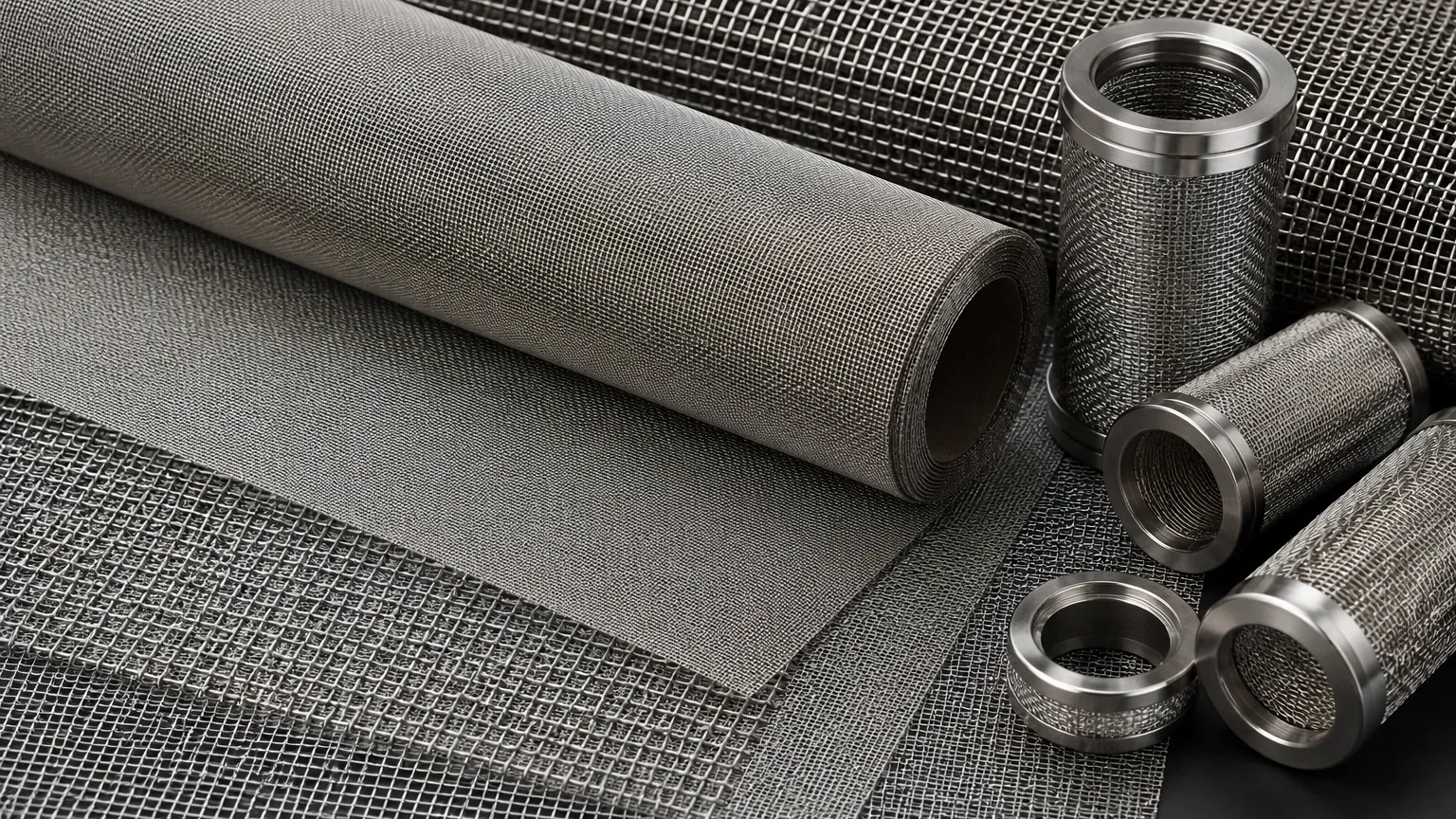
Once a preliminary selection is made based on Plain, twill and dutch woven wire mesh in SS304/316L — rolls, cut mesh and framed panels. Send mesh count or micron target for a technical quote., the next step is technical confirmation. Visual data must be supported by a comprehensive specification package.
Mesh Count vs. Micron Rating
Engineers must confirm the mesh count (number of wires per linear inch) and the wire diameter. These two figures determine the aperture size. For Dutch weaves, the "nominal" and "absolute" micron ratings are more important than the mesh count. An image of a 20-micron Dutch weave may look similar to a 40-micron weave, but the performance difference in a water treatment plant is massive.
Tolerance Standards
Industrial mesh is manufactured to specific standards, such as ASTM E2011 or ISO 9044. These standards define the allowable variation in wire diameter and aperture size. When reviewing woven wire mesh images, ask the manufacturer for their compliance certificates to ensure the product meets these global benchmarks.
Customization and OEM Capabilities
In many B2B scenarios, a standard roll of mesh is not enough. Images of custom-fabricated components—such as pleated filter cartridges, framed mesh panels, or multi-layer sintered mesh—show the manufacturer's ability to handle complex engineering tasks. Kaifil specializes in these customized solutions, providing the precision required for demanding industrial environments.
Total Cost of Ownership and Quality Assurance
Selecting a supplier based on the lowest price often results in receiving mesh that looks acceptable in low-resolution photos but fails in the field. Poorly woven mesh has a shorter service life, leading to frequent replacement costs and system downtime.
High-quality woven wire mesh images from a reputable manufacturer like Kaifil reflect a commitment to quality control. When images show clean, burr-free edges and perfectly aligned wires, it is an indicator of modern weaving technology and rigorous inspection processes. This reliability translates to a lower total cost of ownership over the life of the filtration system.
Conclusion: The Role of Imagery in Informed Purchasing
In the world of industrial filtration, woven wire mesh images serve as a vital technical resource. They allow engineers to conduct a visual audit of weave patterns, material quality, and manufacturing precision before a single sample is shipped. However, the image is only the starting point.
To ensure the success of a filtration project, visual data must be paired with authoritative technical specifications, material certifications, and a deep understanding of the application's environmental demands. By focusing on the details revealed in high-resolution imagery and backing them with engineering data, procurement teams can secure filtration solutions that offer durability, precision, and long-term value.
Whether you are designing a new chemical processing line or replacing filters in a hydraulic system, the combination of visual verification and technical expertise is the key to optimized performance. For those requiring specific configurations, reviewing the available Woven Wire Mesh options and engaging with technical support is the most effective path toward a customized, high-performance filtration solution.
