


Woven Wire Mesh Infill Panels: An Engineering Guide to Selection and Specification
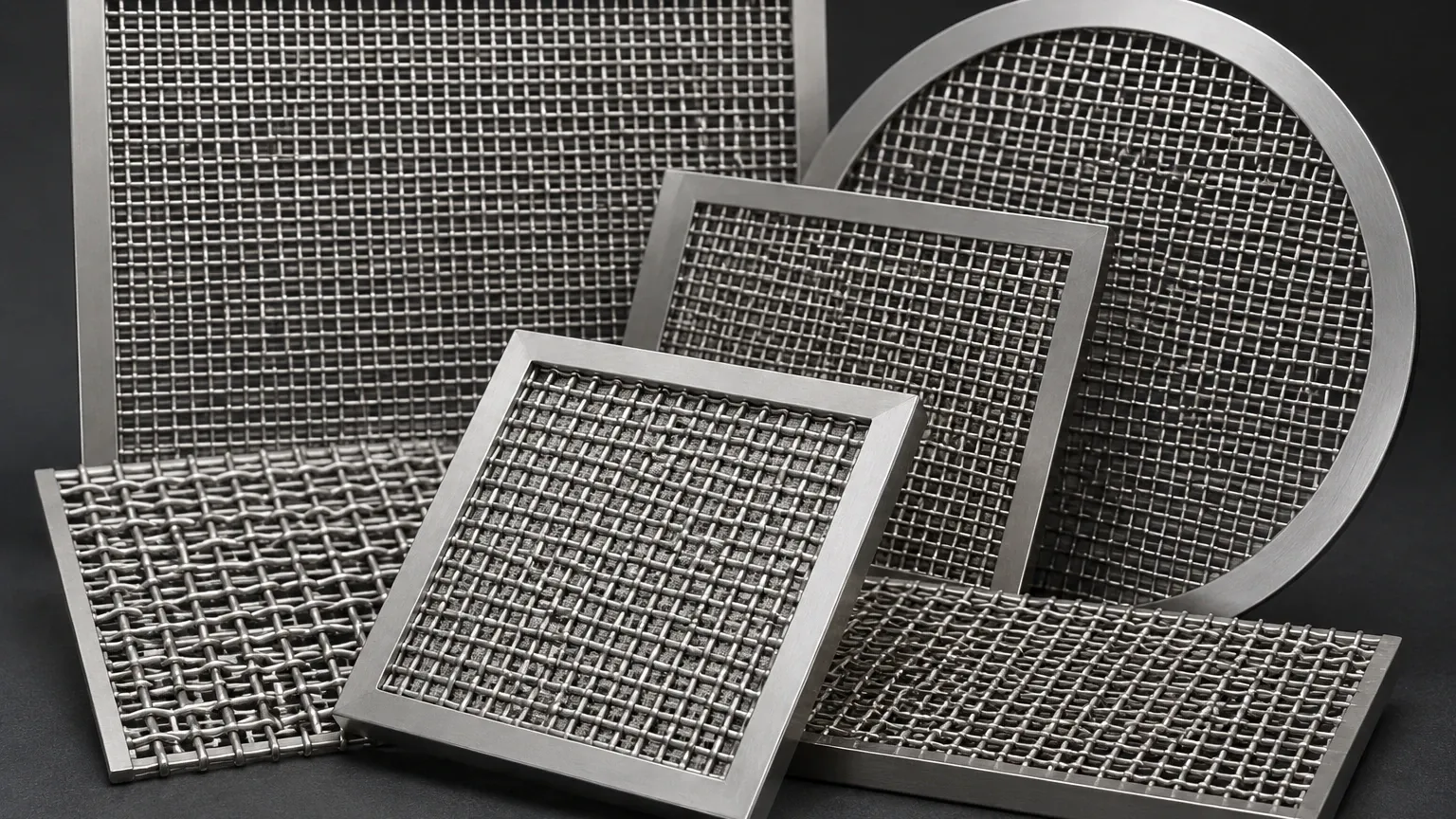
In industrial filtration and structural design, the selection of internal components is critical to the longevity and efficiency of the system. Woven wire mesh infill panels serve as a fundamental building block for a wide range of applications, from high-pressure fluid filtration to safety guarding and architectural partitions. Unlike standard bulk mesh, infill panels are precision-engineered components where the mesh is integrated into a frame or support structure to meet specific mechanical and filtration requirements.
For engineers and procurement teams, understanding the technical nuances of Woven Wire Mesh is essential. Choosing the right weave, material, and fabrication method ensures that the final panel can withstand the rigors of chemical processing, food production, or hydraulic systems without premature failure. This guide examines the technical parameters, material science, and engineering considerations necessary for specifying high-performance infill panels.
1. Technical Fundamentals of Woven Wire Mesh
At its core, woven wire mesh is produced by interlacing longitudinal (warp) wires and transverse (shute) wires. When these materials are converted into woven wire mesh infill panels, the weave pattern dictates the panel’s mechanical strength, filtration accuracy, and flow characteristics.
Plain Weave
The most common configuration, where each shute wire passes over and under one warp wire. This provides a consistent aperture size and is ideal for applications requiring high transparency and predictable airflow or liquid throughput. It is the standard choice for protective infill panels where visibility and ventilation are prioritized.
Twill Weave
In a twill weave, each shute wire passes over and under two warp wires. This allows for the use of heavier wire diameters than a plain weave of the same mesh count. Twill weave panels are often specified when the application requires a higher degree of mechanical durability or when working with finer mesh counts that would otherwise be too fragile.
Dutch Weave (Plain and Twill)
Dutch weaves utilize different diameters for warp and shute wires. The shute wires are driven closely together, creating a "zero-open-area" appearance on the surface but providing a tortuous path for particles. Dutch woven wire mesh infill panels are the industry standard for high-pressure filtration, as they offer superior strength and precise micron ratings ranging from 5μm to 300μm.
2. Material Selection: Engineering for Industrial Environments
The performance of an infill panel is heavily dependent on the alloy used. In industrial B2B sectors, stainless steel is the preferred material due to its mechanical properties and resistance to environmental degradation.
* Stainless Steel 304: The standard grade for most industrial applications. It offers excellent corrosion resistance and can withstand temperatures up to 800°C. It is commonly used in food processing and general industrial guarding where exposure to highly corrosive chemicals is limited.
* Stainless Steel 316L: Containing molybdenum, 316L provides superior resistance to chlorides and pitting. This is the mandatory choice for marine environments, pharmaceutical manufacturing, and chemical processing where the mesh will be exposed to aggressive cleaning agents or acidic solutions. The "L" (low carbon) designation ensures better weldability, which is critical when the mesh is being integrated into a frame.
* Specialty Alloys: For extreme environments, materials like Monel, Inconel, or Hastelloy may be used to address specific challenges such as high-temperature oxidation or extreme pH levels.
3. Structural Design and Fabrication of Infill Panels
An infill panel is defined by its boundary. How the mesh is secured to its frame determines the panel's ability to handle vibration, pressure differentials, and mechanical impact.
Framing Options
1. U-Channel Frames: The mesh edges are tucked into a U-shaped metal profile and then spot-welded or crimped. This provides a clean edge and protects the mesh from fraying.
2. Flat Bar or L-Angle Frames: Used for heavy-duty industrial screens. The mesh is typically sandwich-welded between two flat bars or welded directly to the interior of an angle iron frame. This is ideal for high-load applications like vibrating sieves or heavy machinery guards.
3. Tensioned Panels: In some filtration housings, the mesh must be kept under specific tension to prevent "fluttering" or fatigue failure caused by pulsating fluid flows. Precision tensioning during the fabrication of woven wire mesh infill panels ensures a flat surface and consistent pore geometry.
Precision Cutting and Edging
Modern manufacturing uses CNC laser or plasma cutting to ensure that the mesh dimensions match the frame perfectly. For filtration applications, ensuring that there are no gaps between the mesh edge and the frame is critical to prevent "bypass," where unfiltered media escapes around the perimeter of the panel.
4. Performance Metrics: Open Area and Micron Ratings
When specifying woven wire mesh infill panels, engineers must balance two competing factors: filtration efficiency (or security) and flow capacity.
Calculating Open Area
The percentage of open area determines the pressure drop across the panel. It is calculated using the formula:
*Percentage of Open Area = (Aperture / (Aperture + Wire Diameter))² x 100*
A higher open area reduces energy costs in pumping and ventilation systems but may compromise the structural rigidity of the mesh. Engineering teams must determine the minimum acceptable open area that satisfies the required flow rate while maintaining the necessary wire gauge for durability.
Micron Rating vs. Mesh Count
* Mesh Count: Refers to the number of openings per linear inch. While useful for general categorization, it does not account for wire diameter.
* Micron Rating: Defines the size of the particle that the mesh will effectively block. For precision industrial filtration, the absolute micron rating is the more critical specification, especially when using Dutch weave patterns.
5. Common Risks and Evaluation Criteria
Failure to properly specify an infill panel can lead to system downtime or safety hazards. Engineers should evaluate the following risks during the design phase:
* Galvanic Corrosion: If the mesh and the frame are made of dissimilar metals (e.g., stainless mesh in a galvanized steel frame), electrochemical reactions can lead to rapid failure at the contact points. Always ensure material compatibility.
* Fatigue Failure: In hydraulic or pneumatic systems, constant pressure fluctuations can cause the wire mesh to flex. Over time, this leads to work-hardening and cracking at the wire intersections. Specifying a heavier wire diameter or a reinforced support grid can mitigate this risk.
* Blinding and Plugging: In filtration applications, the shape of the mesh opening can influence how easily particles become trapped. Smooth, plain-weave surfaces are easier to clean (backwash), whereas complex weaves may offer better retention but require more intensive maintenance cycles.
6. Maintenance and Total Cost of Ownership (TCO)
While the initial purchase price of stainless steel Plain, twill and dutch woven wire mesh in SS304/316L — rolls, cut mesh and framed panels. Send mesh count or micron target for a technical quote. may be higher than synthetic alternatives, the total cost of ownership is often lower due to durability and cleanability.
Cleaning Protocols
Stainless steel infill panels can be cleaned using ultrasonic baths, high-pressure steam, or chemical solvents, depending on the contaminant. This allows the panels to be reused through multiple production cycles, reducing waste and replacement costs compared to disposable filter media.
Replacement Cycles
Regular inspection for signs of wire displacement, corrosion, or frame warping is essential. In high-wear environments, such as mining or heavy chemical processing, establishing a predictive maintenance schedule based on pressure drop (differential pressure) across the panel is the most effective way to prevent catastrophic failure.
7. Procurement Checklist for Engineering Teams
Before requesting a quote for woven wire mesh infill panels, ensure the following technical details are confirmed:
1. Application Environment: Temperature, chemical exposure, and pressure requirements.
2. Material Grade: SS304, SS316L, or specialty alloys.
3. Mesh Specifications: Mesh count, wire diameter, and required micron rating (absolute or nominal).
4. Panel Dimensions: Overall height, width, and thickness including the frame.
5. Framing Style: U-channel, flat bar, or custom profile.
6. Finishing Requirements: Passivation, electropolishing, or powder coating (for architectural/safety use).
7. Compliance Standards: Does the panel need to meet FDA, ISO, or ASTM standards for your specific industry?
By focusing on these technical parameters, purchasing departments can ensure they receive a component that is not only fit for purpose but optimized for the specific demands of their industrial process. High-quality fabrication and material integrity are the benchmarks of a reliable filtration or structural solution, ensuring that the woven wire mesh infill panels perform as expected throughout their operational lifespan.
