


Woven Wire Mesh Nz
In the landscape of industrial filtration and separation, woven wire mesh remains a foundational component across diverse sectors. For engineering and procurement teams searching for reliable solutions within the context of woven wire mesh nz, understanding the technical nuances of material properties, weave structures, and performance metrics is essential. Whether the application involves primary filtration in dairy processing, fine separation in pharmaceutical manufacturing, or architectural screening in coastal environments, the selection of the correct mesh specification directly impacts operational efficiency and equipment longevity.
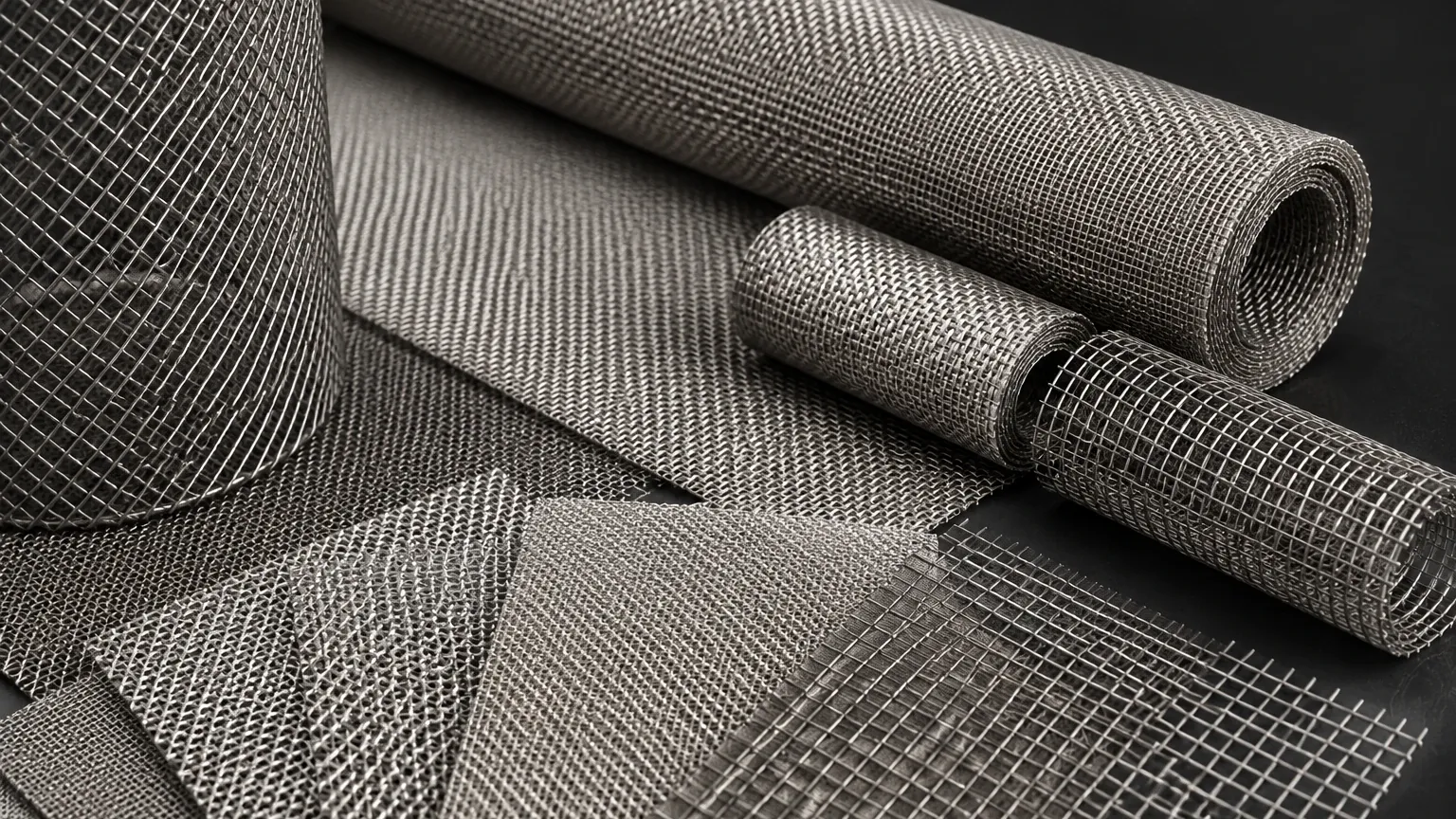
As a specialized manufacturer of stainless steel filtration solutions, Kaifil provides high-precision Plain, twill and dutch woven wire mesh in SS304/316L — rolls, cut mesh and framed panels. Send mesh count or micron target for a technical quote. to meet the rigorous demands of global industrial standards. This guide examines the critical factors that engineers must evaluate when sourcing woven wire mesh for high-performance applications.
Understanding Woven Wire Mesh Specifications
Woven wire mesh is defined by the intersection of warp and weft wires, creating a stable and precise aperture. Unlike expanded metal or perforated sheets, woven mesh offers a high degree of flexibility in terms of open area and filtration accuracy. To select the right product, one must understand the primary weave patterns and how they influence mechanical performance.
Plain Weave
The most common and straightforward pattern, the plain weave follows an "over-one, under-one" sequence. This results in square openings and is ideal for general screening, protective guards, and coarse filtration. It offers the highest percentage of open area, which minimizes pressure drop across the medium.
Twill Weave
In a twill weave, each weft wire passes over and under two warp wires in a staggered pattern. This technique allows for the use of heavier wires in relation to the mesh count, providing increased strength and durability. It is often used when a finer mesh is required but the wire diameter must remain large enough to withstand mechanical stress.
Dutch Weave (Plain and Twill)
Dutch weaves utilize different diameters for warp and weft wires. The warp wires are typically heavier and spaced further apart, while the weft wires are thinner and driven closely together. This creates a dense, robust structure with small, triangular openings. Dutch weaves are the industry standard for high-pressure filtration applications, such as hydraulic systems and fuel filters, where high flow rates and fine particle retention are required.
Material Selection for the New Zealand Industrial Environment
When sourcing woven wire mesh nz, environmental conditions play a decisive role in material selection. New Zealand’s unique geography—characterized by extensive coastlines and high humidity—necessitates materials that can resist atmospheric and chemical corrosion.
Stainless Steel 304 (SS304)
SS304 is the baseline for industrial mesh. It provides excellent mechanical properties and good resistance to oxidation. It is suitable for indoor applications, general machinery guards, and non-corrosive liquid filtration. However, in environments with high chloride exposure, SS304 may be susceptible to pitting.
Stainless Steel 316L (SS316L)
For the majority of New Zealand’s industrial sectors, particularly food processing, marine, and chemical sectors, SS316L is the preferred choice. The addition of molybdenum (2-3%) significantly enhances resistance to chlorides and acids. The "L" denotes low carbon content, which prevents carbide precipitation during welding, ensuring the mesh remains corrosion-resistant at the joints and seams.
Specialty Alloys
In extreme cases involving high-temperature processing or highly aggressive chemical reagents, specialty alloys such as Monel, Inconel, or Hastelloy may be required. These materials maintain their structural integrity and filtration accuracy where standard stainless steels would fail.
Engineering Considerations for Filtration and Separation
Selecting a mesh based solely on "mesh count" is a common pitfall. Engineers must consider the relationship between mesh count, wire diameter, and aperture size to ensure the component performs as expected within a system.
1. Mesh Count: This refers to the number of openings per linear inch. While a higher mesh count generally indicates finer filtration, it must be balanced against the wire diameter.
2. Aperture (Opening Size): This is the clear distance between two adjacent wires. This is the most critical value for determining the size of particles that will be retained by the mesh.
3. Wire Diameter: The thickness of the wire affects the mesh’s strength, weight, and open area. Increasing the wire diameter improves durability but reduces the open area, leading to higher resistance to flow.
4. Open Area Percentage: This is the ratio of the area of the openings to the total area of the mesh. A higher open area allows for higher flow rates and lower pressure drops, which is vital in gravity-fed or low-pressure systems.
For precision applications, it is often more effective to specify a micron rating. This tells the manufacturer exactly what size particle the mesh must block, allowing the engineering team at Kaifil to recommend the optimal weave and wire combination to achieve that target without sacrificing structural integrity.
Applications Across New Zealand’s Key Industries
The demand for woven wire mesh nz spans several critical sectors, each with unique technical requirements.
Dairy and Food Processing
New Zealand’s dairy industry requires filtration media that comply with strict hygiene standards. Woven wire mesh is used in milk processing, whey separation, and powder production. Stainless steel mesh is favored here because it is non-reactive, easy to sanitize, and can withstand high-pressure CIP (Clean-In-Place) cycles.
Viticulture and Beverage Production
In the wine industry, mesh is utilized for must straining and fine lees filtration. The precision of the weave ensures that clarity is achieved without stripping the product of its essential characteristics. SS316L is standard here to resist the organic acids present in grapes and cleaning chemicals.
Marine and Aquaculture
Given the maritime nature of New Zealand, mesh is frequently used in seawater intake systems, cage manufacturing for aquaculture, and onboard filtration for vessels. The high salt content of the environment makes the corrosion resistance of high-grade stainless steel non-negotiable.
Geotechnical and Agricultural
From soil stabilization to seed cleaning and grading, woven wire mesh provides the mechanical strength needed for outdoor and heavy-duty applications. In these scenarios, the focus is often on abrasion resistance and the ability to maintain aperture consistency under load.
Customization and OEM Capabilities
While standard rolls of mesh are suitable for many applications, many industrial projects require customized components. Kaifil specializes in transforming raw woven wire mesh into ready-to-install filtration elements. Our capabilities include:
* Custom Slitting and Cutting: Providing mesh in specific widths or complex shapes to fit proprietary machinery.
* Multi-layer Sintering: Bonding multiple layers of mesh together to create a composite material that offers both fine filtration and high mechanical strength.
* Framing and Edging: Adding U-binders, flanges, or reinforced edges to mesh panels to facilitate easy installation and prevent fraying.
* Cylindrical and Conical Fabrication: Forming mesh into cartridges or strainers for use in pipeline systems and hydraulic housings.
By working with a manufacturer that understands the end-use application, engineers can reduce the risk of component failure and ensure that the mesh integrates seamlessly with their existing hardware.
Maintenance, Service Life, and Total Cost of Ownership
When evaluating the cost of woven wire mesh nz, it is important to look beyond the initial purchase price. The total cost of ownership (TCO) is influenced by the mesh’s service life, cleaning requirements, and the impact of failure on the broader production line.
Cleaning and Regeneration
One of the primary advantages of stainless steel woven wire mesh over synthetic or paper media is its cleanability. Depending on the contaminant, mesh can be cleaned using ultrasonic baths, backwashing, or chemical solvents. A well-maintained mesh can be reused for many cycles, significantly reducing waste and long-term procurement costs.
Identifying Wear and Failure
Engineers should implement regular inspection protocols to check for:
* Blinding/Plugging: Where particles become permanently lodged in the apertures, reducing flow.
* Wire Displacement: Where mechanical stress causes wires to shift, altering the aperture size and compromising filtration accuracy.
* Corrosion: Identifying signs of tea-staining or pitting, which can lead to structural failure.
Choosing a higher-grade material or a more robust weave pattern (such as twill or Dutch) may involve a higher upfront cost but often results in a lower TCO by extending the interval between replacements and preventing unscheduled downtime.
Technical Verification and Quality Assurance
Before finalizing a purchase for industrial mesh, it is critical to confirm the technical specifications with the supplier. At Kaifil, we recommend that purchasing teams and engineers verify the following:
* Material Certification: Ensure the stainless steel grade (e.g., SS316L) is verified by mill test reports (MTRs).
* Dimensional Accuracy: Confirm that the mesh count and wire diameter meet the tolerances required for the application.
* Compliance: For food and pharmaceutical applications, ensure the mesh meets relevant FDA or international regulatory standards for food contact materials.
By focusing on these factual boundaries and technical requirements, New Zealand businesses can ensure they receive filtration components that are fit for purpose. Whether you are looking for bulk rolls of woven wire mesh or a custom-engineered filter cartridge, prioritizing material quality and engineering precision is the key to successful industrial separation.
For those managing complex projects, consulting with a manufacturer during the design phase can prevent costly errors. Understanding the interplay between flow rate, pressure drop, and particle retention allows for a more optimized system design, ensuring that the chosen woven wire mesh provides reliable service in even the most demanding New Zealand industrial environments.
