


Woven Wire Mesh Suppliers South Africa: A Technical Procurement Guide
The industrial landscape of South Africa, characterized by its robust mining sector, expanding chemical processing plants, and stringent food and beverage regulations, demands high-performance filtration and separation media. For engineers and procurement specialists, identifying reliable woven wire mesh suppliers south africa involves more than comparing price lists; it requires a deep dive into material science, weave geometries, and the technical capabilities of the manufacturer.
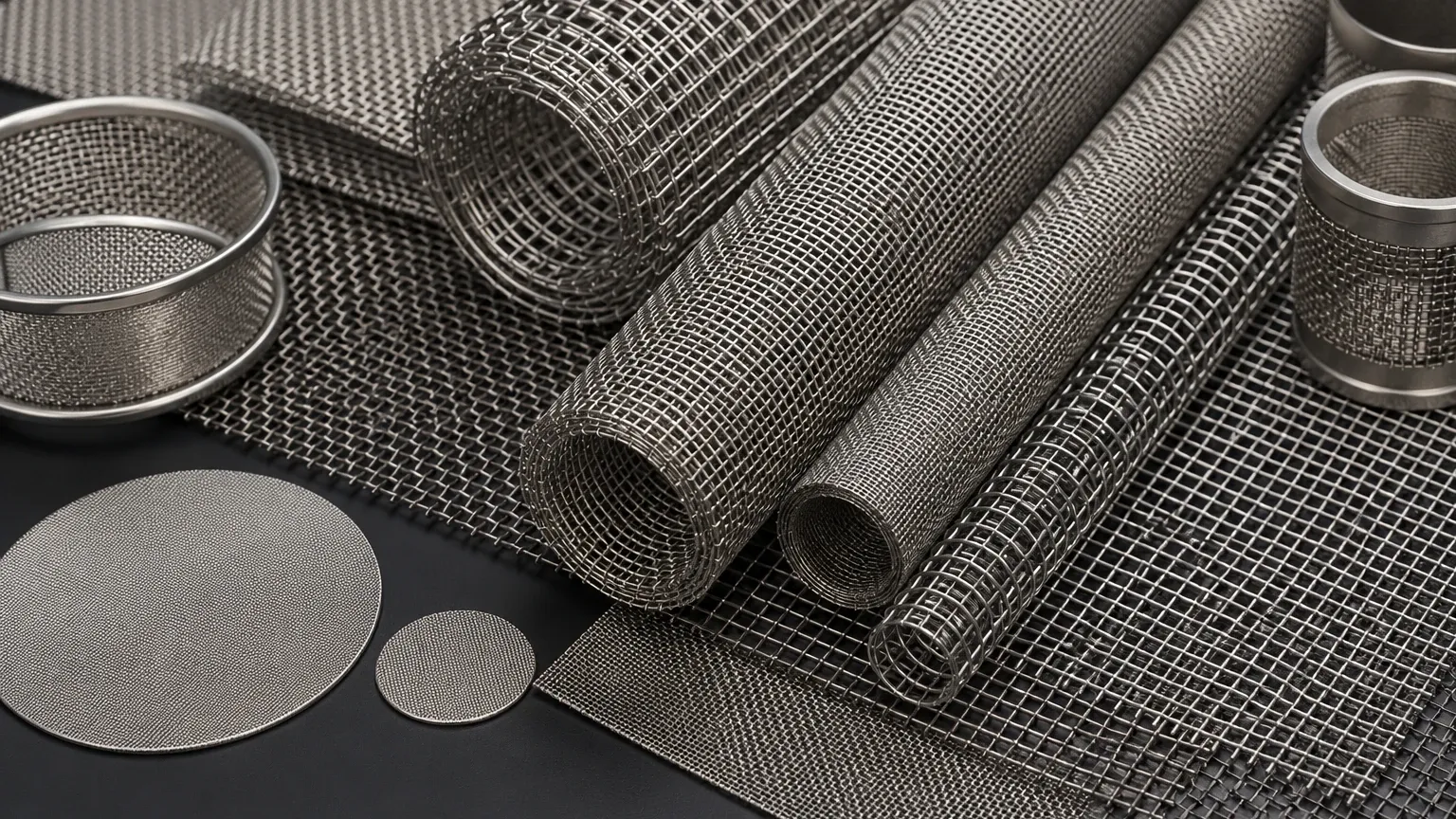
Woven wire mesh is a foundational component in industrial processes ranging from mineral ore grading to pharmaceutical purification. Because these environments are often corrosive or abrasive, the selection of the correct mesh specification is critical to operational uptime and product quality. This guide provides a technical framework for evaluating suppliers and selecting the optimal Plain, twill and dutch woven wire mesh in SS304/316L — rolls, cut mesh and framed panels. Send mesh count or micron target for a technical quote. to meet specific application requirements.
Understanding the Technical Specifications of Woven Wire Mesh
Before engaging with woven wire mesh suppliers south africa, technical teams must define the precise parameters required for their application. Woven wire mesh is defined by its material grade, weave type, mesh count, and wire diameter. Each of these factors significantly influences the mesh’s mechanical strength, flow rate, and filtration efficiency.
Material Selection: SS304 vs. SS316L
In the South African context, stainless steel is the gold standard for industrial mesh due to its durability.
- Grade 304: This is the most common stainless steel used in general industrial applications. It offers excellent strength and basic corrosion resistance. It is suitable for architectural applications, general screening, and environments where high-level chemical exposure is not a primary concern.
- Grade 316L: Containing molybdenum, 316L provides superior resistance to chlorides and acids. This is the preferred choice for South Africa’s coastal industries, chemical processing plants, and marine environments where "tea staining" or pitting corrosion is a risk. The "L" denotes low carbon, which improves weldability and prevents intergranular corrosion in fabricated components.
Weave Geometries and Their Impact
The method by which the wires are interlaced determines the mesh's performance characteristics:
- Plain Weave: The most straightforward pattern where each warp wire crosses alternately over and under each shute wire. It provides high precision for square openings and is ideal for general sieving.
- Twill Weave: Each shute wire passes successively over and under two warp wires. This allows for a heavier wire diameter relative to the mesh count, increasing the strength and durability of the mesh for high-pressure applications.
- Dutch Weave (Plain and Twill): These weaves utilize a larger diameter warp wire and a smaller diameter shute wire, woven tightly together. This creates a tortuous path for particles, allowing for extremely fine filtration (down to 5-10 microns) while maintaining high mechanical stability.
Evaluating Woven Wire Mesh Suppliers in South Africa
The South African market is served by a mix of local stockists, distributors, and global manufacturers. When evaluating woven wire mesh suppliers south africa, engineering teams should look beyond inventory levels and assess the supplier’s technical depth.
Technical Support and Engineering Expertise
A reliable supplier should act as a technical partner rather than a mere vendor. They should be able to assist in calculating the "open area" percentage, which dictates the flow capacity and pressure drop across the mesh. In demanding applications like hydraulic filtration or high-velocity gas separation, understanding the relationship between mesh count and wire diameter is essential to prevent premature mesh failure or system inefficiency.
Quality Certification and Traceability
Industrial applications require material integrity. Suppliers should provide Material Test Reports (MTRs) that confirm the chemical composition of the stainless steel. In sectors like food processing or pharmaceuticals, ensuring the mesh is free from manufacturing lubricants and contaminants is a regulatory necessity. Ask potential suppliers about their quality control processes, including ultrasonic cleaning capabilities and dimensional inspection protocols.
Customization and Fabrication Capabilities
While standard rolls (typically 30m in length and 1m to 1.5m in width) are common, many industrial projects require customized solutions. This includes:
- Cut-to-size panels: Precise laser or plasma cutting to fit specific housing units.
- Framed panels: Adding stainless steel or polymer frames to provide structural rigidity for vibrating screens.
- Multi-layer sintering: Combining multiple layers of mesh into a single, rigid plate for high-pressure environments.
Key Industrial Applications in the South African Market
The diversity of South Africa’s economy means that Woven Wire Mesh must perform across a wide spectrum of environments. Understanding these applications helps in narrowing down the required specifications.
Mining and Mineral Processing
South Africa is a global leader in the production of platinum, gold, and chromium. In these sectors, woven wire mesh is used for ore grading, dewatering, and slurry filtration. The mesh must withstand high abrasion and heavy loads. Often, a twill weave with a heavier wire diameter is selected to extend the service life of the screens.
Chemical and Petrochemical Industries
With major refineries and chemical hubs in Sasolburg and Secunda, there is a high demand for corrosion-resistant filtration media. Woven wire mesh is used in catalyst recovery, gas-liquid separation, and filtration of aggressive chemicals. Here, SS316L or even exotic alloys are often required to ensure the mesh does not degrade under chemical attack.
Food and Beverage Production
From the wine industry in the Western Cape to large-scale grain processing, hygiene is paramount. Stainless steel mesh is favored because it is non-reactive and easy to clean. Suppliers catering to this sector must ensure the mesh meets international food safety standards, providing smooth surfaces that do not harbor bacterial growth.
Critical Selection Criteria for Engineers
When specifying mesh for a project, engineers should focus on three primary performance indicators: filtration accuracy, mechanical strength, and flow capacity.
1. Filtration Accuracy (Micron Rating): This is the size of the largest spherical particle that can pass through the mesh. For Dutch weaves, this is often expressed as a nominal or absolute rating. It is vital to match the micron rating to the specific contaminant profile of the fluid or gas being processed.
2. Mechanical Strength: The mesh must withstand the operating pressure and potential pressure spikes without deforming. The wire diameter and weave type are the primary contributors to strength. In high-pressure applications, supporting the fine filter mesh with a coarser "drainage" or "support" mesh layer is a common engineering practice.
3. Flow Capacity (Open Area): The ratio of the area of the openings to the total area of the mesh. A higher open area reduces the pressure drop and allows for higher flow rates but may compromise the strength of the mesh. Balancing these two factors is a key part of the selection process.
Mitigating Risks in Mesh Procurement
Procuring industrial components involves inherent risks, particularly regarding material quality and lead times. When working with woven wire mesh suppliers south africa, consider the following strategies to mitigate these risks:
- Verify Alloy Composition: Use Positive Material Identification (PMI) testing if there is any doubt about the grade of stainless steel provided. This is especially important for 316L applications where 304 would fail prematurely.
- Assess Dimensional Accuracy: Inconsistent wire spacing or varying wire diameters can lead to "bypass," where particles larger than the target micron size pass through the filter. Request samples or inspection reports for critical applications.
- Plan for Lead Times: While local stockists may have standard sizes, custom weaves or large-scale orders may require manufacturing lead times. Engaging with a manufacturer like Kaifil early in the design phase can help align production schedules with project timelines.
Total Cost of Ownership (TCO) Considerations
The initial purchase price of woven wire mesh is only one component of the total cost of ownership. For B2B buyers, the goal is to optimize the "cost per liter filtered" or "cost per ton processed."
- Durability: A more expensive 316L twill weave mesh that lasts twice as long as a 304 plain weave mesh will significantly reduce maintenance costs and downtime.
- Cleanability: High-quality stainless steel mesh can be cleaned and reused multiple times. Ultrasonic cleaning or backpulsing can restore the flow capacity of the mesh, extending its service life compared to disposable filter media.
- Process Efficiency: Choosing a mesh with the optimal open area can reduce energy consumption by lowering the pump pressure required to move fluid through the system.
Conclusion: Selecting the Right Technical Partner
Finding the right woven wire mesh suppliers south africa requires a balance between local availability and global manufacturing excellence. For South African industries, where environmental conditions are often harsh and performance requirements are high, the technical integrity of the mesh cannot be compromised.
By focusing on material certifications, weave precision, and engineering support, procurement teams can ensure they select a filtration solution that enhances process reliability. Whether you are designing a new filtration system for a mining operation or replacing screens in a food processing plant, starting with a clear technical specification is the first step toward long-term success.
For those requiring high-precision components or customized designs, working directly with an experienced manufacturer allows for greater control over the final product's performance. Always confirm the mesh count, wire diameter, and material grade with a technical quote to ensure the product delivered meets the exact needs of your industrial application.
