


Woven Wire V Mesh
In industrial filtration and separation processes, the selection of media is a critical engineering decision that directly impacts operational efficiency, product purity, and equipment longevity. Among the various options available, Woven Wire Mesh remains a cornerstone material due to its predictable pore geometry and mechanical robustness. However, when specific applications demand enhanced structural integrity or specialized flow dynamics, engineers often turn to specialized configurations, such as woven wire v mesh.
This guide examines the technical nuances of woven wire v mesh, its relationship to standard woven wire mesh, and the engineering considerations necessary for selecting the right filtration components for demanding industrial environments.
Understanding Woven Wire Mesh and V-Profile Configurations
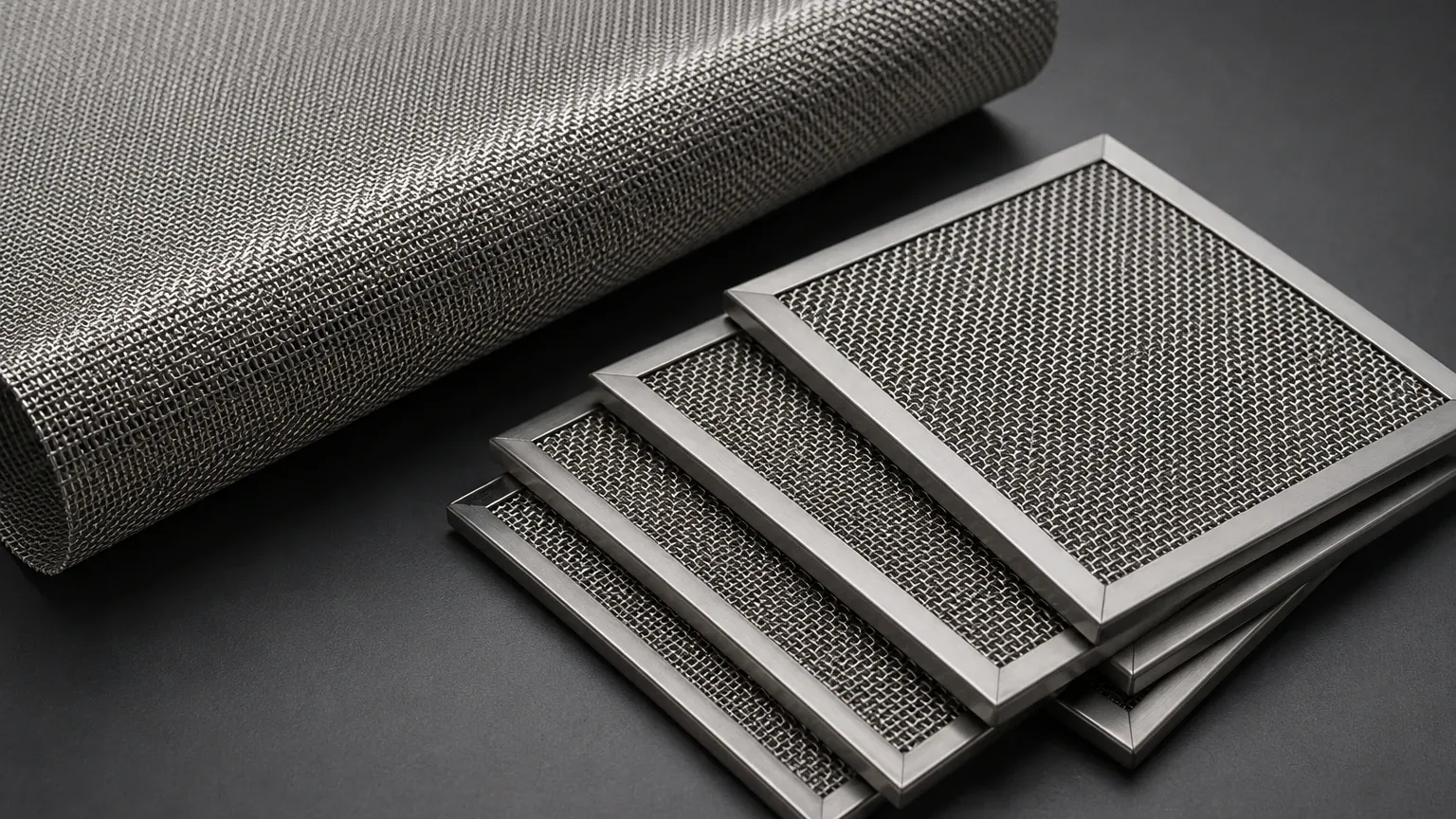
To understand the utility of woven wire v mesh, one must first distinguish between the base material and its geometric application. Standard Woven Wire Mesh is produced by weaving individual wires over and under one another in patterns such as plain, twill, or dutch weave. Each weave type offers different benefits regarding flow rate and particle retention.
The term "v mesh" in an industrial context typically refers to two distinct but related concepts: wedge wire (often called V-wire) or woven wire mesh that has been pleated or formed into a V-shaped profile to increase surface area. In many high-performance filter cartridges, a flat sheet of woven wire mesh is pleated into a series of V-shaped folds. This configuration dramatically increases the available filtration area within a fixed housing diameter, effectively reducing the face velocity of the fluid and extending the time between cleaning cycles.
For engineers, the primary advantage of utilizing a V-shaped configuration with woven wire mesh is the optimization of the "dirt-holding capacity." By increasing the surface area, the pressure drop across the filter remains lower for a longer period, even as particles begin to accumulate on the mesh surface.
Engineering Considerations for Material Selection
When specifying woven wire v mesh for industrial applications, material science is the first line of defense against premature failure. Kaifil specializes in stainless steel alloys, primarily SS304 and SS316L, which are selected based on the chemical and thermal environment of the process.
SS304 vs. SS316L
* SS304: This is the standard grade for general industrial use. It provides excellent mechanical strength and basic corrosion resistance. It is suitable for food and beverage applications where high-acidity cleaning agents are not used, and for hydraulic systems where moisture levels are controlled.
* SS316L: The "L" stands for low carbon, which improves weldability and prevents sensitization during the manufacturing of filter cartridges. The addition of molybdenum provides superior resistance to chlorides and pitting, making it the preferred choice for chemical processing, pharmaceutical production, and marine environments.
Mechanical Properties
Beyond chemical compatibility, engineers must evaluate the tensile strength and ductility of the wire. In a woven wire v mesh configuration, the mesh is often subjected to mechanical stresses during the pleating process or from high-pressure backwashing. Selecting a mesh with the correct wire diameter ensures that the V-folds maintain their shape under hydraulic load without collapsing or experiencing fatigue failure.
Technical Parameters: Mesh Count and Micron Rating
The performance of Woven Wire Mesh is defined by its ability to consistently intercept particles of a specific size. This is measured through mesh count and micron rating.
1. Mesh Count: This refers to the number of openings per linear inch. A higher mesh count indicates a finer weave. However, mesh count alone does not define filtration accuracy, as the wire diameter also influences the size of the opening.
2. Micron Rating: This is a more precise measurement for engineers. It defines the size of the largest spherical particle that can pass through the mesh. In woven wire v mesh applications, the micron rating must be balanced against the required flow rate. A finer micron rating increases resistance to flow (pressure drop), which may necessitate a larger V-pleat surface area to compensate.
When discussing woven wire v mesh with a manufacturer like Kaifil, it is essential to specify whether the requirement is for absolute or nominal filtration. Absolute ratings imply that 99.9% of particles at that micron size will be retained, whereas nominal ratings suggest a lower efficiency (often 60-90%).
Performance Expectations and Flow Dynamics
The geometry of woven wire v mesh significantly influences fluid dynamics. In a standard flat-panel filter, the fluid hits the surface perpendicularly. In a V-shaped pleated configuration, the fluid enters the valleys of the pleats. This design encourages a more uniform distribution of the filter cake (the layer of trapped particles).
Pressure Drop (ΔP)
Every filter introduces a pressure drop into the system. Engineers must calculate the "clean pressure drop" to ensure the pump or gravity feed system can maintain the required flow. Because Woven Wire Mesh has a highly predictable open area percentage, these calculations are more accurate than with non-woven or felt media. The V-profile configuration helps keep the ΔP low by spreading the flow across a larger total area.
Backwashing and Cleaning
One of the greatest advantages of stainless steel woven wire v mesh is its cleanability. Unlike disposable fiber filters, stainless steel mesh can be cleaned via backpulsing, ultrasonic baths, or chemical cleaning. The V-shape must be engineered to be "stable" enough to withstand the reverse pressure of backwashing without deforming the weave, which would alter the micron rating.
Customization and OEM Integration
Industrial systems are rarely "one size fits all." Customization is often required to integrate filtration components into existing machinery. As a manufacturer, Kaifil provides OEM solutions that go beyond simple mesh supply.
Framing and Support Structures
Woven wire v mesh often requires a support core or an external cage, especially in high-pressure hydraulic or gas filtration. These supports prevent the mesh from migrating or bursting. Customization options include:
* Reinforced Edges: To prevent fraying and ensure a bypass-free seal within the filter housing.
* Custom Pleat Depths: Adjusting the height and frequency of the V-folds to match specific flow requirements.
* Multi-layer Sintering: In some cases, the woven wire mesh is sintered (thermally bonded) to a coarser support mesh. This creates a composite material that offers the fine filtration of the top layer with the structural rigidity of the base layer, all while maintaining the V-profile.
Engineers should provide detailed drawings or CAD files when requesting custom woven wire v mesh components to ensure that tolerances for diameter, length, and fitting types (such as DOE, 222, or 226 O-rings) are strictly met.
Maintenance Protocols and Replacement Cycles
While stainless steel Woven Wire Mesh is designed for long-term use, it is not infinite. Establishing a replacement cycle is a critical part of industrial maintenance.
Monitoring Differential Pressure
The most reliable way to determine when a woven wire v mesh filter needs cleaning or replacement is by monitoring the differential pressure. Once the ΔP reaches a pre-determined limit (the "terminal pressure drop"), the filter should be serviced. Operating beyond this limit risks "media migration" or structural failure of the V-pleats.
Inspection for Fatigue
During cleaning, the mesh should be inspected for signs of mechanical fatigue. In high-vibration environments or systems with frequent pressure spikes, the wires at the peaks of the V-folds can experience work-hardening and eventually crack. If any light can be seen through the mesh in an irregular pattern (indicating a gap), the component must be replaced to prevent downstream contamination.
Total Cost of Ownership (TCO) Considerations
When purchasing industrial filters, the initial price is only one component of the total cost. Engineers and purchasing teams should evaluate the TCO of woven wire v mesh based on the following:
* Operational Downtime: How often does the system need to be stopped for filter cleaning? The high surface area of V-mesh typically reduces this frequency.
* Waste Disposal: Unlike disposable polymer filters, stainless steel mesh does not contribute to the waste stream, which can be a significant cost factor in industries with high filtration volumes.
* Energy Consumption: A filter that maintains a lower pressure drop for a longer period reduces the energy load on pumps.
* Product Recovery: In industries like pharmaceutical or precious metal processing, the ability to easily recover the "filter cake" from the surface of a smooth woven wire mesh is a direct financial benefit.
By investing in high-quality Woven Wire Mesh from a specialized manufacturer, companies can achieve a lower TCO despite a higher initial capital expenditure compared to disposable alternatives.
Conclusion
Woven wire v mesh represents a sophisticated intersection of material science and geometric engineering. By utilizing the inherent precision of Woven Wire Mesh and configuring it into high-surface-area V-profiles, industrial operations can achieve superior filtration efficiency, durability, and cost-effectiveness.
For engineers and procurement professionals, the key to success lies in defining the exact parameters of the application—including chemical compatibility, micron requirements, and mechanical stress—and working with a manufacturer capable of delivering customized, precision-engineered solutions. Whether for chemical processing, food production, or hydraulic systems, the right woven wire configuration is an essential component of a reliable industrial process.
