


Woven Wire Fence vs High Tensile: A Technical Guide for Industrial and Structural Applications
In the selection of wire-based containment and filtration support systems, engineers and procurement specialists often face a choice between two primary structural philosophies: woven configurations and high-tensile systems. While the debate of woven wire fence vs high tensile is frequently centered on agricultural boundaries, the underlying engineering principles are deeply relevant to industrial filtration, perimeter security, and material reinforcement.
Understanding the mechanical differences, material properties, and lifecycle costs of these two systems is essential for ensuring long-term performance in demanding environments. This guide examines the technical distinctions between woven wire mesh structures and high-tensile wire systems, focusing on their application in industrial contexts.
Understanding the Fundamentals of Woven Wire Mesh
Woven wire mesh is a versatile material produced by weaving individual wire strands over and under one another to create a stable, uniform grid. In industrial manufacturing, this process is executed with high precision to ensure consistent aperture sizes, which is critical for filtration and separation tasks.
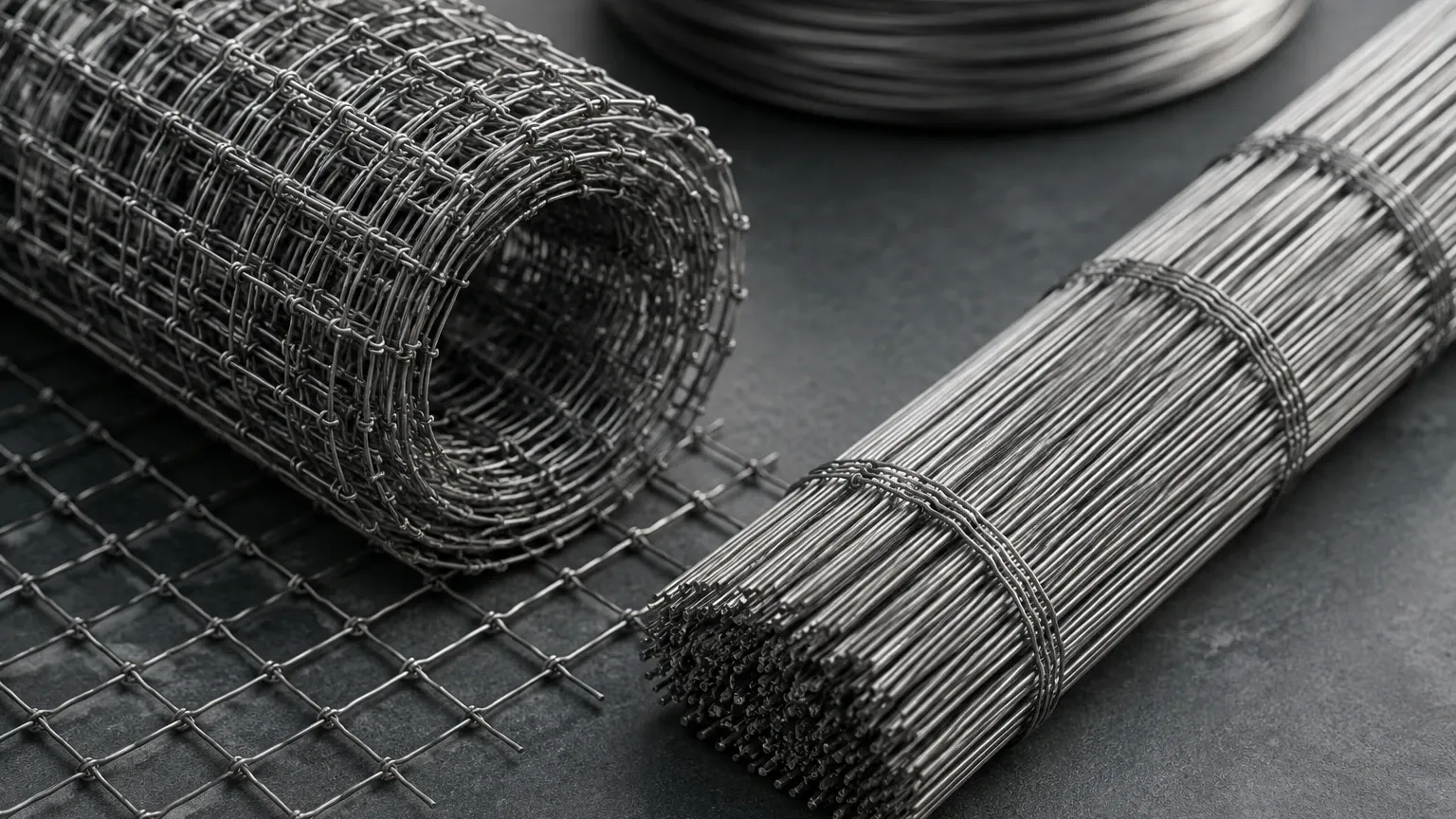
At Kaifil, the production of Plain, twill and dutch woven wire mesh in SS304/316L — rolls, cut mesh and framed panels. Send mesh count or micron target for a technical quote. allows for a high degree of customization. The "woven" nature of the mesh provides inherent stability. Because the wires are interlocked, the mesh resists shifting under lateral pressure. In a fencing or containment context, woven wire mesh (often referred to as "field fence" or "non-climb mesh") utilizes specific knots—such as the fixed knot or hinge joint—to secure the vertical and horizontal wires.
Key Characteristics of Woven Mesh:
* Aperture Stability: The interlocking weave ensures that the openings remain consistent, preventing "spreading" when under localized stress.
* Flexibility: Woven structures can absorb impacts by distributing the force across the entire grid.
* Material Variety: Available in various alloys, including Stainless Steel 304 and 316L, which offer superior corrosion resistance compared to standard galvanized options.
Defining High Tensile Wire Systems
High tensile wire is characterized by its metallurgical composition. Unlike low-carbon "mild" steel wire, high tensile wire is manufactured from high-carbon steel that has been heat-treated to increase its yield strength. This allows the wire to be stretched tighter and remain under tension without stretching or sagging over time.
In a high tensile fencing system, the wires are typically installed as individual horizontal strands or as part of a high-tensile woven mesh. The primary advantage of high tensile wire is its "spring-like" quality. It can withstand significant pressure—such as a heavy animal leaning against it or a falling branch—and snap back to its original position once the pressure is removed.
Key Characteristics of High Tensile Wire:
* High Yield Strength: It can be tensioned to much higher levels than mild steel wire.
* Low Maintenance: Once properly tensioned, it rarely requires re-tightening.
* Reduced Post Requirements: Due to its strength, high tensile systems often require fewer support posts over long distances.
Woven Wire Fence vs High Tensile: Structural Differences
When comparing woven wire fence vs high tensile, the primary distinction lies in how the system handles tension and impact.
1. Impact Resistance and Elasticity
Woven wire mesh, particularly when made with mild steel and hinge joints, acts as a flexible net. It is designed to "give" slightly upon impact. In contrast, high tensile woven mesh combines the grid structure of a weave with the high-carbon strength of the wire. This results in a structure that is incredibly rigid and resistant to deformation. For industrial filtration support or heavy-duty containment, high tensile woven mesh is often the preferred choice because it maintains its shape under high-pressure differentials.
2. Installation Complexity
High tensile systems require specialized tools for tensioning and crimping. Because the wire is under extreme tension, the end posts and corner braces must be exceptionally strong to prevent the system from collapsing inward. Woven wire mesh, while still requiring tension, is generally more forgiving during installation, especially when navigating uneven terrain or wrapping around cylindrical industrial components.
3. Longevity and Environment
In industrial environments involving chemical processing or water treatment, the longevity of the wire is dictated more by its alloy than its tensile strength. While high tensile wire is often heavily galvanized (Class 3 coating), it may still succumb to corrosion in acidic or saline environments. This is where stainless steel woven wire mesh excels, providing both the structural integrity of a weave and the chemical resistance of specialized alloys.
Material Engineering: Stainless Steel vs. Galvanized Steel
In the B2B sector, material selection is a critical factor in the total cost of ownership. When evaluating woven wire fence vs high tensile options, engineers must consider the atmospheric conditions of the installation site.
* Stainless Steel (SS304/SS316L): These materials are the gold standard for industrial applications. SS316L, with its molybdenum content, offers superior resistance to chlorides and pitting. When woven into a mesh, stainless steel provides a maintenance-free solution that far outlasts galvanized high-tensile wire in corrosive environments.
* Galvanized Steel: Suitable for standard outdoor applications where cost is a primary driver. However, the zinc coating can be compromised during the weaving or knotting process, leading to premature rust at the joints.
Industrial Filtration and Support Applications
While the term "fence" implies a perimeter, the comparison of woven vs. high tensile structures is highly applicable to industrial filtration components manufactured by Kaifil.
Filter Cartridge Support
In high-pressure hydraulic or chemical filtration, the filter media (often a fine woven wire mesh) requires a support structure. A high-tensile perforated core or a coarse woven mesh outer wrap provides the necessary rigidity to prevent the fine media from collapsing under the flow of fluid.
Vibratory Sieve Screens
In food and beverage or pharmaceutical processing, woven wire mesh is used in vibrating separators. The mesh must be kept under high tension to ensure efficient particle separation. Here, the principles of high-tensile engineering are applied to the woven mesh to ensure the screen does not sag, which would lead to "blinding" (clogging) of the filter.
Selection Factors for Technical Professionals
To determine the appropriate solution for a specific project, technical teams should evaluate the following criteria:
1. Load Requirements: Will the mesh be subject to constant pressure (as in a filter) or occasional impact (as in a safety barrier)? High tensile systems are better for constant tension, while woven systems are superior for impact distribution.
2. Corrosion Profile: Does the application involve exposure to salt spray, industrial chemicals, or extreme temperatures? If so, stainless steel woven wire mesh is the recommended specification.
3. Aperture Precision: If the goal is to exclude specific particle sizes or small animals/debris, a woven mesh with a fixed knot or a fine weave provides a more reliable barrier than individual high-tensile strands.
4. Maintenance Access: Is the installation in a remote location? High tensile systems, once set, require less frequent adjustment than traditional low-carbon woven fences.
Common Risks and Engineering Pitfalls
One common mistake in selecting wire systems is over-specifying tensile strength while under-specifying corrosion resistance. A high-tensile wire that rusts through in five years is less valuable than a lower-tensile stainless steel mesh that lasts twenty.
Another risk involves the "spring-back" effect of high tensile wire. During maintenance or accidental breakage, high tensile wire can recoil with significant force, posing a safety risk to personnel. Woven wire mesh, due to its interconnected structure, tends to be safer to handle during repairs.
Conclusion: Making the Informed Choice
The choice between woven wire fence vs high tensile is not a matter of one being universally superior, but rather which is better suited to the specific mechanical and environmental demands of the application. For industrial users requiring precision, durability, and chemical resistance, a high-quality woven wire mesh manufactured from stainless steel often provides the most reliable performance.
Kaifil specializes in the engineering and manufacture of these complex wire structures. Whether you are designing a filtration system for a chemical plant or a durable containment solution for an industrial facility, understanding the interplay between weave patterns and wire strength is the key to a successful installation. By focusing on material grade, mesh count, and the specific structural requirements of your project, you can ensure a solution that minimizes downtime and maximizes service life.
