


Engineering Guide to Woven Wire Mesh for Industrial Yard and Perimeter Containment
In industrial environments, the selection of materials for perimeter security, yard containment, and specialized enclosures is a critical engineering decision. While the term "woven wire yard fence" often evokes images of agricultural or residential barriers, the technical requirements of chemical processing plants, pharmaceutical facilities, and heavy industrial yards demand a much higher level of material integrity and performance.
High-performance woven wire mesh serves as the foundation for these demanding applications. Unlike standard welded wire or chain-link options, woven wire structures offer superior dimensional stability, customizable aperture sizes, and significant resistance to mechanical stress. For engineers and purchasing teams, understanding the intersection of material science, weave patterns, and environmental factors is essential for ensuring long-term reliability and safety.
The Structural Advantages of Woven Wire Mesh
At its core, woven wire mesh is produced by interlacing individual wires over and under one another in a systematic pattern. This process, similar to textile weaving, creates a stable fabric that maintains its opening sizes even under significant tension or impact. In an industrial yard setting, this structural integrity is paramount.
Dimensional Stability
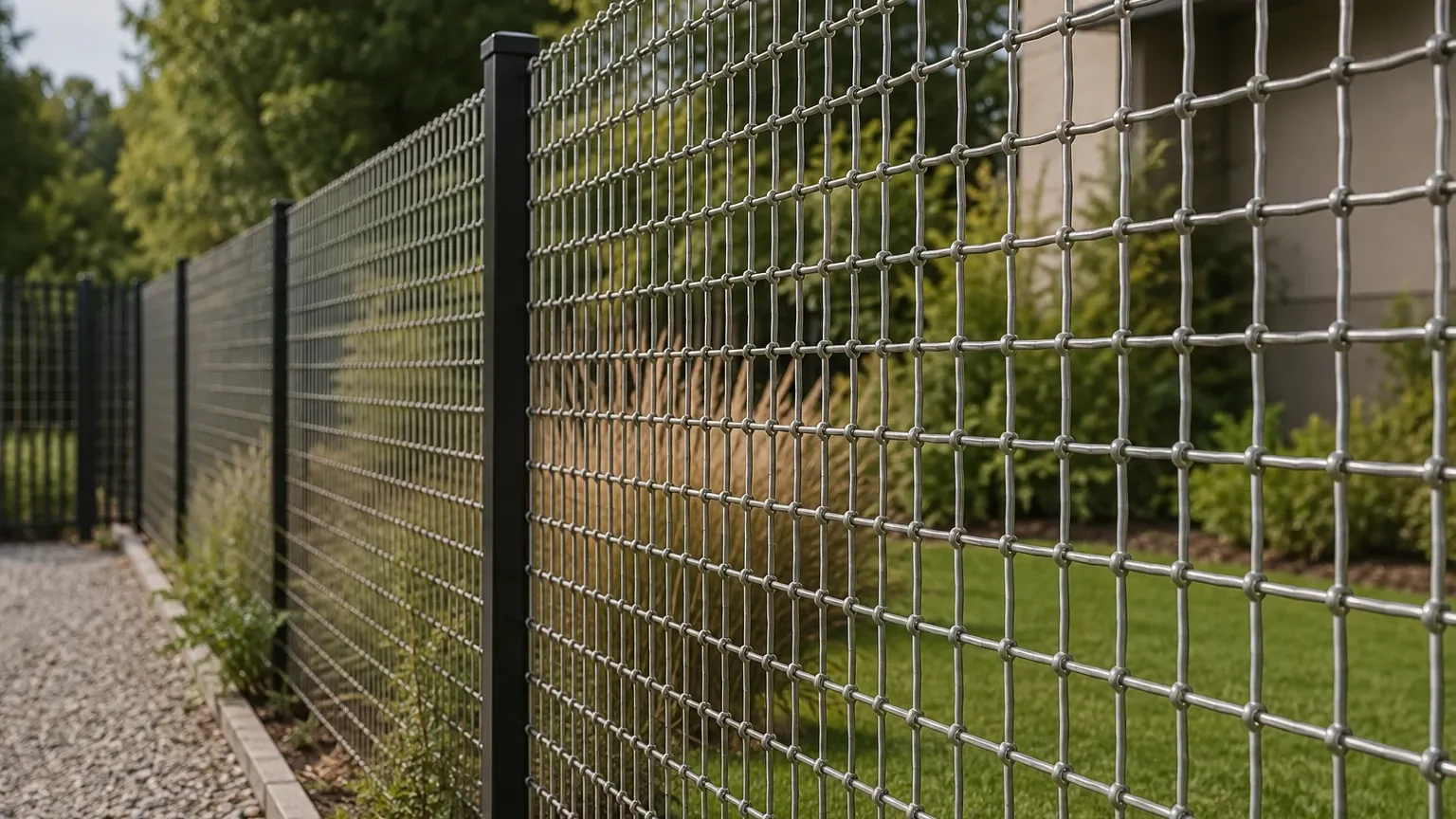
One of the primary reasons engineers specify woven wire for containment is its resistance to deformation. In large-scale yard applications, wind loads and physical impacts can cause lesser materials to sag or stretch. The mechanical interlock of the weave ensures that the mesh retains its shape, providing a consistent barrier that does not require frequent re-tensioning.
Customization of Aperture and Wire Diameter
Industrial applications rarely benefit from a "one-size-fits-all" approach. The ability to specify precise wire diameters and aperture (opening) sizes allows for the optimization of the fence for specific goals. Whether the objective is maximum visibility for security cameras, airflow for ventilation in storage areas, or high-tensile strength for equipment protection, Plain, twill and dutch woven wire mesh in SS304/316L — rolls, cut mesh and framed panels. Send mesh count or micron target for a technical quote. provides the necessary flexibility to meet these engineering targets.
Material Selection: Why Stainless Steel Dominates Industrial Yards
When evaluating a woven wire yard fence for an industrial facility, the choice of material is the single most significant factor in determining the total cost of ownership (TCO). While galvanized steel may offer a lower initial price point, stainless steel—specifically grades 304 and 316—is the industry standard for durability.
Grade 304 Stainless Steel
SS304 is the most common stainless steel used in industrial fencing and filtration. It offers excellent corrosion resistance to most oxidizing acids and is highly durable against atmospheric conditions. For standard industrial yards located away from coastal or highly corrosive chemical environments, SS304 provides an ideal balance of performance and cost.
Grade 316 Stainless Steel
For facilities located near marine environments or those handling chlorides and industrial solvents, SS316 is the preferred specification. The addition of molybdenum (usually 2-3%) significantly enhances its resistance to pitting and crevice corrosion. In a yard fence application, this prevents the structural degradation that often plagues carbon steel or lower-grade alloys in harsh climates.
Comparison of Material Longevity
| Material Type | Corrosion Resistance | Mechanical Strength | Typical Service Life (Industrial) |
| :— | :— | :— | :— |
| Galvanized Steel | Moderate | High | 5–10 Years |
| SS304 Woven Mesh | High | Very High | 20+ Years |
| SS316 Woven Mesh | Exceptional | Very High | 30+ Years |
Technical Considerations for Fence Specification
Specifying a woven wire mesh for a yard or perimeter requires a deep dive into technical parameters. Engineers must evaluate several key metrics to ensure the mesh performs as expected under field conditions.
Mesh Count and Aperture Size
Mesh count refers to the number of openings per linear inch. In the context of a yard fence, a lower mesh count with a larger wire diameter is typically used to create a robust, high-visibility barrier. Conversely, higher mesh counts are used for specialized containment, such as preventing debris from exiting a scrap yard or protecting sensitive equipment from wildlife.
Wire Diameter and Tensile Strength
The diameter of the wire directly influences the mesh's weight and its ability to withstand physical force. For perimeter security, thicker wire diameters (e.g., 2.0mm to 4.0mm) are common. The tensile strength of the stainless steel wire ensures that the fence can absorb energy from impacts without breaching.
Weave Types and Their Applications
* Plain Weave: The most common type, where each warp wire crosses over and under each shute wire. It is ideal for general-purpose fencing and provides the highest level of transparency.
* Twill Weave: Each warp wire floats over two shute wires. This allows for the use of heavier wires in a given mesh count, increasing the overall strength of the panel.
* Dutch Weave: Primarily used in filtration, but specialized "reverse dutch" weaves can be utilized in high-security yard applications where extreme strength and limited visibility are required.
Engineering for Environmental and Load Factors
An industrial woven wire yard fence must be engineered to withstand more than just physical intruders; it must also handle environmental stressors.
Wind Load Analysis
In open yard areas, wind load is a significant factor. A solid wall or a very fine mesh acts as a sail, putting immense pressure on the support posts and footings. Woven wire mesh allows for controlled airflow. By calculating the "open area percentage" of the mesh, engineers can design support structures that are both safe and cost-effective.
Thermal Expansion and Contraction
Stainless steel has a specific coefficient of thermal expansion. In large perimeter installations, the mesh must be installed with enough flexibility or within frames that allow for seasonal temperature fluctuations without causing the wire to snap or the frames to warp.
Impact Resistance
In logistics yards where forklifts and heavy machinery operate, accidental impacts are a reality. Woven wire mesh, particularly when framed in stainless steel panels, offers superior energy absorption compared to rigid welded panels, which are more prone to weld-point failure under sudden stress.
Installation and Maintenance in Industrial Settings
To maximize the lifespan of a woven wire yard fence, proper installation and minimal but consistent maintenance are required.
Framing and Mounting Options
For industrial yards, woven wire mesh is rarely installed as a loose roll. Instead, it is typically integrated into framed panels. These panels can be bolted to structural steel posts, providing a modular system that is easy to install and replace if a single section is damaged. Framing also protects the edges of the mesh, preventing fraying and ensuring a secure attachment point.
Maintenance Protocols
While stainless steel is "low maintenance," it is not "no maintenance." In industrial environments, the accumulation of dust, chemicals, or salt can lead to surface staining (tea staining). Periodic cleaning with pressurized water or mild detergents helps maintain the protective chromium oxide layer of the steel, ensuring the fence remains aesthetically professional and structurally sound for decades.
Total Cost of Ownership (TCO) Evaluation
When presenting a proposal for a new yard containment system, purchasing teams must look beyond the initial invoice. The TCO of a stainless steel woven wire mesh system often proves lower than cheaper alternatives due to:
1. Reduced Replacement Frequency: Stainless steel does not rust through like galvanized options, eliminating the need for full replacements every decade.
2. Lower Maintenance Costs: No painting, coating, or rust-treatment is required.
3. Enhanced Security: The difficulty of cutting through high-tensile stainless steel wire provides a superior deterrent, potentially lowering insurance premiums for the facility.
4. Sustainability: Stainless steel is 100% recyclable, contributing to corporate green initiatives and providing scrap value at the end of its multi-decade service life.
Custom OEM Solutions for Specialized Yard Needs
Every industrial site has unique challenges. Whether it is a requirement for non-standard panel sizes, specific alloy compositions for chemical compatibility, or integrated filtration properties for wastewater containment yards, Kaifil provides customized manufacturing capabilities.
By working closely with engineering teams during the design phase, we ensure that the mesh count, wire diameter, and weave pattern are perfectly aligned with the application’s mechanical and environmental requirements. From material selection to the final production of cut-to-size panels, our focus remains on delivering high-performance filtration and containment components that withstand the rigors of the modern industrial landscape.
In conclusion, the transition from a standard "yard fence" to an engineered woven wire mesh solution represents an investment in facility safety and operational continuity. By prioritizing high-grade stainless steel and precise technical specifications, engineers can secure their industrial perimeters with a solution that is as durable as the equipment it protects.
