


Carbon Filter Discs
In industrial filtration, the removal of dissolved contaminants, odors, and organic compounds requires more than just mechanical straining. While traditional wire mesh excels at removing particulate matter, the integration of activated carbon into filtration systems introduces the capability of adsorption. Carbon filter discs represent a specialized component in this field, often utilized within complex Filter Discs & Packs to provide a dual-action filtration solution that addresses both physical and chemical impurities.
For engineers and procurement professionals in the chemical processing, pharmaceutical, and food and beverage sectors, understanding the technical nuances of carbon filter discs is essential. These components are rarely used in isolation; rather, they are engineered as part of a multi-layered assembly where material compatibility, mechanical strength, and adsorption efficiency must be carefully balanced.
Technical Composition and Engineering Principles
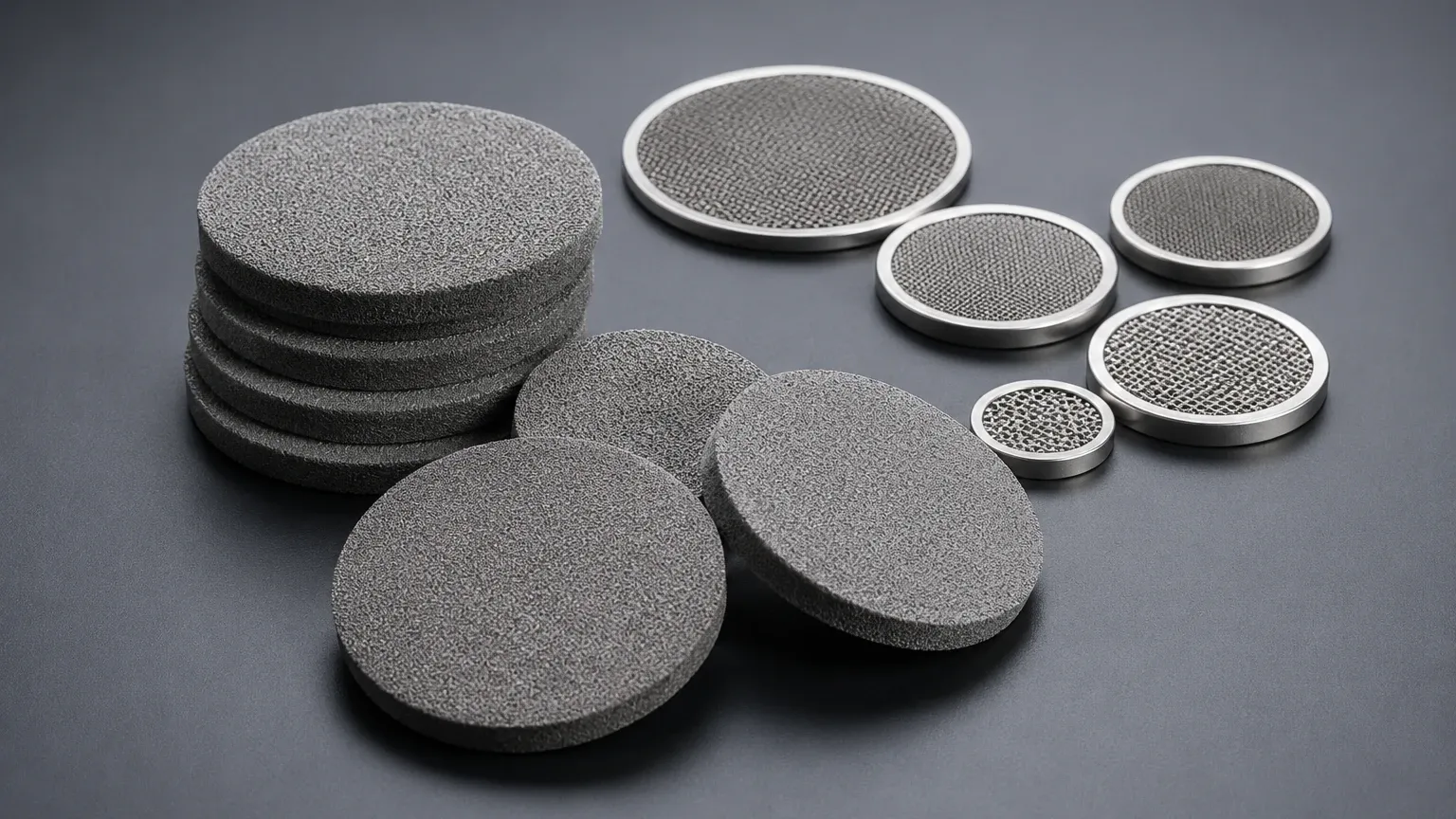
Carbon filter discs are primarily defined by their use of activated carbon—a form of carbon processed to have small, low-volume pores that increase the surface area available for adsorption or chemical reactions. In a B2B industrial context, these discs are typically constructed in one of three ways: carbon-impregnated cellulose or synthetic fibers, bonded activated carbon blocks, or loose granulated activated carbon (GAC) encapsulated between layers of stainless steel wire mesh.
The Role of Adsorption
Adsorption is the process by which atoms, ions, or molecules from a gas, liquid, or dissolved solid adhere to a surface. The high internal surface area of the carbon media allows it to trap organic molecules and chlorine. This is distinct from mechanical filtration, where particles are trapped because they are larger than the pore size of the filter media. When carbon media is formed into a disc shape, it allows for a high contact time between the fluid and the carbon surface within a compact footprint.
Structural Support and Containment
Because activated carbon media—especially in fiber or granular form—can be fragile or prone to migration, industrial applications require robust containment. This is where the synergy between carbon media and stainless steel Filter Discs & Packs becomes critical. Stainless steel mesh serves as a pre-filter to remove large debris that might clog the carbon pores and as a post-filter to ensure no carbon fines (small particles of carbon) escape into the downstream fluid.
Key Applications in Industrial Processes
Carbon filter discs are deployed in environments where purity and the removal of molecular-level contaminants are non-negotiable. Their utility spans several high-stakes industries.
Chemical Processing and Decolorization
In chemical manufacturing, trace organic impurities can affect the color, stability, or reactivity of the final product. Carbon filter discs are frequently used to remove unwanted pigments or catalysts from liquid streams. The choice of carbon grade (e.g., wood-based, coal-based, or coconut shell-based) depends on the molecular weight of the impurities being targeted.
Food and Beverage Purification
In the beverage industry, carbon filtration is standard for removing chlorine, trihalomethanes (THMs), and off-flavors from process water. When used in these applications, the filter discs must meet strict food-grade standards. The stainless steel housing and support mesh must be corrosion-resistant (typically 304 or 316L grade) to withstand both the fluid properties and the Clean-in-Place (CIP) cycles.
Pharmaceutical and Biotech Manufacturing
Pharmaceutical processes often require the removal of endotoxins, pyrogens, or residual solvents. Carbon filter discs provide a predictable and scalable method for these tasks. In these settings, the mechanical integrity of the disc assembly is paramount to prevent bypass, which could lead to batch contamination.
Design Considerations for Engineers
When specifying carbon filter discs for an industrial system, engineers must evaluate several performance metrics beyond simple dimensions. A failure to account for these factors can lead to premature saturation or system failure.
Filtration Accuracy and Micron Rating
While the carbon media handles molecular adsorption, the surrounding mesh layers in the Filter Discs & Packs assembly define the mechanical filtration accuracy. Engineers must select a micron rating for the support mesh that prevents "media migration"—the loss of carbon particles into the process stream—while ensuring that the mesh itself does not create an excessive pressure drop.
Pressure Drop and Flow Rate
Carbon media is inherently dense. As fluid passes through the tortuous path of the carbon pores, a significant pressure drop (differential pressure) occurs. Engineers must calculate the total surface area required to maintain the desired flow rate without exceeding the system's pump capacity. Increasing the diameter of the disc or using a multi-disc pack can mitigate high pressure drops.
Contact Time (EBCT)
Empty Bed Contact Time (EBCT) is a critical calculation in carbon filtration. It represents the time the fluid spends in contact with the carbon media. If the flow rate is too high or the disc is too thin, the adsorption process may be incomplete. Customizing the thickness of the carbon layer within the disc pack is often necessary to achieve the required contact time.
Customization and OEM Solutions
Industrial filtration requirements are rarely "one size fits all." Customization is often the key to optimizing filtration performance and reducing long-term costs. Manufacturers like Kaifil specialize in developing tailored Filter Discs & Packs that incorporate various media types and structural designs.
Multi-Layer Configurations
To maximize efficiency, filter discs can be constructed with multiple layers of varying mesh counts. A typical configuration might include a coarse outer mesh for structural support, a fine inner mesh for carbon containment, and the carbon media itself. These layers are often joined using spot welding or rim binding to ensure a leak-proof seal.
Material Selection for Demanding Environments
In corrosive environments or high-temperature applications, the choice of metal for the support structure is vital. While stainless steel 316L is the industry standard for its excellent corrosion resistance, other alloys may be used for specific chemical compatibilities. The binding material (the rim of the disc) can also be customized, using aluminum, copper, or stainless steel to match the housing requirements.
Custom Shapes and Dimensions
While circular discs are most common, industrial housings may require rectangular, oval, or ring-shaped filters. Precision laser cutting and CNC machining allow for the production of carbon filter discs that fit perfectly into existing hardware, eliminating the risk of bypass.
Performance Evaluation and Quality Control
To ensure reliable performance in a B2B environment, carbon filter discs must undergo rigorous quality checks. Purchasing teams should confirm the following with their suppliers:
1. Adsorption Capacity: Does the carbon media meet the required iodine number or molasses number for the specific application? These metrics indicate the microporosity and macroporosity of the carbon.
2. Mechanical Strength: Can the disc assembly withstand the maximum expected differential pressure without deforming or bursting? This is particularly important in hydraulic or high-pressure chemical lines.
3. Cleanliness: For pharmaceutical and food applications, are the discs manufactured in a controlled environment to prevent pre-use contamination?
4. Consistency: Is there a documented process for ensuring that every disc in a high-volume order meets the same filtration specifications?
Maintenance and Replacement Cycles
Unlike purely mechanical filters, which can sometimes be backwashed or cleaned, carbon media has a finite lifespan based on its adsorption capacity. Once all available bonding sites on the carbon surface are occupied, the media is "spent" or saturated.
Monitoring the effluent quality (e.g., checking for the return of color, odor, or specific chemical markers) is the most accurate way to determine when a carbon filter disc needs replacement. However, in many industrial settings, replacement is scheduled based on total throughput or time intervals to prevent breakthrough—the point at which contaminants pass through the filter unabsorbed.
Using high-quality Filter Discs & Packs with durable stainless steel frames can simplify the replacement process. Well-constructed discs are easier to handle and install, reducing downtime during maintenance turnarounds.
Conclusion
Carbon filter discs are a vital component for achieving high-purity results in modern industrial processes. By combining the chemical adsorption properties of activated carbon with the mechanical strength and precision of stainless steel wire mesh, these components provide a robust solution for complex filtration challenges.
When selecting a partner for filtration solutions, engineers should look for manufacturers who understand the interplay between media performance and structural integrity. Whether you require a standard size or a fully customized multi-layer assembly, focusing on material quality and engineering precision will ensure that your filtration system operates efficiently, protects downstream equipment, and maintains the highest product standards.
