


Disc Filter Replacement
In high-precision industrial environments, the efficiency of a filtration system is often determined by the condition of its most fundamental components. For industries ranging from polymer extrusion and chemical processing to food and beverage production, maintaining optimal flow and purity requires a rigorous approach to disc filter replacement. These components, often referred to as Filter Discs & Packs, serve as the primary barrier against contaminants, and their timely replacement is critical to preventing equipment downtime and product degradation.
Understanding when and how to replace these filters is not merely a maintenance task; it is an engineering necessity. This guide explores the technical indicators for replacement, the selection criteria for new components, and the operational risks associated with delayed maintenance.
The Role of Filter Discs & Packs in Industrial Filtration
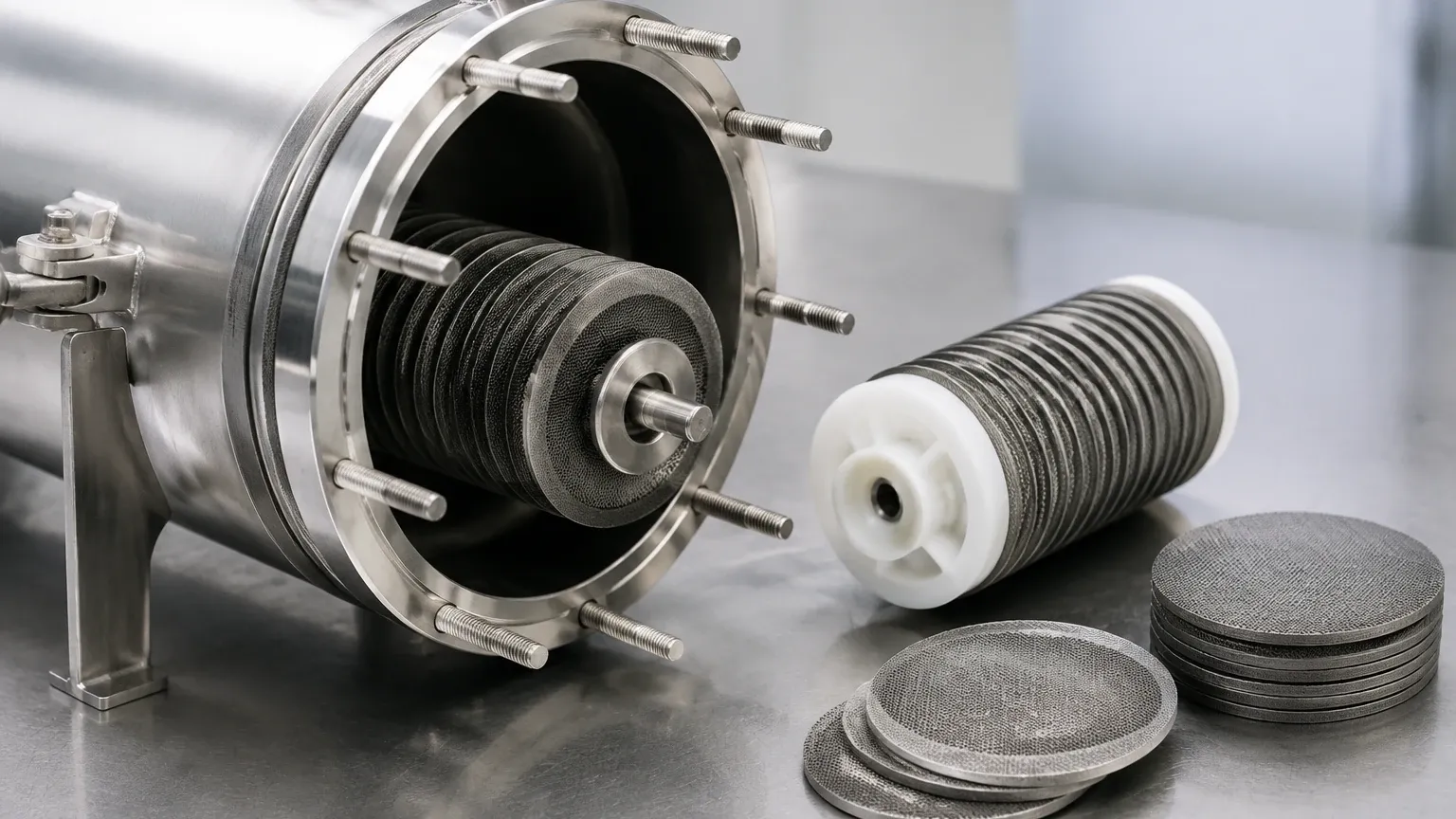
Filter discs and packs are engineered from stainless steel wire mesh, often layered to achieve specific filtration ratings and structural rigidity. They are designed to withstand high pressures and temperatures while providing a precise micron rating. In applications like plastic extrusion, these discs are often assembled into "packs"—multi-layered configurations that combine coarse mesh for support and fine mesh for particle retention.
Because these filters operate in demanding environments, they are subject to mechanical stress, chemical exposure, and the gradual accumulation of particulates. Over time, the effective open area of the mesh decreases, leading to a shift in the system's hydraulic balance. This is why a strategic disc filter replacement schedule is essential for any facility aiming for consistent output quality.
Key Indicators for Disc Filter Replacement
Determining the exact moment for a disc filter replacement requires monitoring several key performance indicators (KPIs). Relying on visual inspection alone is often insufficient, as internal blinding within multi-layer packs may not be visible to the naked eye.
1. Pressure Differential (ΔP) Monitoring
The most reliable indicator for replacement is the pressure drop across the filter assembly. As contaminants clog the mesh pores, the resistance to flow increases. Engineers typically define a "terminal pressure drop"—a threshold beyond which the risk of mesh failure or pump strain becomes unacceptable. If the ΔP reaches this predetermined limit, immediate replacement is required to protect the upstream equipment.
2. Flow Rate Reduction
In systems where pumps operate at a constant pressure, a decrease in downstream flow rate indicates that the filter is reaching its capacity. This is particularly common in gravity-fed or low-pressure liquid filtration systems. A significant drop in throughput can disrupt production timelines and lead to inconsistencies in the final product.
3. Contaminant Breakthrough
If the downstream fluid shows signs of particulate contamination despite the filter being in place, it may indicate a structural failure. High-pressure surges can occasionally cause "wire shifting" or mesh tearing, especially in single-layer discs that lack adequate support. In such cases, the disc filter replacement must be performed immediately to prevent downstream damage.
4. Scheduled Maintenance Cycles
In highly stable processes, historical data may allow for predictive replacement. By analyzing the average lifespan of Filter Discs & Packs under specific operating conditions, maintenance teams can schedule swaps during planned downtime, thereby avoiding the costs associated with emergency shutdowns.
Engineering Considerations for Selecting Replacement Discs
When sourcing components for a disc filter replacement, engineers must ensure that the new discs match or exceed the original specifications. Material science and mechanical design play a pivotal role in the performance of these components.
Material Compatibility
Stainless steel is the standard for industrial filtration due to its durability and resistance to corrosion. However, the specific grade matters:
* SS304: Suitable for general industrial applications with low corrosive potential.
* SS316/316L: Preferred for pharmaceutical, food and beverage, and chemical processing due to superior resistance to pitting and acetic acids.
* High-Nickel Alloys: For extreme environments involving high temperatures or highly acidic media, specialized alloys may be necessary.
Mesh Weave and Micron Rating
The weave pattern (Plain, Twill, or Dutch weave) determines the filtration accuracy and the flow capacity. During a disc filter replacement, it is vital to verify that the micron rating aligns with the process requirements. A mesh that is too fine will clog prematurely, while one that is too coarse will fail to meet purity standards.
Structural Design and Edging
Filter discs can be supplied as plain cut edges, spot-welded packs, or rimmed discs. Rimmed discs, often bound with aluminum, stainless steel, or copper, provide a better seal within the filter housing and prevent bypass. When replacing packs, ensuring the layers are correctly oriented (coarse-fine-coarse) is essential for maintaining structural integrity under high-pressure loads.
The Risks of Delayed Disc Filter Replacement
Postponing a necessary disc filter replacement can lead to a cascade of operational failures. The "total cost of ownership" of a filter is not just the purchase price, but the impact it has on the entire production line.
* Energy Inefficiency: As the filter clogs, pumps must work harder to maintain flow, leading to significantly higher energy consumption.
* Equipment Strain: Excessive backpressure can damage seals, pump impellers, and upstream piping. In some cases, it can lead to the catastrophic failure of the filter housing itself.
* Product Quality Issues: In polymer extrusion, a clogged filter can cause temperature spikes and shear stress, leading to material degradation and "black specks" in the final product.
* Safety Hazards: High-pressure build-up in a blocked system poses a safety risk to personnel and can lead to environmental leaks if a seal or joint fails.
Optimization Through Customization
Standard off-the-shelf filters may not always provide the optimal balance of flow and durability for every application. Working with a manufacturer like Kaifil allows for the development of customized Filter Discs & Packs tailored to specific process parameters.
Customization options include:
* Layer Configuration: Optimizing the number and sequence of mesh layers to maximize dirt-holding capacity.
* Precision Sizing: Ensuring a perfect fit within specialized housings to eliminate the risk of bypass.
* Specialized Coatings: Enhancing the release properties of the mesh for easier cleaning or improved chemical resistance.
By choosing the right specifications during the disc filter replacement process, facilities can often extend the service life of the components and reduce the frequency of maintenance intervals.
Best Practices for Installation and Maintenance
To maximize the effectiveness of a disc filter replacement, proper handling and installation procedures must be followed:
1. Cleanliness: Ensure the filter housing is thoroughly cleaned before installing new discs. Even minor debris can prevent a proper seal, leading to bypass.
2. Orientation: For multi-layer packs, verify the direction of flow. Some packs are designed to be asymmetrical to handle specific loading patterns.
3. Sealing: Check that the edges of the disc or the rim are properly seated. In high-pressure applications, even a microscopic gap can lead to significant erosion over time.
4. Documentation: Log the date of replacement, the pressure drop at installation, and the condition of the used filter. This data is invaluable for optimizing future maintenance schedules.
Conclusion
Effective disc filter replacement is a cornerstone of industrial process control. By monitoring pressure differentials, understanding material requirements, and recognizing the signs of wear, engineering teams can ensure that their filtration systems operate at peak efficiency. Utilizing high-quality Filter Discs & Packs and adhering to technical best practices not only protects expensive downstream equipment but also ensures the consistent quality of the final product. For specialized applications, partnering with a manufacturer capable of providing custom-engineered solutions is the most effective way to achieve long-term filtration success.
