


Duplex Filter
In industrial environments where process continuity is critical, the inability to stop a flow for filter maintenance can lead to significant operational losses. This is where the duplex filter—also known as a dual basket strainer or twin filter—becomes an essential component of the fluid handling system. Unlike simplex filters, which require a system shutdown for element cleaning or replacement, a duplex filter system consists of two separate filter housings connected by a common manifold and a changeover valve. This configuration allows one side of the filter to remain in operation while the other is isolated for maintenance, ensuring that the process remains online 24/7.
For engineers and procurement teams, selecting a duplex filter involves more than just matching pipe sizes. It requires a deep understanding of fluid dynamics, material compatibility, and the specific filtration requirements of the application. As a professional manufacturer, Kaifil specializes in providing high-performance stainless steel filtration solutions that address these complex engineering challenges, ensuring that every Main Page link in the industrial chain remains robust and efficient.
Understanding the Role of Duplex Filters in Continuous Industrial Processes
The primary advantage of a duplex filter is its ability to facilitate uninterrupted flow. In industries such as chemical processing, power generation, and large-scale water treatment, even a few minutes of downtime can result in thousands of dollars in lost productivity or potential damage to downstream equipment like pumps and heat exchangers.
A duplex filter is designed to handle these demanding environments by integrating redundancy into the filtration stage. When the primary filter element becomes clogged—indicated by an increase in differential pressure—the operator can toggle a valve to divert the fluid flow to the secondary, clean housing. This transition happens without interrupting the system's flow or pressure, allowing the clogged element to be cleaned or replaced at the operator's convenience.
Beyond simple redundancy, these systems are often utilized in applications where the contaminant load is high or unpredictable. By providing a standby unit, the duplex configuration mitigates the risk of sudden system blockage, which is a critical safety and operational consideration in high-pressure hydraulic systems and fuel oil filtration lines.
Technical Design and Operational Mechanics of Duplex Filtration Systems
The efficiency of a duplex filter depends heavily on the design of its changeover mechanism. There are several common valve types used to manage the flow between the two housings:
1. Ball Valve Changeover: Often used in smaller or high-pressure systems, ball valves provide a tight seal and quick transition. In a duplex setup, these are typically linked together to ensure that one valve opens as the other closes, preventing a total flow blockage during the switch.
2. Plug Valve Design: This is a common choice for larger duplex strainers. A tapered plug can be rotated to redirect flow. It is valued for its durability and simplicity in heavy-duty industrial applications.
3. Butterfly Valve Manifolds: For very large pipe diameters, butterfly valves are often used due to their compact size and lower torque requirements. These are usually actuated simultaneously to maintain constant pressure across the system.
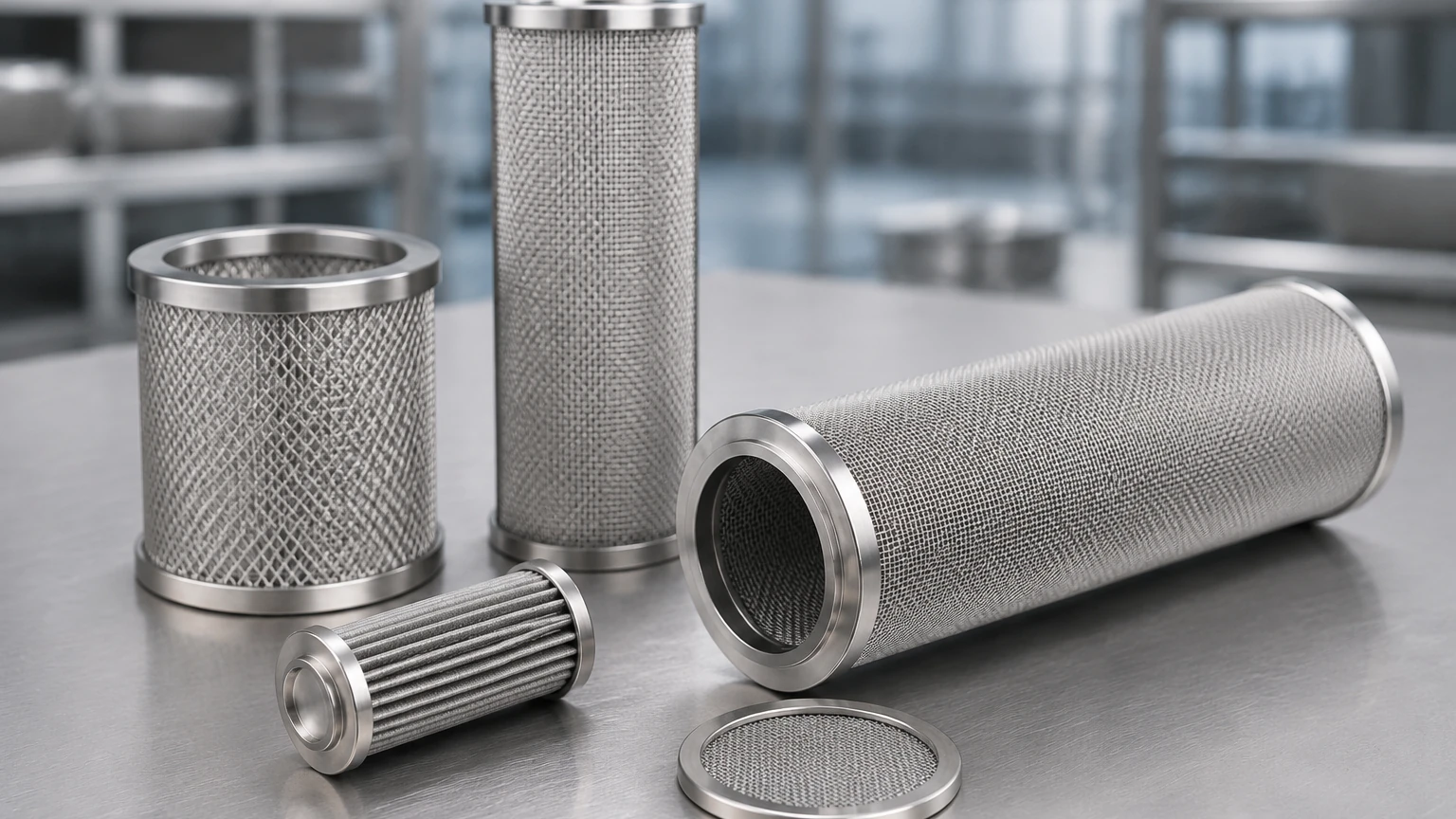
The internal components, specifically the filter cartridges or baskets, are where the actual filtration occurs. Depending on the application, these may be constructed from multi-layered stainless steel wire mesh, sintered metal, or pleated metal fiber. The choice of internal media determines the filtration rating, which can range from coarse straining (millimeter scale) to fine precision filtration (down to 1 micron).
Key Engineering Considerations: Material Selection and Filtration Accuracy
When specifying a duplex filter, material selection is the most critical factor for ensuring long-term reliability. Stainless steel, particularly grades 304 and 316L, is the industry standard for high-performance filtration.
* 304 Stainless Steel: Suitable for general industrial use, providing excellent strength and basic corrosion resistance for water and non-corrosive chemical applications.
* 316L Stainless Steel: Preferred for pharmaceutical, food and beverage, and marine environments. The addition of molybdenum and a lower carbon content provides superior resistance to pitting and crevice corrosion, especially in chloride-rich environments.
Filtration accuracy, or the micron rating, must be balanced against the allowable pressure drop. A finer mesh will capture smaller particles but will also clog more quickly, leading to more frequent changeovers. Engineers must calculate the "dirt holding capacity" of the filter element to determine the appropriate surface area. Kaifil’s expertise in custom wire mesh filters allows for the optimization of this surface area through pleated designs, which significantly increase the filtration zone without increasing the overall footprint of the duplex housing.
Performance Evaluation: Flow Rates, Pressure Drop, and Seal Integrity
To ensure a duplex filter performs as expected, several performance metrics must be evaluated during the design phase:
Flow Rate and Velocity
The system must be sized to handle the maximum expected flow rate without exceeding the recommended fluid velocity. High velocities can lead to excessive turbulence, increased wear on the internal mesh, and a higher initial pressure drop across the clean filter.
Clean and Dirty Pressure Drop (ΔP)
The "Clean ΔP" is the pressure loss across the filter when the elements are new. The "Dirty ΔP" is the point at which the changeover must occur. A well-engineered duplex filter will have a low initial pressure drop to provide a wider operational window before cleaning is required. Differential pressure gauges or transmitters are essential accessories for monitoring this status in real-time.
Seal Integrity and Bypass Prevention
The integrity of the seals within the changeover valve and the filter housing is paramount. Any internal bypass—where fluid leaks from the active side to the standby side or bypasses the filter element entirely—compromises the purity of the downstream fluid. Common sealing materials include EPDM, Viton (FKM), and PTFE, each selected based on the chemical compatibility and temperature of the process fluid.
Customization and OEM Solutions for Specialized Industrial Applications
Standard off-the-shelf filters often fall short in specialized industrial environments. This is where customized OEM solutions become invaluable. Every industry has unique constraints, whether it is a restricted installation space, specific inlet/outlet orientations, or extreme operating temperatures and pressures.
Customization options for a duplex filter include:
* Housing Geometry: Modifying the height, width, or connection types (flanged, NPT, or sanitary) to fit existing piping layouts.
* Advanced Media: Utilizing sintered metal powder or multi-layered mesh for high-viscosity fluids or high-temperature steam filtration.
* Automation: Integrating automated changeover valves triggered by differential pressure sensors, allowing for unmanned operation and enhanced safety.
* Specialized Coatings: For highly aggressive chemicals, housings can be lined or coated with materials like Halar or PTFE to augment the base stainless steel's resistance.
By working with a manufacturer that understands these nuances, engineers can ensure that the filtration system is a perfect match for the application's specific technical requirements.
Maintenance Protocols and Optimizing the Total Cost of Ownership
While a duplex filter is designed to minimize downtime, it is not a "fit and forget" solution. Proper maintenance is required to protect the investment and ensure continued performance.
One of the most common mistakes in duplex filter operation is failing to properly vent and prime the standby housing before switching the flow. If the standby housing contains air, switching the valve can cause a "pressure surge" or air pocket to travel downstream, potentially damaging sensitive equipment or causing process fluctuations. Most high-quality duplex systems include vent valves and equalization lines to prevent this.
Cleaning the filter elements also requires precision. Stainless steel wire mesh filters are often reusable, but they must be cleaned using methods that do not damage the mesh structure, such as ultrasonic cleaning or back-flushing with a compatible solvent. Over time, the total cost of ownership (TCO) of a high-quality stainless steel duplex filter is often lower than that of disposable systems, as the durable metal elements can be cleaned and reused for years, reducing waste and replacement part costs.
Selection Guide: Essential Specifications for Engineering and Procurement
Before initiating a purchase or a custom design project for a duplex filter, the following technical details should be confirmed to ensure the system is fit for purpose:
1. Fluid Characteristics: What is the fluid being filtered? What is its viscosity at operating temperature? Is it corrosive or abrasive?
2. Operating Parameters: What are the maximum operating pressure and temperature? What is the normal and maximum flow rate?
3. Filtration Requirements: What is the target micron rating? Is absolute or nominal filtration required? What is the nature of the contaminants (hard particles, soft gels, or fibers)?
4. Connection Standards: What are the pipe sizes and flange ratings (e.g., ANSI, DIN, JIS)?
5. Space Constraints: Are there height or width limitations for the installation? Does the design need to allow for top-entry or side-entry element removal?
6. Compliance and Certification: Does the housing need to meet specific pressure vessel codes (like ASME Section VIII) or industry-specific standards (like 3A for food/dairy)?
By addressing these factors early in the procurement process, technical teams can avoid costly retrofits and ensure that the filtration system provides reliable service throughout its lifecycle. Kaifil remains committed to supporting these decisions with engineering expertise and high-quality manufacturing, delivering filtration components that meet the most demanding industrial standards.
