


Disc Filter Hsn Code and Gst Rate
In the landscape of industrial procurement, technical accuracy extends beyond material specifications and micron ratings; it encompasses the regulatory and fiscal classifications required for seamless global trade and domestic tax compliance. For engineers and purchasing managers sourcing filtration components, understanding the disc filter hsn code and gst rate is as critical as verifying the chemical compatibility of a stainless steel alloy. Proper classification ensures that Filter Discs & Packs are moved through customs without delay and that tax liabilities are calculated correctly, preventing costly audits or shipment rejections.
Kaifil, as a specialized manufacturer of stainless steel filtration solutions, recognizes that high-performance filtration requires a comprehensive approach to documentation. This guide examines the technical and regulatory framework surrounding filter discs and packs, providing the factual clarity needed for informed industrial decision-making.
The Importance of HSN Classification in Filtration
The Harmonized System of Nomenclature (HSN) is a multipurpose international product nomenclature developed by the World Customs Organization (WCO). For industrial filtration components, the HSN code serves as the universal language for identifying the nature of the product. In the context of metal filtration, the code distinguishes between raw wire mesh, semi-finished components, and finished machinery parts.
When sourcing Filter Discs & Packs, the primary HSN classification generally falls under Chapter 84, which covers nuclear reactors, boilers, machinery, and mechanical appliances. Specifically, Heading 8421 is the most relevant category for filtration equipment. This heading includes "Centrifuges, including centrifugal dryers; filtering or purifying machinery and apparatus, for liquids or gases."
Relevant HSN Sub-headings
Depending on the specific application and the complexity of the assembly, filter discs may be classified under several sub-headings:
1. HSN 8421 29 00: This sub-heading is typically used for other filtering or purifying machinery and apparatus for liquids. It is often applied to finished filter assemblies or specialized discs used in liquid processing.
2. HSN 8421 39 90: This code is frequently applied to filtering or purifying machinery and apparatus for gases, relevant for filter packs used in air or gas emission control.
3. HSN 8421 99 00: This is a critical code for "Parts" of filtering or purifying machinery. Since many filter discs and packs are components of a larger system (such as a polymer extruder or a hydraulic unit), they are often classified as parts rather than independent machinery.
4. HSN 7314: In some instances, if the product is viewed strictly as an article of iron or steel wire (such as simple wire mesh discs without specialized rims or multi-layer bonding), it may fall under Chapter 73. However, for precision-engineered industrial filters, Chapter 84 is generally the standard for professional procurement.
Understanding the GST Rate for Industrial Filters
The Goods and Services Tax (GST) rate is directly tied to the HSN classification. For the majority of industrial machinery and parts falling under HSN 8421, the standard GST rate is 18%.
This 18% rate applies to most stainless steel filter cartridges, wire mesh filters, and precision metal filter components used in B2B environments. It is important for purchasing departments to verify the current notification from tax authorities, as rates can be subject to revision based on industrial policy changes. For export-oriented units (EOUs) or transactions involving Special Economic Zones (SEZs), different tax treatments such as Zero-Rated Supplies may apply, allowing for the refund of GST paid on inputs.
Technical Specifications of Filter Discs & Packs
Beyond the fiscal classification of disc filter hsn code and gst rate, the engineering value of these components lies in their construction and performance capabilities. Filter discs are not merely cut pieces of mesh; they are engineered barriers designed to withstand high pressures, corrosive environments, and extreme temperatures.
Material Selection
The choice of material is the first step in ensuring filtration longevity. Kaifil utilizes high-grade alloys to meet diverse industrial demands:
* SS304/304L: The standard for general-purpose applications, offering good corrosion resistance and cost-effectiveness.
* SS316/316L: Preferred for pharmaceutical and chemical processing due to its superior resistance to chlorides and organic acids. The "L" (low carbon) variant is essential for components requiring welding, as it prevents carbide precipitation.
* Specialty Alloys: For highly aggressive environments, materials like Monel, Inconel, or Hastelloy are used to prevent pitting and stress corrosion cracking.
Construction Methods
The performance of Filter Discs & Packs is determined by how the layers are integrated:
* Single-Layer Discs: Used for simple straining or as a support layer in multi-stage systems. These are precision-cut using laser or die-cutting technology to ensure dimensional accuracy.
* Multi-Layer Spot-Welded Packs: Multiple layers of different mesh counts are stacked and spot-welded at the edges. This configuration allows for graduated filtration, where coarser layers provide structural support and finer layers perform the actual filtration.
* Rimmed Filter Discs: The edges of the mesh are encased in a metal rim (usually aluminum, stainless steel, or copper). This prevents fraying, provides a better seal within the housing, and increases the mechanical strength of the disc.
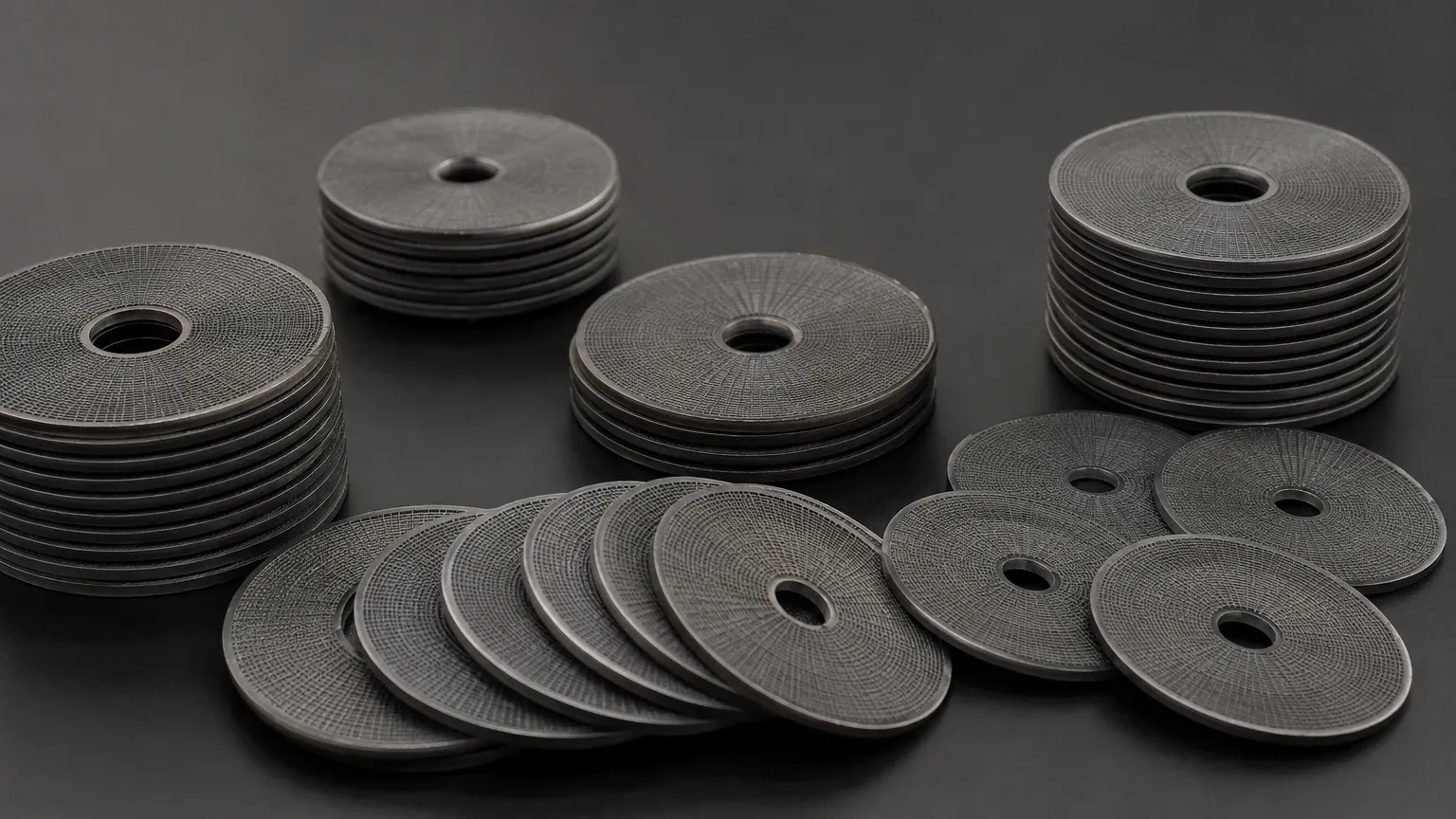
* Sintered Metal Discs: Layers of wire mesh are bonded together through a high-temperature vacuum sintering process. This creates a monolithic structure that is extremely durable, easy to clean, and capable of withstanding high differential pressures without layer migration.
Engineering Considerations for Selection
When specifying filter discs for an industrial application, engineers must look beyond the disc filter hsn code and gst rate and focus on the technical variables that impact the total cost of ownership (TCO).
Filtration Accuracy (Micron Rating)
The micron rating defines the size of the smallest particle the filter is intended to capture. It is crucial to distinguish between nominal and absolute ratings. A nominal rating refers to a filter's ability to retain a major percentage of particles of a certain size, while an absolute rating indicates the size of the largest particle that can pass through the filter under specific test conditions. For critical applications in the pharmaceutical or semiconductor industries, absolute-rated sintered discs are often required.
Pressure Drop and Flow Rate
Every filter introduces a resistance to flow, known as pressure drop ($ΔP$). An optimized filter design balances the need for high filtration efficiency with the requirement for low initial pressure drop. Factors influencing this include the open area of the mesh, the number of layers in the pack, and the viscosity of the fluid. Over-specifying the filtration fineness can lead to rapid clogging and increased energy consumption by pumps.
Mechanical Integrity and Reusability
In many industrial processes, such as polymer melt filtration or oil refining, filters are subjected to high pressures. The structural design of the filter pack must prevent deformation. Stainless steel filters offer the advantage of being cleanable and reusable. Methods such as ultrasonic cleaning, chemical cleaning, or burnout (for polymer applications) can restore the filter's performance, significantly reducing the long-term cost compared to disposable media.
Customization and OEM Capabilities
Industrial filtration is rarely a one-size-fits-all solution. Kaifil specializes in providing customized designs that integrate seamlessly into existing machinery. Customization options include:
* Non-Standard Shapes: While circular discs are common, Kaifil can produce oval, rectangular, or complex geometric shapes tailored to specific equipment housings.
* Layer Optimization: Engineering specific layer combinations (e.g., a 5-layer sintered structure) to achieve a precise balance of permeability and strength.
* Integrated Gaskets: Adding specialized sealing materials to the rim of the disc to ensure leak-proof performance in high-vacuum or high-pressure environments.
Compliance and Quality Assurance
For B2B buyers, the verification of the disc filter hsn code and gst rate is part of a broader compliance check. Quality assurance in filtration manufacturing involves several layers of verification:
1. Material Certification: Providing Mill Test Reports (MTRs) to confirm the chemical composition of the stainless steel.
2. Dimensional Inspection: Using high-precision calipers and optical comparators to ensure the discs meet the specified tolerances.
3. Bubble Point Testing: A non-destructive test used to verify the pore size and integrity of sintered filter media.
4. Cleanliness Standards: Ensuring that filters used in food, beverage, or pharmaceutical applications are free from manufacturing oils and particulate matter, often involving ultrasonic cleaning in a controlled environment.
Conclusion: Streamlining Your Filtration Procurement
Navigating the technicalities of Filter Discs & Packs requires a partner who understands both the engineering requirements and the regulatory framework. Correctly identifying the disc filter hsn code and gst rate is a foundational step in a professional procurement process, ensuring that the financial and logistical aspects of the supply chain are as robust as the filtration components themselves.
By focusing on material integrity, precise manufacturing, and customized engineering, Kaifil helps industrial operators achieve optimal filtration performance. Whether you are replacing components in a chemical reactor or designing a new hydraulic system, selecting the right filter disc involves a careful evaluation of micron ratings, pressure limits, and material compatibility.
For technical consultation or to discuss specific customization requirements for your industrial application, engineers and purchasing teams are encouraged to review the available options and seek expert guidance to ensure the highest standards of durability and efficiency in their filtration processes.
