


Disc Filter Manufacturers in India
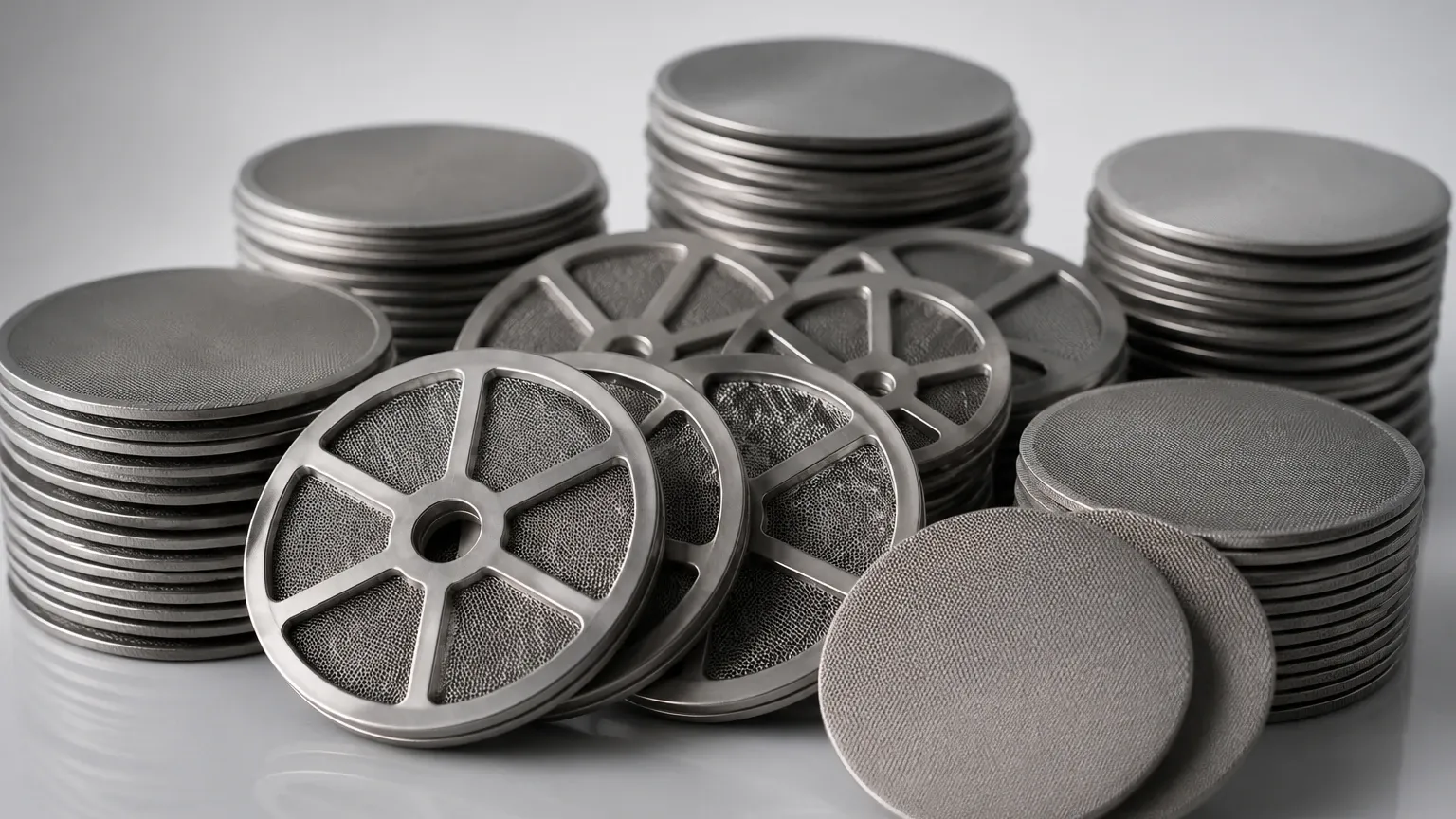
In the landscape of industrial filtration, the selection of high-precision components is critical for maintaining the integrity of production lines, particularly in sectors such as polymer processing, chemical manufacturing, and oil and gas. For procurement officers and engineers, identifying reliable disc filter manufacturers in India involves a deep understanding of material science, weaving technologies, and quality control protocols. As the demand for durable, corrosion-resistant filtration media grows, the market for Filter Discs & Packs has expanded, offering a wide range of solutions from single-layer mesh circles to complex, multi-layered rimmed packs.
This guide examines the technical landscape of disc filter production, the factors that define the Indian manufacturing sector, and the engineering considerations necessary to ensure optimal filtration performance in demanding environments.
Understanding the Role of Filter Discs & Packs in Industrial Processes
Filter discs and packs are fundamental components used to remove solid contaminants from liquids or gases. Unlike cylindrical cartridges, discs are often used in plate-and-frame filters, polymer melt extruders, and hydraulic systems where space is constrained or where the filtration surface must be perfectly flat.
In polymer extrusion, for instance, a "screen pack" consisting of multiple layers of stainless steel wire mesh is placed before the die. These packs must withstand extreme pressures and temperatures while ensuring that no degraded polymer or foreign particles reach the final product. The engineering of these components focuses on two primary goals: achieving the required micron rating and maintaining structural integrity under high differential pressure (Delta P).
Manufacturers typically utilize stainless steel wire mesh (SS 304, 316, or 316L) due to its thermal stability and chemical resistance. For specialized applications involving highly corrosive fluids or extreme temperatures, alloys like Hastelloy or Monel may be employed. The choice of material and the configuration of the disc—whether it is a simple mesh cut or a spot-welded multilayer pack—directly impacts the efficiency and lifespan of the filtration system.
Evaluating Disc Filter Manufacturers in India: Market Overview
India has established itself as a significant hub for wire mesh and filtration product manufacturing. The growth of the domestic pharmaceutical, petrochemical, and food processing industries has driven local manufacturers to upgrade their capabilities. Regional clusters in states like Gujarat, Maharashtra, and Haryana host a variety of producers ranging from small-scale fabrication shops to advanced engineering firms.
When evaluating disc filter manufacturers in India, technical professionals often look for several key indicators of capability:
1. In-house Weaving vs. Sourcing: Some manufacturers weave their own wire mesh, allowing for tighter control over wire diameter and aperture consistency. Others source mesh globally and focus on the precision cutting and assembly of the discs.
2. Customization Capabilities: Industrial applications rarely follow a one-size-fits-all approach. The ability to produce non-standard diameters, specific mesh combinations, and custom edging (such as aluminum, copper, or stainless steel rims) is a hallmark of a sophisticated manufacturer.
3. Technological Investment: Leading manufacturers utilize laser cutting or high-precision power presses to ensure that the edges of the discs are clean and free of burrs, which is essential for preventing bypass and ensuring a proper seal within the filter housing.
While the Indian market offers competitive pricing, engineers must balance cost-efficiency with technical rigor, ensuring that the products meet international standards such as ISO 9001.
Key Technical Parameters for Stainless Steel Filter Discs
Specifying a filter disc requires more than just defining the outer diameter. Engineers must provide detailed parameters to ensure the component performs as expected.
Micron Rating and Filtration Efficiency
The micron rating defines the size of the particles the mesh is intended to intercept. It is important to distinguish between "nominal" and "absolute" ratings. A nominal rating refers to the ability of the mesh to retain a majority of particles of a certain size, while an absolute rating indicates the size of the largest spherical particle that can pass through the mesh under specific test conditions.
Mesh Count and Wire Diameter
Mesh count refers to the number of openings per linear inch. However, the open area—the percentage of the total surface area that allows fluid to pass—is determined by the relationship between the mesh count and the wire diameter. A higher open area results in lower initial pressure drop but may sacrifice the structural strength of the disc.
Weave Types
* Plain Weave: The most common type, where each warp wire crosses over and under each weft wire. It provides a simple, effective filtration media for general use.
* Dutch Weave: This weave utilizes heavier warp wires and finer weft wires, resulting in a dense, strong mesh with very fine filtration paths. It is ideal for high-pressure applications.
* Twill Weave: Each wire passes over two and under two wires, allowing for a heavier wire to be used for a given mesh count, increasing the durability of the disc.
Manufacturing Processes: From Wire Drawing to Precision Cutting
The quality of a filter disc is determined long before the final cutting stage. It begins with the quality of the stainless steel wire. High-quality wire must have a consistent diameter and a smooth surface finish to prevent premature fatigue or chemical pitting.
Once the mesh is woven, it may undergo several secondary processes:
* Annealing: Heat treatment to relieve internal stresses, making the mesh more ductile and easier to form or cut without fraying.
* Sintering: In some high-performance discs, multiple layers of mesh are sintered together. This process involves heating the layers in a vacuum furnace until the contact points of the wires fuse. Sintered mesh discs offer unparalleled structural integrity and do not migrate wires even under extreme pressure.
* Degreasing and Cleaning: Especially for pharmaceutical and food-grade applications, discs must be ultrasonically cleaned to remove lubricants and contaminants from the weaving process.
The final cutting is a critical step. Traditional mechanical shearing can sometimes deform the mesh at the edges. Advanced manufacturers utilize CNC laser cutting or plasma cutting to achieve high dimensional accuracy and sealed edges, which is particularly important for multi-layer packs that are not rimmed.
Quality Control Standards for Industrial Filtration Components
For an engineer, a manufacturer’s quality assurance (QA) process is as important as the product itself. When sourcing from disc filter manufacturers in India or international suppliers like Kaifil, the following documentation and testing should be verified:
1. Material Traceability: Manufacturers should provide Mill Test Certificates (MTC) for the stainless steel used. This ensures the chemical composition (e.g., Chromium, Nickel, and Molybdenum content) matches the grade specified (e.g., SS 316L).
2. Bubble Point Testing: This test is used to verify the pore size and integrity of the filter media. By submerging the disc in a liquid and increasing air pressure until bubbles appear, the manufacturer can calculate the largest pore size.
3. Dimensional Inspection: Using digital calipers or optical comparators to ensure the outer diameter (OD) and thickness are within the specified tolerances.
4. Flatness and Surface Integrity: Discs must be flat to ensure a proper seal. Any warping or surface defects can lead to fluid bypassing the filter media.
Sourcing Strategy: Comparing Global Manufacturers and Local Suppliers
When deciding between local disc filter manufacturers in India and global specialists, procurement teams must evaluate the "Total Cost of Ownership" (TCO). While local sourcing may offer lower shipping costs and shorter lead times for standard items, global manufacturers often provide higher levels of technical support and more consistent material quality for specialized applications.
When to Choose a Specialized Global Manufacturer
Specialized manufacturers like Kaifil focus on high-performance, custom-engineered solutions. If your application involves:
* Extreme pressure differentials where sintered packs are required.
* Highly sensitive pharmaceutical processes requiring stringent cleanliness certifications.
* Complex multi-layer designs with specific flow rate requirements.
* The need for engineering consultation to optimize filter life.
In these cases, the technical expertise and advanced manufacturing capabilities of a global specialist often outweigh the initial cost savings of a local generalist. A well-engineered filter disc can last significantly longer, reducing downtime and replacement costs, which ultimately provides better value over the production cycle.
Maintenance and Replacement Cycles for Optimal Performance
Even the highest quality Filter Discs & Packs will eventually require cleaning or replacement. The timing of this cycle is typically determined by the pressure drop across the filter. As contaminants build up, the pressure required to push fluid through the disc increases.
* Cleaning: Some stainless steel discs can be cleaned using ultrasonic baths, chemical solvents, or burnout ovens (for polymer applications). However, repeated cleaning can eventually degrade the wire mesh or the welds in a pack.
* Replacement: In many high-precision applications, discs are treated as consumables. It is vital to have a consistent supply of identical replacements to ensure that process variables remain constant. Inconsistencies in mesh quality from one batch to another can lead to unpredictable flow rates and product quality issues.
Engineers should work closely with their chosen manufacturer to establish a replacement schedule based on empirical data from their specific process. This proactive approach prevents catastrophic filter failure and ensures the longevity of downstream equipment like pumps and valves.
Conclusion: Making an Informed Procurement Decision
Selecting the right partner for filter disc procurement requires a balance of technical scrutiny and commercial awareness. Whether engaging with disc filter manufacturers in India or looking toward global experts, the focus must remain on the technical specifications that drive performance: material grade, weave precision, and assembly quality. By prioritizing manufacturers who offer transparent quality control and robust engineering support, industrial operators can ensure their filtration systems provide the reliability and efficiency required for modern manufacturing excellence.
