


Wedge Wire Screen Market
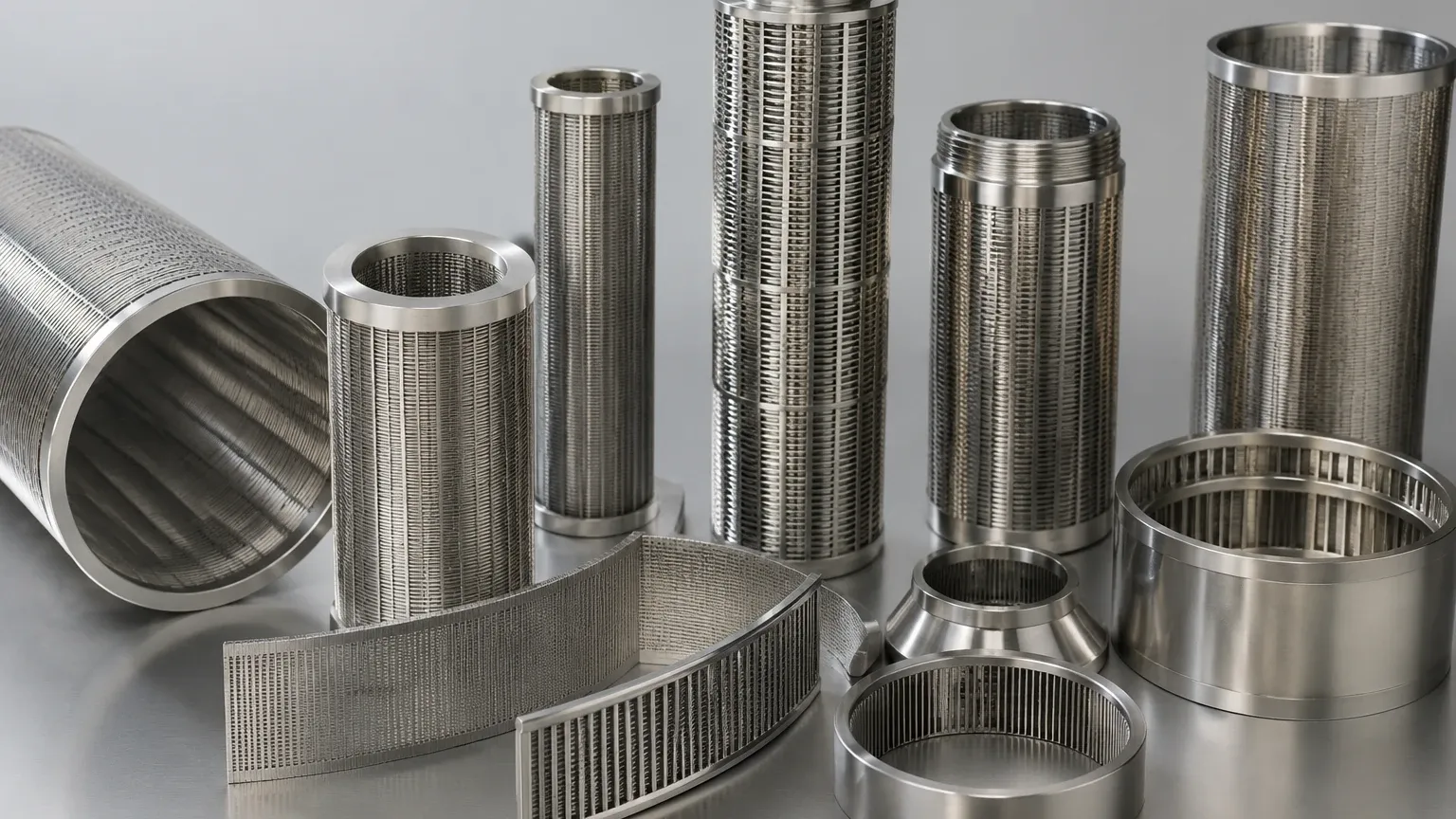
In the landscape of industrial filtration and separation, the wedge wire screen market represents a critical segment driven by the demand for high-precision, durable, and low-maintenance filtration components. Unlike traditional woven wire mesh or perforated plates, wedge wire screens are engineered through the resistance welding of V-shaped profile wires onto support rods. This unique construction creates a non-clogging surface that is essential for continuous industrial processes. For engineers and procurement professionals, understanding the dynamics of this market—from material selection to structural design—is vital for optimizing operational efficiency and ensuring long-term equipment reliability.
Market Overview and Industrial Significance
The global wedge wire screen market has seen consistent growth, primarily fueled by the expansion of the water treatment, oil and gas, and food processing industries. The shift toward more sustainable industrial practices has placed a premium on filtration solutions that offer high throughput with minimal downtime. Wedge wire technology stands out because its V-shaped profile allows only two-point contact with particles, significantly reducing the risk of blinding and clogging.
Several factors influence the current market trajectory. Increasing environmental regulations regarding wastewater discharge have forced industrial facilities to adopt more rigorous filtration standards. Additionally, the move toward automated self-cleaning systems has made Wedge Wire Screens the preferred choice due to their inherent structural strength and ability to withstand high backwash pressures. Geographically, the market is expanding in regions with heavy industrialization and mining activities, where robust separation tools are non-negotiable.
Technical Engineering of Wedge Wire Screens
To navigate the wedge wire screen market effectively, technical professionals must understand the engineering nuances that differentiate a standard component from a high-performance one. The performance of these screens is defined by three primary geometric factors: the profile wire shape, the slot opening, and the support rod configuration.
Profile Wire Geometry
The "wedge" in wedge wire refers to the triangular or trapezoidal shape of the surface wire. This geometry is designed to create a widening aperture in the direction of the flow. In a B2B context, selecting the correct profile wire width and height is a balance between the required open area and the mechanical strength needed to resist pressure drops. Narrower wires increase the effective filtration area but may compromise the screen's ability to handle heavy solids loading.
Slot Precision and Consistency
In the wedge wire screen market, the accuracy of the slot opening (the gap between wires) is the most critical quality metric. For applications requiring fine filtration—such as catalyst recovery or pharmaceutical processing—slot tolerances must be kept within microns. Inconsistent slot widths lead to "bypass," where oversized particles pass through the filter, potentially damaging downstream equipment or contaminating the final product.
Structural Integrity and Support Rods
Support rods are the backbone of the screen, welded perpendicularly to the profile wires. The spacing and shape of these rods determine the collapse strength and burst pressure of the screen. Engineers must calculate the expected differential pressure across the screen to specify a support structure that prevents mechanical deformation during peak flow or cleaning cycles.
Procurement Evaluation: Selecting the Right Supplier
When sourcing components in the wedge wire screen market, procurement teams often face a wide range of price points and quality levels. A factual evaluation of a manufacturer should go beyond the initial quote and focus on technical capabilities and quality assurance protocols.
1. Material Certification: Industrial environments often involve corrosive fluids or high temperatures. Suppliers should provide mill test reports (MTRs) for materials such as SS304, SS316L, Duplex, or Super Duplex stainless steel. The choice of material directly impacts the lifespan of the screen in aggressive chemical environments.
2. Welding Precision: The integrity of a wedge wire screen depends on the quality of the resistance welds at every intersection of wire and rod. Inconsistent welding can lead to "wire loose" scenarios, where the profile wires shift, altering the slot size or causing structural failure.
3. Customization Capabilities: Most industrial applications require bespoke designs. A reliable partner in the wedge wire screen market should offer engineering support to customize diameters, lengths, flange types, and reinforcement rings to fit existing housings or specific vessel geometries.
4. Quality Control Documentation: For industries like food and beverage or pharmaceuticals, documentation regarding surface finish (Ra values) and cleanliness is essential. Electropolishing or passivating the screens can enhance corrosion resistance and reduce bacterial adhesion.
Managing Risks in the Wedge Wire Screen Market
Investing in filtration components involves risks related to performance mismatch and premature failure. Understanding these risks allows engineering teams to implement better selection criteria.
Material Degradation and Corrosion
One of the most common risks is selecting a material that is insufficient for the process fluid. For example, using SS304 in a high-chloride environment can lead to pitting and stress corrosion cracking. In the wedge wire screen market, manufacturers often recommend higher-grade alloys or specialized coatings for saline or acidic applications to mitigate this risk.
Mechanical Fatigue
In applications involving high-frequency backwashing or pulsating flows, the screen is subject to cyclic loading. If the screen is not engineered for fatigue resistance, the welds may eventually fail. Engineers should confirm that the manufacturer has accounted for the dynamic load requirements of the specific application.
Slot Blinding in Specific Geometries
While wedge wire is naturally resistant to clogging, certain particle shapes (such as elongated or needle-like solids) can still become wedged if the slot size is not correctly specified. Testing a sample or conducting a pilot run is often the best way to mitigate the risk of blinding in complex separation tasks.
Industry-Specific Applications and Performance Standards
The wedge wire screen market serves a diverse array of sectors, each with its own set of performance benchmarks.
* Water and Wastewater Treatment: Wedge wire is used in intake screens, resin traps, and dewatering screw presses. The primary requirement here is high flow rates and resistance to biofouling.
* Oil and Gas: In downstream refining, wedge wire internals are used in reactor vessels for catalyst support. These components must withstand extreme temperatures and maintain slot integrity under heavy catalyst beds.
* Food and Beverage: Applications include mash tun bottoms in brewing and juice extraction. Here, the focus is on sanitary design, ease of CIP (Cleaning-In-Place), and compliance with food safety standards.
* Mining and Minerals: Screens are used for vibratory sieving and centrifuge baskets. These require high-thickness profile wires to withstand the abrasive nature of ores and minerals.
Total Cost of Ownership and Maintenance Considerations
A critical error in the wedge wire screen market is focusing solely on the purchase price. The Total Cost of Ownership (TCO) includes installation, energy consumption (related to pressure drop), maintenance labor, and the cost of downtime.
Wedge wire screens generally offer a lower TCO than disposable filters or woven mesh. Because they are permanent or semi-permanent components, the absence of frequent replacement costs offsets the higher initial investment. Furthermore, the ease of cleaning—whether through manual hosing, backpulsing, or mechanical scraping—reduces labor costs and extends the service interval. When evaluating suppliers, engineers should ask for data on expected service life and recommended cleaning protocols to accurately project long-term costs.
Pre-Purchase Checklist for Engineering Teams
Before finalizing a purchase in the wedge wire screen market, technical professionals should confirm the following details with their supplier to ensure the component meets the application's rigorous demands:
* Slot Tolerance: What is the maximum allowable deviation from the nominal slot size?
* Flow Direction: Is the flow from out-to-in (FOTI) or in-to-out (FITO)? This dictates which side the profile wire should be on.
* Pressure Rating: What is the maximum collapse and burst pressure the screen can withstand at operating temperature?
* End Connections: Are the flanges, threaded fittings, or weld rings compatible with existing piping and vessel internals?
* Surface Treatment: Does the application require pickling, passivation, or electropolishing for enhanced performance?
By addressing these technical and commercial factors, organizations can navigate the wedge wire screen market with confidence, securing filtration solutions that provide precise separation, structural durability, and optimized operational life. Whether for a new installation or a replacement of existing internals, the focus must remain on engineering precision and material suitability to achieve the best results in demanding industrial environments.
