


Cascade 300 Filter Cartridges
In the landscape of industrial fluid management and process water treatment, the selection of appropriate filtration media is a critical factor in maintaining system integrity and product quality. Among the various configurations available to engineers and procurement teams, the specifications associated with cascade 300 filter cartridges represent a specific tier of filtration density and flow capacity often utilized in multi-stage purification systems. Understanding the technical nuances of these cartridges—ranging from material compatibility to micron-rated precision—is essential for optimizing filtration performance in demanding environments.
Industrial filtration requires a balance between particle retention efficiency and the physical durability of the filter element. While many standard applications rely on polymer-based media, the transition to high-performance Filter Cartridges often involves moving toward stainless steel or specialized alloy components. This shift is particularly relevant when dealing with high-temperature fluids, aggressive chemical solvents, or high-pressure differentials where conventional cartridges might fail.
The Role of Cascade 300 Filter Cartridges in Fluid Management
The "cascade" designation in filtration typically refers to a multi-stage approach where fluid passes through successive layers of media, each finer than the last. Cascade 300 filter cartridges are designed to function within this hierarchy, often serving as a secondary or final stage to ensure that fine particulates are removed before the fluid reaches sensitive downstream equipment. In an industrial context, these cartridges are frequently employed in cooling water loops, chemical processing lines, and pre-filtration for reverse osmosis (RO) systems.
The primary objective of utilizing these specific cartridges is to achieve a consistent effluent quality. By managing the particle load through a structured pore distribution, the system can maintain a lower pressure drop over a longer period compared to single-stage filters. For engineers, this translates to reduced pump strain and lower energy consumption. When evaluating cascade 300 filter cartridges, it is vital to confirm that the internal support structure can withstand the specific flow velocities of the application without media migration or structural bypass.
Technical Specifications and Filtration Media Options
When sourcing filter cartridges for industrial use, the choice of media determines the chemical resistance and thermal stability of the component. While many cascade 300 filter cartridges in the consumer or light-commercial market utilize carbon-impregnated pads or simple poly-fibers, industrial-grade versions often require more robust materials.
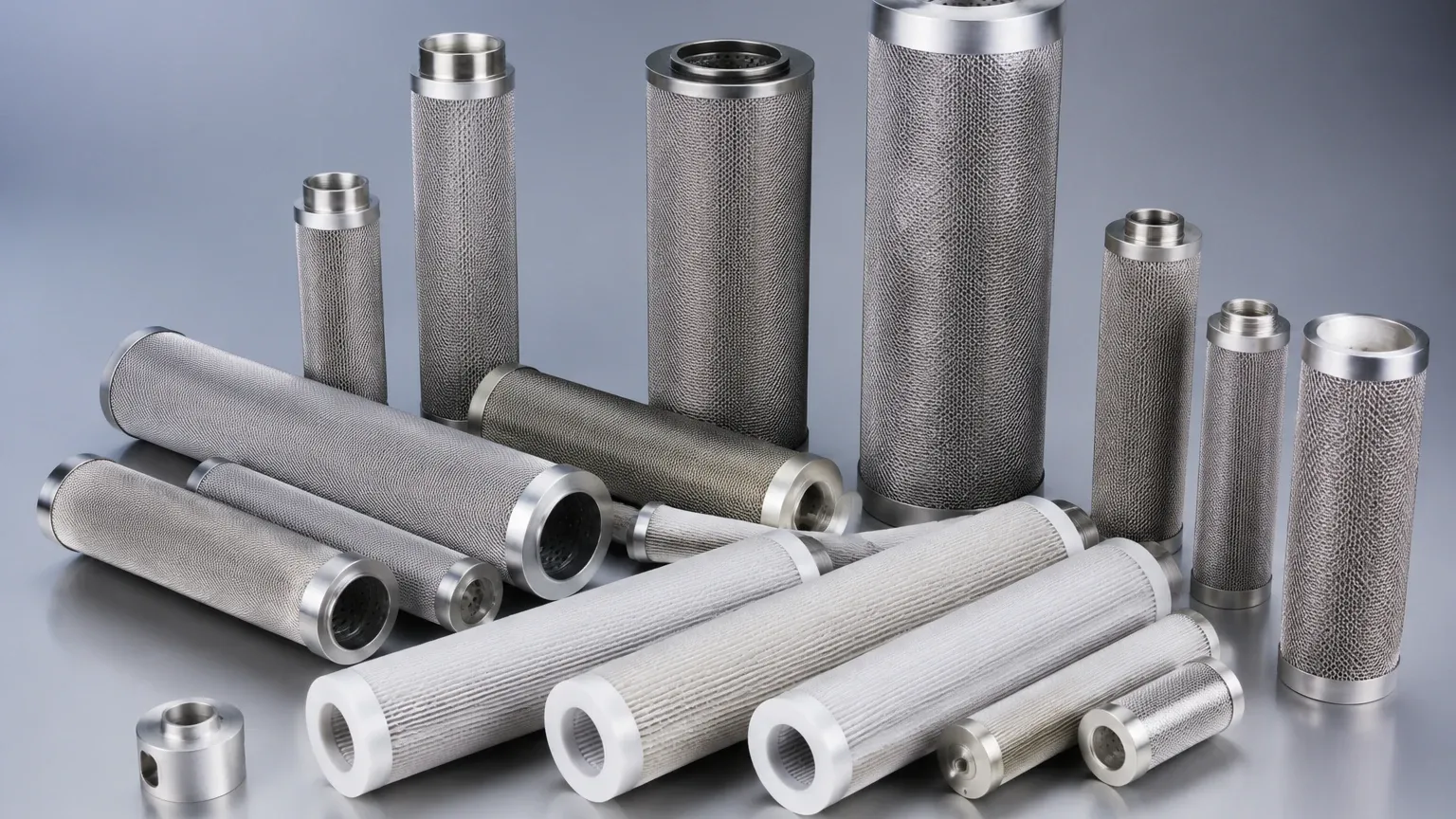
1. Stainless Steel Wire Mesh: For applications involving high temperatures or the need for cleanability, 304 or 316L stainless steel wire mesh is the preferred choice. These cartridges offer precise micron ratings and can be ultrasonically cleaned and reused, providing a better long-term ROI.
2. Sintered Metal Felt: This provides depth filtration capabilities similar to polymer fibers but with the mechanical strength of metal. It is ideal for high-viscosity fluids where surface-loading filters would blind too quickly.
3. Pleated Media: To increase the effective filtration area within the standard dimensions of a cascade 300 housing, pleating is used. This design reduces the face velocity of the fluid at the media surface, which enhances particle capture efficiency and extends the service life between replacements.
Selecting the correct media involves analyzing the particle size distribution (PSD) of the contaminant. If the goal is to remove 98% of particles above 5 microns, the cartridge must be rated for absolute filtration rather than nominal, as nominal ratings can be misleading in critical process environments.
Industrial Upgrades: Moving from Polymer to Stainless Steel
Many systems originally designed for standard cascade 300 filter cartridges utilize plastic housings and disposable poly-spun elements. However, in industrial sectors such as food and beverage or pharmaceutical manufacturing, the limitations of polymers become apparent. Plastic components are susceptible to leaching, thermal degradation, and physical deformation under pressure spikes.
Upgrading to stainless steel Filter Cartridges allows facilities to operate at higher temperatures (exceeding 200°C) and ensures that no surfactants or binders from the filter media migrate into the process stream. Furthermore, stainless steel elements are inherently more resistant to microbial growth, a critical factor in water treatment and food-grade applications. When replacing standard cartridges with metal equivalents, engineers must ensure that the O-ring or gasket materials (such as Viton, EPDM, or PTFE) are compatible with both the fluid chemistry and the operating temperature.
Evaluating Flow Dynamics and Pressure Differential
A critical engineering consideration for any cartridge system is the clean pressure drop (ΔP). For cascade 300 filter cartridges, the flow rate is typically optimized for medium-scale operations. If the flow rate exceeds the design capacity of the cartridge, the velocity through the media increases, which can force contaminants through the pores or cause the media to collapse.
To maintain optimal flow dynamics, it is recommended to monitor the differential pressure across the filter bank. A common industry standard is to replace or clean the cartridges when the ΔP reaches 15-20 psi (1.0-1.4 bar) above the clean starting pressure. Using high-quality stainless steel wire mesh filters allows for a more predictable pressure curve, as the rigid structure does not compress under load. This predictability is essential for automated systems that rely on pressure sensors to trigger backwash cycles or maintenance alerts.
Custom OEM Integration for Specialized Cartridge Housings
In many B2B scenarios, standard off-the-shelf cascade 300 filter cartridges do not meet the exact dimensional or performance requirements of a proprietary machine. This is where OEM customization becomes necessary. Manufacturers specializing in precision metal filtration can modify the end-cap configurations, overall length, and diameter of the cartridges to fit existing housings while enhancing the filtration grade.
Customization options often include:
* End-Cap Variations: DOE (Double Open End), SOE (Single Open End) with 222 or 226 O-ring configurations, or threaded connections for high-pressure stability.
* Reinforced Cores: For high-viscosity applications, an inner perforated core can be added to prevent the filter media from collapsing inward.
* Bespoke Micron Ratings: Engineering specific mesh weaves to target unique particle shapes or sizes found in specific industrial byproducts.
By working with a manufacturer that understands the engineering behind the cascade 300 format, purchasing teams can secure components that are purpose-built for their specific environmental challenges, rather than settling for generic alternatives.
Maintenance Protocols and Longevity of Precision Filters
The total cost of ownership (TCO) for filtration systems is heavily influenced by the frequency of replacement and the ease of maintenance. While disposable cascade 300 filter cartridges have a lower initial purchase price, the cumulative cost of replacement, disposal, and downtime can be significant.
In contrast, permanent stainless steel filter cartridges offer a sustainable alternative. Maintenance protocols for these elements usually involve:
* Backpulsing: Reversing the flow of clean fluid through the filter to dislodge surface-loaded particles.
* Chemical Cleaning: Soaking the elements in compatible solvents or acids to dissolve organic or mineral scaling.
* Ultrasonic Cleaning: Using high-frequency sound waves in a cleaning bath to remove deeply embedded particulates from the wire mesh pores.
Implementing a rigorous maintenance schedule ensures that the cascade 300 system operates at peak efficiency. It is also advisable to keep a set of "change-out" cartridges on hand to minimize downtime during the cleaning process. By rotating two sets of stainless steel filters, a facility can maintain continuous operation while ensuring each set is thoroughly cleaned and inspected.
Engineering Selection Guide: Choosing the Right Filter Cartridges
Before finalizing a purchase for cascade 300 filter cartridges, engineers should confirm the following technical parameters with their supplier:
1. Chemical Compatibility: Ensure the media and seals can withstand the pH levels and chemical composition of the process fluid.
2. Operating Temperature: Confirm the maximum continuous and peak temperature ratings.
3. Maximum Differential Pressure: Determine the point of structural failure to set safety margins for the system.
4. Filtration Efficiency: Distinguish between nominal (approximate) and absolute (validated) micron ratings based on the sensitivity of downstream components.
5. Regulatory Compliance: For food, beverage, or pharmaceutical applications, ensure the materials meet FDA or equivalent industrial standards for contact surfaces.
By addressing these factors, procurement teams can avoid common risks such as premature clogging, media rupture, or fluid contamination. High-quality Filter Cartridges act as the primary defense for expensive industrial machinery, making the selection process a vital part of operational risk management.
In conclusion, while the cascade 300 format is a well-known standard in various water treatment sectors, its application in industrial environments demands a higher level of material integrity and engineering precision. Whether utilizing stainless steel wire mesh for its durability or seeking custom OEM solutions for specific process needs, understanding the technical boundaries of these cartridges is the key to achieving reliable, long-term filtration performance.
