


How Long Do Pool Filter Cartridges Last
In commercial and industrial aquatic systems, the efficiency of the filtration cycle is the primary determinant of water quality and operational cost. For facility managers and engineers, understanding how long do pool filter cartridges last is not merely a matter of maintenance scheduling; it is a critical component of hydraulic system management. While residential pool owners may rely on seasonal estimates, industrial-scale operations require a more technical evaluation of media degradation, pressure differentials, and material fatigue.
Typically, a high-quality synthetic filter cartridge in a well-maintained commercial environment has a functional lifespan of 1 to 3 years. However, this window is highly variable, influenced by the hydraulic load, chemical exposure, and the specific engineering of the Filter Cartridges used within the system. This guide examines the technical factors that dictate the replacement cycle and the indicators that signify a cartridge has reached the end of its service life.
Factors Influencing Filter Cartridge Longevity
The service life of a filtration element is a function of its environment and the physical properties of the media. In industrial applications, several variables accelerate the degradation of the pleats and structural components.
Bather Load and Organic Contaminants
In commercial aquatic centers or industrial water treatment facilities, the volume of organic matter—such as oils, proteins, and environmental debris—directly impacts the "loading" rate of the filter. As these contaminants embed themselves within the fibers of the media, they create a permanent reduction in the available surface area. Even with rigorous cleaning, a percentage of these solids remains trapped, leading to a gradual baseline increase in operating pressure.
Hydraulic Flow Rates and Pressure
Every filter cartridge is rated for a specific flow rate, measured in Gallons Per Minute (GPM). Operating a system at or near its maximum flow rate increases the velocity of particles hitting the media. High-velocity impact can drive contaminants deeper into the substrate, a process known as "bridging," which makes cleaning less effective. Furthermore, consistent high-pressure operation stresses the plastic end caps and the internal support core, eventually leading to structural failure or bypass.
Chemical Exposure and pH Imbalance
Filter media, usually made of spun-bonded polyester, is susceptible to chemical degradation. Prolonged exposure to high concentrations of chlorine or bromine, as well as frequent fluctuations in pH, can embrittle the fibers. When the fibers become brittle, they lose their ability to trap fine particulates and may eventually shed material into the effluent stream. In specialized industrial settings where aggressive chemicals are present, engineers often pivot toward stainless steel Filter Cartridges to ensure chemical compatibility and longevity.
Technical Indicators for Replacement
Determining when to replace a cartridge requires monitoring specific performance metrics. Relying on visual inspection alone is often insufficient for high-performance systems.
Terminal Pressure Differential
The most reliable indicator of a cartridge's condition is the pressure gauge on the filter tank. A clean system operates at a "baseline" pressure. As the filter accumulates debris, the pressure rises. Standard engineering practice dictates that a filter should be cleaned when the pressure increases by 8 to 10 PSI over the baseline. If, after a thorough cleaning, the pressure returns to a level that is significantly higher than the original baseline (e.g., 5 PSI higher), the media is permanently fouled and nearing the end of its life.
Short-Cycling
Short-cycling occurs when the interval between necessary cleanings becomes progressively shorter. If a system that previously ran for four weeks between cleanings now requires maintenance every five days, the media's pore structure is likely compromised. This inefficiency increases labor costs and puts unnecessary strain on the pump motor due to the increased resistance.
Physical Degradation of the Media
During maintenance, engineers should inspect for:
* Frayed Pleats: Evidence of the polyester fibers breaking down.
* Cracked End Caps: Structural failure that allows unfiltered water to bypass the media.
* Collapsed Cores: Usually a sign of a high-pressure event or improper sizing.
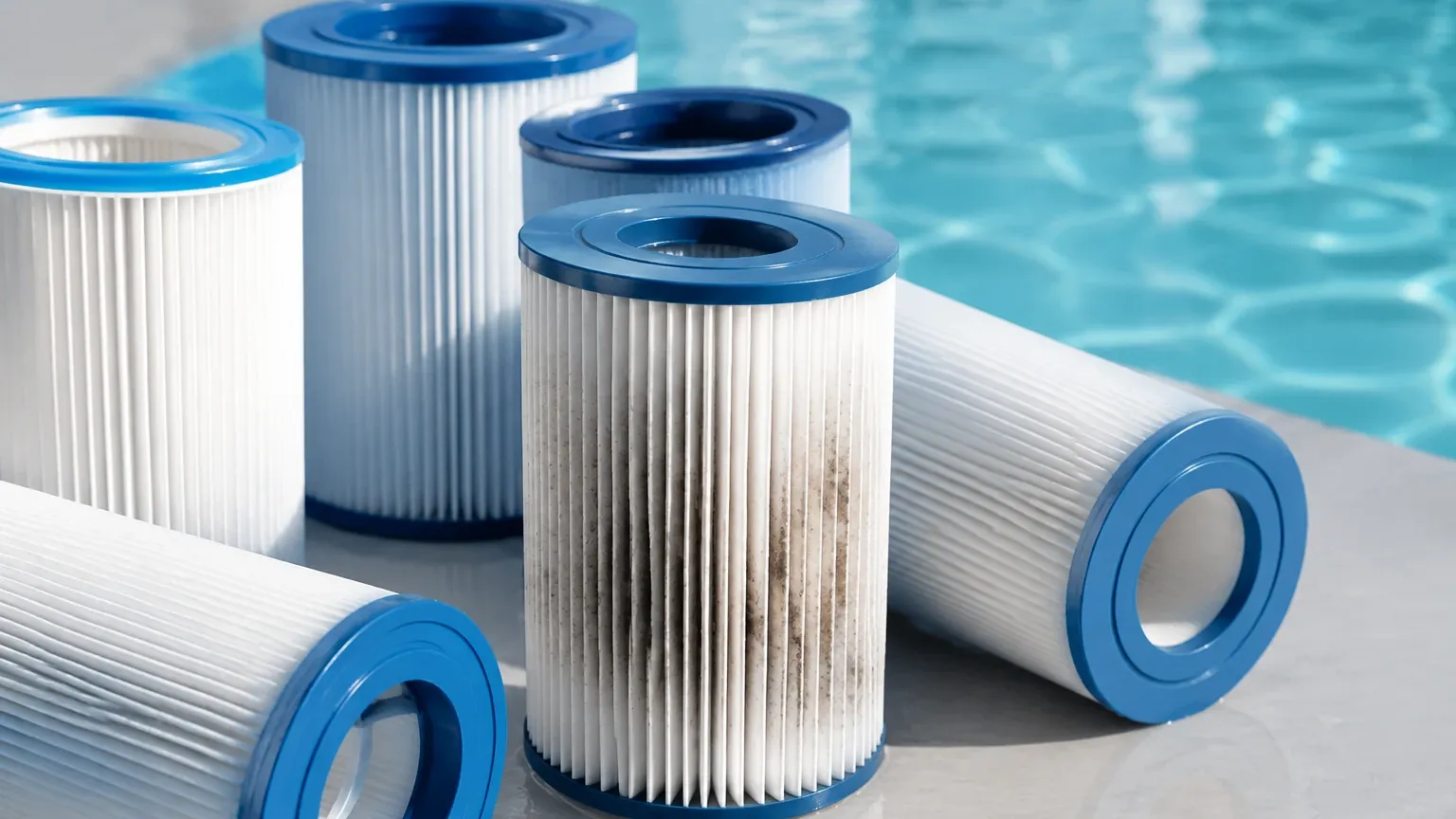
* Permanent Discoloration: While some staining is normal, oily or calcified deposits that cannot be removed by chemical soaking indicate deep-seated fouling.
Maintenance Protocols to Extend Service Life
To maximize the ROI of filtration hardware, a rigorous maintenance protocol must be established. How long do pool filter cartridges last is often a direct reflection of the cleaning methodology employed.
Physical Rinsing vs. Chemical Soaking
Simple pressure washing (using a standard garden hose, never a high-pressure power washer) removes surface debris. However, it does not address oils or mineral scale. Commercial systems require a two-stage cleaning process:
1. Degreasing: Soaking the cartridges in a specialized surfactant to break down body oils and lotions.
2. Acid Bathing: If calcium scale is present, a mild acid soak can dissolve mineral deposits. It is critical to degrease *before* acid bathing, as acid can bake oils into the media, causing permanent damage.
Drying Cycles
Allowing a cartridge to dry completely after cleaning can help kill any remaining microorganisms and allows the fibers to "reset." Many facilities maintain two sets of cartridges, rotating them to ensure one set is always clean and dry, which can significantly extend the total service life of both sets.
Comparing Synthetic and Metal Filter Media
In many industrial and high-demand commercial applications, the limitations of synthetic cartridges lead engineers to consider more durable alternatives. While standard pool systems utilize polyester, industrial filtration often requires the precision and durability of metal.
| Feature | Synthetic Cartridges | Stainless Steel Cartridges |
| :— | :— | :— |
| Typical Lifespan | 1–3 Years | 5–10+ Years |
| Temperature Resistance | Moderate | High |
| Chemical Resistance | Limited (Sensitive to pH/Oxidizers) | Excellent |
| Cleaning Method | Manual Rinsing/Soaking | Backwashing/Ultrasonic/Chemical |
| Structural Integrity | Prone to collapsing under high Delta P | Rigid and high-strength |
For facilities looking for long-term stability and reduced waste, transitioning to custom-engineered Filter Cartridges made from stainless steel wire mesh or sintered metal can provide a permanent solution. These components are designed to withstand high-pressure differentials and can be cleaned and reused almost indefinitely, making them ideal for critical industrial processes where downtime is costly.
Total Cost of Ownership (TCO) Considerations
When evaluating how long do pool filter cartridges last, purchasing teams must look beyond the initial unit price. The Total Cost of Ownership includes:
* Replacement Frequency: The cost of purchasing new units every 12-24 months.
* Labor Costs: The man-hours required for frequent cleaning and replacement.
* Energy Consumption: As filters clog, pumps must work harder, increasing electricity usage.
* Water Loss: Frequent cleaning cycles (especially if backwashing is involved) lead to significant water and chemical loss.
In high-volume commercial aquatic environments, a cartridge that lasts three years but requires bi-weekly cleaning may be more expensive in the long run than a more robust filtration system with a higher upfront cost but lower maintenance requirements.
Engineering Selection for Replacement
When the time comes to replace filter elements, it is essential to verify that the replacement parts meet the original equipment manufacturer (OEM) specifications. Key specifications to confirm include:
1. Micron Rating: Ensure the filtration fineness aligns with the water clarity requirements of the facility. A lower micron rating provides clearer water but will clog more quickly.
2. Surface Area: Total square footage of the media. More surface area generally leads to longer cycles between cleanings.
3. Material Compatibility: Ensure the end caps and gaskets are compatible with the specific chemical treatments used in the system.
For specialized applications where standard off-the-shelf solutions fail prematurely, custom manufacturing becomes necessary. Custom-designed Filter Cartridges allow for optimized pleat geometry and material selection tailored to the specific flow dynamics of the facility.
Conclusion
Understanding how long do pool filter cartridges last is essential for maintaining the hydraulic efficiency and safety of any aquatic or industrial water system. By monitoring pressure differentials, adhering to strict chemical cleaning protocols, and recognizing the signs of material fatigue, facility managers can optimize their replacement cycles. While synthetic media remains the standard for many applications, the move toward high-durability metal filtration solutions represents a growing trend in industrial-grade water management, offering superior longevity and performance in demanding environments.
