


Filter Cartridge Superfish
In the realm of fluid management and water treatment, the selection of filtration components is a critical decision that impacts system longevity, maintenance overhead, and output purity. While many entry-level or hobbyist applications utilize standard modular systems, such as the filter cartridge superfish series often found in small-scale aquatic environments, industrial and commercial operations require a more robust approach to filtration. Understanding the transition from consumer-grade modularity to industrial-grade precision is essential for engineers and procurement specialists tasked with maintaining high-performance systems.
Industrial filtration demands go far beyond basic sediment removal. They involve complex variables including chemical compatibility, high-pressure tolerance, and the need for consistent micron ratings under varying thermal conditions. This guide examines the technical architecture of filter cartridges, the engineering considerations for upgrading from standard media to stainless steel solutions, and how to evaluate the total cost of ownership in professional filtration environments.
Understanding the Architecture of Filter Cartridges
A filter cartridge is a modular piece of equipment designed to remove particles or contaminants from a fluid stream. Whether used in a small-scale system like a filter cartridge superfish setup or a large-scale chemical processing plant, the fundamental goal remains the same: to provide a barrier that captures unwanted solids while allowing the liquid phase to pass with minimal resistance.
Media Selection and Surface Area
The performance of any cartridge is primarily dictated by its media. In standard commercial applications, media types often include:
* Synthetic Fibers: Polypropylene or polyester non-wovens are common for general-purpose sediment removal. These are often disposable and provide depth filtration.
* Activated Carbon: Used primarily for chemical adsorption, removing chlorine, odors, and organic compounds.
* Stainless Steel Mesh: For industrial applications, 304 or 316L stainless steel wire mesh offers superior durability and the ability to be cleaned and reused.
In high-flow industrial environments, the surface area of the media is maximized through pleating. Pleated Filter Cartridges offer significantly more surface area than cylindrical depth filters of the same dimensions, leading to lower initial pressure drops and longer service intervals.
Mechanical vs. Biological Filtration Principles
When discussing systems like the filter cartridge superfish, the conversation often revolves around the dual-action of mechanical and biological filtration. In a B2B or industrial context, these principles are scaled and refined to meet specific regulatory and process requirements.
Mechanical Filtration
Mechanical filtration is the physical straining of solids. In industrial settings, this is measured by the micron rating—the size of the smallest particle the filter can reliably capture. There are two types of ratings:
1. Nominal Rating: An approximate value indicating that the filter will trap a large percentage of particles of a given size.
2. Absolute Rating: A strict value indicating that 99.9% (or higher) of particles of that size are retained. For critical processes in pharmaceutical or food production, absolute-rated stainless steel cartridges are often the standard.
Biological and Chemical Considerations
While industrial systems rarely rely on the nitrifying bacteria found in aquarium-style superfish cartridges, they do face biological challenges such as biofilm accumulation. Stainless steel filters are particularly advantageous here because they can withstand aggressive sterilization techniques, including Steam-in-Place (SIP) and Clean-in-Place (CIP) protocols, which would destroy standard synthetic or plastic-housed cartridges.
Engineering Considerations: When to Move Beyond Standard Cartridges
Engineers must determine when a standard plastic or fiber-based filter cartridge superfish-style component is no longer sufficient for their application. Several technical thresholds indicate the need for industrial-grade stainless steel filtration.
Temperature and Pressure Extremes
Standard polymer cartridges typically have a maximum operating temperature of 60°C to 80°C. Beyond this, the structural integrity of the media and the end caps may be compromised. In contrast, stainless steel filter components can operate effectively at temperatures exceeding 250°C. Furthermore, industrial processes often involve high differential pressures ($ΔP$). A stainless steel cartridge with a reinforced inner core can withstand high pressure drops without collapsing, a failure mode common in less robust designs.
Chemical Compatibility
In chemical processing or hydraulic applications, the fluid being filtered may be corrosive or reactive. While certain plastics offer good resistance to specific acids, they may swell or degrade when exposed to solvents or high-temperature oils. Stainless steel 316L provides broad-spectrum chemical resistance, ensuring that the filter media does not leach contaminants into the process stream.
The Role of Stainless Steel in Precision Filtration
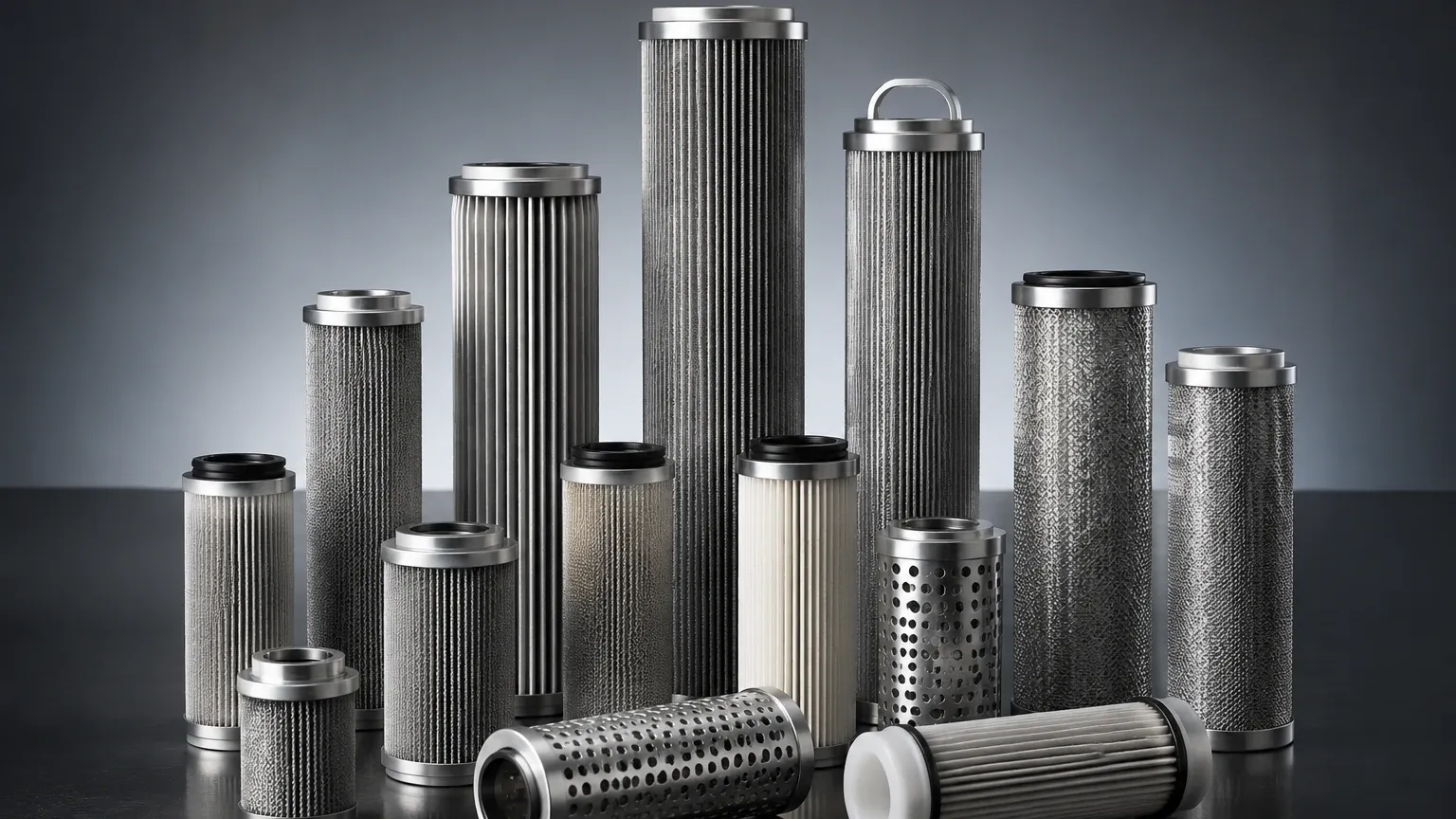
For organizations looking for long-term reliability, the shift toward stainless steel wire mesh and sintered metal fiber is a strategic investment. These materials allow for the creation of Filter Cartridges that are not only durable but also highly precise.
Wire Mesh vs. Sintered Metal
* Woven Wire Mesh: This media provides surface filtration. It is ideal for removing hard, spherical particles and is very easy to clean via backwashing or ultrasonic baths. It is the preferred choice for protecting downstream equipment like pumps and spray nozzles.
* Sintered Metal Fiber: Created by compressing and bonding stainless steel fibers, this media provides depth filtration similar to synthetic felts but with the thermal and chemical benefits of metal. It is excellent for capturing irregular or deformable particles.
Customization and OEM Capabilities
One of the primary advantages of working with a professional manufacturer like Kaifil is the ability to customize the filter geometry. While a filter cartridge superfish is limited to specific proprietary housings, industrial stainless steel cartridges can be engineered with various end-cap configurations (e.g., 222, 226, DOE) to fit existing filter vessels. Custom lengths, diameters, and reinforcement layers can be added to meet the exact flux requirements of a specific production line.
Performance Evaluation and Maintenance
To ensure the efficiency of a filtration system, technical teams must monitor performance metrics beyond simple visual inspections. In professional environments, the following criteria are used to evaluate the health of a filter cartridge:
Differential Pressure Monitoring
The difference in pressure between the inlet and outlet of the filter housing is the most reliable indicator of filter loading. A clean cartridge will have a low initial $ΔP$. As particles accumulate, the $ΔP$ increases. Manufacturers provide a "recommended change-out pressure," typically between 15 and 25 PSI for liquid systems. Exceeding this can lead to "bypass," where contaminants are forced through the media or around the seals.
Cleaning and Reusability
Unlike disposable cartridges that contribute to the waste stream and require frequent replacement, stainless steel cartridges are designed for multiple lifecycles. The cleaning process typically involves:
1. Backwashing: Reversing the flow of fluid to dislodge surface contaminants.
2. Chemical Cleaning: Using surfactants or mild acids to dissolve organic or mineral buildup.
3. Ultrasonic Cleaning: Using high-frequency sound waves in a solvent bath to remove fine particles lodged deep within the mesh pores.
This reusability significantly reduces the long-term cost per gallon filtered, despite the higher initial capital expenditure compared to standard disposable units.
Total Cost of Ownership (TCO) Analysis
When procurement departments compare a standard filter cartridge superfish-style solution with an industrial stainless steel alternative, the TCO must be the primary metric. The TCO includes:
* Purchase Price: Higher for stainless steel, lower for disposables.
* Replacement Frequency: Stainless steel can last years; disposables may last weeks.
* Labor Costs: The time required for staff to change out filters and manage inventory.
* Disposal Costs: Environmental fees associated with disposing of contaminated synthetic media.
* Downtime: The lost production value during filter change-outs.
In most continuous industrial processes, the reduction in downtime and replacement labor alone justifies the transition to permanent, cleanable Filter Cartridges.
Selection Criteria for Engineers
Before finalizing a filtration specification, engineers should confirm the following data points with their supplier:
1. Fluid Characteristics: Viscosity, density, and chemical composition.
2. Contaminant Profile: Particle size distribution, concentration, and whether the particles are rigid or deformable.
3. Flow Requirements: Minimum and maximum flow rates (GPM or m³/h).
4. Operating Environment: Maximum temperature and system pressure.
5. Target Purity: The required micron rating and whether an absolute or nominal rating is necessary.
By addressing these factors, technical teams can move beyond the limitations of consumer-grade modularity and implement a filtration strategy that supports the rigorous demands of modern industrial manufacturing. Whether the application involves food and beverage processing, pharmaceutical production, or heavy hydraulic systems, the right cartridge selection is the foundation of process stability and product quality.
