


Filter Cartridge Size
In industrial filtration, selecting the correct filter cartridge size is a critical engineering decision that directly impacts the efficiency, longevity, and cost-effectiveness of a process. While it may seem like a simple matter of physical dimensions, the size of a filter cartridge dictates the available surface area, the fluid velocity across the media, and the total dirt-holding capacity of the system. For engineers and procurement teams, understanding the nuances of sizing—from nominal dimensions to custom geometries—is essential for optimizing filtration performance in demanding environments like chemical processing, food and beverage production, and hydraulic systems.
The Relationship Between Dimensions and Performance
The physical dimensions of a filter cartridge—primarily its length, outer diameter (OD), and inner diameter (ID)—are the first parameters considered during the design or replacement phase. However, these dimensions must be evaluated in the context of hydraulic performance.
Surface Area and Flux
For a given media type, such as stainless steel wire mesh or pleated metal felt, the total surface area is a function of the cartridge size. A larger filter cartridge size provides more area for the fluid to pass through. This reduces the "flux," or the volume of fluid passing through a unit area of filter media per unit of time (typically measured in GPM/ft² or LPM/m²). Lower flux generally leads to higher filtration efficiency and a slower rate of pressure drop increase, as particles are distributed over a larger area.
Pressure Drop (Delta P)
Every filter introduces a resistance to flow, known as pressure drop ($ΔP$). The initial pressure drop is influenced by the cartridge size and the viscosity of the fluid. If a cartridge is undersized for the required flow rate, the initial $ΔP$ will be high, leaving very little room for the pressure to increase as the filter loads with contaminants. This results in shorter service life and more frequent maintenance intervals.
Standard Industrial Filter Cartridge Sizes
While custom solutions are common, the industrial filtration market relies heavily on several standardized dimensions to ensure compatibility across different housing manufacturers. Understanding these standards is the first step in technical selection.
Common Lengths
Standard lengths for industrial Filter Cartridges typically follow a modular progression. The most common lengths include:
* 9.75 inches / 10 inches: Often used in small-batch processing or as pre-filters.
* 20 inches: A standard for medium-flow applications.
* 30 inches: Frequently utilized in high-flow process industries.
* 40 inches: The standard for large-scale industrial water treatment and chemical processing.
It is important to note that "10-inch" or "20-inch" often refers to the nominal length. The actual physical length can vary slightly depending on the end cap configuration (e.g., Double Open End vs. Single Open End with a fin or spear).
Diameter Standards
* Standard Diameter: Most industrial cartridges have an outer diameter (OD) ranging from 2.5 inches to 2.75 inches (approx. 63mm to 70mm).
* Large Diameter (High Flow): For applications requiring high flow rates in a compact footprint, large-diameter cartridges (often called "Big Blue" or High-Flow series) may have ODs of 4.5 inches or even 6 inches.
Engineering Considerations for Sizing
When specifying a filter cartridge size, engineers must look beyond the housing dimensions to the operational requirements of the specific application.
Flow Rate Requirements
The maximum flow rate of the system is the primary driver for sizing. If the flow rate exceeds the recommended capacity for a specific cartridge size, the fluid velocity can become high enough to cause "particle breakthrough," where contaminants are forced through the media, or "media migration," where the filter material itself begins to shed. For stainless steel filters, which are often used in high-temperature or high-pressure applications, maintaining a conservative flow-to-size ratio is vital for structural integrity.
Contaminant Loading and Dirt-Holding Capacity
The volume of solids that a filter must remove before reaching its terminal pressure drop is its dirt-holding capacity. A larger cartridge size naturally offers more space for contaminant accumulation. In processes with high solids loading, such as wastewater treatment or crude chemical filtration, over-sizing the filter can significantly reduce the Total Cost of Ownership (TCO) by extending the time between cleaning or replacement cycles.
Fluid Viscosity
Viscosity plays a major role in sizing. High-viscosity fluids (such as heavy oils or polymers) create higher resistance to flow. To maintain a reasonable pressure drop, these applications require significantly more surface area than water-like fluids. Consequently, a larger filter cartridge size or multiple cartridges in a single housing are often necessary for viscous media.
End Cap Configurations and Total Length
The size of a cartridge is also affected by its end cap style, which determines how it seals within the filter housing. Common configurations include:
1. Double Open End (DOE): The cartridge is open at both ends and relies on gaskets and a compression nut for sealing. The size measurement is typically the edge-to-edge length of the media and gaskets.
2. Single Open End (SOE): One end is sealed, while the other features an O-ring or bayonet fitting (e.g., Code 7, Code 3, or Code 8). In these cases, the "total length" must include the fitting, as an incorrect measurement can prevent the housing head from closing or cause a bypass due to an improper seal.
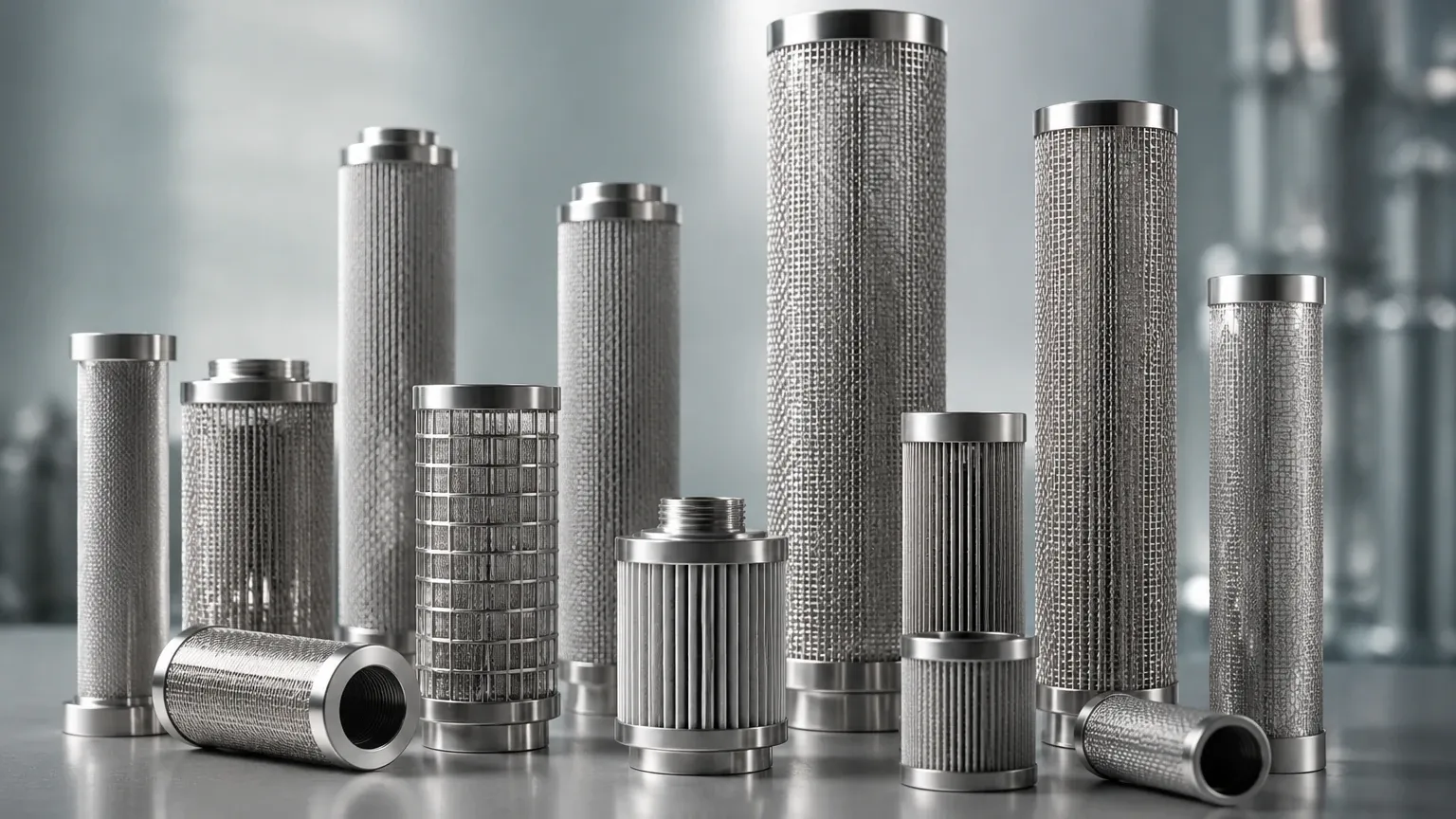
Custom Filter Cartridge Sizes and OEM Solutions
In many specialized industrial settings, standard off-the-shelf sizes do not meet the spatial or performance constraints of the machinery. This is where custom manufacturing becomes essential. Customization allows for the optimization of the ID/OD ratio to maximize the volume of filter media within a fixed envelope.
For example, in hydraulic systems or specialized chemical reactors, the filter may need to fit into a non-standard cavity. Custom stainless steel filter cartridges can be engineered with specific lengths and diameters to provide the exact micron rating and flow capacity required without necessitating a complete redesign of the existing hardware. Manufacturers like Kaifil specialize in these OEM solutions, providing precision-engineered metal filters that adhere to strict dimensional tolerances.
Common Risks of Incorrect Sizing
Selecting the wrong filter cartridge size can lead to several operational failures:
* Bypass: If a cartridge is too short or the diameter is slightly off, the fluid will take the path of least resistance around the filter media rather than through it. This results in unfiltered fluid reaching downstream equipment.
* Premature Clogging: An undersized filter will reach its terminal pressure drop quickly, leading to excessive downtime and high replacement costs.
* Structural Collapse: In high-pressure applications, an undersized cartridge may experience a pressure differential that exceeds its structural collapse rating, leading to catastrophic failure and system contamination.
* Incomplete Seal: If the length is even a few millimeters off, O-rings may not seat correctly, or spring-loaded caps may not provide enough tension to prevent bypass.
Evaluation Criteria for Purchasing Teams
Before finalizing a purchase or specifying a filter for a new project, technical teams should confirm the following data points regarding size:
1. Actual vs. Nominal Length: Confirm the exact millimeter measurement including end caps.
2. Housing Compatibility: Ensure the OD allows for sufficient annular space between the cartridge and the housing wall for fluid distribution.
3. Seal Type: Match the end cap geometry (e.g., 222 O-ring, 226 O-ring) to the housing base.
4. Media Type vs. Area: Recognize that a pleated stainless steel cartridge will have significantly more surface area than a cylindrical (wrapped) cartridge of the same physical size.
Conclusion
Filter cartridge size is a fundamental parameter that bridges the gap between physical installation and process performance. By carefully matching the cartridge dimensions to the flow rate, viscosity, and contaminant profile of the application, engineers can ensure reliable filtration and long-term durability. Whether utilizing standard industrial sizes or seeking a customized OEM solution for specialized equipment, precise sizing is the key to achieving optimal filtration efficiency and minimizing operational costs.
For those managing complex industrial processes, consulting with a manufacturer that understands the engineering behind the dimensions ensures that every filter cartridge is perfectly suited to its environment. Review product options and application support at Filter Cartridges to determine the best configuration for your specific technical requirements.
