


Filter Cartridge Spa
In the context of commercial and industrial water treatment, the term "filter cartridge spa" refers to high-performance filtration components designed to maintain water clarity, hygiene, and equipment longevity in large-scale aquatic environments. Unlike residential applications that may rely on low-cost disposable media, commercial spa and wellness facilities require robust engineering to handle high bather loads, continuous circulation, and aggressive chemical treatments. For engineers and facility managers, selecting the appropriate Filter Cartridges is a critical decision that impacts both operational costs and water quality standards.
Industrial-grade filtration solutions, particularly those utilizing stainless steel media, offer a durable alternative to traditional synthetic filters. This guide examines the technical requirements, material considerations, and engineering benchmarks necessary for optimizing spa filtration systems in commercial settings.
Engineering Requirements for Commercial Spa Filtration
Commercial spa systems operate under conditions significantly more demanding than standard pool environments. The high water temperature—typically between 34°C and 40°C (93°F to 104°F)—accelerates the growth of microorganisms and increases the rate of chemical reactions. Consequently, the filtration system must be capable of removing organic debris, oils, and particulate matter with high efficiency.
Flow Rates and Pressure Differentials
Effective filtration depends on the balance between flow rate and the surface area of the filter media. In a spa environment, the turnover rate—the time it takes for the entire volume of water to pass through the filter—is often mandated by local health regulations, frequently requiring a full turnover every 30 to 60 minutes.
When evaluating a filter cartridge spa solution, engineers must calculate the flux rate (flow per unit of surface area). High flux rates can lead to "blinding" of the media, where particles are forced deep into the pores, making cleaning difficult and increasing the pressure differential (ΔP). Stainless steel cartridges are often preferred in these high-demand scenarios because their rigid structure prevents media migration or collapse under high-pressure conditions.
Micron Ratings and Particle Capture
For spa applications, a filtration accuracy of 10 to 50 microns is generally sufficient to maintain visual clarity. However, specialized applications may require finer filtration to remove specific pathogens or fine suspended solids. The choice between nominal and absolute micron ratings is vital. A nominal rating indicates the ability to retain a major percentage of particles of a given size, while an absolute rating (common in high-end stainless steel mesh) ensures that 99.9% of particles above the specified size are captured.
Material Selection: Stainless Steel vs. Synthetic Media
While polyester and cellulose are common in the residential market, industrial and commercial facilities often transition to stainless steel filter cartridges for their superior lifecycle value and chemical resistance.
Chemical and Thermal Stability
Spa water is treated with high concentrations of chlorine, bromine, or ozone to ensure disinfection. Over time, these oxidizers can degrade synthetic fibers, leading to media breakdown and the release of "fines" into the water. Stainless steel, particularly Grade 316L, provides exceptional resistance to corrosion and chemical attack. Furthermore, the thermal stability of metal ensures that the cartridge maintains its structural integrity even during high-temperature sterilization cycles or in heated spa environments.
Structural Durability
A primary failure point in standard spa filters is the end cap and the internal core. Under the stress of continuous pump operation, plastic components can crack or warp. Industrial stainless steel cartridges utilize welded or mechanically bonded end caps (such as 222, 226, or DOE configurations) that provide a leak-proof seal and withstand significant mechanical stress. This durability is essential for systems that utilize automated backwashing or high-pressure cleaning protocols.
Technical Specifications of Stainless Steel Filter Cartridges
When specifying Filter Cartridges for commercial spa or industrial water applications, several technical parameters must be confirmed to ensure compatibility with existing housings and performance targets.
Mesh Types and Weave Patterns
The type of wire mesh used determines the filtration characteristics and cleaning efficiency:
* Plain Weave: Provides a simple, straight-through flow path, ideal for surface filtration where particles are easily washed off.
* Dutch Weave: Offers a more complex, tortuous path that provides higher strength and finer filtration ratings.
* Sintered Mesh: Multiple layers of mesh are heat-bonded to create a porous metal plate. This is the most robust option, offering excellent permeability and the ability to withstand repeated cleaning without deforming the pore structure.
Surface Area Optimization
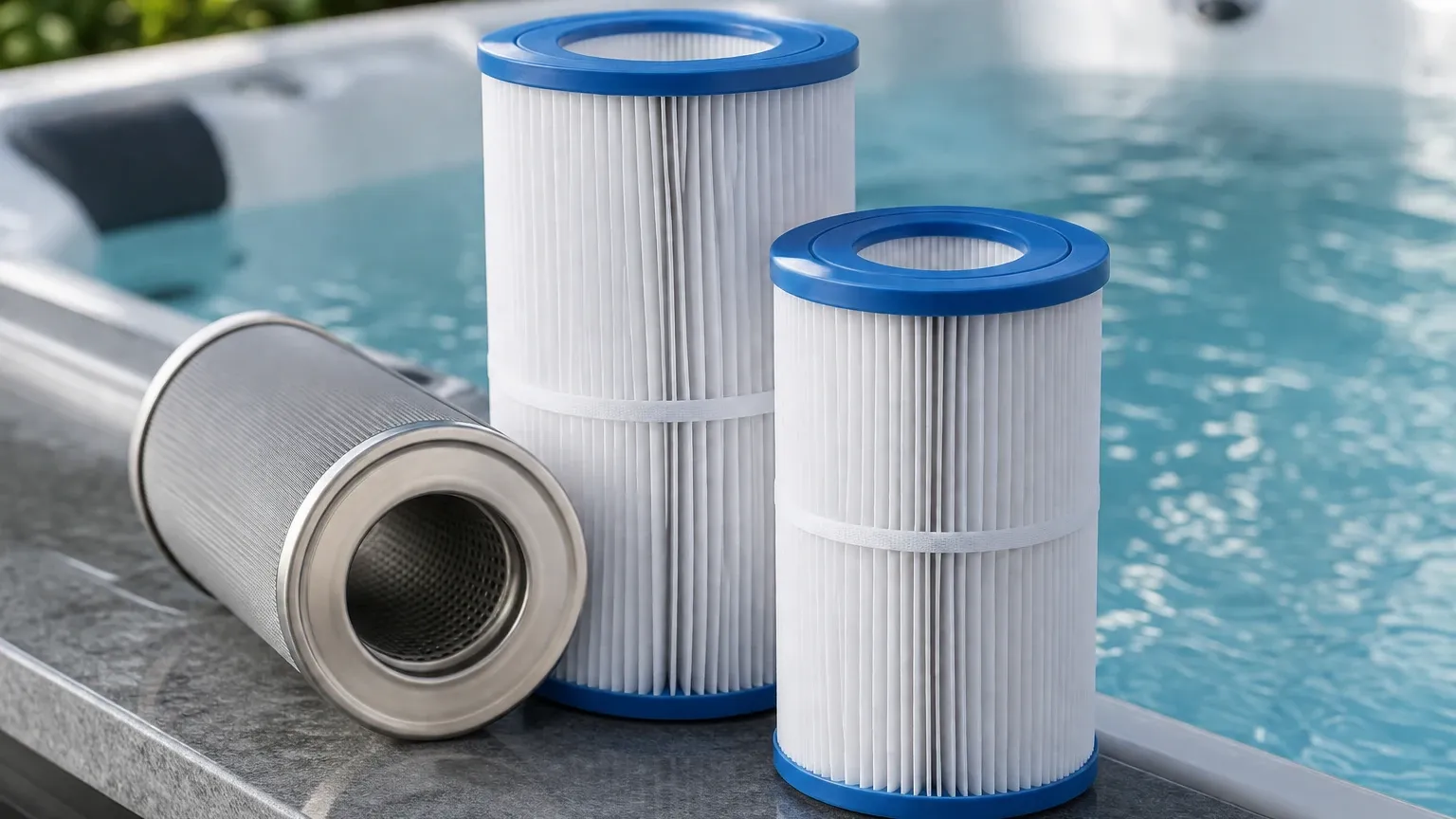
To handle high flow rates without excessive pressure drop, many industrial cartridges utilize a pleated design. Pleating the stainless steel mesh significantly increases the effective filtration area within the same footprint as a cylindrical cartridge. This design is particularly beneficial in spa mechanical rooms where space for large filter housings may be limited.
Maintenance and Cleaning Protocols
One of the primary advantages of a stainless steel filter cartridge spa system is the ability to clean and reuse the media indefinitely, provided the cleaning is performed correctly. This contrasts with synthetic filters, which must be discarded once the media becomes saturated with oils and minerals.
Cleaning Methods for Metal Cartridges
1. Backwashing: Reversing the flow of water through the cartridge to dislodge surface-level debris. This is effective for routine maintenance.
2. Chemical Soaking: To remove accumulated body oils, lotions, and calcium scale, cartridges can be soaked in specialized degreasing agents or mild acidic solutions. Unlike plastic filters, stainless steel is not damaged by these cleaning agents.
3. Ultrasonic Cleaning: For deep-seated particulates within the mesh layers, ultrasonic baths use high-frequency sound waves to create cavitation bubbles that strip away contaminants. This method restores the cartridge to near-original pressure drop levels.
Monitoring Performance
Facility operators should monitor the pressure gauge on the filter housing. A common industry standard is to initiate a cleaning cycle when the pressure differential increases by 8 to 10 PSI over the "clean" starting pressure. Consistent monitoring prevents pump strain and ensures that the water quality remains within the required parameters.
Customization and OEM Solutions
Every commercial spa installation has unique hydraulic requirements based on the pump capacity, piping diameter, and bather load. Off-the-shelf filters often fail to meet these specific needs, leading to suboptimal performance.
Custom manufacturing allows for the adjustment of several variables:
* Length and Diameter: Cartridges can be fabricated to fit non-standard or legacy filter housings, eliminating the need for expensive system replacements.
* End Cap Configurations: Custom adapters can be engineered to ensure a perfect bypass-free seal, which is critical for maintaining water hygiene.
* Reinforcement: For systems with high-pressure spikes, internal support cores or external shrouds can be added to the cartridge design to prevent deformation.
By working with a manufacturer experienced in Filter Cartridges, engineering teams can develop proprietary filtration solutions that are optimized for their specific equipment and environmental conditions.
Total Cost of Ownership (TCO) Analysis
When evaluating the procurement of a filter cartridge spa solution, it is essential to look beyond the initial purchase price. While stainless steel cartridges represent a higher upfront investment compared to disposable alternatives, the Total Cost of Ownership (TCO) is often significantly lower over a 3-to-5-year period.
Factors Influencing TCO:
* Replacement Frequency: Synthetic filters may need replacement every 3 to 12 months in a commercial setting. A stainless steel cartridge can last for years with proper maintenance.
* Disposal Costs: Reducing the volume of spent filter media contributes to sustainability goals and reduces waste disposal fees.
* Energy Efficiency: Metal cartridges often maintain a lower clean pressure drop than depth-style synthetic filters, reducing the energy demand on circulation pumps.
* System Uptime: High-durability components reduce the risk of unexpected system failure, which is vital for commercial facilities where downtime results in lost revenue and customer dissatisfaction.
Conclusion: Selecting the Right Filtration Partner
Achieving optimal water quality in a commercial spa environment requires more than just standard filtration; it requires an engineered approach that considers material science, hydraulics, and long-term durability. For B2B buyers, the focus should be on sourcing components that provide predictable performance and ease of maintenance.
When selecting a partner for spa filtration components, it is important to confirm their capabilities in material selection (specifically the grade of stainless steel), their ability to provide custom micron ratings, and their experience in manufacturing for high-demand industrial environments. By prioritizing these technical factors, facilities can ensure a safe, clear, and cost-effective water treatment process.
For those seeking to upgrade their current systems or develop new filtration equipment, exploring specialized Filter Cartridges designed for industrial longevity is a necessary step in professional facility management.
