


Universal Water Filter Cartridges Wilko
In the realm of fluid management, the search for "universal water filter cartridges wilko" often reflects a broader industrial need for standardized, accessible, and reliable filtration components. While consumer-grade retailers like Wilko historically provided accessible solutions for domestic water treatment, industrial engineers and procurement specialists must look beyond retail availability to understand the technical specifications that define a truly "universal" filter. For industrial applications—ranging from chemical processing to food and beverage production—the concept of universality is less about brand name and more about dimensional standards, material compatibility, and performance reliability.
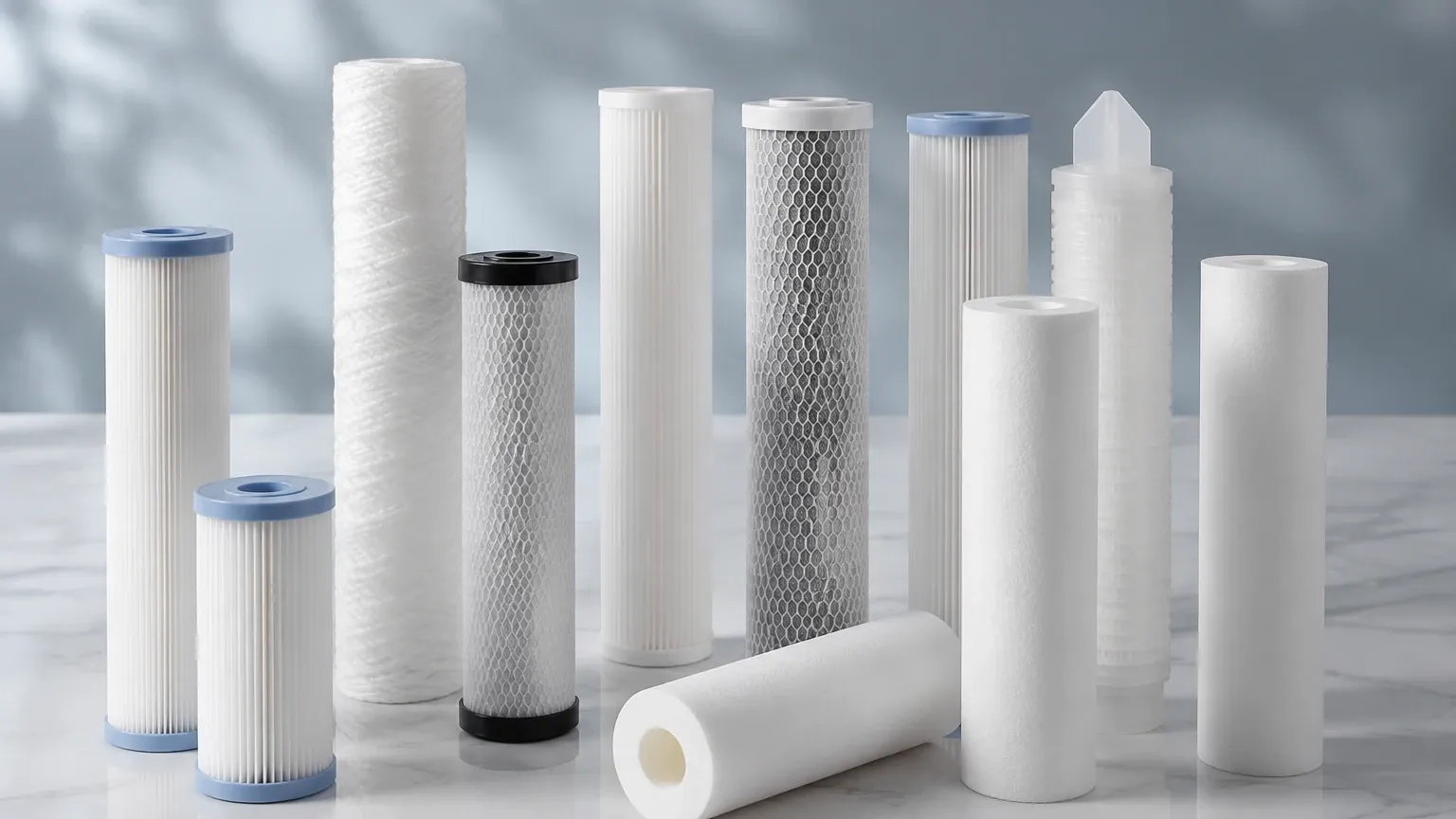
Selecting the right Filter Cartridges requires a deep understanding of how standardized dimensions interface with specialized industrial requirements. This guide examines the engineering considerations behind universal filtration solutions, the transition from consumer-grade expectations to industrial-grade realities, and the critical evaluation criteria necessary for maintaining system integrity.
Understanding "Universal" in Industrial Filtration
When a technician or engineer searches for universal water filter cartridges wilko, they are typically looking for a specific form factor: the standard 10-inch or 20-inch cartridge. In the filtration industry, "universal" refers to the Double Open End (DOE) configuration or specific Single Open End (SOE) designs that fit into standard filter housings.
Dimensional Standardization
The most common "universal" size is the 2.5-inch diameter by 10-inch length cartridge. This standard allows for interchangeability across various housing brands. However, in industrial environments, dimensional accuracy is paramount. A cartridge that is even a few millimeters off in length can lead to bypass—a failure mode where unfiltered fluid escapes around the seals, compromising the entire process.
Industrial-grade cartridges often utilize precision-machined end caps and high-quality gaskets (such as EPDM, Viton, or PTFE) to ensure that the "universal" fit translates into a leak-proof seal. Unlike consumer-grade products, industrial stainless steel variants are engineered to maintain these dimensions even under significant thermal expansion or high differential pressures.
The DOE vs. SOE Choice
* Double Open End (DOE): These are the traditional universal cartridges. They rely on flat gaskets at both ends, compressed by the housing cap. While versatile, they are more prone to bypass if the housing is not perfectly aligned.
* Single Open End (SOE): Often featuring a 222 or 226 O-ring configuration, these provide a more secure, locked-in fit. While less "universal" in the retail sense, they are the standard for high-purity applications in the pharmaceutical and biotech sectors.
Material Limitations: Moving Beyond Consumer Grade
Consumer-focused products, such as those associated with the universal water filter cartridges wilko category, are predominantly made of polypropylene, activated carbon, or pleated paper. While effective for basic sediment removal in a home setting, these materials often fail in demanding B2B environments.
Temperature and Pressure Resistance
Industrial processes frequently involve high-temperature fluids or steam sterilization (SIP). Plastic cartridges typically lose structural integrity above 60°C (140°F). In contrast, stainless steel filter cartridges can withstand temperatures exceeding 250°C. Furthermore, industrial systems experience pressure spikes that would cause a standard consumer cartridge to collapse. Metal mesh filters provide the necessary hoop strength to resist deformation under high differential pressure (ΔP).
Chemical Compatibility
One of the primary reasons engineers move away from retail-grade universal solutions is chemical resistance. Many industrial fluids, including solvents, oils, and caustic cleaning agents, will degrade polypropylene or adhesives used in standard cartridges. Stainless steel (304 or 316L) offers broad compatibility, ensuring that the filter does not leach contaminants into the process stream or disintegrate during operation.
Engineering Evaluation Criteria for Filter Cartridges
When evaluating Filter Cartridges for a professional facility, the focus must shift from "will it fit?" to "how will it perform?". Engineers use several key metrics to determine the suitability of a cartridge for a specific application.
Micron Ratings: Absolute vs. Nominal
A common pitfall in purchasing universal filters is failing to distinguish between nominal and absolute micron ratings.
* Nominal Rating: This is an approximate value, often indicating that the filter will trap 50% to 85% of particles of a certain size. Most consumer-grade filters use nominal ratings.
* Absolute Rating: This indicates that the filter will trap 99.9% (Beta 5000) or more of particles at the specified size. For critical industrial tasks, such as protecting a high-pressure pump or ensuring the clarity of a beverage, absolute-rated stainless steel mesh is often the only acceptable choice.
Flow Rate and Pressure Drop (Clean ΔP)
Every filter introduces resistance to the system. The "Clean Pressure Drop" is the initial resistance measured when the filter is new. A high-quality industrial cartridge is designed to maximize surface area—often through pleating—to allow for high flow rates with minimal pressure loss. This reduces the energy load on pumps and extends the time between filter changes.
Dirt Holding Capacity (DHC)
The total mass of contaminants a cartridge can hold before reaching its terminal pressure drop is its dirt holding capacity. While a universal water filter cartridges wilko style sediment filter might clog quickly in an industrial sludge application, a multi-layered sintered metal cartridge provides depth filtration, significantly increasing the service life and reducing downtime.
The Role of Customization in Industrial Applications
While "universal" fits are convenient for standard maintenance, many industrial challenges require customized filtration components. The limitations of off-the-shelf retail solutions become apparent when dealing with unique flow geometries, extreme viscosities, or specific regulatory requirements (such as FDA compliance for food contact).
Tailored Filtration Media
Industrial manufacturers like Kaifil can customize the weave pattern of the wire mesh—such as plain weave, twill weave, or Dutch weave—to balance flow and strength. For example, a Dutch weave provides superior strength for high-pressure hydraulic applications, while a fine plain weave might be better suited for gas filtration.
Structural Reinforcement
In heavy-duty applications, a standard cartridge may require an internal core or an external shroud to prevent mechanical failure. These reinforcements are rarely found in "universal" retail products but are standard options in custom industrial manufacturing. This ensures that the filter remains a reliable component of the machinery rather than a weak point.
Replacement Cycles and Total Cost of Ownership (TCO)
A common misconception in B2B procurement is that the cheapest "universal" cartridge provides the best value. When analyzing the Total Cost of Ownership, the initial purchase price is often the smallest factor.
Disposable vs. Cleanable Filters
Most consumer universal cartridges are disposable. Once they reach their dirt-holding limit, they are discarded. In an industrial setting, the cost of replacement filters, labor for change-outs, and disposal fees for contaminated media add up quickly.
Stainless steel filter cartridges offer the advantage of being cleanable. Through ultrasonic cleaning, backwashing, or chemical baths, these filters can be restored to near-original performance multiple times. This not only reduces waste but also ensures a lower TCO over the life of the equipment.
Monitoring Performance
To optimize replacement cycles, industrial systems should be equipped with differential pressure gauges. Replacing a filter too early wastes money; replacing it too late can cause cartridge collapse or bypass. By tracking the ΔP trend, maintenance teams can move from reactive to predictive maintenance, ensuring that even "universal" components are used to their maximum efficiency.
Conclusion: Selecting for Reliability
While the search for "universal water filter cartridges wilko" may begin with a need for a simple, standard solution, the requirements of industrial filtration demand a more rigorous approach. Engineering teams must prioritize material integrity, absolute filtration accuracy, and structural durability over retail convenience.
By understanding the standards that govern universal dimensions and recognizing where industrial needs diverge from consumer capabilities, professionals can select Filter Cartridges that protect their equipment and ensure process consistency. Whether utilizing a standard DOE 10-inch format or a highly customized sintered metal component, the goal remains the same: achieving precise, reliable, and cost-effective filtration performance in the most demanding environments.
