


Hplc Flow Splitter
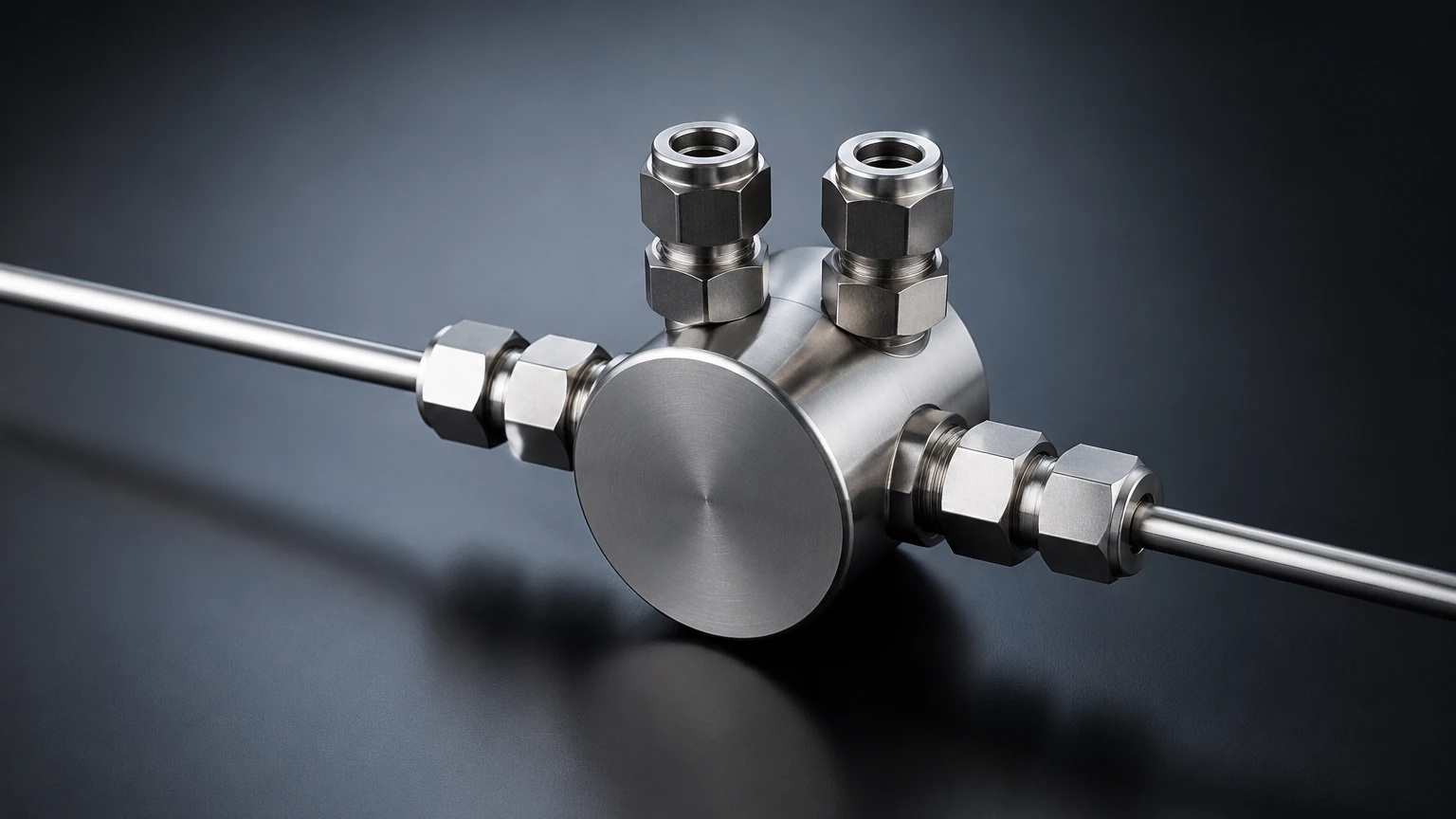
In the field of analytical chemistry and industrial liquid chromatography, the management of fluid dynamics is a critical factor in achieving precise results. A high-performance liquid chromatography (HPLC) flow splitter is a precision-engineered component designed to divide the effluent from an HPLC column into two or more separate streams. This process is essential when a single sample needs to be directed to multiple detectors or when the flow rate required by a detector, such as a mass spectrometer (MS), is significantly lower than the optimal flow rate of the chromatographic separation.
For engineers and laboratory managers, understanding the mechanics of an hplc flow splitter is vital for maintaining system integrity and ensuring reproducible data. As a specialized manufacturer of stainless steel filtration and fluidic components, Kaifil provides the technical foundation necessary to support these high-precision applications. Detailed information on custom filtration and component manufacturing can be found on our Main Page.
Understanding the Function of an HPLC Flow Splitter
The primary function of an hplc flow splitter is to manage the volumetric flow rate of the mobile phase. In many HPLC applications, the flow rate coming off the column—often ranging from 0.5 to 2.0 mL/min for standard analytical columns—is too high for certain sensitive detectors. For example, electrospray ionization (ESI) in mass spectrometry often performs best at much lower flow rates (microliters per minute).
A flow splitter allows the bulk of the solvent and sample to be diverted to a waste container or a secondary detector (like a UV/Vis detector), while a precisely metered fraction is sent to the primary analytical instrument. This ensures that the detector is not overwhelmed, preventing source contamination and maintaining the ionization efficiency required for high-sensitivity analysis.
Types of Flow Splitting Technologies: Static vs. Dynamic
Flow splitters generally fall into two categories: static and dynamic. Choosing between them depends on the required split ratio stability and the complexity of the chromatographic gradient.
Static Flow Splitters
Static splitters rely on the principle of fluid resistance. By using two different paths with specific lengths and internal diameters of capillary tubing, a fixed resistance is created. Since the pressure drop across both paths is identical, the ratio of the flow is determined by the ratio of the resistances. These are cost-effective and reliable but are sensitive to changes in solvent viscosity, which can occur during a gradient elution.
Dynamic and Adjustable Flow Splitters
Dynamic flow splitters often incorporate a metering valve or a specialized manifold that allows the user to adjust the split ratio in real-time. Some advanced systems use electronic feedback loops to maintain a constant split ratio regardless of changes in backpressure or solvent composition. These are ideal for complex methods where precision is paramount across a wide range of operating conditions.
Engineering Considerations for High-Precision Splitting
When integrated into a high-pressure system, an hplc flow splitter must meet several engineering benchmarks to avoid compromising the chromatographic separation.
1. Dead Volume and Extra-Column Band Broadening: The internal volume of the splitter must be minimized. Any "dead space" or unswept volume can lead to peak dispersion, where the sharp bands of separated compounds begin to spread out, reducing the resolution of the analysis.
2. Split Ratio Accuracy: The ability to maintain a consistent ratio (e.g., 100:1 or 1000:1) is essential for quantitative analysis. Engineering tolerances in the internal bore of the splitter components must be extremely tight.
3. Pressure Rating: HPLC systems operate at high pressures, often exceeding 5,000 to 10,000 PSI. The splitter housing and connections must be manufactured from high-strength materials, typically 316L stainless steel, to ensure leak-free operation and structural integrity.
The Critical Role of Stainless Steel Filtration in Protecting HPLC Components
One of the most common causes of failure in an hplc flow splitter is the introduction of particulates. Because splitters utilize very narrow internal channels to create fluid resistance, even microscopic debris can cause a partial or total blockage. This changes the split ratio and can lead to over-pressuring the system.
This is where high-quality filtration becomes indispensable. To protect the delicate internal geometry of flow splitters and columns, industrial-grade stainless steel filters are utilized at various points in the fluid path. These include:
* Solvent Inlet Filters: Placed in the mobile phase reservoir to prevent dust and microbial growth from entering the pump.
* In-line Filters: Positioned between the pump and the injector or between the column and the flow splitter to capture any seal wear particles or column packing fines.
Utilizing precision-woven wire mesh or sintered stainless steel filter elements ensures that the fluid remains pristine without introducing chemical extractables into the system. Engineers should consult the Main Page to evaluate the various filtration grades available for protecting sensitive chromatography hardware.
Selecting the Right Flow Splitter for Analytical and Preparative Applications
The selection of an hplc flow splitter is dictated by the scale of the operation. In analytical HPLC, the focus is on maintaining resolution and sensitivity at low flow rates. Conversely, in preparative HPLC—where the goal is to purify and collect large quantities of a compound—the flow splitter is used to divert a small analytical stream to a detector while the majority of the product is sent to a fraction collector.
Key selection criteria include:
* Chemical Compatibility: The materials in contact with the fluid (wetted parts) must be inert. Stainless steel is standard, but for applications involving high salts or extreme pH, PEEK (polyetheretherketone) or specialized alloys may be required.
* Flow Range: Ensure the splitter is rated for the total flow rate produced by the HPLC pump. Using a splitter designed for 1 mL/min in a 50 mL/min preparative system will result in catastrophic failure.
* Split Ratio Range: Determine if a fixed ratio is sufficient or if the application requires the flexibility of an adjustable splitter.
Maintenance and Longevity of Precision Fluidic Components
To ensure the long-term performance of an hplc flow splitter, a proactive maintenance schedule is required. Engineers should monitor the system backpressure regularly; a gradual increase in pressure often indicates that the splitter or its associated protective filters are becoming clogged.
* Cleaning Protocols: Periodic flushing with appropriate solvents can remove accumulated residues. In cases of persistent blockage, ultrasonic cleaning of the stainless steel components may be effective.
* Replacement Cycles: While the housing of a flow splitter can last for years, the internal resistors or capillary tubes may need replacement if they become damaged or permanently fouled.
* Filter Maintenance: Replacing in-line filters is the most cost-effective way to extend the life of a flow splitter. A stainless steel filter element is designed for durability, but it must be replaced once the pressure drop across the filter exceeds the manufacturer's recommended threshold.
Custom OEM Solutions for Chromatography Systems
Many industrial equipment manufacturers require custom flow splitting and filtration solutions that are not available as off-the-shelf products. Whether it is a specific manifold design, a unique split ratio for a proprietary detector, or integrated filtration components, customization is often necessary to optimize system performance.
Kaifil specializes in the OEM production of stainless steel components that meet the rigorous demands of the chromatography industry. By focusing on precision machining and advanced filtration technology, we help engineers develop systems that are both reliable and efficient. Our capabilities include custom wire mesh configurations and precision metal filter cartridges that can be integrated directly into flow splitter assemblies to provide a compact, protected fluidic path.
Conclusion: Strategic Component Selection
The hplc flow splitter is a small but pivotal component in the modern analytical laboratory and industrial processing plant. Its ability to accurately and reliably manage fluid distribution directly impacts the quality of the data generated and the efficiency of the purification process. By prioritizing high-quality materials, such as 316L stainless steel, and implementing robust filtration strategies, organizations can minimize downtime and ensure the longevity of their sophisticated HPLC systems.
For technical professionals seeking to optimize their filtration and fluidic setups, selecting a partner with deep manufacturing expertise is essential. Exploring the resources on our Main Page provides a starting point for identifying the components and custom solutions needed to maintain peak performance in demanding industrial environments.
