


Fine Woven Wire Mesh
In the landscape of industrial filtration and separation, fine woven wire mesh serves as a critical component for achieving high-precision results. Whether used in pharmaceutical processing, chemical manufacturing, or high-end food production, the performance of a filtration system often depends on the structural integrity and dimensional accuracy of the mesh employed. For engineers and procurement specialists, understanding the technical nuances of fine woven wire mesh is essential for optimizing process efficiency and ensuring the longevity of filtration equipment.
As a specialized manufacturer, Kaifil provides engineered solutions that bridge the gap between standard wire cloth and high-performance filtration media. This guide examines the technical specifications, material considerations, and engineering variables that define the selection of fine woven wire mesh in professional B2B environments.
Technical Fundamentals of Fine Woven Wire Mesh
The term "fine" in the context of woven wire mesh typically refers to products with a high mesh count—the number of openings per linear inch—and small aperture sizes, often measured in microns. Unlike coarse screens used for basic scalping or sorting, fine woven wire mesh is designed for precise particle retention and fluid dynamics management.
Mesh Count vs. Aperture Size
There is an inverse relationship between mesh count and aperture size. As the mesh count increases, the size of the individual openings (apertures) decreases. For example, a 200-mesh screen has significantly smaller openings than a 50-mesh screen. However, the aperture size is also influenced by the wire diameter. Two meshes with the same mesh count but different wire diameters will have different aperture sizes and different percentages of open area. Engineers must balance the need for fine filtration with the requirement for a high open area to maintain flow rates and minimize pressure drop.
Micron Ratings
In precision applications, fine woven wire mesh is often specified by its micron rating. This rating indicates the size of the particles the mesh is intended to retain. It is important to distinguish between "nominal" and "absolute" micron ratings. Nominal ratings refer to a general efficiency (e.g., 90% of particles retained), while absolute ratings refer to the largest spherical particle that can pass through the mesh under specific test conditions. For critical industrial processes, absolute ratings are generally preferred for their predictability.
Material Selection for Industrial Environments
The performance of fine woven wire mesh is heavily dependent on the alloy from which it is manufactured. In most industrial filtration applications, stainless steel is the standard due to its mechanical strength and resistance to environmental degradation.
Stainless Steel 304
SS304 is the most common grade used for woven wire mesh. It offers excellent corrosion resistance in a wide range of atmospheric environments and is suitable for many food-grade applications. However, it may be susceptible to pitting and crevice corrosion in chloride-rich environments.
Stainless Steel 316L
For more demanding applications, particularly in chemical processing and marine environments, SS316L is the preferred choice. The addition of molybdenum enhances its resistance to chlorides and acidic solutions. The "L" denotes low carbon content, which improves weldability and reduces the risk of intergranular corrosion near weld joints—a critical factor when the mesh is integrated into framed panels or filter cartridges.
Specialized Alloys
In extreme cases involving high temperatures or highly corrosive chemicals, specialized alloys such as Monel, Inconel, or Hastelloy may be required. These materials ensure that the fine woven wire mesh maintains its structural integrity and filtration accuracy even under severe operating conditions.
Comparing Weave Types for Precision Filtration
The method by which the wires are interlaced—the weave pattern—determines the mechanical properties and filtration characteristics of the mesh. Selecting the appropriate weave is as important as selecting the right material.
Plain Weave
Plain weave is the most straightforward construction, where each shute (weft) wire passes over and under each warp wire. This pattern provides a stable structure and consistent aperture sizes. It is widely used for general-purpose fine woven wire mesh where high flow rates are a priority.
Twill Weave
In a twill weave, each shute wire passes over and under two warp wires in a staggered pattern. This allows for the use of heavier wire diameters for a given mesh count, resulting in a more robust mesh. Twill weave is often employed when the mesh count is so high that the wires are too thin to be woven in a plain pattern without compromising strength.
Dutch Weave (Plain and Twill)
Dutch weaves utilize different wire diameters for the warp and shute directions. Typically, the shute wires are smaller and woven more tightly together, creating a "tortuous path" for the fluid. This results in a mesh with very high mechanical strength and extremely fine filtration capabilities. Dutch weaves do not have straight-through openings like plain weaves; instead, they provide depth-style filtration, which is ideal for high-pressure applications and fine particle retention.
Engineering Considerations: Flow Dynamics and Mechanical Strength
When integrating fine woven wire mesh into an industrial system, engineers must evaluate how the mesh will interact with the process fluid and the mechanical stresses of the operation.
Pressure Drop (Delta P)
Every filter medium introduces a resistance to flow, resulting in a pressure drop across the mesh. In fine woven wire mesh, the pressure drop is influenced by the percentage of open area, the fluid viscosity, and the flow velocity. Excessive pressure drop can lead to reduced system efficiency, increased energy consumption, and potential damage to the mesh if the structural limits are exceeded.
Dirt Holding Capacity
This refers to the amount of contaminant the mesh can retain before the pressure drop reaches a critical level requiring cleaning or replacement. While fine woven wire mesh is excellent for precision, its surface-loading nature means it may have a lower dirt-holding capacity than depth filters. However, its ability to be cleaned and reused often offsets this in B2B industrial cycles.
Mechanical Stability
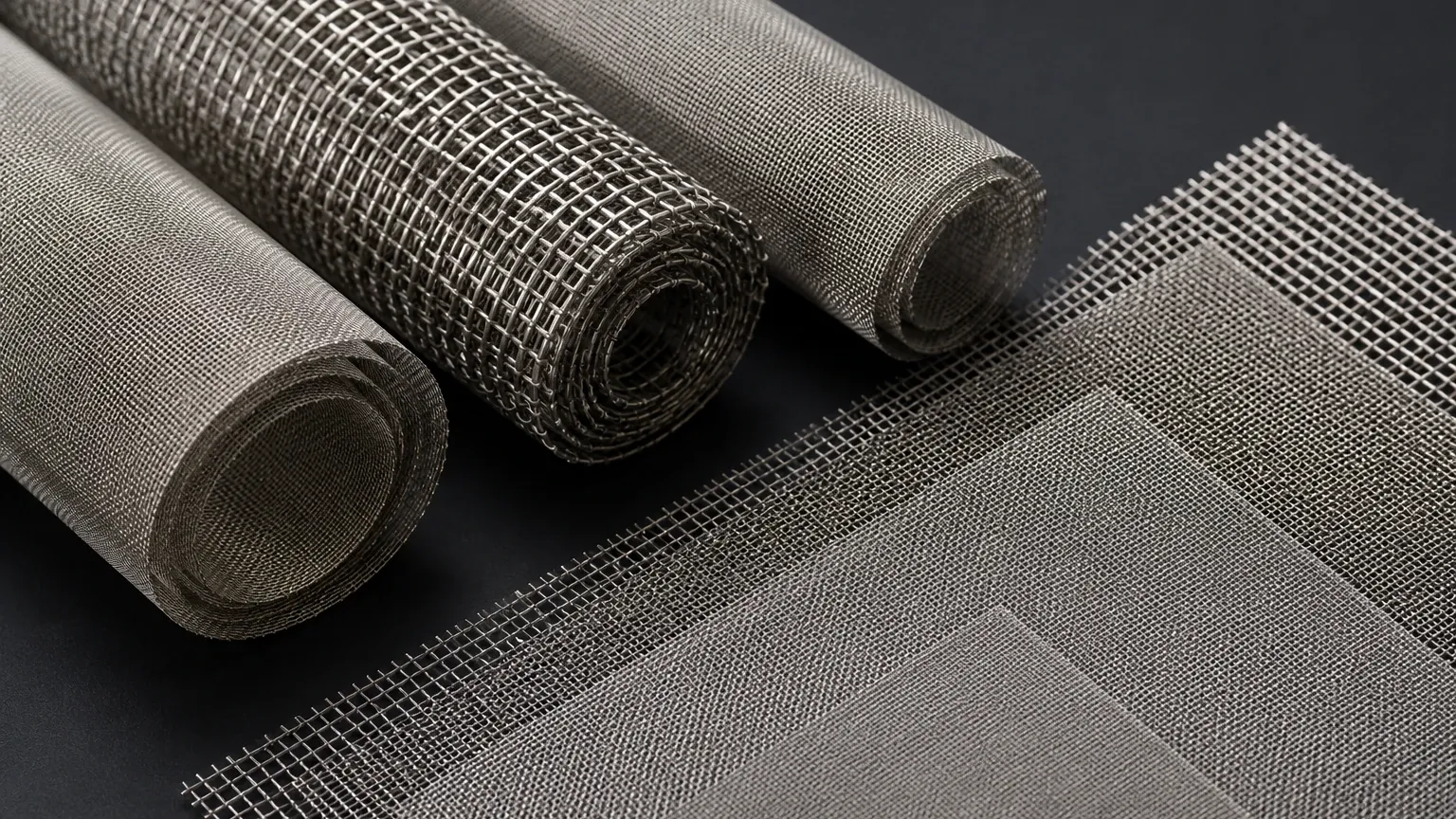
Fine mesh is inherently delicate due to the thin wire diameters involved. In high-pressure or high-vibration environments, the mesh must be supported. This is often achieved by sintering multiple layers of mesh together or by mounting the mesh into rigid frames. Kaifil specializes in these types of reinforced solutions, ensuring that the Plain, twill and dutch woven wire mesh in SS304/316L — rolls, cut mesh and framed panels. Send mesh count or micron target for a technical quote. meets the structural demands of the application.
Customization and Fabrication Capabilities
Standard off-the-shelf mesh rolls rarely meet the specific needs of complex industrial machinery. Customization is a core requirement for most engineering projects. Fabrication services allow the mesh to be transformed into functional components ready for installation.
* Cut-to-Size Pieces: Precision cutting using laser or ultrasonic methods ensures clean edges and dimensional accuracy, preventing fraying and ensuring a proper fit within filter housings.
* Framed Panels: For vibrating screens or large-scale filtration units, the mesh is often tensioned and secured within a metal frame. This provides the necessary support to prevent sagging and premature fatigue failure.
* Cylindrical and Conical Elements: Fine woven wire mesh can be formed into various shapes and seam-welded to create filter cartridges or strainers. The quality of the weld is paramount to ensure that no bypass occurs at the seam.
* Multi-Layer Sintering: By bonding layers of fine mesh with coarser support layers through heat and pressure, manufacturers can create a composite material that offers the filtration fineness of the fine mesh with the structural rigidity of a heavy plate.
Quality Assurance and Testing Standards
To ensure that fine woven wire mesh performs as specified, rigorous quality control measures must be implemented during and after the manufacturing process.
Aperture Uniformity
In precision filtration, a single oversized opening can compromise the entire process. Digital imaging and automated inspection systems are used to verify that the aperture sizes across the entire roll or piece remain within the specified tolerances.
Bubble Point Testing
This is a non-destructive test used to determine the maximum pore size of a filter element. By submerging the mesh in a liquid and increasing air pressure until bubbles appear, technicians can calculate the largest opening based on the surface tension of the liquid and the pressure required to break it. This is a standard procedure for validating the integrity of fine woven wire mesh components.
Material Certification
For industries such as pharmaceuticals and food processing, material traceability is mandatory. Standard B2B procurement should always include mill test reports (MTRs) that confirm the chemical composition and mechanical properties of the stainless steel used in the mesh.
Selection Checklist for Procurement and Engineering Teams
Before finalizing a specification for fine woven wire mesh, technical teams should confirm several key variables to ensure the selected product is fit for purpose:
1. Target Particle Size: What is the specific micron rating required (nominal or absolute)?
2. Fluid Characteristics: What is the chemical composition, temperature, and viscosity of the fluid being filtered?
3. Operating Pressure: What is the maximum differential pressure the mesh will encounter during operation and cleaning cycles?
4. Flow Rate Requirements: What is the minimum required throughput, and what is the allowable pressure drop?
5. Mechanical Support: Does the mesh require a support grid, or will it be sintered to other layers for added strength?
6. Cleaning Protocol: How will the mesh be cleaned (e.g., backwashing, ultrasonic cleaning, or chemical CIP)? The mesh must be able to withstand these processes without deformation.
By addressing these factors, engineers can select a fine woven wire mesh solution that provides the optimal balance of filtration accuracy, durability, and cost-effectiveness. Kaifil’s manufacturing expertise ensures that each custom filtration component is engineered to meet these rigorous industrial standards, providing reliable performance in the most demanding environments.
